
George Zimmerman Is guilty
Post-Trial Controversies and Public Fallout

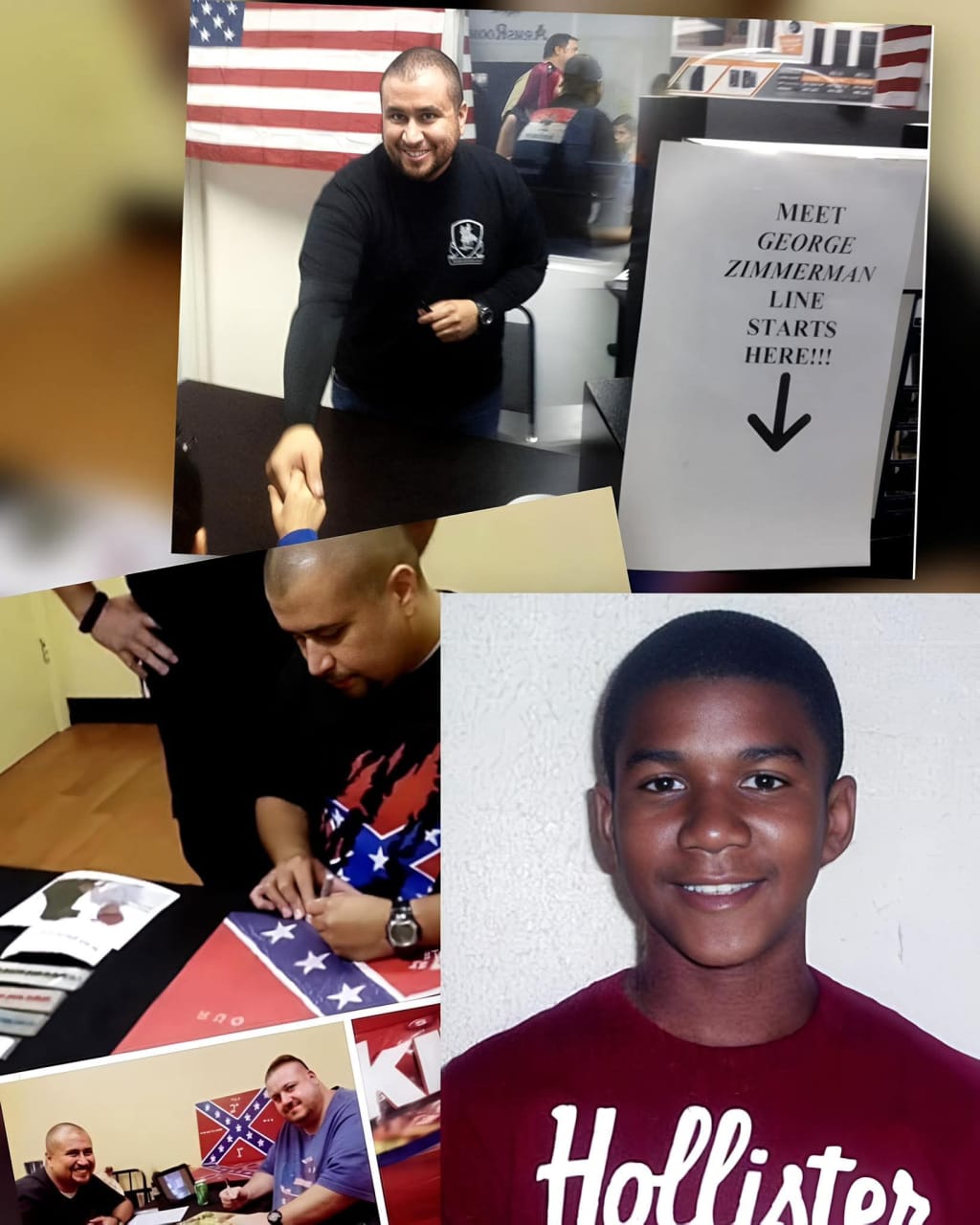

Following his acquittal in the 2012 shooting of Trayvon Martin, George Zimmerman remained a polarizing figure, drawing headlines for a series of controversial actions and statements.
In 2015, Zimmerman sparked outrage by retweeting a photo of Martin’s body, later claiming he had only seen the accompanying text. Later that year, his Twitter account was suspended after he posted intimate photos of an ex-girlfriend along with her personal contact details, accusing her of theft and infidelity. The posts also included an anti-Muslim remark, further fueling criticism.

Zimmerman returned to the spotlight in May 2016 when he attempted to auction the firearm used in Martin’s death, calling it an “American Firearm icon.” He claimed proceeds would support efforts against the Black Lives Matter movement and Hillary Clinton’s gun policies. After the original auction site removed the listing, Zimmerman sold the weapon for $250,000 amid widespread backlash and prank bids.
Later that year, Zimmerman was ejected from a Florida bar following a dispute with staff, during which he allegedly used a racial slur and clashed with law enforcement. He also accused a Black pastor of battery, though surveillance footage contradicted his claim.

Zimmerman pursued legal action in subsequent years, filing a $100 million lawsuit against Trayvon Martin’s family in 2019 and a $265 million defamation suit against politicians Pete Buttigieg and Elizabeth Warren in 2020. Both cases were dismissed.
His notoriety even extended to pop culture, with a satirical portrayal in the 2013 South Park episode “World War Zimmerman,” cementing his place as a controversial figure in American media.
Would you like me to expand this into a full-length article with more context and analysis, make it more neutral for academic use, or add a strong opinionated tone for editorial purposes?

Under Florida law (Chapter 776) and common law, if Zimmerman initiated or provoked the encounter with Trayvon Martin, he would generally lose the right to claim self-defense. The key factors:
Zimmerman was told by the 911 dispatcher not to follow Trayvon, yet he continued to pursue him. This pursuit can be interpreted as initiating the encounter.
If Zimmerman’s actions (following, confronting) made Trayvon reasonably feel threatened, Zimmerman could be considered the initial aggressor. Florida law says an aggressor cannot claim self-defense unless:They clearly withdraw and communicate intent to stop (Zimmerman did not).

The other party escalates to deadly force (Trayvon was unarmed, holding Skittles and iced tea). So, if Zimmerman’s pursuit and confrontation provoked the situation, his self-defense claim would be legally questionable under the “initial aggressor” rule.
Florida law permits defensive force only when a person reasonably believes such force is necessary to prevent imminent harm; critically, an initial aggressor or provocateur forfeits the right to claim self‑defense unless they clearly withdraw and communicate that withdrawal, or the other party escalates to deadly force. See Fla. Stat. § 776.012; FindLaw, Florida Self‑Defense Laws (Mar. 13, 2025); Bonderud Law Firm, Understanding Self‑Defense Laws in Florida (Feb. 6, 2025). This motion asks the Court to apply that settled rule to exclude or cabin self‑defense where the record demonstrates the defendant initiated the confrontation.

On February 26, 2012, George Zimmerman called Sanford police about a “suspicious” person and pursued Trayvon Martin after reporting that Martin was running. When the dispatcher asked, “Are you following him?” and then stated, “OK, we don’t need you to do that,” Zimmerman answered “OK,” yet the contact continued and culminated in a fatal shooting. See UMKC Famous Trials, Transcripts of Calls (Call #1); Britannica, Shooting of Trayvon Martin (Nov. 27, 2025). Martin was unarmed. See Britannica; Wikipedia, Killing of Trayvon Martin.
Note: The dispatcher exchange (“we don’t need you to do that”/“OK”) and the resulting contact underpin the legal analysis of provocation/initial aggression, even as commentary disputes whether Zimmerman remained in active pursuit. See Reason, Jacob Sullum, Did Zimmerman Ignore the Police Dispatcher? (Apr. 3, 2012).
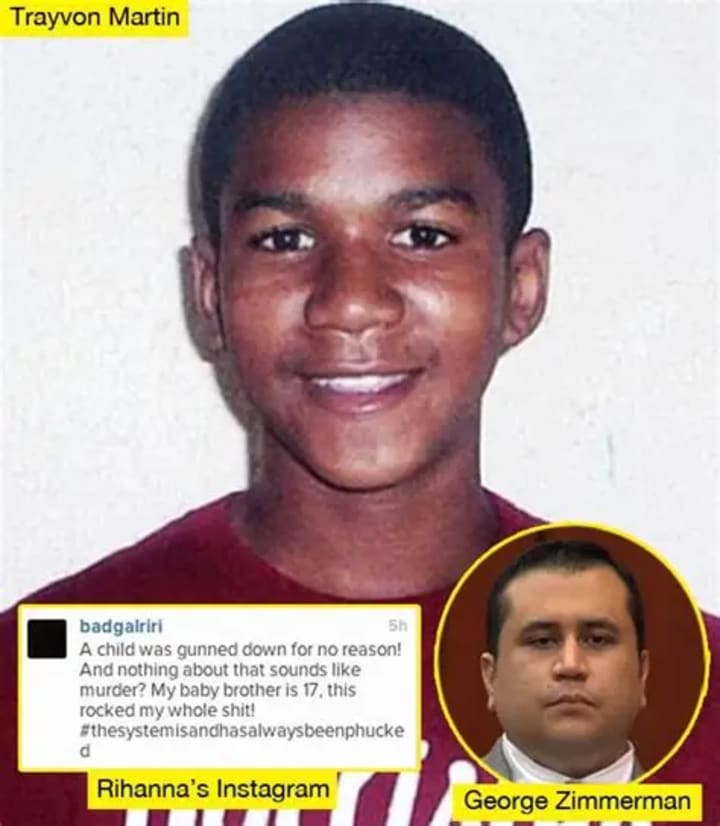
Florida’s Justifiable Use of Force statute permits deadly force only if the actor reasonably believes it is necessary to prevent imminent death or great bodily harm, with no duty to retreat if the actor is not engaged in criminal activity and is in a place they have a right to be. See Fla. Stat. § 776.012 (Online Sunshine; Florida Senate; Florida House). Florida law and practice recognize limits: self‑defense is not justified if the claimant was the initial aggressor or provoked the altercation, absent (1) good‑faith withdrawal communicated to the other party, or (2) escalation by the other party to deadly force. See FindLaw; Bonderud Law Firm.
The initial‑aggressor doctrine bars an instigator from later claiming self‑defense; defensive rights may be restored only by clear withdrawal or where the other party escalates to deadly force. See U.S. law digest (United States v. Behenna, 71 M.J. 228) and Model Penal Code § 3.04(2)(b)(i).

Florida’s statutory justification is tethered to necessity and reasonableness; it does not license a person to create the peril and then invoke self‑defense. Where evidence shows the defendant followed and confronted the decedent despite dispatcher guidance not to pursue, a jury may find the defendant was the initial aggressor, defeating the self‑defense claim. See dispatcher transcript (UMKC) and Florida practice summaries (FindLaw; Bonderud Law Firm).

B. The Dispatcher Exchange and Pursuit Evidence Are Admissible to Prove Initial Aggression/Provocation.
The dispatcher’s directive (“we don’t need you to do that”) and the defendant’s acknowledgment are probative of reasonable alternatives to confrontation and of provocation when the defendant continued engagement that culminated in violence. See UMKC call transcript; practitioner guidance (FindLaw; Bonderud Law Firm).
C. No Evidence of Good‑Faith Withdrawal or Opponent’s Deadly Escalation Restores the Defense.
Even if an aggressor may regain defensive rights through clear withdrawal or opponent’s deadly escalation, the record contains no evidence that the defendant communicated withdrawal in good faith prior to the fatal contact, and the decedent was unarmed, foreclosing any claim that the decedent escalated to deadly force first. See U.S. law digest; MPC § 3.04; Britannica summary of facts.
D. “Stand Your Ground” Does Not Protect Initial Aggressors.
Florida’s no‑duty‑to‑retreat rule protects those lawfully present and not engaged in wrongdoing; it does not immunize a person who provokes or initiates the confrontation. See Fla. Stat. § 776.012; FindLaw; Bonderud Law Firm.
V. RELIEF REQUESTED
Defendant respectfully requests that the Court: (1) preclude any self‑defense instruction or argument if the evidence shows the defendant initiated or provoked the encounter, absent competent evidence of good‑faith withdrawal or deadly escalation by the other party; and (2) in the alternative, limit any self‑defense presentation to conform strictly with Florida Statute § 776.012 and the initial‑aggressor doctrine, with a tailored jury instruction reflecting that provocation or initiation negates self‑defense unless the narrow exceptions apply.

About the Creator
Organic Products
I was born and raised in Chicago but lived all over the Midwest. I am health, safety, and Environmental personnel at the shipyard. PLEASE SUBSCRIBE to my vocal and check out my store
Keep reading
More stories from Organic Products and writers in Criminal and other communities.
The Elevator Killers: The Chilling Case of the Parents Who Butchered Their Children
In the prestigious Ekbatan neighborhood of North Tehran, life usually follows a predictable, quiet rhythm. In this massive residential complex, Akbar and Iran Khorramdin lived a life that seemed defined by peace and devotion. To their neighbors, they were the quintessential elderly couple—polite, soft-spoken, and always ready with a gentle greeting in the elevator. No one could have imagined that behind their wrinkled faces and the polished metal of that elevator, a dark, repetitive ritual was unfolding. For years, the building's security cameras captured a chilling image: the couple frequently leaving the elevator carrying heavy, black trash bags, moving with a terrifying calmness, without a hint of panic. They weren't taking out the trash; they were disposing of their own children.
By Mayar Younes5 days ago in Criminal
The Last Confession
M Mehran The police file labeled Case 417-B had gathered dust for seven years. No arrests. No suspects. Just one body and a city full of silence. Until tonight. Detective Aaron Cole stared at the man sitting across the interrogation table. Thin. Pale. Calm in a way that made the room feel colder. His name was Elliot Moore, a night-shift janitor at St. Vincent Hospital. Elliot had walked into the police station at 2:13 a.m. and said only one sentence: “I killed Daniel Harper.” Daniel Harper’s murder was the most disturbing unsolved crime the city had ever known. Aaron pressed the recorder button. “Start from the beginning,” he said. Elliot smiled faintly. “That’s where it gets complicated.” A Crime That Shook the City Seven years ago, Daniel Harper—a respected journalist known for exposing corruption—was found dead in his apartment. No forced entry. No weapon. No fingerprints except his own. The autopsy revealed poisoning, but the toxin was rare, expensive, and untraceable. The media called it The Perfect Crime. Aaron had been a rookie detective back then. The case haunted him. It had ruined careers. It had ended marriages. And now, suddenly, a confession appeared out of nowhere. Too perfect. The Janitor No One Noticed Elliot described his life in careful detail. Invisible. Ignored. He cleaned hospital floors while saving lives walked past him every day. “No one looks at janitors,” he said. “That’s why I was perfect.” Aaron frowned. “Perfect for what?” “For watching.” Elliot explained that Daniel Harper had been visiting the hospital frequently before his death—always late at night, always nervous. Elliot overheard phone calls. Arguments. Names that didn’t belong in public conversations. Politicians. Judges. CEOs. Daniel wasn’t just exposing corruption. He was about to publish something that would destroy powerful people. “And they noticed,” Elliot whispered. The Twist No One Expected Aaron leaned forward. “So you killed him?” Elliot shook his head slowly. “No. They did.” The room went silent. “I just made sure they couldn’t get away with it.” Elliot explained that he had followed Daniel one night, out of curiosity. He saw him meet someone in a parking garage—someone Elliot recognized from the news. A senator. Elliot watched as Daniel was handed a drink. Watched as his hands began to shake. Watched as the senator walked away calmly, leaving Daniel to die on the cold concrete floor. “I didn’t stop it,” Elliot said, his voice cracking for the first time. “I was scared.” A Crime Within a Crime Instead of calling the police, Elliot made a decision that would change everything. He dragged Daniel’s body back to his apartment. Cleaned the scene. Removed evidence. Made the murder look like a mystery. “Why?” Aaron demanded. “Because I knew the truth would never survive,” Elliot replied. “Power protects itself.” Elliot spent years collecting proof—audio recordings, documents, hidden files Daniel had given him in his final moments. “They thought they committed the perfect crime,” Elliot said. “I gave them one.” Seven Years of Silence Elliot waited. He watched elections come and go. Promotions. Awards. Smiles on television. Meanwhile, Daniel Harper’s name faded into a footnote. Until tonight. “I’m dying,” Elliot said quietly. “Cancer. Stage four.” Aaron’s chest tightened. “So I came here,” Elliot continued. “Because I don’t need justice for myself. I need truth for him.” He slid a flash drive across the table. “Everything is there.” The Real Criminals Forensic analysis confirmed the files were authentic. Recordings of bribes. Emails ordering Daniel’s murder. Bank transfers tied to offshore accounts. Within forty-eight hours, arrests shook the nation. A senator. A judge. A corporate tycoon. The headlines exploded. THE PERFECT CRIME WAS NEVER PERFECT JANITOR EXPOSES MURDER COVER-UP Elliot Moore pleaded guilty—not to murder, but to obstruction of justice. He accepted his sentence without protest. “I did what I had to,” he told Aaron during their last meeting. “History needed time to be ready.” The Final Confession Elliot died six months later in prison medical care. On his grave, someone left a simple note: Truth doesn’t need power. It needs patience. Aaron visited that grave every year. Because some criminals wear suits. Some wear uniforms. And some carry mops, waiting quietly for the world to notice. Why This Story Matters The city still talks about Daniel Harper. But Aaron knows the real story belongs to the man no one ever saw. The janitor who turned a perfect crime into a perfect confession. Keywords (SEO-friendly): criminal story, true crime style fiction, crime short story, murder mystery, psychological crime, unsolved murder, criminal justice, suspense story, Vocal Media crime
By Muhammad Mehran5 days ago in Criminal
Not Just For Clean Up: A History Of The MCU's Department of Damage Control
Initially an organisation that seemed to exist to help the heroes of the Marvel Cinematic Universe, from Phase Four onwards, the Department of Damage Control has shifted into a more antagonistic role. Most recently seen in the Wonder Man series, the current incarnation of Damage Control seems to target superpowered individuals, regardless of whether that person poses an active or intentional threat.
By Kristy Anderson3 days ago in Geeks


Comments (3)
**The Legal Standard and Verdict** George Zimmerman was charged with second-degree murder and acquitted by a jury in July 2013. Under Florida law, the prosecution bore the burden of disproving self-defense beyond a reasonable doubt. They failed to meet that burden. The jury heard weeks of testimony, reviewed all the physical evidence, and returned a not guilty verdict. **The Physical Evidence** The physical evidence at the scene supported Zimmerman's account of being attacked. Zimmerman had lacerations on the back of his head consistent with his head being struck against concrete. He had a broken nose. Trayvon Martin, by contrast, had no injuries other than the fatal gunshot wound and abrasions on his knuckles consistent with throwing punches. The medical examiner confirmed these findings. The gunshot wound itself was consistent with a close-range struggle. The trajectory and powder burns indicated Martin was leaning over Zimmerman when the shot was fired, which matched Zimmerman's description of shooting while pinned on his back. **Eyewitness Testimony** John Good, a resident of the townhome complex, witnessed the confrontation from his back porch. He testified that he saw two people on the ground, with the person in dark clothing on top, throwing downward blows in what he described as a "ground and pound" style. That term comes from mixed martial arts and describes a dominant position where someone on top strikes the person beneath them. Martin was wearing a dark hoodie that night. Zimmerman was wearing red. Good's testimony directly corroborated Zimmerman's account of being mounted and beaten before he fired. **The Timeline** The timeline of events creates serious problems for the prosecution's theory that Zimmerman chased down Martin. At 7:09 PM, Zimmerman called the non-emergency police line to report someone he found suspicious in the neighborhood. During that call, Zimmerman briefly followed Martin on foot. The dispatcher said "We don't need you to do that," and Zimmerman said "Okay." The call ended at approximately 7:13 PM. The physical confrontation did not occur until approximately 7:16 PM or later, based on the 911 calls from neighbors reporting the altercation. That gap of over three minutes is critical. The location where Zimmerman lost sight of Martin was a short distance from the townhome where Martin was staying with his father's girlfriend. Martin had more than enough time to reach that destination, which was less than 100 yards away. If Zimmerman had been actively chasing Martin, the confrontation would have occurred almost immediately, not several minutes later. The timeline is consistent with Zimmerman's account: that he lost sight of Martin, walked toward a street sign to get an address for police, and was heading back to his truck when Martin confronted him. **The "Stand Your Ground" Misrepresentation** In the aftermath of the verdict, this case became the focal point of a national campaign against Florida's Stand Your Ground law. Politicians, activists, and media figures cited the Zimmerman case as the reason Stand Your Ground laws needed to be repealed or reformed. There is one problem: Stand Your Ground was not the defense used at trial. Stand Your Ground removes the duty to retreat before using deadly force in self-defense. But Zimmerman's defense was not that he chose not to retreat. His defense was that he could not retreat because he was pinned on the ground being beaten. That is traditional self-defense, which has existed in law for centuries. Even in states without Stand Your Ground laws, you have no duty to retreat when retreat is physically impossible. The jury was given standard self-defense instructions. The entire national conversation about Stand Your Ground in relation to this case was built on a misunderstanding of what actually happened in the courtroom. **Zimmerman's History of Calls** Part of the narrative constructed around this case was that Zimmerman was a vigilante who obsessively called police about Black people in his neighborhood. His call the night of the shooting was cited as evidence of this pattern. The actual record tells a different story. Zimmerman's call history to police and non-emergency lines over the years shows reports about a wide range of issues: open garage doors, suspicious vehicles, loose animals, noise complaints, and similar mundane neighborhood concerns. He served as a neighborhood watch coordinator in a community that had experienced a series of burglaries. His calls reflected someone engaged in that role, not someone with a fixation on any particular group. **The Witness Statement Evolution** Rachel Jeantel was on the phone with Trayvon Martin in the minutes before the confrontation. Her testimony became central to the prosecution's case. But her account changed significantly across multiple statements. In her first recorded statement to prosecutors, her account was relatively straightforward. By the time of trial, her testimony included more inflammatory details and characterizations that had been absent from earlier versions. Specific phrases and descriptions that would have been memorable and significant appeared for the first time months after her initial statements. When witnesses' accounts grow more detailed and more aligned with a particular narrative over time rather than becoming less certain as memory naturally fades, that pattern raises questions about the reliability of the later testimony. **What the Reported Dialogue Reveals** One detail from Jeantel's testimony actually supports Zimmerman's account, though it was presented as evidence against him. She testified that Martin asked "Why are you following me?" and that Zimmerman responded "What are you talking about?" or words to that effect. If Zimmerman had been actively chasing Martin, that response makes no sense. You do not respond with confusion to an accusation of following someone if you are, at that moment, following them. That response suggests Zimmerman was not pursuing Martin at the moment of confrontation, which aligns with his account that several minutes had passed since he lost sight of Martin and that he was surprised by the encounter. **Post-Trial Conduct Is Irrelevant, and Misrepresented** In the years following the trial, Zimmerman had various legal troubles and public incidents. These are routinely cited as evidence that he was the aggressor on the night of the shooting, as if later behavior can retroactively change what happened years earlier. This reasoning is backwards. You evaluate a case based on the evidence of what happened that night. Subsequent events, whatever they may be, do not change the physical evidence, the eyewitness testimony, the timeline, or the jury's verdict. The attempt to use later incidents to justify the original narrative is an admission that the narrative could not be supported by the actual evidence from the case. But even taken on their own terms, the post-trial incidents do not support the characterization of Zimmerman as a violent or dangerous person. Zimmerman was diagnosed with post-traumatic stress disorder following the trial. He was also diagnosed with ADD. These are documented medical conditions resulting from the ordeal of being tried for murder while being made into a national symbol of hatred, receiving death threats, being unable to work, and having his life destroyed in the public eye. The psychological toll of that experience is not speculative. It was clinically diagnosed. And here is what is notable about every incident cited as evidence of his violent nature: in none of them did Zimmerman actually harm anyone. The incidents involved property damage. He broke things. He did not punch anyone. He did not shoot anyone. He did not assault anyone. This is a man who legally carried a firearm throughout this period. If he were the dangerous, violence-prone individual the narrative requires him to be, the opportunity to cause harm was always present. He never took it. The worst documented behavior amounts to breaking objects during emotional outbursts, which is consistent with someone suffering from PTSD and struggling with the psychological aftermath of trauma. Compare that to the narrative: that this is a man who hunted down and murdered a teenager for no reason. If that were true, if Zimmerman were capable of that kind of predatory violence, his post-trial behavior would reflect it. Instead, even at his lowest moments, dealing with diagnosed psychological conditions resulting from years of death threats and public vilification, he never harmed another person. The post-trial conduct, when examined honestly, actually undercuts the narrative rather than supporting it. **The Institutionalization of a False Narrative** This case did not remain a local criminal matter. It became a national cause. It was cited in policy debates, referenced by elected officials including the President, and treated as an emblem of systemic injustice. But the narrative that was institutionalized does not match the evidence. The physical evidence supported self-defense. The eyewitness testimony supported self-defense. The timeline contradicted the pursuit theory. The jury, having heard all the evidence, acquitted. What happened in the public sphere was the construction of a story that served various purposes but did not reflect what was proven in court. Documenting the gap between the evidence and the narrative is not about one case. It is about understanding how these gaps occur and how false narratives become embedded in public consciousness and official policy.
This article whether AI or written by an actual person, misstates Florida law more than once. Further the MPC has no relevance. Still further, George Zimmerman was not an aggressor who provoked under Florida law. Bonderud Law Firm is not expert on the law. No is any other source mentioned.
and we are back where we started, nothing changes