

The Red Dupatta
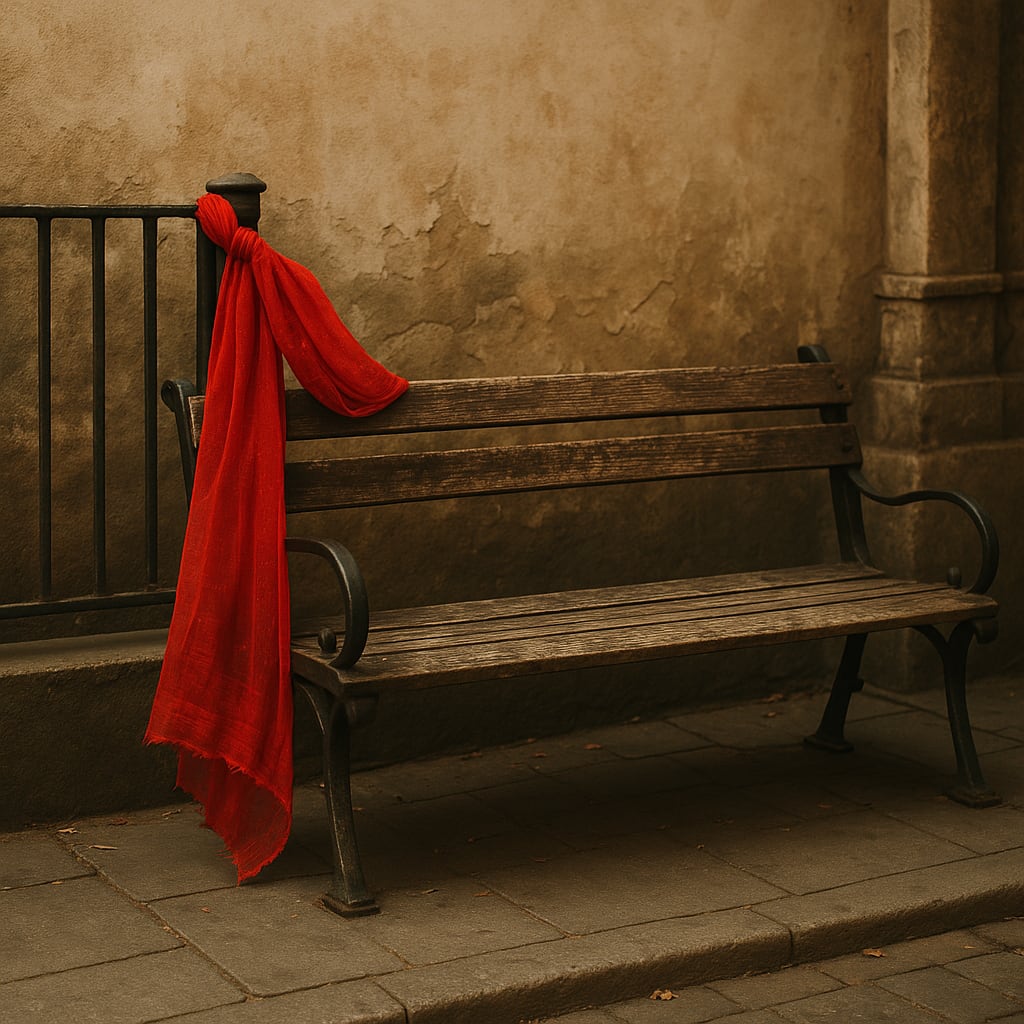
In the heart of Peshawar’s old city, by the rusting bench near Rehman Baba Chowk, a red dupatta flutters every morning—tied loosely to the iron railing, as if someone left in a hurry and never returned.
It’s faded now, kissed too often by sun and dust, but unmistakably red—bright, defiant, like the girl who once wore it.
No one dares to remove it.
The shopkeepers, the rickshaw drivers, the chaiwalas—they’ve all seen it. They’ve all felt it. “Kisi ki yaad hogi,” someone mutters each time the wind lifts it. Someone’s memory. Someone’s ghost.
But I know better.
I remember her.
Her name was Amina, and she sat by that bench every Friday, waiting for the university bus. Head held high, eyes lost in books of Faiz and Parveen Shakir. She had this habit of mouthing the verses under her breath, like poetry was prayer. Her voice? Soft, yet firm—like someone raised to be quiet but born to question.
We weren’t close friends, not really. But we were familiar enough to smile, to exchange small words, to sip chai under the winter sun. She had a spark—like a flame protected in cupped hands. You knew she had dreams, and you could sense they didn’t fit into the narrow lanes of our mohalla.
She used to say:
“I want to write things that outlive me.”
And she meant it.
Amina was the first girl in her family to go to university. The only one in our neighborhood who dared to study journalism. People stared. Women whispered. Men scoffed. But she walked with a kind of quiet rebellion, red dupatta flying behind her like a flag of resistance.
I admired her in silence—my courage was never as loud as hers.
Then, one day, she didn’t come.
It was a Friday. The bench was empty. The street felt louder in her absence. I waited longer than usual, hoping she’d appear from behind the kabab stall or the bookstore. But she didn’t.
The whispers began that evening.
“Larki haad se barh rahi thi.”
“She was seen talking to a boy.”
“Unhon ne chhupa diya hoga kahin... ya...”
No one ever said it out loud, but everyone filled in the blanks. In our society, the worst things are always wrapped in silence.
Her parents said she had moved to Islamabad. A new university, they claimed. But her phone stopped working. Her social media vanished. Her room was emptied. Her name was unspoken.
It was like she never existed.
Except… the red dupatta stayed.
Tied to the railing by that rusting bench. Not placed or forgotten—tied, firmly, like a signature left behind.
Someone had to do it. Maybe her. Maybe someone who loved her. Maybe someone who couldn’t bear how easily a whole girl could be erased.
I started visiting the bench again. At first out of habit. Then out of guilt. Then because I realized I didn’t want her to be forgotten. And I wasn’t the only one.
Every now and then, I see others pause. A schoolgirl in a white shalwar kameez who looks at the dupatta with quiet curiosity. An old woman who shakes her head and whispers a prayer. A man who lights a cigarette and stares too long.
In those moments, I hear her again.
“Absence isn’t silence,” she once told me. “Sometimes it’s the loudest scream.”
She’s not in the newspapers she dreamed of writing for. She’s not in her father’s house. She’s not even in our conversations anymore. People say she was never really here.
But she was.
She shaped me. She changed many of us. She left a mark that won’t wash away with time or talk.
And as long as that red dupatta dances in the wind near Rehman Baba Chowk,
she’s still here.
Author’s Note:
This story is based on an original concept and idea by me. It was crafted with the help of AI for language polishing and grammatical clarity. All emotions, cultural context, and themes reflect my own vision and voice.
About the Creator
A Waseem khattak
Waseem Khattak,a journalist,author,and media educator with 16+ years of experience,heads the Journalism Department at Women University Swabi.He writes for top outlets and trains youth in ethical, responsible journalism. @awaseemkhattak
Keep reading
More stories from A Waseem khattak and writers in Confessions and other communities.
The Piggy Project
I’ve had so many names in this life I lose track of which ones were ever really mine and which ones I wore because someone needed me to. Some were handed to me before I had words to refuse them, before I knew what they meant, before I knew I could say no. Most weren’t meant to hurt. That doesn’t mean they didn’t leave marks. Marks that told me who I belong to, who I am by way of who claims me, recognizes me in the good and bad, who walks beside me.
By Fatal Serendipitya day ago in Confessions
I Didn’t Lose My Mind — I Outgrew Chaos
For a long time, I thought something was wrong with me. I thought I was overthinking. I thought I was reading too deeply into situations that were meant to be taken at face value. I thought I was emotional, dramatic, sensitive—every word people use when they don’t want to engage with what’s actually being said.
By Dakota Denise 3 days ago in Confessions


Comments (1)
مرحبا انا من مصر ما هو بلدك