
Fire in blue eyes
The English poet Rudyard Kipling opens his poem “The Song of East and West” with the phrase: “The West is West and East is East and they will not meet,”
The English poet Rudyard Kipling opens his poem “The Song of East and West” with the phrase: “The West is West and East is East and they will not meet,” a phrase that moved from its poetic aesthetic field to ideological and political fields. We glimpse it in various Western intellectual, literary and historical works.
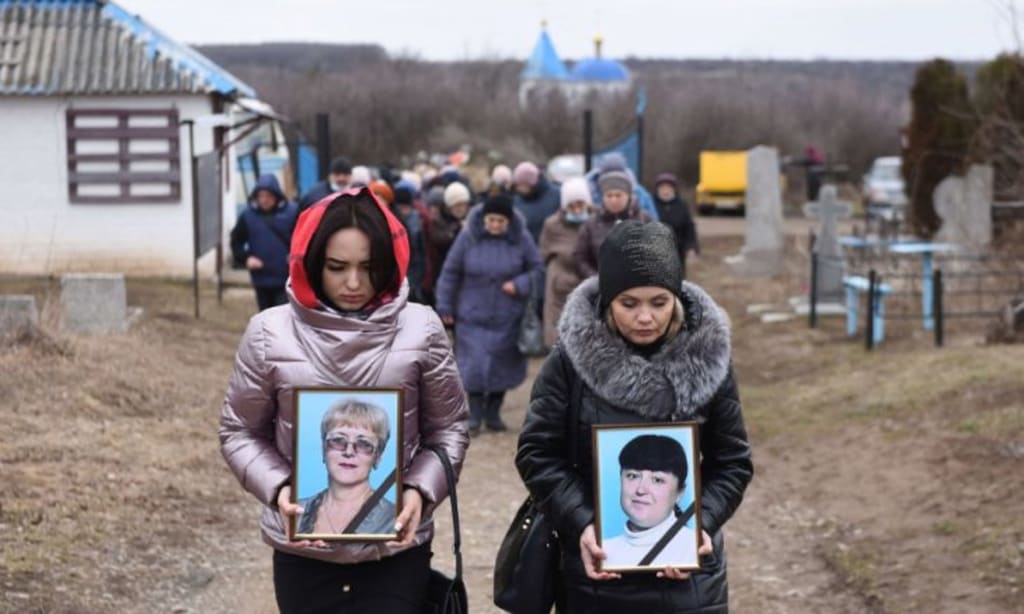
Perhaps it was appropriate to recall this phrase while tracing a large number of comments made - during the past days - by various Western media about the war in Ukraine, where many coverages of Western television networks and press - not to mention social media - were filled with quite a few "stereotyped visions". of the war, which has been described as “shocking”, because it is raging against “a people with blond hair and blue eyes”, in “sacred geography”, which invokes the deposits of “hidden western centralism” and other related ideas.
Despite the natural sympathy for the humanitarian situation in Ukraine, many of the comments went out of their humanitarian context to clear racist trends that highlighted the war as a “shock”, not only because it is a war, but because it is taking place in a “Christian blond European country with blue eyes.” ’, where there were statements by reporters and commentators about refugees “not different from us”, in a clear implementation of geography, religion, color and ethnicity in the analysis and coverage.
British journalist who was a conservative politician David Henan wrote in the Telegraph of the Ukrainian refugees: “They look a lot like us, and that made it all the more horrible.”
“This place is not Iraq or Afghanistan,” said a CBS correspondent from Kyiv. “It is a civilized and European city where no one expected this to happen,” in a clear call to civilization and barbarism.
And last Friday, an analyst on the French TV channel BFM was saying: “We are not talking about Syrian refugees fleeing from the oppression of Assad supported by Putin, but we are talking about Europeans riding in cars that look like ours,” which made racial differences wide – in This commentator looked at the patterns and ways of living that differentiate between two banks of the Mediterranean, one of which rides “cars”, while the residents of the other bank are still riding horses, at best.
Edward Said was critical of the orientalist idea based on the centrality of Western civilization, which, despite attempts to refine it by many “cover-up means”, still appears in many works in television, theater, politics, history, literature and the arts, as it appears in many slips of the tongues of politicians that In many moments of emotional flow similar to that emotional moment in which Kipling depicts the West and the East as parallel lines that do not meet, the idea that the currents of the Euro-American right translate clearly racist and which lies in the mindset of the border guards who distinguished between the refugees fleeing from Ukraine On the basis of color and race, according to a statement by the United Nations High Commissioner for Refugees.
Of course, it is not required of European countries to deal with the issue of Ukraine as they do with the Syrian, Iraqi, Afghan or Palestinian issue, due to the factors of history, geography, culture and religion as well, and this European-American mobilization can be understood for what is happening in Ukraine, but what is not acceptable It is the abhorrent exaggeration in focusing on the horror of the “shock”, which did not come - only - from the horror of the war as a horrific act, but from the fact that it erupted within specific geography, culture, color and lifestyles, “that is not supposed to happen to them what happens to others.”
And last Sunday, Ukrainian President Volodymyr Zelensky said that he would open the door for foreign fighters to volunteer to fight in his country against the Russians, and regardless of the exercise by an elected president of his sovereign right as he deems appropriate to defend his country, and the feasibility and purpose of the call, some support for that call received from Various Western countries and entities call for stopping at the issue of criminalizing foreigners going to fight in Syria, Libya or Iraq, and putting us in front of questions such as: If foreigners going to fight in Syria is terrorism that must be fought, then why is foreigners going to fight in Ukraine as a struggle that must be supported?! Are the Russians in Syria others in Ukraine? Or is it because Syria's neighborhood is not Ukraine's, or is it the religion of foreign fighters that distinguishes between a terrorist act and a combative one?
Why is the Ukrainian resistance's bombing of a Russian convoy considered a "heroic" act, while the Palestinian resistance's bombing - for example - of the Israeli soldiers occupying his country is a "terrorist" act? And many other confusing questions about defining the concepts of terrorism and heroism, and what are the criteria that make a certain action heroic in one country and terrorist in another, and the extent of the discipline of those criteria that encouraged the “Arab mujahideen” to go to Afghanistan to fight against the Soviets, as a “jihadi and heroic act” to defend a country. Occupied Muslim” against the “atheist occupation”, and then changed its vision, to consider these “Mujahideen” terrorists later, in a “dualism” that can be politically justified, but it is not consistent with the exaggerated theorizing about the principle of policies and the humanity of laws and the universality of Western values that seem to be “geographical values” “Pure.
Perhaps the explanation that can shed light on this “double standards” lies in what was mentioned at the beginning of the article about “Western centralism,” which issues its judgments based on a set of interests and perceptions, such as those mentioned by the American Francis Fukuyama in his book “The End of History and the Last Man.” These are perceptions that see political democracy and economic liberalism - in their Western connotations - as the last stages of human ideological development, and therefore they are supposed to be generalized in waves of “message” globalization that do not differ in their peremptory aspects from religious certainties.
Hence, defining an act as heroic or terrorist is not actually due to the nature and nature of this act, but to the different angle of view through which it is viewed, and the extent to which it is appropriate to a particular culture, thought, civilization, color and central geography, which represents the standard of criteria in judging things, even if it is It has two different judgments on one verb.
It is true that the Western political field has left the idea of “the centrality of the king in the state”, but - apparently - developed it into another idea, which is the “centralization of the West in the world”, and it is true that the king is no longer above the constitution, but many on both sides of the Atlantic still see that the West is International law, ideas associated with instinctive and populist racism more than with objectivity and human meanings.
About the Creator
Keep reading
More stories from Zernouh abderrahman and writers in Confessions and other communities.
Enough with the scars and scars... and let's turn the Ukraine crisis to our advantage
It is a farce of fate that Israeli Prime Minister Naftali Bennett brazenly continues his attempts to play the role of mediator in the Russian/Ukrainian crisis to stop the war, while he, the hard-line settler, refuses to meet with any Palestinian officials, and at any level to end the oldest crises in the Middle East, but rather in the scientist.
By Zernouh abderrahman4 years ago in Confessions
Blessed 33
So I woke up on the morning of February 5, 2026 and guess what and you know what I realized? It’s my 33rd birthday. Do you know what that means? Yes, technically I’m getting old, but what I couldn’t have guessed was this would be one of the best days of my life.
By Joe Patterson12 days ago in Confessions
Think for Me
"How do you calculate the circumference of a circle? Submit your answer when ready." [Pause] "Excellent! Every student was able to call up the answer electronically very quickly. If I, as a robot had feelings, I would express pride. You may break for lunch. Return to this cyber room in 45 minutes."
By Julie Lacksonen7 days ago in Humans



Comments
There are no comments for this story
Be the first to respond and start the conversation.