
Basic Materials Roundup: Market Talk
Metals, chemicals, and mining stocks reflect cautious optimism amid global uncertainty

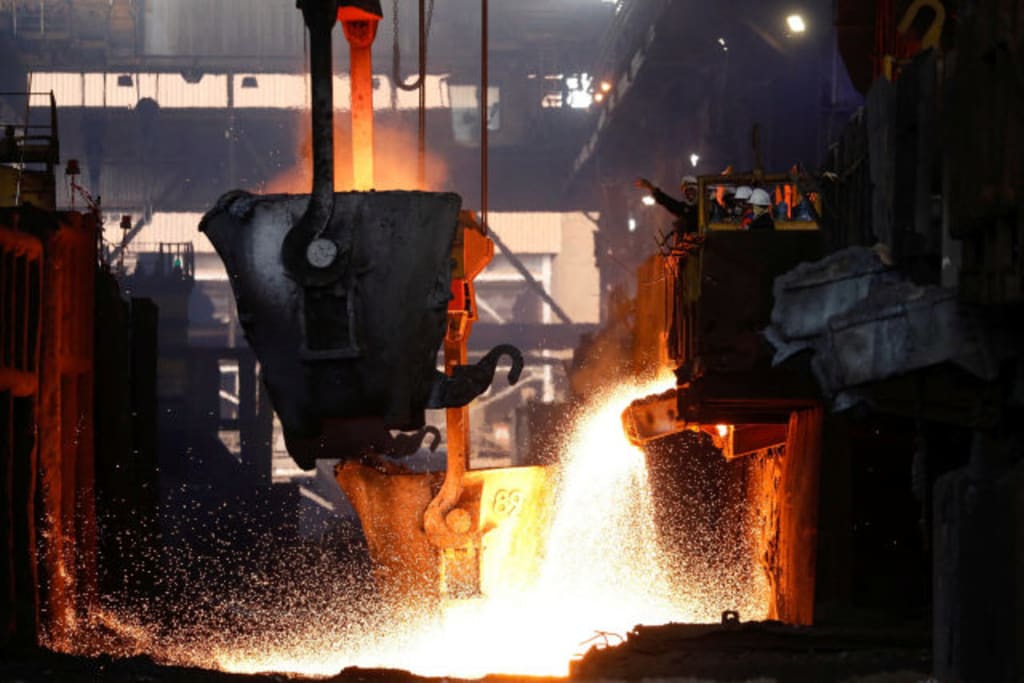
The basic materials sector is once again drawing attention as investors weigh mixed economic signals, shifting commodity prices, and evolving corporate strategies. Often viewed as a barometer for global industrial health, basic materials—including metals, chemicals, mining, and construction inputs—are navigating a period defined less by sharp rallies and more by selective strength and cautious positioning.
Recent market action suggests that while demand remains uneven across regions, underlying fundamentals in several key materials are stabilizing. From base metals responding to infrastructure needs to chemicals adjusting to cost pressures, the sector is reflecting a broader story of recalibration rather than retreat.
Metals: Selective Strength Beneath the Surface
Base metals continue to trade in a narrow but telling range. Copper, often called “Dr. Copper” for its ability to signal economic health, has shown resilience despite concerns over global manufacturing slowdowns. Demand linked to electrification, renewable energy, and grid expansion is providing a structural floor, even as short-term consumption in some regions softens.
Aluminum prices remain sensitive to energy costs and supply discipline. Smelters in energy-intensive regions are closely watching power prices, which directly affect production decisions. Any sustained increase in electricity costs could limit supply growth, offering price support even in a modest demand environment.
Meanwhile, tin has emerged as a quiet outperformer. Its critical role in electronics and soldering makes it vulnerable to supply disruptions, and recent constraints have kept prices elevated. Market participants note that tin’s relatively small and concentrated supply base often amplifies price movements, making it one to watch in the months ahead.
Precious Metals: A Defensive Undertone
Precious metals have added a defensive layer to the basic materials story. Gold continues to attract steady interest as investors hedge against economic uncertainty, currency fluctuations, and geopolitical risk. While not traditionally grouped with industrial materials, gold’s performance often influences sentiment across the broader mining space.
Silver, straddling both industrial and precious metal categories, reflects this dual role. Industrial demand linked to solar panels and electronics offers long-term support, while its safe-haven appeal fluctuates with macroeconomic headlines. For materials-focused investors, precious metals are serving less as speculative plays and more as portfolio stabilizers.
Chemicals: Margin Management Takes Center Stage
The chemicals segment is undergoing its own form of adjustment. After a period marked by high input costs and uneven demand, companies are increasingly focused on margin discipline rather than aggressive expansion. Feedstock prices, particularly those tied to energy markets, have moderated compared to recent highs, offering some relief.
Producers of specialty chemicals appear better positioned than bulk chemical manufacturers. Their ability to pass through costs and maintain pricing power has helped insulate earnings, even as volumes remain under pressure in certain end markets like construction and automotive.
At the same time, corporate restructuring and portfolio optimization are becoming common themes. Companies are divesting non-core assets, streamlining operations, and prioritizing segments with clearer long-term demand visibility. These moves signal a shift from growth-at-any-cost strategies toward sustainable returns.
Mining: Capital Discipline Over Expansion
Mining companies are approaching the current environment with caution. Unlike previous commodity cycles characterized by aggressive capital spending, today’s miners are emphasizing balance-sheet strength and shareholder returns. Dividends, buybacks, and debt reduction remain priorities, reflecting lessons learned from past boom-and-bust cycles.
Exploration activity continues, but with tighter scrutiny. Projects tied to energy transition metals—such as copper, lithium, and nickel—are still attracting investment, though timelines are stretching as companies navigate regulatory hurdles and cost inflation. The focus is less on rapid volume growth and more on securing long-life assets with manageable operating risks.
Gold miners, in particular, are benefiting from relatively stable prices and improved cost control. While inflationary pressures have raised operating expenses, disciplined capital allocation has helped maintain profitability.
Construction Materials: Regional Divergence
Construction-related materials like cement, aggregates, and steel are showing regional divergence. In markets where infrastructure spending remains robust, demand has held up reasonably well. Public-sector projects, especially those tied to transportation and energy infrastructure, are providing a buffer against softness in residential construction.
Elsewhere, higher interest rates have weighed on private construction activity, dampening demand for building materials. This split highlights how basic materials performance is increasingly shaped by localized policy decisions rather than uniform global growth trends.
Sustainability and Regulation: A Long-Term Factor
Environmental and regulatory considerations are no longer peripheral issues for the basic materials sector. Companies are investing in cleaner production methods, emissions reduction, and recycling technologies—not only to meet regulatory requirements but also to remain competitive.
For metals and mining firms, sustainability initiatives are becoming a factor in securing financing and maintaining social licenses to operate. While these investments can raise short-term costs, they are increasingly viewed as essential for long-term viability.
Market Sentiment: Cautious, Not Bearish
Overall sentiment in basic materials can best be described as cautiously constructive. Investors are not chasing broad rallies, but they are selectively positioning in areas where supply constraints, structural demand, or disciplined management offer clearer visibility.
Volatility remains a feature, driven by macroeconomic data, currency movements, and policy signals. However, the absence of panic selling suggests that markets are adjusting expectations rather than pricing in severe downturns.
Looking Ahead
The basic materials sector is entering a phase where incremental developments matter more than sweeping trends. Small changes in supply discipline, demand forecasts, or regulatory frameworks can have outsized effects on individual commodities and companies.
For investors and market watchers, the takeaway from this Basic Materials Roundup: Market Talk is straightforward: the sector is not flashing uniform strength or weakness. Instead, it is revealing a more nuanced landscape—one shaped by selective demand, strategic restraint, and a growing emphasis on long-term sustainability.
In a world where economic growth is uneven and policy-driven shifts are frequent, basic materials remain a space where careful analysis matters more than broad assumptions.
About the Creator
Saboor Brohi
I am a Web Contant writter, and Guest Posting providing in different sites like techbullion.com, londondaily.news, and Aijourn.com. I have Personal Author Sites did you need any site feel free to contact me on whatsapp:
+923463986212
Keep reading
More stories from Saboor Brohi and writers in Confessions and other communities.
Piper Rockelle
It no longer requires a Hollywood agent, a record label, or a casting director’s approval. Instead, a smartphone, creativity, and consistency can turn an ordinary life into a public one. Few people represent this shift more clearly than Piper Rockelle—a digital creator who grew up in front of millions, navigating success, criticism, and personal growth in real time. Piper Rockelle is not just a social media personality; she is a reflection of how childhood, creativity, and internet culture intersect in the modern era. Her journey highlights both the opportunities and challenges that come with growing up online. Early Beginnings and a Natural Camera Presence Piper Rockelle Smith was born on August 21, 2007, and began gaining attention at a young age through short-form content and musical performances. From the start, what made Piper stand out was her comfort in front of the camera. She had an expressive personality, a playful sense of humor, and an ability to connect with viewers her age. Initially, her content focused on lighthearted entertainment—dance videos, challenges, skits, and playful vlogs. These videos felt casual and approachable, which helped her quickly attract a loyal audience. Unlike traditional child stars, Piper’s rise did not come from a studio-backed production. It came from relatability and repetition, showing up consistently in viewers’ feeds. The YouTube Era and Rapid Growth Piper’s YouTube channel became the foundation of her online presence. As her subscriber count grew, her videos evolved from simple clips into more structured storytelling. Her content often featured friends, collaborative challenges, and short narrative skits that blurred the line between reality and performance. This format appealed strongly to preteens and teenagers, many of whom saw Piper not as a distant celebrity but as someone living a life similar to theirs—only documented online. The sense of familiarity was key to her success. Viewers felt as though they were growing up alongside her. With millions of subscribers across platforms, Piper Rockelle became a recognizable name in youth digital culture. Brand partnerships, music releases, and merchandise soon followed, turning her online popularity into a full-time career. Music, Performance, and Creative Exploration Beyond vlogging, Piper explored music and performance as creative outlets. Her songs, often upbeat and youthful, reflected themes of friendship, emotions, and self-expression. While critics sometimes questioned the artistic depth of influencer-driven music, for Piper’s audience, the appeal was authenticity rather than perfection. Her music videos mirrored her online persona—colorful, expressive, and energetic. They were designed to entertain rather than impress industry insiders. In that sense, Piper’s music functioned as an extension of her digital identity rather than a departure from it. Life Under Constant Visibility Growing up online brings unique challenges, and Piper Rockelle’s experience illustrates this clearly. Every milestone—friendships, disagreements, personal changes—played out under public scrutiny. Unlike most teenagers, she had to navigate adolescence while millions watched, commented, and speculated. This level of exposure can blur boundaries between private life and public performance. For young creators especially, the pressure to remain entertaining while still discovering who they are can be intense. Piper’s journey highlights the emotional complexity of internet fame, particularly for minors. Controversy and Conversations About Child Creators As Piper’s popularity grew, so did discussions surrounding child influencers and their working environments. Public conversations emerged about boundaries, consent, and protection for young creators in the digital space. These discussions were not unique to Piper but part of a larger cultural reckoning with how online fame affects children. What this revealed was a broader issue: social media evolved faster than the rules designed to protect young people. Piper Rockelle became part of an important conversation about responsibility—by platforms, guardians, and audiences alike. While controversies often dominate headlines, they also encourage necessary dialogue about ethics in digital entertainment. Piper’s story helped shine a light on the need for better safeguards for young creators. Reinvention and Maturing Content As Piper grew older, her content naturally began to change. The playful tone of early videos gradually shifted toward more mature storytelling, reflecting her personal development. This transition is common for long-term creators but especially challenging when an audience expects a frozen version of who someone used to be. Adapting while retaining authenticity is a delicate balance. Piper’s evolving content demonstrates an attempt to grow without completely disconnecting from the audience that supported her early success. The Cultural Impact of Piper Rockelle Piper Rockelle represents a generation raised not just with the internet, but on it. Her career shows how influence now works horizontally rather than hierarchically. Instead of being placed on a pedestal, creators grow alongside their viewers, sharing the same digital spaces. She also embodies the dual reality of online fame: opportunity paired with vulnerability. Success can come quickly, but so can criticism. Visibility brings validation and pressure in equal measure. Looking Ahead The future for Piper Rockelle, like many digital creators, remains open-ended. Whether she continues as a content creator, shifts toward traditional entertainment, or chooses a quieter path, her early influence is undeniable. Her story is not simply about internet fame. It is about adaptation, growing up publicly, and learning in a space with no clear rulebook. In many ways, Piper Rockelle’s journey mirrors the internet itself—constantly evolving, sometimes messy, but undeniably impactful. Final Thoughts Piper Rockelle is more than a viral name or a trending topic. She is a case study in modern childhood, creativity, and the power of digital platforms. Her rise reminds us that behind every screen is a real person navigating real growth. As audiences, understanding these stories with empathy rather than judgment is essential. The internet may create stars overnight, but growing up—online or offline—still takes time, support, and space.
By Saboor Brohi about a month ago in Confessions
The Piggy Project
I’ve had so many names in this life I lose track of which ones were ever really mine and which ones I wore because someone needed me to. Some were handed to me before I had words to refuse them, before I knew what they meant, before I knew I could say no. Most weren’t meant to hurt. That doesn’t mean they didn’t leave marks. Marks that told me who I belong to, who I am by way of who claims me, recognizes me in the good and bad, who walks beside me.
By Fatal Serendipity2 days ago in Confessions
Developing Emotional Intelligence To Improve Relationships And Mental Health Skills
Emotional intelligence (EI) refers to the capacity to be aware of, know and be able to control and regulate personal emotions as well as ability to perceive and react to the emotions of other people. It is critical in ensuring that relations are healthy and also that mental health is enhanced. High-EI individuals are able to manage their emotions, cope with stress better and express themselves positively. The ability to grow emotionally enables individuals to cope with social life better, fit into other people, and avoid the pitfalls of misunderstandings, which may ruin any relationships. This is one of the basic skills that facilitate individual development as well as relationship peace.
By Willian James5 days ago in Confessions
Self Help: Grifters' Gospel
On Self-Help, Snake Oil, and the Illusion of Change Psychology professionals and students can be imagined on two opposite sides of a line called self-help books: likely a larger group opposes pop-science and step-by-step manuals filled with talk of success, journaling, and not giving a f**k; others love them, but they aren’t many.
By Avocado Nunzella BSc (Psych) -- M.A.P 2 days ago in BookClub


Comments
There are no comments for this story
Be the first to respond and start the conversation.