
Saudi Oil Story: From Crude Dependence to Economic Diversification
How the Kingdom transformed its oil wealth into a strategy for a broader, more resilient economy.

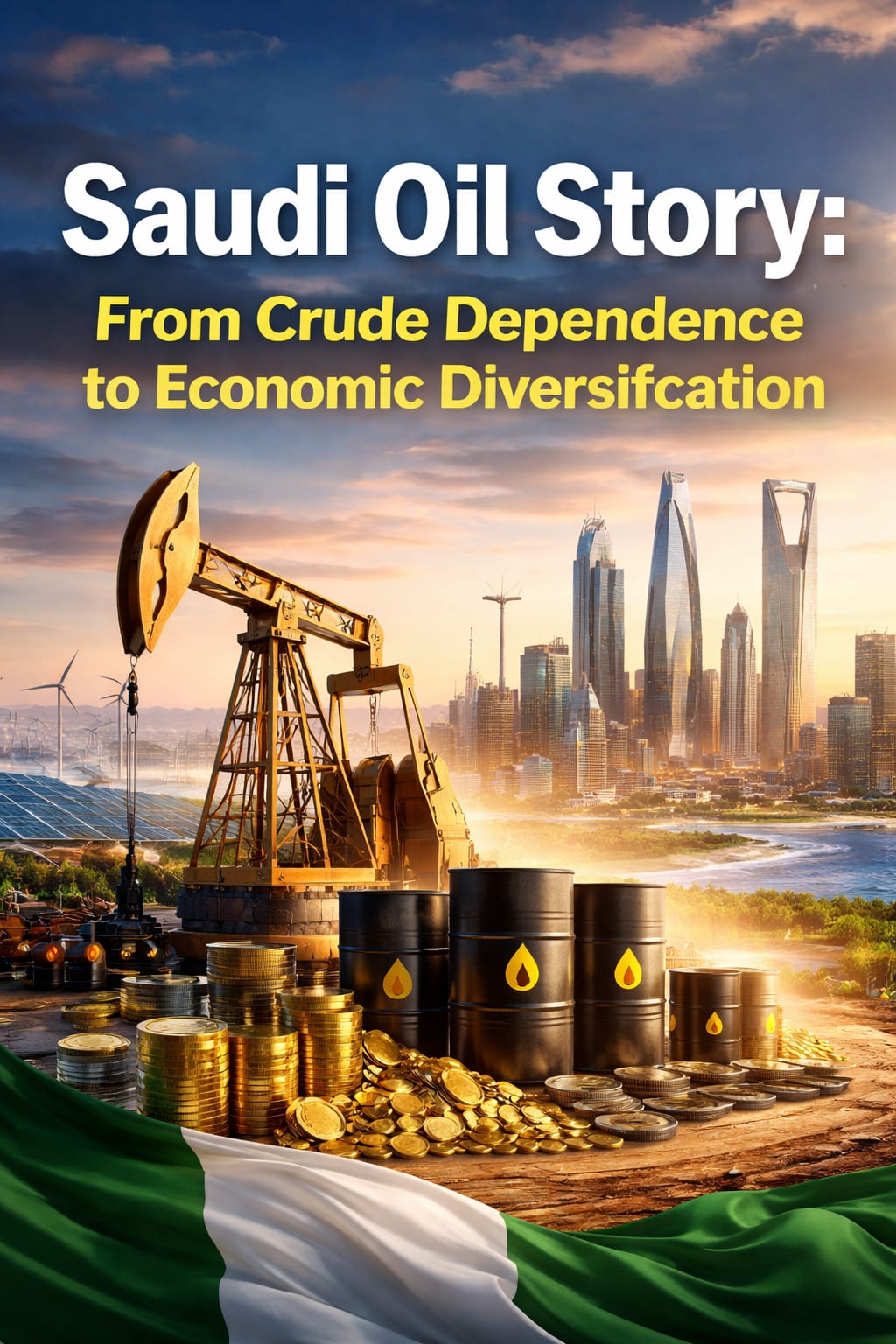
For decades, the global identity of Saudi Arabia has been inseparable from oil. The Kingdom sits on some of the largest petroleum reserves in the world, and for much of the 20th century its economy revolved almost entirely around crude oil production and exports. However, the Saudi economic story is no longer just about oil wells and pipelines. In recent years, the country has been steadily working to transform its economy, moving from heavy dependence on crude oil toward a more diversified and sustainable economic model.
The foundation of Saudi Arabia’s oil economy dates back to the 1930s when commercial oil was discovered in the Kingdom. The discovery eventually led to the creation of Saudi Aramco, which became one of the largest and most valuable energy companies in the world. As global demand for energy increased after World War II, Saudi Arabia emerged as a central player in international oil markets. Revenues from oil exports funded infrastructure projects, modern cities, education systems, and healthcare institutions across the country.
Membership in Organization of the Petroleum Exporting Countries (OPEC) further strengthened Saudi Arabia’s role as a global energy leader. Through coordinated production strategies with other oil-producing nations, the Kingdom gained significant influence over global oil supply and pricing. Oil revenues quickly became the backbone of the Saudi economy, accounting for a major share of government income, exports, and GDP.
However, relying heavily on a single resource also created vulnerabilities. Oil prices are notoriously volatile, often influenced by geopolitical tensions, global economic cycles, and shifts in energy demand. When oil prices fall sharply, countries dependent on oil revenues can face budget deficits and slower economic growth. Saudi policymakers recognized that long-term economic stability required reducing this dependence.
This realization became the driving force behind ambitious economic reforms. One of the most significant initiatives in this direction is Saudi Vision 2030, a national transformation strategy launched by Mohammed bin Salman. The program aims to diversify the economy by expanding sectors such as tourism, technology, renewable energy, logistics, and entertainment.
A key pillar of this transformation is investment. Saudi Arabia has been channeling oil wealth into long-term development funds, particularly through the Public Investment Fund. The fund has invested billions of dollars in both domestic mega-projects and international companies, seeking to generate new revenue streams beyond oil.
One of the most ambitious development projects is NEOM, a futuristic city planned along the Red Sea coast. Designed as a hub for innovation, renewable energy, and high-tech industries, NEOM represents Saudi Arabia’s vision of a post-oil economic future. Other large-scale projects, including tourism developments along the Red Sea and cultural initiatives in historic regions, aim to attract international visitors and stimulate the service sector.
Tourism, in particular, has become a central focus of diversification efforts. Historically, most visitors to Saudi Arabia traveled for religious purposes, primarily to the holy cities of Mecca and Medina during the annual pilgrimage known as Hajj. Now, the government is expanding tourism opportunities through new visas, heritage preservation projects, and global events designed to attract leisure travelers as well.
Another important area of development is renewable energy. As the world gradually shifts toward cleaner energy sources, Saudi Arabia has begun investing in solar and wind power projects. The Kingdom’s vast deserts and high sunlight levels provide ideal conditions for large-scale solar energy production. By developing renewable energy infrastructure, Saudi Arabia hopes to remain a significant energy provider even as global demand for fossil fuels evolves.
At the same time, the country is expanding private sector participation in the economy. Reforms have been introduced to encourage entrepreneurship, foreign investment, and small business growth. These measures aim to create new jobs for Saudi citizens, especially the younger generation, while reducing the government’s dependence on oil revenues.
Despite these ambitious plans, the transition is not without challenges. Oil still plays a dominant role in Saudi Arabia’s economy, and diversification will take time. Building new industries requires significant investment, skilled labor, and global competitiveness. Moreover, fluctuations in oil prices can still influence government spending and economic momentum.
Nevertheless, the direction is clear. Saudi Arabia is attempting one of the most significant economic transformations in the modern world. By leveraging its oil wealth to build new industries, infrastructure, and global partnerships, the Kingdom aims to secure long-term prosperity beyond crude oil.
The Saudi oil story, therefore, is evolving. What began as a resource-driven economy is gradually turning into a multifaceted economic system. If the diversification strategy succeeds, Saudi Arabia may redefine its global identity—not just as an oil powerhouse, but as a dynamic and diversified economic hub in the Middle East.
About the Creator
Irshad Abbasi
Ali ibn Abi Talib (RA) said 📚
“Knowledge is better than wealth, because knowledge protects you, while you have to protect wealth.
Keep reading
More stories from Irshad Abbasi and writers in Chapters and other communities.
Why the United Arab Emirates Remains Prosperous Despite COVID-19 Waves
When the COVID-19 pandemic spread across the world in early 2020, many countries faced severe economic downturns, overwhelmed healthcare systems, and long-term social disruptions. However, the United Arab Emirates (UAE) emerged as one of the nations that managed to maintain stability and economic resilience despite multiple waves of the virus. Through swift action, strong planning, and strategic investments, the UAE demonstrated how effective governance and preparedness can reduce the impact of a global crisis.
By Irshad Abbasi about 17 hours ago in Chapters
Valentine's Dates Over the Years
Colin grinned as Brooklyn slipped into the living room. “Is it all set?” he asked. The twenty-one year old grinned. She was in her last year of college and Colin knew that Lincoln was proud of her. Although she had been away at college, she’d eagerly helped Colin plan his surprise for Lincoln. “I’m so glad you’re finally doing this,” she said.
By Reb Kreyling27 days ago in Chapters




Comments
There are no comments for this story
Be the first to respond and start the conversation.