
A POINEER BEHIND THE LENS
The Remarkable Legacy of Dr. Leonidas Berry and the Eder‑Berry Biopsy Gastroscope
A Pioneer Behind the Lens: The Remarkable Legacy of Dr. Leonidas Berry and the Eder‑Berry Biopsy Gastroscope
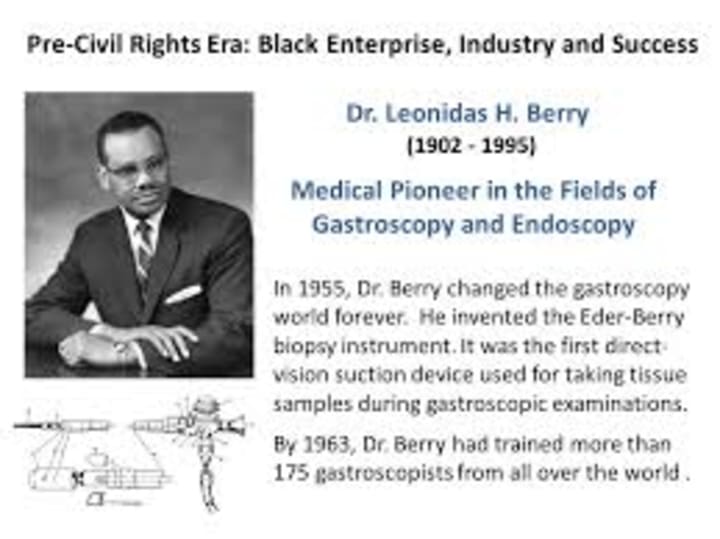
In the mid‑20th century, when medical technology was racing forward but gastrointestinal diagnostics still lagged behind, one physician‑inventor stepped into the spotlight with a series of innovations that would change the field forever. Dr. Leonidas Berry—a gastroenterologist, researcher, and trailblazing medical thinker—helped usher in a new era of minimally invasive diagnostic medicine. His contributions, notably the Eder‑Berry biopsy attachment, remain one of the most transformative milestones in endoscopic history.
In 1953, the Eder Instrument Company released the original Eder‑Palmer biopsy gastroscope, a flexible and promising device that allowed doctors to peer directly into the stomach. It was revolutionary for its time, yet it lacked one essential capability: the ability to retrieve tissue samples safely and reliably without open surgery. For physicians studying gastritis, ulcers, tumors, and various unexplained internal conditions, this limitation made the original device more observational than diagnostic.
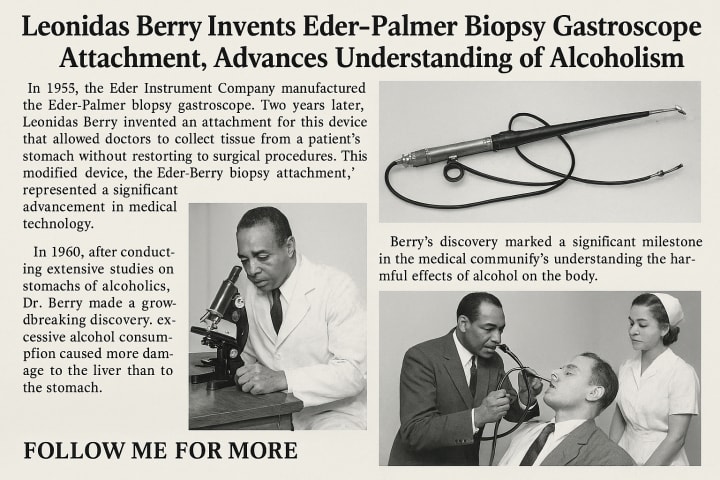
Then came Dr. Leonidas Berry.
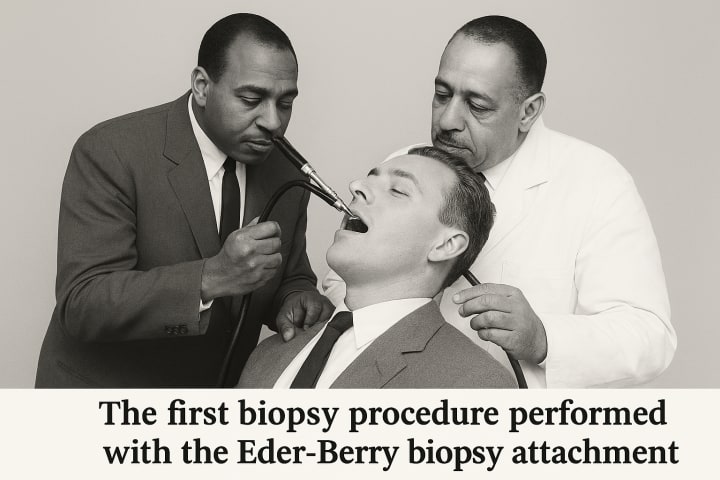
Just two years later, Berry designed a precision‑engineered attachment that augmented the capability of the gastroscope dramatically. This add‑on—later named the Eder‑Berry biopsy attachment—enabled doctors to collect actual tissue samples during the endoscopic procedure, eliminating the need for invasive surgical biopsies. By integrating delicate gripping mechanisms, improved maneuverability, and better visualization, Berry’s attachment gave physicians unprecedented access to internal anatomy with far less risk to patients.
The medical community recognized instantly that this was no minor extension. It was a leap forward.
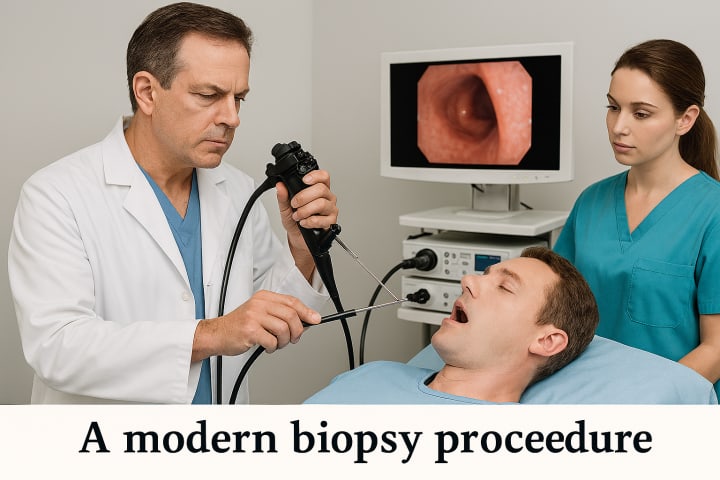
Doctors could now inspect, diagnose, and sample tissue within minutes, all without a surgical suite. Patients gained safer, faster, and more accurate care. Hospitals embraced the device. Researchers began collecting more data than ever before. The ripple effects spread across gastroenterology, oncology, and pathology.
This was only the beginning of Berry’s impact.
Throughout the 1950s, Dr. Berry continued his clinical work, focusing especially on the stomach and gastrointestinal damage among patients with chronic alcoholism. Alcohol abuse at that time was poorly understood medically, and research often focused on visible symptoms—gastric inflammation, ulcers, vomiting, and other stomach‑related complications. The prevailing assumption was that alcohol’s primary damage occurred in the digestive tract.
Berry challenged this assumption through a series of rigorous, methodical studies. By examining the internal condition of patients’ stomachs with his improved tools, he began to notice troubling discrepancies. While some alcoholics displayed significant gastric damage, many did not. Yet they suffered severe systemic symptoms, often unexplained by stomach pathology alone.
Berry’s research turned toward the liver.
In 1960, after years of clinical observation, biopsies, and comparative analysis, Dr. Berry made a discovery that would reshape the medical world’s understanding of alcoholism: alcohol causes far more long‑term damage to the liver than to the stomach.
This revelation shifted the entire medical framework for diagnosing, treating, and preventing alcohol‑related illness. It fueled deeper study into cirrhosis, fatty liver disease, and the metabolic pathways through which alcohol destroys hepatocytes. It also changed public‑health messaging and influenced generations of medical curricula.
By redirecting scientific attention to the liver as the primary target organ of chronic alcohol consumption, Dr. Berry pioneered a new era of research—one that continues to guide modern addiction medicine.
But Berry’s legacy extends beyond research papers and medical devices. He was a visionary who believed technology should serve people, not the other way around. He advocated for equitable patient care, better diagnostic tools, and stronger representation for Black physicians in American medicine. His groundbreaking device wasn’t just a scientific achievement; it was a symbol of his belief in continuous improvement, accessibility, and innovation.
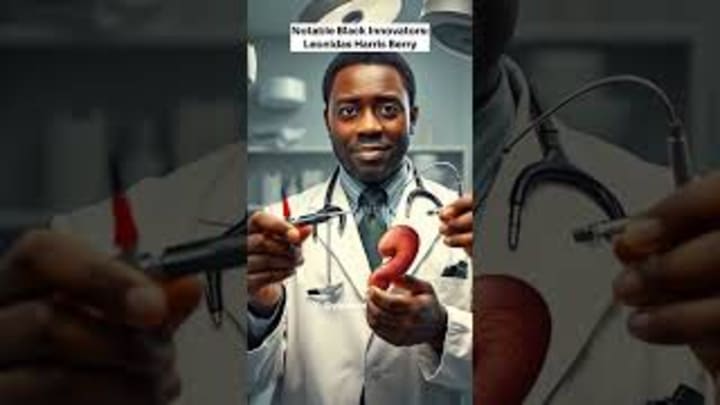
Today, the Eder‑Berry biopsy attachment stands as an early ancestor of modern endoscopic biopsy tools, and Berry’s alcohol‑related liver research paved the road for today’s hepatology.
His story is not just one of invention—but of persistence, curiosity, and a relentless pursuit of truth inside the human body.
Follow me for more and don't forget to check out my collection of ebooks here......
About the Creator
TREYTON SCOTT
Top 101 Black Inventors & African American’s Best Invention Ideas that Changed The World. This post lists the top 101 black inventors and African Americans’ best invention ideas that changed the world. Despite racial prejudice.
Keep reading
More stories from TREYTON SCOTT and writers in BookClub and other communities.
The Real McCoy
Byline: LEAVIE SCOTT Dateline: February 19, 2026 In the grand narrative of American innovation, certain names ring out like the steady cadence of a piston—powerful, rhythmic, indispensable. Elijah McCoy (1844–1929) is one of those names. His story travels the full length of a railroad line, from the distant signal of hope to the hard work of arriving at a destination. Born to parents who found freedom through the Underground Railroad and trained as a mechanical engineer in Scotland, McCoy returned to a United States still shackled by prejudice. Barred from opportunities his education should have guaranteed, he took a job as a railroad fireman—feeding the engine, monitoring gauges, and, crucially, oiling the moving parts that made those iron horses run.
By TREYTON SCOTTa day ago in BookClub
Self Help: Grifters' Gospel
On Self-Help, Snake Oil, and the Illusion of Change Psychology professionals and students can be imagined on two opposite sides of a line called self-help books: likely a larger group opposes pop-science and step-by-step manuals filled with talk of success, journaling, and not giving a f**k; others love them, but they aren’t many.
By Avocado Nunzella BSc (Psych) -- M.A.P 18 days ago in BookClub
Quotes From Pride & Prejudice
Valentine's Day has come and gone, but that doesn't mean we can't still relish in some romantic notions, no? Here are some of my favourite quotes that I pulled after rereading Pride & Prejudice at the end of last year/the beginning of this year - most of which will not be romantic in any sense. The pages come from The Annotated Pride & Prejudice, edited and annotated by David M. Shapard (the book is very long due to all the notes, and therefore pages may not line up with a more regular edition of the book). I've broken up some of the quotes into little sections for ease of reading.
By The Austen Shelf4 days ago in BookClub
Think for Me
"How do you calculate the circumference of a circle? Submit your answer when ready." [Pause] "Excellent! Every student was able to call up the answer electronically very quickly. If I, as a robot had feelings, I would express pride. You may break for lunch. Return to this cyber room in 45 minutes."
By Julie Lacksonen7 days ago in Humans


Comments
There are no comments for this story
Be the first to respond and start the conversation.