
Marjorie Stewart Joyner
Curls, Courage, and a Crown of Innovation
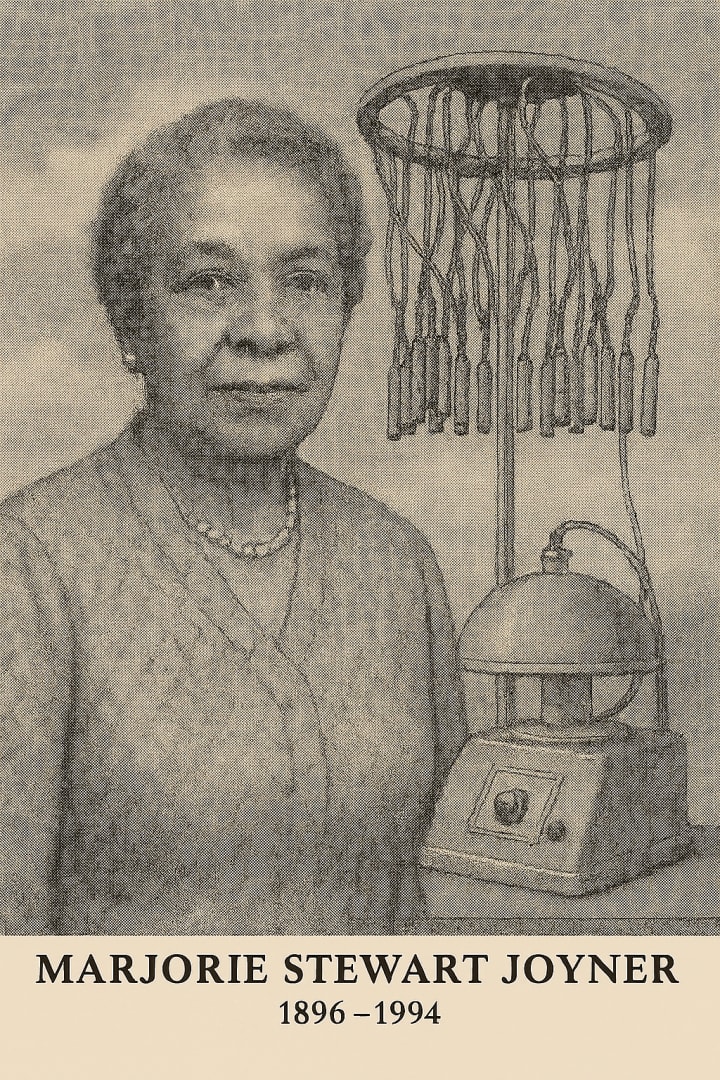
Marjorie Stewart Joyner: Curls, Courage, and a Crown of Innovation
An original narrative inspired by the life and legacy of Marjorie Stewart Joyner (1896–1994)
The way a woman wears her hair has always been more than style. It is language. It is identity. It is armor. It is freedom. And in the early decades of the 20th century, when America was shaped by segregation, migration, jazz, and the pulse of new ambition, the beauty salon became one of the few places where Black women could breathe without apology. Marjorie Stewart Joyner knew this truth in her bones long before she ever held a patent in her hands.
She entered the world in 1896, a year when opportunity for Black women was a locked door with few keys. But Marjorie had something rarer than opportunity—she had direction. The kind of direction that doesn’t shout, but hums like a tuning fork in the center of a person’s chest. Her mother noticed it early. Marjorie could sit still for hours, watching, studying, absorbing the ways women transformed themselves at the mirror until they glowed like they were walking toward a future they deserved.
That glow, that shift from ordinary to radiant, fascinated her. Not vanity—transformation. She understood, even then, that beauty was an act of defiance for women whose lives were shaped by limitation.
As a teenager, she followed that hum to beauty school. And not just any school—she chose the institution founded by the legendary Madame C. J. Walker, a titan of the beauty industry and a blueprint for Black entrepreneurship. At Walker’s school, Marjorie found more than education. She found purpose. She moved through the classrooms and practice stations with the determination of someone who recognized what doors were opening around her and refused to let them swing shut again.
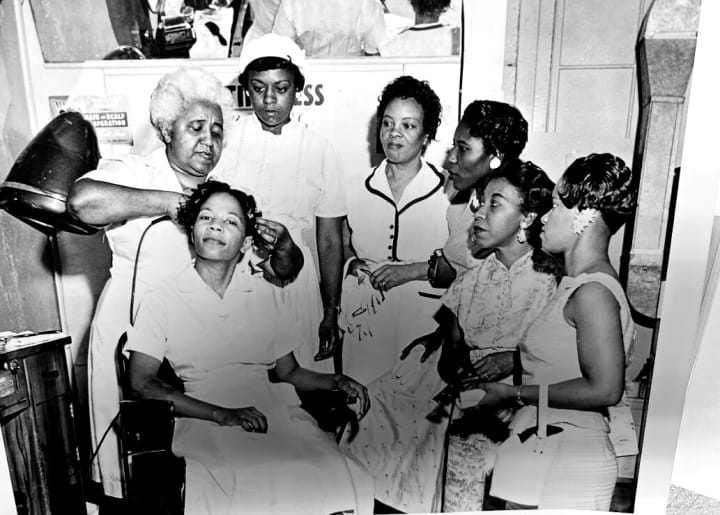
By her mid-twenties, she wasn’t simply a graduate—she was a leader. She supervised over 200 beauty schools within the Walker empire, ensuring standards, training, professionalism, and a level of excellence that shaped the entire industry. She traveled constantly, her days a ribbon of train rides, hotel rooms, and bustling classrooms filled with young Black women eager to master a trade that could buy them independence, dignity, and self-respect.
But while she taught, she also listened.
She listened to students whose hands cramped from the repetition of curling irons. She listened to customers who sat for hours while stylists curled each small section of hair one scorching strand at a time. She listened to women who wanted the grace of curls without the pain, the heat, the long hours. She listened until the problem began whispering solutions.
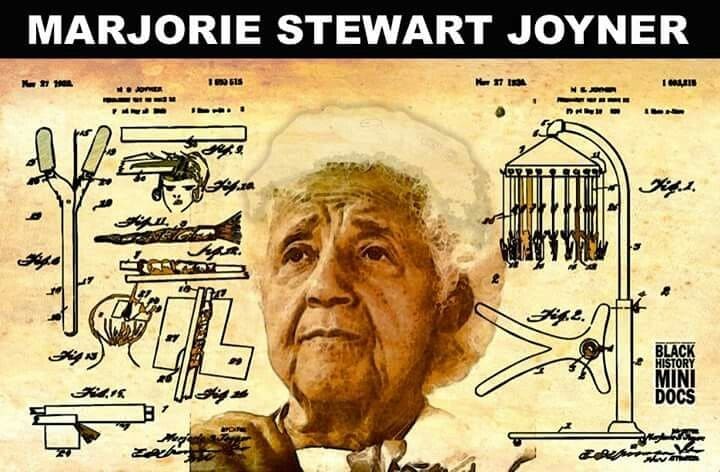
The permanent-waving machine—the invention that would carry her name into history—did not arrive in a thunderbolt. It grew quietly in her mind over months: the idea of curling multiple sections of hair at once, of maintaining even heat, of using chemistry and electricity together like dance partners rather than adversaries. She began sketching. She fiddled with rods, clamps, wires. She visited machinists. She took apart small appliances. She repurposed tools the way a jazz musician repurposes notes.
The final design looked, initially, like something from a science-fiction novel: a tall metal dome crowned with dangling metal rods, each attached to a cord that heated chemicals designed to restructure the hair. It resembled a crown—an accidental, yet fitting symbol for what she was giving to women.
Her permanent hair-waving machine changed everything. Before her invention, curling a full head of hair could devour half a day. With Joyner’s machine, a stylist could curl every segment at once—and do it safely, evenly, elegantly. Women who had never had access to professional-grade permanent waves could now enjoy long-lasting curls that seemed to float with a life of their own.
It wasn’t just a tool. It was a revolution on a stand.
Her clients included dazzlers—the kind of women whose names still carry the perfume of elegance: Ethel Waters, Marian Anderson, Billie Holiday. These were women whose voices changed rooms, whose presence rearranged the air. They trusted Marjorie. They trusted her hands, her eye, her engineering, and her artistry.
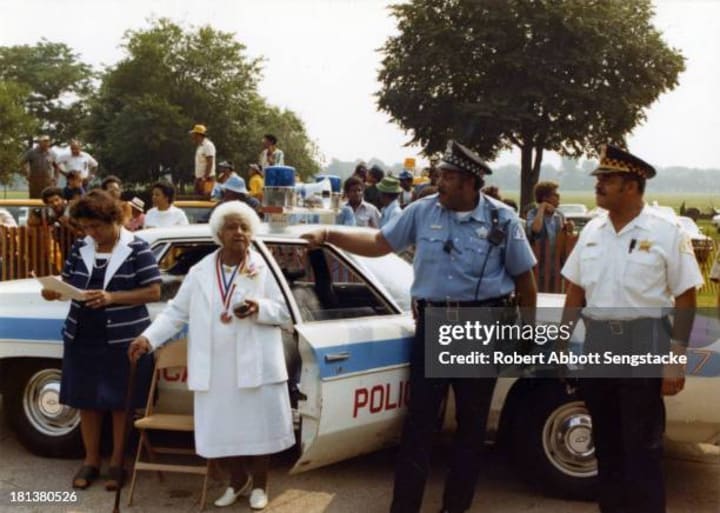
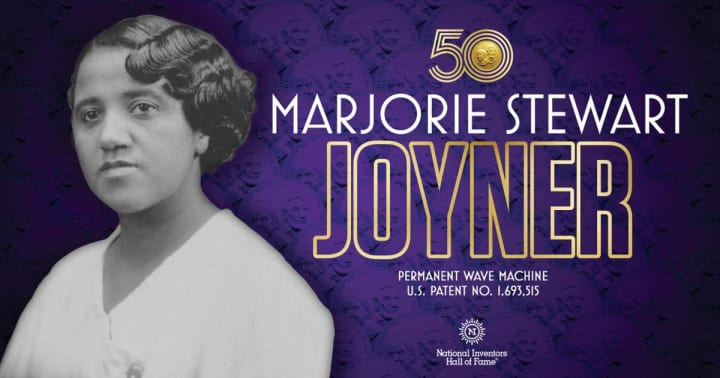
Yet the patent she held—issued in 1928—was bittersweet. Because she worked under Madame Walker’s umbrella, the rights to the invention legally belonged to the company. It was an old story: a brilliant Black woman whose genius was real, but whose financial share was limited by the structure of the world she lived in. Marjorie accepted it with grace, but she never allowed it to define her. The machine wasn’t the end of her creativity. It was the beginning.
Her mind was a loom—always weaving, always threading new possibilities. She later co-developed a portable salon tent, designed to help stylists maintain cleanliness and privacy. She wrote textbooks on cosmetology. She refined techniques. She standardized methods. She understood not only the science of hair, but the business of beauty.
And she knew beauty could not exist in isolation from justice.
Marjorie Stewart Joyner spent as much time fighting for community as she did fighting frizz. She wasn’t loud, but she was unwavering. She joined the National Council of Negro Women, working alongside visionary activists who were determined to create opportunity where the world insisted on scarcity. She organized charity drives, founded scholarship programs, and hosted meetings that nurtured young leaders who would go on to shape their own movements.
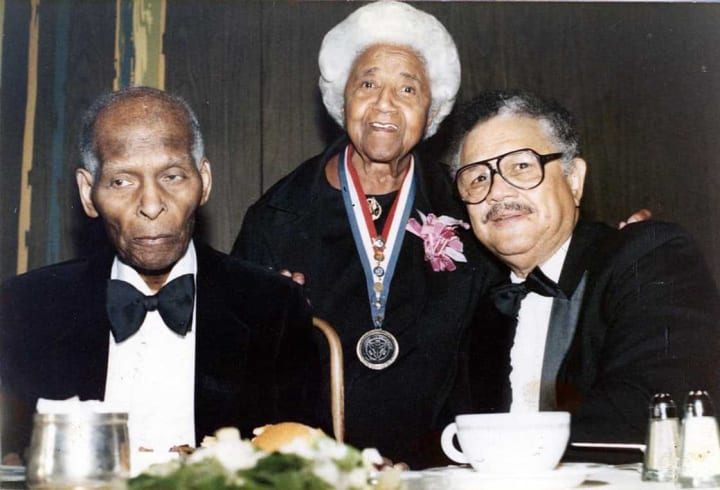
Those who met her rarely forgot her. She spoke with the presence of someone who carried both wisdom and warmth. Her hands were steady—stylist hands, capable hands—but her voice was soft, deliberate. She didn’t need volume. She had gravity.
Through the decades—through the Great Depression, through the civil rights era, through the dawn of the digital age—she remained committed to teaching women how to earn their own money, build their own businesses, and claim their own futures. She believed a beauty parlor was more than a service space; it was a sanctuary, a school, a community center, a launchpad.
She lived long enough to see hairstyles evolve, technologies come and go, and social expectations be rewritten. But the core truth she carried never changed:
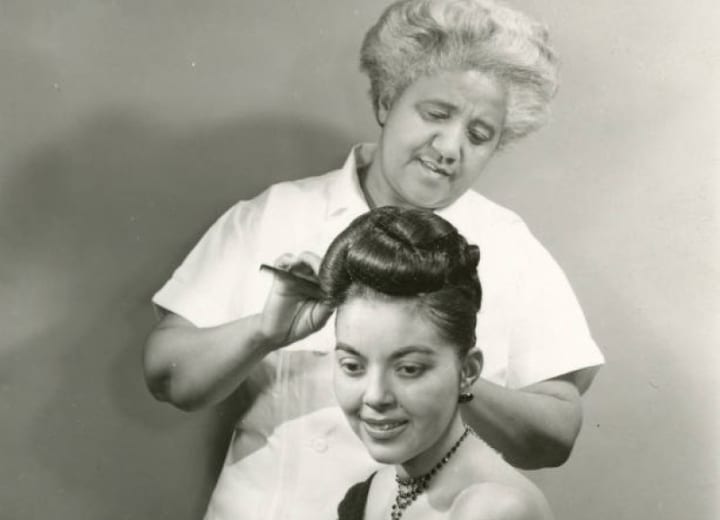
When a woman controls her image, she touches the edges of controlling her destiny.
Her permanent-waving machine helped millions of women feel confident, glamorous, and powerful. But her deeper legacy was the empowerment she extended beyond the curling chair.
Near the end of her life, when asked what she was proudest of, she didn’t mention the patent. She mentioned her students. The thousands upon thousands she had trained, encouraged, uplifted. Young women who walked into her classrooms with timid ambition and walked out with ironclad purpose.
Marjorie Stewart Joyner understood something simple and profound:
Invention isn’t just creating devices. Sometimes the invention is creating opportunity.
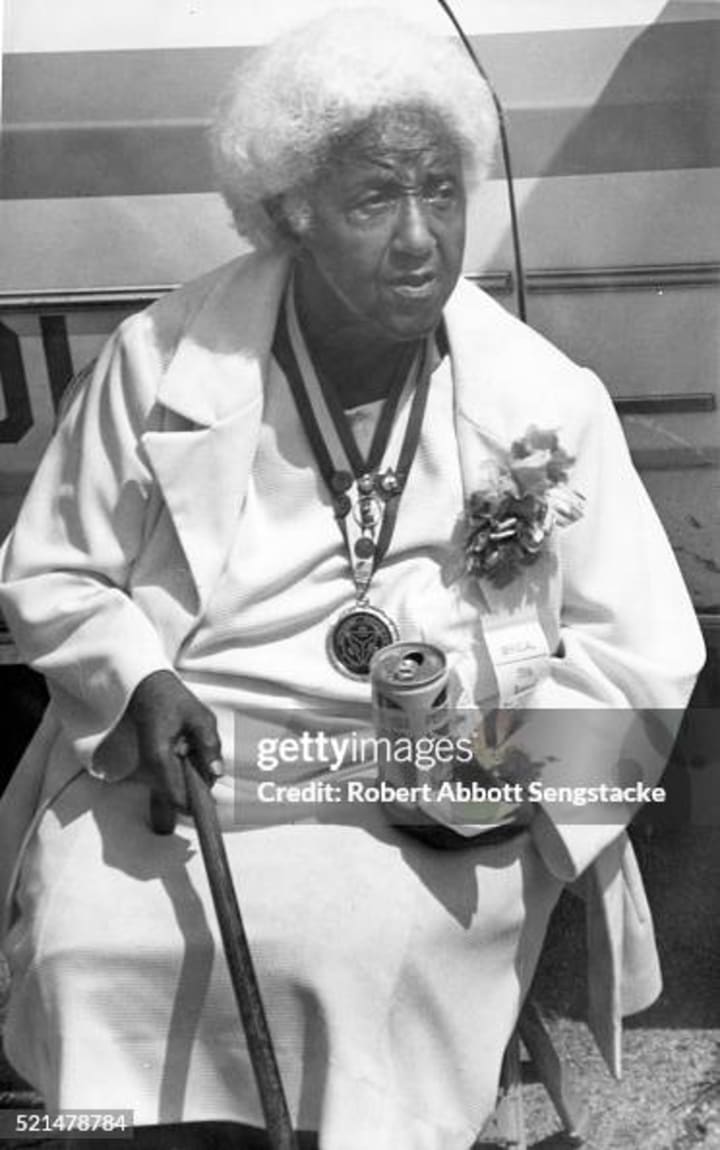
Her life was a circle of service woven into strands of creativity, business leadership, and civil rights work. She did not wait for the world to shift. She curled it, shaped it, and set it under her own crown of innovation.
And when she passed at 98 years old, she left behind more than a patent.
She left behind an industry transformed, a community strengthened, and generations of women who could move through life with their chins higher, their businesses stronger, and their curls—beautifully, defiantly—intact.
Your Call‑to‑Action (as requested):

About the Creator
TREYTON SCOTT
Top 101 Black Inventors & African American’s Best Invention Ideas that Changed The World. This post lists the top 101 black inventors and African Americans’ best invention ideas that changed the world. Despite racial prejudice.
Keep reading
More stories from TREYTON SCOTT and writers in Blush and other communities.
Frederick McKinley Jones
Frederick McKinley Jones (1893 – 1961) The train that carried Frederick McKinley Jones back to Hallock, Minnesota, after World War I rattled like a pocketful of bolts. Through the window, winter wheat lay flat against the prairie, and the sky stretched in a pale sheet to the horizon. He had a duffel bag, a head full of machine music, and the kind of hands that remembered how things fit together long after memory had given up the words.
By TREYTON SCOTTabout 14 hours ago in BookClub
Skincare Routine
A good skincare routine isn’t one-size-fits-all — it should be built around your unique skin type, concerns, and goals. With the skincare space constantly evolving, new ingredients and science-backed routines are reshaping how we approach skin health.
By Stories Today7 days ago in Blush




Comments
There are no comments for this story
Be the first to respond and start the conversation.