
They've Probably Been Untouched for 49 Million Years: The New Mexico Cave Expanding Our Search for Alien Life
How an ancient subterranean world in New Mexico is helping scientists rethink where life can exist beyond Earth

Subtitle
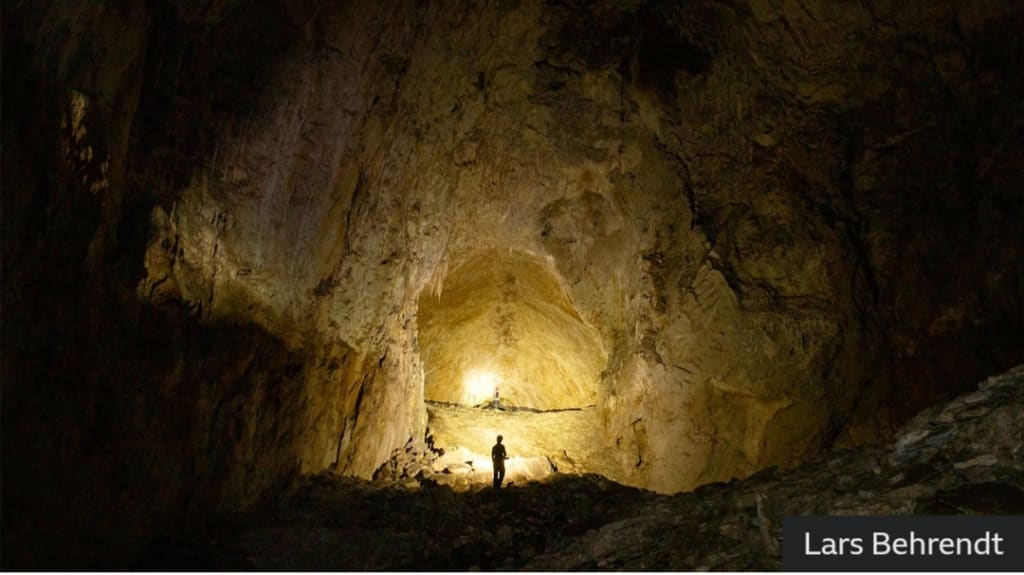
Deep beneath the arid landscape of New Mexico lies a cave system so ancient and isolated that scientists believe parts of it may not have been exposed to the surface world for nearly 49 million years. This extraordinary underground environment is not just a geological curiosity—it is rapidly becoming one of the most important natural laboratories on Earth for understanding how life might exist on other planets.
The cave, located within the Guadalupe Mountains region, has captured the attention of astrobiologists, geologists, and microbiologists alike. Its extreme isolation, chemical-rich waters, and lack of sunlight closely resemble environments thought to exist on Mars, Europa, and Enceladus—places long considered promising candidates in the search for extraterrestrial life.
A Window Into Deep Time
What makes this New Mexico cave remarkable is its age and stability. Researchers estimate that sections of the cave have remained sealed off from the surface since the late Eocene epoch, a time when early mammals were evolving and Earth’s climate looked vastly different. Over tens of millions of years, slow geological processes carved the cave, while mineral-rich groundwater shaped its chambers.
Unlike most caves formed by surface water seeping downward, this system was largely created by rising acidic fluids, meaning it developed independently of surface ecosystems. As a result, whatever life exists inside has evolved in near-total isolation, without sunlight and with minimal organic input from above.
Life Without Sunlight
In the absence of light, life in the cave depends on chemosynthesis, a process in which microbes derive energy from chemical reactions rather than photosynthesis. These microorganisms feed on compounds such as sulfur, iron, and methane dissolved in the cave’s waters.
This is where the astrobiological significance becomes clear. On planets and moons where sunlight cannot penetrate—such as beneath Mars’ surface or under the icy crust of Jupiter’s moon Europa—life, if it exists, would likely rely on similar chemical energy sources.
Scientists studying the cave have discovered microbial communities unlike any found on the surface, some of which may represent entirely new branches on the tree of life. These organisms survive in conditions once thought to be uninhabitable, redefining the boundaries of life itself.
A Natural Analog for Other Worlds
NASA and other space agencies are deeply interested in environments like this cave because they serve as planetary analogs—Earth locations that mimic conditions elsewhere in the solar system. The cave’s darkness, isolation, and chemical environment closely parallel what scientists expect to find underground on Mars or in the subsurface oceans of icy moons.
By studying how microbes survive and leave behind chemical or mineral traces, researchers can refine the tools and methods used to detect life beyond Earth. For example, understanding which biosignatures—chemical clues left by living organisms—persist over millions of years helps scientists design more effective instruments for future space missions.
Implications for Mars and Beyond
Mars, once home to flowing water, may still harbor liquid reservoirs beneath its surface. If microbial life ever arose there, it could have retreated underground as surface conditions became hostile. The New Mexico cave offers a powerful comparison, showing that life can persist for extraordinary lengths of time in sealed, subsurface environments.
Similarly, moons like Europa and Enceladus, which contain subsurface oceans heated by tidal forces, could support chemosynthetic life. The cave’s ecosystems help scientists model what such alien biospheres might look like—and how we might recognize them.
Protecting a Scientific Treasure
Because of its scientific value, access to the cave is tightly controlled. Researchers take extreme precautions to avoid contamination, as introducing surface microbes could permanently alter the pristine ecosystem. Every visit is carefully planned, underscoring how rare and fragile such untouched environments are.
This protection also highlights a broader ethical question in space exploration: if we discover life elsewhere, how do we study it without harming it? The cave serves as a reminder that exploration must be balanced with preservation.
Expanding the Definition of Habitability
Perhaps the most profound impact of the New Mexico cave is philosophical. For decades, the search for alien life focused on Earth-like conditions—sunlight, liquid water on the surface, and moderate temperatures. Discoveries in extreme environments like this cave are forcing scientists to broaden that view.
Life, it turns out, does not need comfort. It needs chemistry, energy, and time.
As researchers continue to explore this ancient subterranean world, each new discovery strengthens the idea that life in the universe may be far more common—and far more resilient—than once believed. A cave hidden beneath New Mexico’s desert may ultimately help answer one of humanity’s oldest questions: Are we alone?
By peering into a world untouched for nearly 49 million years, scientists are not just uncovering Earth’s past—they are illuminating the possibilities of life beyond our planet.
About the Creator
Keep reading
More stories from Salaar Jamali and writers in Beat and other communities.
The Moon Is Quietly Collecting Earth’s Escaping Air, Study Finds
For centuries, the Moon has been viewed as a silent companion to Earth—airless, lifeless, and largely unchanged. But new scientific research is challenging that long-held perception. According to recent studies, the Moon may be quietly collecting small amounts of Earth’s escaping atmosphere, creating an unexpected chemical connection between the two worlds. This discovery is reshaping how scientists understand atmospheric loss, planetary evolution, and the long-term relationship between Earth and its closest neighbor in space.
By Salaar Jamaliabout 17 hours ago in Beat
How ISO 9001 Certification in Dubai Helps Companies Win Long-Term Clients
Dubai’s B2B market moves fast. New companies enter every year, and clients compare options more carefully than before. Price still matters, but it rarely decides everything. Clients want reliability. They want suppliers who deliver the same level of quality today, next month, and next year.
By Umar Quality Jounal4 days ago in Beat
Cabin Fever Because of Snow, Sleet, and Freezing Rain That Turned to Icy Roads
What Is Cabin Fever? The short answer is that cabin fever is restlessness from being in a confined area. Cabin fever is the distressing irritability or restlessness experienced when a person or group is stuck at an isolated location or in confined quarters for an extended time. Research shows that prolonged cold, gray skies, and being stuck indoors can trigger mood shifts similar to “winter blues.”
By Margaret Minnicks2 days ago in Humans




Comments
There are no comments for this story
Be the first to respond and start the conversation.