70s music
The 1970s were all about sex, drugs and rock and roll; Beat welcomes you to our Disco Inferno.
2007 the year the Osbournes had made Ozzfest free!
A lovely time for me In 2007 Ozzy and Sharon had decided to Ozzfest free and it was fantastic! That was the year that I had gone to Ozzfest it was my once in a lifetime chance to get to see Ozzy in concert. I am glad I could go.
By Revista Mikoabout 8 hours ago in Beat
Andreas Szakcs Productions Officially Begins Production on New Project
Andreas Szakcs Productions has officially entered production on its latest project, marking an exciting and ambitious new chapter for the studio. Known for its striking visual storytelling, meticulous craftsmanship, and commitment to high production standards, the company is poised to deliver a project that promises to engage audiences both emotionally and visually.
By Andreas Szakacsabout 11 hours ago in Beat
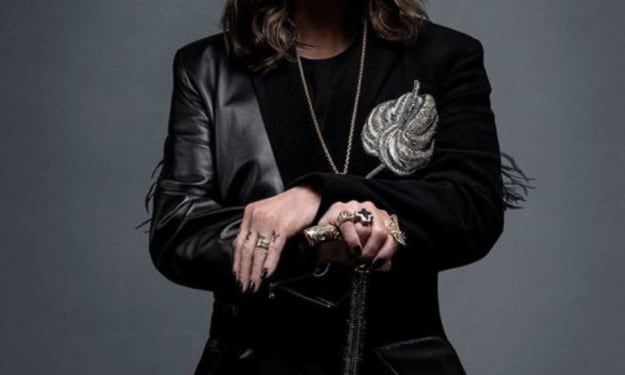
Long Live the true King of Rock n Roll Mr. Ozzy Osbourne!!
To Ozzy Osbourne From Rikki La Rouge IT IS SHOCKING AND SADENING I HOPED THAT OZZY OSBOURNE WOULD LIVE FOREVER. HE WAS IMMORTAL, A GOD AMONGST MEN. OZZY WAS BORN IN BIRMINGHAM, ENGLAND AND HE TOOK HIS FINAL BREATH IN THE TOWN OF HIS BIRTH. I LIKE TO POUR A LITTLE OF THE ALCOHOLIC BEVERAGE I DRINK UP WHEN A STAR WHO MEANS SOMETHING TO ME IN THEIR HONOR AND IT WAS NO DIFFERENT FOR THE PRINCE OF DARKNESS HIMSELF OZZY OSBOURNE! OZZY AND RANDY RHODES ARE UNITED IN ROCK N ROLL HEAVEN. MY HEART 🖤 GOES OUT TO OZZY AND HIS FAMILY, I CANNOT BELIEVE I AM WRITING THIS TRIBUTE TO OZZY HE SHOULD STILL BE HERE.
By Revista Mikoabout 22 hours ago in Beat
The Battle for Ozzfest
The Battle for Ozzfest was a brainchild of Ozzy and Sharon and MTV. The idea of the show was it was a competition show where Metal bands from around the country as well as the world who were chosen to compete in games and challenges and the ultimate prize was the winning band would get a spot on the MainStage at Ozzfest.
By Revista Mikoabout 23 hours ago in Beat
This Old Heart of Mine
Sir Rod Stewart is a legendary British singer, songwriter, musician, and producer. He began his musical career in the 1960s singing in music groups before beginning his solo career. The singer is known for his raspy singing voice and has become one of the best-selling artists of all time.
By Rasma Raisters11 days ago in Beat
Songs For The Orange One. Content Warning.
Introduction After the thirty-four guilty verdicts for the mendacious misogynist and habitual bankrupt and cheat and thought I put together a short playlist for the occasion, with some notes on the songs and their sources.
By Mike Singleton 💜 Mikeydred 12 days ago in Beat
Tears on the Witness Stand: When Prince Harry’s Case Became a Performance
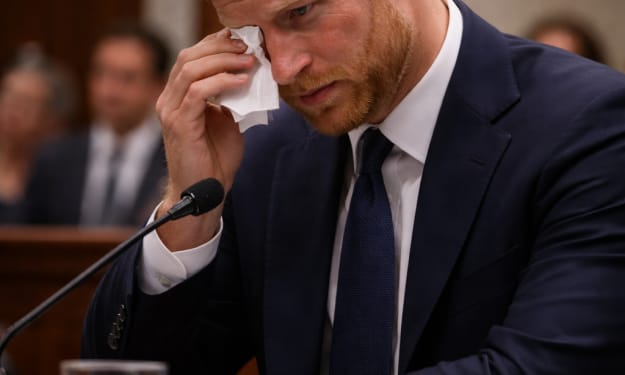
In a courtroom designed for evidence, not emotion, Prince Harry delivered something closer to a monologue than a testimony. What was meant to be a decisive moment in his legal battle against a major British newspaper publisher instead unfolded as a study in contradiction, frustration, and theatrical vulnerability—leaving legal observers questioning whether the Duke of Sussex strengthened his case or quietly undermined it. At the heart of the lawsuit lies a serious allegation: that elements of the British press engaged in illegal information-gathering practices, including phone hacking, deception, and the use of private investigators. Harry has positioned himself as both plaintiff and symbol, a man standing not just for personal justice but for the principle that public figures deserve privacy. Yet under cross-examination, the clarity of that mission blurred. Throughout the day, the Duke presented himself as a lifelong victim of relentless media intrusion, someone whose private life had been treated as open territory for commercial exploitation. “I fundamentally reject the idea that my life is public property,” he insisted, framing his case as a moral stand against an industry he believes thrives on intrusion disguised as public interest. But the defense methodically chipped away at this narrative. The most damaging moment came with the discussion of a pseudonymous Facebook account—“Mr. Mischief”—used in 2016 to contact a journalist. Initially, Harry denied any involvement. Then he suggested the account might have been created by someone else. Finally, he conceded that he may have used the alias himself. The shifting explanations were stark, and in a courtroom, inconsistency is costly. What this moment revealed was not merely a lapse in memory, but a deeper tension in Harry’s argument. He portrays himself as a passive target of media manipulation, yet evidence suggested a willingness—at least at times—to engage with the press on his own terms. The image of a prince entirely besieged by journalists gave way to something more complicated: a man simultaneously resentful of media attention and capable of seeking it out. As the questioning continued, Harry’s demeanor fluctuated dramatically. At moments, he was defiant, even argumentative, challenging assumptions and lecturing the court on the failures of British journalism. At others, he appeared fragile, visibly strained by the weight of past experiences. He spoke at length, and with striking emotion, about former relationships, particularly the distress faced by an ex-girlfriend under intense media scrutiny. His recollections were vivid, detailed, and deeply personal. By contrast, references to his wife were brief and procedural—until the very end. In what became the defining moment of the day, Harry’s composure finally broke. Speaking of the impact of press coverage on his wife, his voice faltered. He paused, reached for water, and struggled to continue. Tears followed. It was raw, unrestrained, and undeniably human. Yet in the context of a legal proceeding, the moment raised uncomfortable questions. Why had the most detailed emotional testimony been reserved for past relationships, while his wife’s suffering emerged only as a climactic declaration? Why did this emotional crescendo arrive after hours of damaging contradictions? To legal analysts, the breakdown risked appearing less like spontaneous grief and more like a strategic pivot—from facts to feeling. The defense seized on this perception. They argued that Harry has built a lucrative second career on publicly narrating his pain through memoirs, documentaries, and interviews. In their framing, this lawsuit is not a rejection of exposure, but another iteration of it. The courtroom, they suggested, had become yet another stage. This paradox sits at the core of Harry’s struggle. He condemns the commercialization of his private life while simultaneously profiting from its disclosure. He seeks privacy through the most public mechanisms available. His tears, however genuine, exist in the same economy of attention as the stories he denounces. None of this negates the possibility that press misconduct occurred. The case will ultimately turn on evidence, statutes, and legal precedent—not emotion. But in the court of public opinion, optics matter. And the image Harry left behind was fractured: a man torn between righteous anger and unresolved grief, between moral crusader and media participant, between authority and vulnerability. As he stepped down from the witness stand, visibly drained, the question lingered. Did Prince Harry expose a corrupt system—or did he expose the limits of his own narrative? In seeking to condemn the press for turning his life into spectacle, he may have proven just how difficult it is to escape a role once the spotlight is on. The law will decide the case. But the performance has already left its mark.
By Behind the Curtain13 days ago in Beat
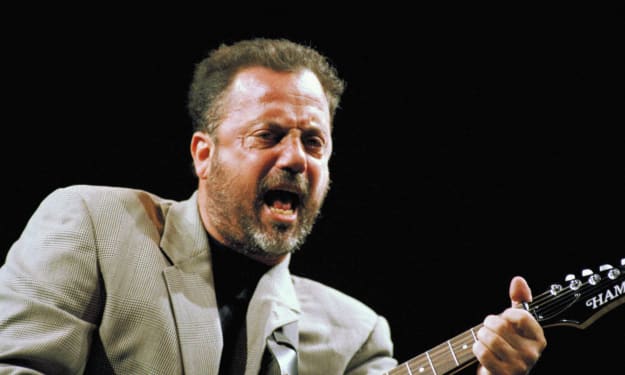
You May Be Right
For Billy Joel, it all began with “Piano Man.” The song was written and recorded by the American singer and songwriter Billy Joel. It is featured on his 1973 album of the same name. The song is based on his real-life experiences as a lounge musician in Los Angeles, California. The song became his first major hit and signature song. In 2013 it was inducted into the Grammy Hall of Fame.
By Rasma Raisters22 days ago in Beat