Behind the Curtain
Bio
"Exploring the untold stories and hidden truths. From royal rumors to cultural deep dives, Behind the Curtain brings you bold, insightful narratives that spark curiosity and conversation."
Stories (57)
Filter by community
The Rift Behind the Palace Smile
Behind the polished smiles, glittering gowns, and carefully choreographed royal appearances, a quieter and more complicated story was unfolding. To the world, Kate Middleton and Meghan Markle represented modern royalty: intelligent, elegant, and destined to reshape the future of the British monarchy together. But behind palace walls, the reality was far less harmonious. It began not with shouting matches or public scandals, but with small moments—glances, silences, and subtle discomforts that slowly grew into something impossible to ignore. One of the earliest cracks appeared during the Royal Foundation Forum in 2018. The event was meant to showcase unity between Prince William, Kate, Prince Harry, and Meghan. Cameras captured smiles and friendly conversation. But backstage, tension filled the air. As Meghan prepared for the stage, she casually asked Kate if she could borrow her lip gloss. It was an ordinary request, the kind women make without thinking. Yet Kate hesitated. According to Prince Harry’s later account, Kate looked uncomfortable—almost startled—before reluctantly handing it over. It was a tiny moment, but it spoke volumes. To Meghan, the hesitation felt cold. To Kate, the request felt intrusive. Two women, standing only feet apart, were already operating by completely different emotional rules. Kate had spent nearly a decade learning how to survive inside the royal system. She understood restraint. She believed in caution. Every gesture, every word, every expression was carefully controlled. Meghan came from a world where openness was power. Hollywood had taught her to speak freely, to connect emotionally, and to command attention. She was confident, expressive, and unafraid of being seen. Neither approach was wrong. But together, they collided. At the forum, the contrast became obvious. Meghan spoke passionately, effortlessly engaging the audience. She appeared polished, confident, and natural on stage. Kate, pregnant and exhausted, spoke more quietly and cautiously, following the traditional royal style. Headlines soon praised Meghan’s performance. Some even suggested she had “stolen the show.” For Kate, who had spent years patiently earning her place, it felt unsettling. Behind the scenes, another comment worsened the situation. Meghan reportedly joked about Kate having “baby brain” during her pregnancy. Meghan may have intended it lightly, but Kate was suffering from severe pregnancy sickness and was physically struggling every day. The remark cut deep. Soon, the four royals sat down for a tense private meeting. Emotions were high. No one yelled. No one exploded. But nothing was truly resolved either. They left knowing one truth: coexistence was necessary, but closeness might never be possible. Then came the wedding. In the days before Meghan and Harry’s ceremony, a disagreement broke out over Princess Charlotte’s bridesmaid dress. Rumors spread quickly that Meghan had made Kate cry. Meghan was labeled difficult, demanding, and cruel. Years later, Harry revealed the opposite: Meghan had been the one in tears. According to Harry, Kate insisted the dress needed to be remade entirely. Meghan, overwhelmed by wedding stress and family chaos, felt pushed too far. The argument ended with Meghan crying alone. Kate later arrived with flowers and apologized. The truth, as always, likely exists somewhere in the middle. But the damage was done. When Meghan publicly addressed the issue during her interview with Oprah Winfrey, she stated clearly: “The reverse happened.” With those three words, a silent war became public. Kate remained quiet, bound by royal tradition. Meghan spoke openly, determined to reclaim her narrative. William stood firmly by his wife. Harry stood firmly by his. Two brothers who once shared everything now stood on opposite sides of a widening divide. What makes this story tragic is not who was right or wrong. It is what was lost. Two women who could have been allies became symbols of rivalry. Two brothers who once walked side by side became strangers. A family built on tradition proved unable to adapt to change without breaking. The lip gloss, the dress, the comments—none of them truly mattered. What mattered was the clash of two worlds: Silence versus expression. Tradition versus transformation. Endurance versus reinvention. And once those forces collided, there was no turning back. The palace remained standing. But the fairy tale did not.
By Behind the Curtainabout 8 hours ago in Petlife
Living in the In-Between: What My ADHD Feels Like
I didn’t wake up one morning and think, Today is the day I realize my brain works differently. It happened in pieces. Small, quiet realizations that stacked on top of each other like unread notifications. It started with an alarm. Not because I didn’t hear it. Not because I slept through it. I heard it. I looked at it. I thought about getting up. Then I stared at the ceiling wondering if cereal or eggs would take longer. Then I wondered if I still had eggs. Then I remembered I never washed the pan from yesterday. Then I checked my phone “for a second” and somehow twenty minutes disappeared. My body stayed in bed. My mind went on ten different field trips. That’s when I started to suspect something wasn’t just laziness. I tell myself every day: Today I will be productive. Not in a grand, inspirational way. Just simple goals. Shower. Answer two emails. Eat real food. Fold laundry. Four tasks. That’s it. Yet somehow, I start by organizing my sock drawer. Why? Because I went to grab a shirt. Noticed socks on the floor. Sat down to pick them up. Found a pen. Wondered where that pen came from. Started looking for its matching notebook. Ended up sitting on the floor scrolling through my phone. Still wearing yesterday’s clothes. Still hungry. Still no emails answered. But wow… my socks look amazing. People say, “Just focus.” I wish they knew how funny that sounds. I want to focus. I crave focus. My brain, however, treats focus like a cat treats commands. Sometimes it listens. Sometimes it stares at me and knocks everything off the table. There are moments when my brain becomes a laser. I write for three hours without blinking. I clean my entire kitchen in one burst. I solve problems quickly. I feel unstoppable. Then suddenly… it’s gone. Like someone unplugged my motivation without warning. I don’t know when it will come back. I don’t know how to turn it on. I just sit there, frozen between wanting to move and not moving at all. It feels like being stuck at a green light while everyone behind you honks. Grocery stores are my personal obstacle course. I walk in with a list. Milk. Bread. Rice. That’s all. Ten minutes later I’m holding candles, gum, a notebook, and a plant I absolutely do not need. Why do I own so many notebooks? Because I believe each one will magically turn me into a new, organized person. It never does. I leave the store with everything except bread. Every. Single. Time. Conversations are another adventure. I try so hard to listen. I really do. But my brain starts building side quests. Someone says, “Yesterday I went to the mall.” My brain says: Oh yeah, I need socks. Did I pay my phone bill? I should drink more water. I wonder if penguins have knees. Suddenly they ask, “What do you think?” I panic-smile. “Yeah… totally.” I have no idea what they just said. Growing up, I thought I was broken. Teachers wrote: “Smart but careless.” “Needs to try harder.” “Daydreams too much.” I believed them. I thought everyone else had a manual for life that I somehow lost. Why could others sit and study for hours? Why could others remember homework? Why did simple things feel heavy? No one explained that my brain wasn’t lazy. It was wired differently. ADHD isn’t just distraction. It’s emotional, too. I feel things loudly. Excitement becomes obsession. Small rejection feels enormous. Criticism echoes for days. At the same time, I can forget entire conversations. Not because I don’t care. Because my brain misfiles information like a messy computer. People assume forgetting equals not caring. That hurts. I care deeply. Sometimes too deeply. The day I learned about ADHD, something shifted. Not everything became easy. But everything made sense. I wasn’t stupid. I wasn’t lazy. I wasn’t broken. I was different. Different with strengths. Different with challenges. Different with a brain that moves fast and zigzags. Now I build my life differently. I write things down immediately. I use alarms for everything. I break tasks into tiny pieces. Not: “Clean the house.” But: Pick up clothes. Wipe table. Wash three dishes. Three dishes is better than zero. Progress doesn’t have to be perfect. Some days are still hard. Some days I scroll instead of start. Some days I forget important things. Some days I feel behind everyone else. But I remind myself: I am running a different race. And I am still running. Living with ADHD feels like living in the in-between. Between chaos and creativity. Between exhaustion and inspiration. Between struggling and shining. It’s messy. It’s frustrating. It’s also full of imagination, curiosity, empathy, and ideas. So many ideas. I’m learning to stop asking: “What’s wrong with me?” And start asking: “How does my brain work best?” That question changes everything. I am not a failure. I am not broken. I am a human with a fast, noisy, beautiful mind. And I’m still figuring it out. One unfinished to-do list at a time.
By Behind the Curtain5 days ago in Horror
Buying the Spotlight: The Sussexes’ Sundance Moment and the Art of Staying Visible
When Meghan Markle and Prince Harry arrived at the Sundance Film Festival in late January, the moment was presented as casual, supportive, and low-key. The couple attended a screening of a small documentary about young Girl Scouts learning life lessons through cookie sales—a wholesome and inspiring concept. On paper, it sounded simple: two well-known figures showing up to champion a feel-good project. In practice, however, the appearance felt anything but simple. For years, critics have argued that the Duke and Duchess of Sussex are less focused on creating original work and more focused on attaching themselves to projects that already exist. Sundance seemed to reinforce that narrative. Rather than developing the documentary from its earliest stages, the couple reportedly joined later as executive producers, adding their names and financial backing once the film was already completed. To supporters, this is smart investing. To skeptics, it looks like a familiar shortcut: wait until a project is polished, step in with funding, and collect both credit and access. Either way, the outcome was the same. Harry and Meghan secured an invitation to one of the most prestigious film festivals in the world—along with the red-carpet photos that inevitably follow. And photos, once again, became the main event. Prince Harry’s outfit drew mild amusement online. A puffer vest, casual clogs, and relaxed styling gave off the energy of someone headed to a tech meetup rather than a major cultural festival. Meghan opted for a pared-down look: jeans, a black top, minimal jewelry, and understated makeup. Many observers noted that this was one of her most restrained fashion choices in recent memory, a sharp contrast to some of her more heavily styled public appearances. The simplicity felt intentional. In recent years, Meghan’s image has increasingly leaned toward “effortless relatability.” Casual denim and neutral tones communicate approachability, even when worn by someone who lives a life far removed from ordinary experience. It is a familiar celebrity tactic: look normal, appear accessible, and let the optics suggest humility. Body language, however, told a more complicated story. Photographs from the event showed Harry appearing relaxed beside other attendees, including the filmmaker’s family. Meghan, meanwhile, was frequently positioned close to the center of the frame, smiling broadly, leaning in, and maintaining strong visual presence. To critics, it looked less like a quiet supportive role and more like a carefully managed photo opportunity. This contrast reignited an ongoing debate about authenticity. Only days earlier, Prince Harry had been in a London courtroom describing the emotional toll of press intrusion and arguing that relentless media coverage had deeply harmed him and his loved ones. Yet in Utah, he appeared comfortable posing for photographers and participating in festival publicity. For many observers, the contradiction was difficult to ignore. If press attention is traumatizing, why actively seek it? Supporters might argue that controlled publicity is different from invasive tabloid behavior. Critics counter that the distinction grows thin when high-profile appearances are carefully staged and widely circulated. The underlying tension remains: Harry condemns the media machine while continuing to rely on it to maintain relevance. Timing also raised eyebrows. While the Sussexes were attending screenings and mingling with industry insiders, major global issues dominated headlines elsewhere. This disconnect fueled accusations of tone-deafness, a criticism the couple has faced repeatedly. Their brand emphasizes compassion, activism, and global awareness, yet moments like Sundance often come across as more focused on celebrity networking than substantive impact. The documentary itself—centered on young girls navigating ambition, teamwork, and growth—received positive reactions. Ironically, many viewers felt that the girls featured in the film came across as more genuine and naturally engaging than the famous adults attached to the project. Their unpolished sincerity contrasted sharply with the polished public personas surrounding the screening. Another layer of criticism centered on comparisons between Meghan and Princess Catherine. Observers noted similarities in Meghan’s understated outfit and calm demeanor, interpreting it as an attempt to project a “supportive royal spouse” image. Whether intentional or not, the comparison highlights an ongoing struggle: Meghan’s public image is often perceived as strategic rather than instinctive. Charisma, critics argue, cannot be manufactured. Over time, a consistent pattern has emerged in how the Sussexes operate in Hollywood. Instead of building long-term creative pipelines, they tend to align themselves with existing projects, attach executive producer credits, and leverage the association for visibility. It is not inherently wrong—many celebrities do the same—but it clashes with their frequent claims of wanting to move away from superficial fame. Sundance, then, felt less like a milestone in creative achievement and more like a reminder of their current position in the entertainment ecosystem. They are no longer working royals. They are not fully established Hollywood power players. They exist somewhere in between—famous enough to draw attention, yet still searching for a defining success. For one snowy weekend in Utah, the strategy worked. They got headlines. They got photos. They reminded the world they are still here. But the larger question remains unresolved. Are Meghan and Harry building something meaningful, or simply buying moments that simulate relevance? The Sundance appearance did not provide a definitive answer. Instead, it reinforced a growing perception that their public life is driven less by creative vision and more by calculated visibility. In an era where attention is currency, the Sussexes continue to spend generously. Whether that investment will ever translate into lasting influence—or merely temporary headlines—remains to be seen.
By Behind the Curtain7 days ago in Writers
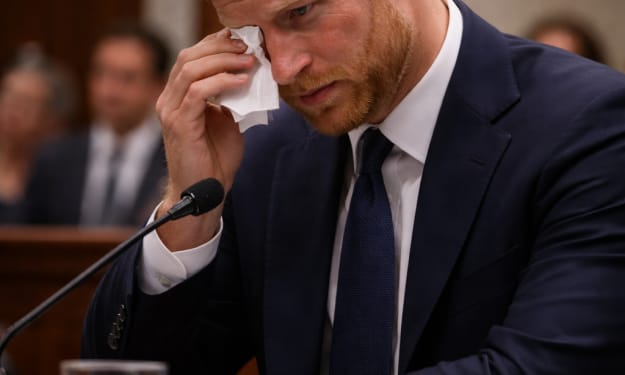
Tears on the Witness Stand: When Prince Harry’s Case Became a Performance
In a courtroom designed for evidence, not emotion, Prince Harry delivered something closer to a monologue than a testimony. What was meant to be a decisive moment in his legal battle against a major British newspaper publisher instead unfolded as a study in contradiction, frustration, and theatrical vulnerability—leaving legal observers questioning whether the Duke of Sussex strengthened his case or quietly undermined it. At the heart of the lawsuit lies a serious allegation: that elements of the British press engaged in illegal information-gathering practices, including phone hacking, deception, and the use of private investigators. Harry has positioned himself as both plaintiff and symbol, a man standing not just for personal justice but for the principle that public figures deserve privacy. Yet under cross-examination, the clarity of that mission blurred. Throughout the day, the Duke presented himself as a lifelong victim of relentless media intrusion, someone whose private life had been treated as open territory for commercial exploitation. “I fundamentally reject the idea that my life is public property,” he insisted, framing his case as a moral stand against an industry he believes thrives on intrusion disguised as public interest. But the defense methodically chipped away at this narrative. The most damaging moment came with the discussion of a pseudonymous Facebook account—“Mr. Mischief”—used in 2016 to contact a journalist. Initially, Harry denied any involvement. Then he suggested the account might have been created by someone else. Finally, he conceded that he may have used the alias himself. The shifting explanations were stark, and in a courtroom, inconsistency is costly. What this moment revealed was not merely a lapse in memory, but a deeper tension in Harry’s argument. He portrays himself as a passive target of media manipulation, yet evidence suggested a willingness—at least at times—to engage with the press on his own terms. The image of a prince entirely besieged by journalists gave way to something more complicated: a man simultaneously resentful of media attention and capable of seeking it out. As the questioning continued, Harry’s demeanor fluctuated dramatically. At moments, he was defiant, even argumentative, challenging assumptions and lecturing the court on the failures of British journalism. At others, he appeared fragile, visibly strained by the weight of past experiences. He spoke at length, and with striking emotion, about former relationships, particularly the distress faced by an ex-girlfriend under intense media scrutiny. His recollections were vivid, detailed, and deeply personal. By contrast, references to his wife were brief and procedural—until the very end. In what became the defining moment of the day, Harry’s composure finally broke. Speaking of the impact of press coverage on his wife, his voice faltered. He paused, reached for water, and struggled to continue. Tears followed. It was raw, unrestrained, and undeniably human. Yet in the context of a legal proceeding, the moment raised uncomfortable questions. Why had the most detailed emotional testimony been reserved for past relationships, while his wife’s suffering emerged only as a climactic declaration? Why did this emotional crescendo arrive after hours of damaging contradictions? To legal analysts, the breakdown risked appearing less like spontaneous grief and more like a strategic pivot—from facts to feeling. The defense seized on this perception. They argued that Harry has built a lucrative second career on publicly narrating his pain through memoirs, documentaries, and interviews. In their framing, this lawsuit is not a rejection of exposure, but another iteration of it. The courtroom, they suggested, had become yet another stage. This paradox sits at the core of Harry’s struggle. He condemns the commercialization of his private life while simultaneously profiting from its disclosure. He seeks privacy through the most public mechanisms available. His tears, however genuine, exist in the same economy of attention as the stories he denounces. None of this negates the possibility that press misconduct occurred. The case will ultimately turn on evidence, statutes, and legal precedent—not emotion. But in the court of public opinion, optics matter. And the image Harry left behind was fractured: a man torn between righteous anger and unresolved grief, between moral crusader and media participant, between authority and vulnerability. As he stepped down from the witness stand, visibly drained, the question lingered. Did Prince Harry expose a corrupt system—or did he expose the limits of his own narrative? In seeking to condemn the press for turning his life into spectacle, he may have proven just how difficult it is to escape a role once the spotlight is on. The law will decide the case. But the performance has already left its mark.
By Behind the Curtain10 days ago in Beat
Under the Spotlight: A Hollywood Love That Burned Bright and Faded Fast
In Hollywood, love stories often unfold like films: intense, glamorous, and watched by millions, only to end in ways no one expects. The recent marriage of music producer Benny Blanco and pop icon Selena Gomez is a prime example of this modern celebrity tale—a union celebrated with fanfare but quietly strained from the beginning. The couple’s whirlwind romance captivated public attention from the start. After a short courtship, they tied the knot in a lavish, star-studded ceremony that reflected their enormous status in the music industry. A-list friends attended, cameras flashed, and the world seemed to cheer on a fairytale love. Fans eagerly followed every interview, every appearance, and every social media post, analyzing the dynamic between the two stars. However, behind the glimmering facade, sources close to the couple reveal that reality was more complicated. While the marriage began with creative energy and intense passion, the daily realities of merging two independent lives under constant public scrutiny proved challenging. Both Blanco and Gomez have demanding careers, loyal fanbases, and personal histories that required space and attention. According to insiders, their expectations often clashed, leading to repeated arguments and long stretches of silent tension. Publicly, subtle signs hinted at these struggles. Observers noted forced smiles at events, physical distance in photographs, and a lack of spontaneous gestures of affection. Social media fans quickly picked up on these cues, analyzing videos and interviews for evidence of emotional distance. Small comments and interactions were dissected frame by frame. Some fans even interpreted Blanco’s playful remarks as a subtle assertion of power, portraying Gomez as overly eager while he remained detached. The couple reportedly made a concerted effort to maintain appearances. They attended high-profile events together, showing a united front despite growing personal tension. PR advisors encouraged them to continue this image to protect their brands. They were also in counseling, attempting to salvage their marriage privately. But despite these efforts, sources indicate that the emotional connection had significantly eroded. Blanco, in particular, reportedly struggled with the sense that affection had become performative, aimed more at the cameras than at genuine partnership. Eventually, this private struggle culminated in a decisive legal move: Blanco filed for divorce, citing irreconcilable differences. The filing confirms what fans had long suspected from carefully observed interactions online: that the marriage had faced persistent friction from nearly the beginning. There were no public scandals, no explosive incidents—rather, the separation reflects a slow unraveling of intimacy and understanding. Both parties had signed a prenuptial agreement, which experts suggest will streamline the division of assets and avoid prolonged legal battles. For Gomez, the end of this marriage coincides with significant professional achievements, including new music and expanding business ventures. Friends describe her as devastated yet determined to move forward. For Blanco, the decision to file represents a grim acknowledgment that the relationship could no longer be sustained. The couple’s story demonstrates a fundamental truth of celebrity romance: chemistry and passion, while compelling, do not guarantee long-term compatibility, especially under the pressures of fame and public scrutiny. The dissolution of this union also highlights a unique aspect of modern celebrity culture: the power of the public eye. Long before legal filings confirmed the separation, fans and social media analysts had meticulously observed and documented the couple’s interactions. They studied body language, analyzed smiles, and debated subtle gestures, essentially predicting the trajectory of the marriage before any official announcement. This level of fan engagement reflects both fascination and a cultural shift: the audience itself becomes an active participant in interpreting celebrity relationships. Ultimately, the story of Benny Blanco and Selena Gomez is a reminder that even the most glamorous love stories can be fragile. It underscores the challenges of balancing personal connection with career demands, media attention, and the expectations of a global audience. Their marriage, once celebrated as a dazzling partnership, quietly ended with a legal acknowledgment of irreconcilable differences. The curtain has fallen on a modern Hollywood romance, leaving both individuals to rebuild their lives independently while the public continues to watch, analyze, and learn from the story they lived in the spotlight.
By Behind the Curtain14 days ago in Beat
The Chair That Never Came
The ballroom shimmered beneath a thousand lights, every breath in the room carrying a quiet note of expectation. It was the annual Global Philanthropy Summit — the kind of gathering where names were whispered, not introduced, and where power did not need to announce itself. Guests filled the hall in practiced elegance: CEOs, founders, donors whose signatures could build hospitals or topple companies. Their names were printed on cards in the front rows — curated, counted, and arranged weeks ahead of time. And then, she arrived. Megan, the Duchess of Sussex, stepped into the room with her aide at her side — unlisted, unexpected, yet walking with the confidence of someone long accustomed to the world bending for her. A ripple went through the staff. She wasn’t on the schedule. Her name wasn’t on the seating chart. Yet here she was — bright, smiling, certain that a seat had been prepared simply because she had entered. Her assistant gestured toward the front row — an empty chair, momentarily vacated by a tech billionaire who had stepped away. They approached. A tap on her shoulder stopped her. “I’m sorry, ma’am,” an event coordinator said, voice low but firm. “This row is reserved. We have a place for you on the side.” It was polite. It was professional. But it was also final. Witnesses described a frozen moment — the duchess pausing, her fixed smile barely shifting. She waited. Surely someone would come. Someone always did. Someone to pull forward a chair, clear a space, make room for The Duchess. But the room moved without her. Guests settled. Conversations resumed. Cameras flashed for other faces. No eyes searched for her. No staff scrambled. For a long, awkward stretch of minutes, she stood — a royal silhouette in a space where titles were currency no one traded in. Only after the keynote began did someone quietly guide her to a chair far off to the side — not ignored, but unmistakably ordinary. It was a message sharper than any royal protocol. Here, pedigree meant nothing. Here, you had to earn your place. As she sat, her posture perfect, she seemed smaller somehow — not in height, but in certainty. She had left behind a palace she felt confined her. Now she was discovering that the world outside was not a red carpet rolled out on demand, but a maze of circles that chose who belonged. No one glared. No one mocked. Worse — no one cared. And as the lights dimmed and the speaker continued, the duchess realized that a story she controlled for years — of escape, of reinvention, of ranking above the room — had slipped unexpectedly from her hands. Because in this world, there were no thrones to claim. Only seats to earn. And on this night, hers had not yet been built. Yet the echoes of that evening stretched far beyond the ballroom. In the days that followed, the incident circulated quietly through private WhatsApp groups, PR offices, and agency boardrooms long before it drifted onto newsfeeds. It became not merely a moment, but a cautionary parable whispered among people who move unseen behind red carpets and televised galas. The philanthropic summit, for all its glamour, was in essence a workplace — one built on long hours, unglamorous logistics, and delicate balances of influence. Those who earned their seats — hedge fund architects, founders who spent decades scaling companies from kitchen tables, activists who slept more nights in tents than in five-star hotels — had arrived with portfolios of proof. Their chairs symbolized legacy, labor, and investment. That was the silent contradiction that defined the tension of the evening: a clash between earned capital and perceived entitlement. Long after the lights dimmed, several attendees recalled the most striking image of the night was not Meghan’s presence, but the posture she held. Standing still while those around her settled into ease created a tableau impossible to ignore. The body language told its own story — a woman accustomed to doors opening, suddenly meeting a door that did not move. But the narrative is not static. Those closest to Hollywood know perception shifts as quickly as ticket sales or social algorithms. For every room closing, another may open. A new initiative, a breakout documentary, a bold charity partnership — any could rewrite the arc. Indeed, some observers saw the moment less as punishment and more as a turning point. A “reset” disguised as discomfort. Within crisis, opportunity hides — and public figures have reinvented themselves from weaker positions. The industry rewards resilience almost as much as originality. Whether Meghan interprets the evening as humiliation or instruction remains unseen. What will matter most is the response — not in speeches or statements, but in action. Consistency. Delivery. Showing up in rooms after the spotlight fades, not only before it rises. The silent lesson of the missing chair was not only you cannot assume your place — it was you can build one. Chairs — literal or symbolic — are manufactured, funded, and earned. They are pulled up by those willing not just to sit, but to contribute. The question now hanging over future rooms is simple and powerful: Will Meghan build her chair — or wait for another one to be offered?
By Behind the Curtain20 days ago in Petlife
Silence, Patterns, and Power: How Tom Bower Changed the Royal Conversation
For months, the royal conversation rippled with speculation. Claims multiplied, narratives twisted, and every whisper seemed to point back to the same names. But one man whose voice normally thundered across royal reporting said nothing—Tom Bower. Known for investigative aggression and fearless conclusions, Bower’s silence didn’t just feel unusual. It felt intentional. Observers noticed. Commentators asked where he’d gone. Why wasn’t he weighing in? And then came the realization: Tom Bower doesn’t react to noise. He studies the echo. While tabloids flung accusations and social media threads tied Meghan Markle to every flare-up inside the monarchy, Bower remained quiet. That wasn’t restraint—it was strategy. Bower had no interest in arguing rumor versus fact. His method relies on something far more revealing than gossip: institutional behavior. Silence as Data Where others saw unanswered questions, Bower saw an unfolding pattern. Inside Buckingham Palace, silence isn’t absence. It is a coded response. A pause. A calculation. A decision about what is worth engaging—and what is safer to ignore. Bower wasn’t analyzing the scandal itself; he was analyzing how the palace reacted to the scandal. Which stories were swatted away within hours? Which claims lingered unchallenged for months? Which headlines forced quiet restructuring behind closed doors? To Bower, these reactions told the real story—one about stress fractures and shifting roles inside the monarchy. The Meghan Variable What emerged from his study wasn’t accusation, but recurrence. Meghan Markle wasn’t presented as the source of crises—but as the constant in the room each time turbulence hit. Not triggering explosions, but always standing close enough for the shockwaves to force recalibration. This interpretation damaged no reputations legally—but it reshaped perception. Institutions don’t need villains. They react to pressure, not personalities. And by simply existing at the center of modern royal controversy—interviews, lawsuits, streaming projects, fractured family ties—Meghan represented unpredictability. In royal systems built on predictability, unpredictability reshapes behavior. The Palace Logic Palace advisers work from a simple, centuries-old rulebook: Threats to the Crown’s function are addressed Threats to the Crown’s image are absorbed You don’t fight every rumor—especially when fighting validates the rumor. Sometimes silence is not weakness but defense. To the public, silence feels mysterious. To the institution, silence is strategy. Harry’s Blind Spot Prince Harry’s story complicates this further. For him, silence meant abandonment. Lack of response confirmed neglect rather than restraint. Harry believed discussion was the solution, that acknowledgment could heal wounds. But the monarchy is not designed for emotional transparency. It is designed to outlast individuals, moods, and moments. And so, what looked like indifference to Harry was—according to Bower—calculated caution. When Bower Finally Spoke By the time Tom Bower broke silence, the ground had already shifted. Public trust in royal messaging had cracked. Media fatigue had set in. Sympathy moved from one side to another, then back again. Bower offered no new allegations. He offered explanation. He spoke about patterns—how silence itself becomes a reaction, how institutions prioritize stability over fairness, and how recurring storms force systems to distance rather than confront. His words reframed everything. Suddenly, the debate wasn’t: “Is this rumor true?” The question became: “Why does the palace treat this rumor differently?” That reframing turned speculation into a study of power. The Impact of Insight From the palace’s viewpoint, Bower’s words required no response—and they gave none. Engagement would elevate. Silence would deflate. For Meghan and Harry, the shift was subtle but significant. It challenged the narrative that ignoring them meant irrelevance or denial. Instead, it suggested strategic containment. The media world, weary of royal upheaval, reacted differently. Producers didn’t panic—they paused. Not because Bower exposed wrongdoing, but because he illuminated the operating system behind the monarchy’s reactions. And once a system is visible, it is harder to ignore. The Conversation Evolves Tom Bower didn’t break silence to drop bombs. He broke silence to show how bombs are diffused—even when no explosion is heard. His intervention changed nothing on paper: No policies, no statements, no public apologies. Yet it changed everything in perception. He taught audiences to stop listening only to what is said—and start studying what is left unsaid. And in the end, that insight may be more disruptive than any accusation. Because once silence stops looking accidental and starts looking deliberate, distance becomes clarity— and the story begins to write itself.
By Behind the Curtain21 days ago in The Chain
The Sussex Exodus: Behind the Scenes of a Celebrity Empire in Crisis
For a couple who left royal life claiming to escape toxic workplaces, the numbers are impossible to ignore. Eleven senior staff departures in less than two years. Seven months—the longest tenure for their head of public relations. A pattern of professional attrition so intense it can no longer be dismissed as coincidence, media bias, or tabloid exaggeration. What it reveals is a story Meghan Markle and Prince Harry desperately do not want the world to see. For years, the Sussexes promised a new kind of organization. One that would prioritize wellness, mental health, and collaboration. They positioned themselves as ethical employers, contrasting the strict hierarchies of Kensington Palace. But reality has been far different. The Archwell Foundation and their associated lifestyle ventures were supposed to be models of innovation and empathy. Instead, they have become synonymous with chaos and staff burnout. The exodus began almost immediately. Upon joining the royal orbit, Meghan’s arrival triggered a wave of staff requests for transfers. Within months, personal assistants, private secretaries, and communication officers resigned. This was not ordinary turnover—it was a revolving door spinning out of control. When the couple relocated to California, they promised an ethical and collaborative empire. But staff who followed them across continents quickly discovered an impossible work environment. Sources describe relentless late-night demands, constantly shifting priorities, and unpredictable reversals of decisions. Staff report an atmosphere of walking on eggshells, where completed projects are criticized, instructions change multiple times in a day, and employees are blamed for failures they did not cause. One former staffer compared it to building a house while the blueprints constantly change. Another described meetings that left employees in tears—not from constructive feedback, but from impossible standards paired with personal criticism. The pattern of departures is telling. James Holt, the executive director of Archwell, recently announced his departure after years of loyal service. He uprooted his family to support the couple’s American vision, stood by them through controversies, and yet chose to leave. Just before him, Meredith Mains, head of public relations, walked away after only seven months. In high-profile celebrity operations, such short tenures are not normal—they indicate an unsustainable, chaotic environment. The reasons for this professional implosion are manifold. Industry insiders describe mercurial leadership, unclear authority, and unrealistic expectations. The ARRO lifestyle brand launch became emblematic of this dysfunction. Staff who raised concerns about pricing, product quality, or marketing strategy were allegedly ignored, and when problems arose, blame was assigned downward. The launch, instead of building credibility, became a public punchline. Employees who worked tirelessly to execute plans watched their efforts mocked, while leadership remained unaccountable. Prince Harry’s response adds another layer of complexity. Increasingly, he has distanced himself from joint ventures. Solo appearances, independent charitable projects, and public events separate from Meghan indicate discomfort with the mounting staff and operational crises. Sources suggest he is growing frustrated with defending a system that repeatedly fails, a scenario at odds with their public messaging about mental health and ethical leadership. The Monteceto operation now reportedly resembles a paranoid fortress. Remaining staff work under intense scrutiny, and honest feedback has disappeared. The culture of mistrust and constant observation has made recruitment nearly impossible. Industry whispers in Los Angeles and New York describe working for the Sussexes as a career risk. Talented professionals decline even to interview once they learn the operation’s reputation. This story is not just about turnover—it is about the consequences of mismanaged power and the gap between public image and reality. Meghan and Harry’s global platform, immense resources, and celebrity influence are unable to compensate for poor internal management. The fallout affects not only current staff but also future ambitions. A brand that promised ethical leadership and innovation now struggles to attract competent talent, deliver on its promises, and maintain credibility. Ultimately, the Sussexes’ situation is a cautionary tale. Leaving royal life to escape perceived toxicity is one thing. Recreating it in a new context—under your own direction—is quite another. The very vision that once inspired admiration now fuels a revolving door of departures, frustrated professionals, and public scrutiny. While the world continues to watch, Prince Harry and Meghan Markle face a challenge far larger than media narratives: creating a sustainable, functional operation capable of delivering on their promises. Until the pattern of exodus is addressed, the evidence speaks for itself. Eleven departures, relentless turnover, and mounting staff disillusionment tell a story that no celebrity influence can spin away: leadership without accountability can never achieve its vision. In the end, this is a story of ambition, celebrity, and professional failure. The Sussexes may command attention, but the exodus of talent reveals a truth impossible to ignore. Building a legacy requires more than resources, contracts, or charisma—it requires trust, structure, and accountability, qualities that appear in dangerously short supply in their current operation. Image Creation Format for This Story: Subject: Meghan Markle and Prince Harry in a stylized office or estate setting, showing a sense of chaos. Empty desks, scattered papers, and tense staff figures in the background. Mood: Tense, dramatic, chaotic, professional stress. Style: Realistic digital painting, cinematic lighting, slightly dramatic. Background Elements: Monteceto estate or modern office details, staff shadows, overturned chairs or paperwork to imply turmoil. Colors: Muted, dramatic tones—cool shadows with warm highlights on the couple to emphasize focus. Focus: Meghan and Harry central, expressions serious, staff and environment around them conveying stress and departure.
By Behind the Curtain24 days ago in Trader
Catherine: The Unshakable Heart of the Monarchy
The House of Windsor is facing a subtle but undeniable shift. Tension runs high, and the once-clear lines of loyalty and influence are now blurred. At the center of it all stands Catherine, Princess of Wales—a figure who has long been admired for her grace, calm, and unwavering dignity. But recent events have brought a storm to the palace doors, one that threatens to test the very foundation of royal stability. For years, Catherine served as the quiet anchor of the monarchy. She carried her role with elegance, weathering constant scrutiny from the public and press alike. Then came a serious health challenge, a period of uncertainty and silence that left many wondering if she would step back permanently. But she did not. Instead, she returned stronger, her poise and presence commanding renewed attention and respect. Public admiration for her soared, culminating in headlines that celebrated her as more than a royal figure—they crowned her a symbol of strength. This rising public affection, however, has created ripples behind palace walls. Reports suggest that King Charles feels overshadowed, and Queen Camilla may be aligning with palace traditionalists in response to Catherine’s prominence. What was once a harmonious center of royal life now shows signs of friction. Influences are shifting, whispers and press narratives become tools of subtle power struggles, and Catherine, the stabilizing force, is suddenly cast as a threat. This isn’t about Catherine versus Meghan Markle, though the comparison is inevitable. Meghan, once seen as the disruptor, now observes the palace from outside. Her era of controversy shaped her influence, but today’s narrative highlights endurance over disruption. Catherine doesn’t need confrontation to command attention—her consistency, humility, and resilience naturally draw public support. This quiet power is precisely what unsettles those who rely on control and manipulation. Catherine’s return demonstrates a fundamental truth: legacy outlasts noise. She embodies a rare combination of grace under pressure, emotional intelligence, and unshakable composure. Her strength is evident not in headlines or controversy but in her ability to maintain dignity amid chaos. People don’t just admire her; they trust her. They feel her presence, and in her, they see continuity, reliability, and hope for the monarchy’s future. The palace may attempt to manage narratives, deploy commentators, or subtly influence the media, but they cannot manufacture the connection Catherine shares with the public. Her influence is organic. It is the result of years of consistent, visible dedication, and it resonates far beyond the confines of Buckingham Palace. While power struggles may unfold within, the world watches, and the audience has already chosen a champion. Meanwhile, Meghan’s story, once loud and all-encompassing, fades into the background. Her brand of influence—rooted in challenge and controversy—cannot compete with Catherine’s enduring presence. The public craves stability, someone who embodies calm, resilience, and authenticity. Catherine provides that in abundance, and the contrast is unmistakable. Enduring legacy outshines transient disruption. Ultimately, Catherine’s rise is not a threat to the monarchy—it is its lifeline. She is the bridge between tradition and relevance, connecting generations with quiet confidence. The very qualities that some may perceive as challenging palace control—her popularity, her grace, her resilience—are precisely what sustain public trust. This isn’t a story of rivalry; it’s a lesson in the power of character, the influence of consistency, and the enduring appeal of authenticity. History has a way of remembering who strengthens institutions and who allows petty conflicts to erode them. Catherine stands as a testament to steadfast leadership, quiet courage, and the enduring bond between a royal and her people. Those who underestimate her do so at their peril, for her strength is both visible and deeply felt. The narrative is clear: Catherine isn’t merely surviving; she is thriving. She faces pressure, criticism, and palace politics with unflinching dignity, reinforcing her role as an indispensable figure in the monarchy’s future. Her story reminds the world that true influence is built on resilience, authenticity, and the unwavering commitment to serve, rather than to command attention. As the palace navigates shifting alliances and personal insecurities, the public stands with Catherine. Her legacy, already forming, will outlast the temporary noise of gossip and speculation. She is the embodiment of stability, grace, and leadership—a woman whose presence strengthens the monarchy and whose endurance inspires the world. The House of Windsor may grapple with internal tension, but Catherine has already secured her place in the hearts of those she serves. In a world of fleeting attention and manufactured drama, Catherine proves that true influence is quiet, steady, and lasting. She faces life’s storms not with theatrics, but with poise and resilience, leaving a legacy that no palace intrigue can diminish. The world watches, admiration grows, and history quietly notes who stood firm, who served with dignity, and who became a true icon of endurance. Image Creation Format for This Story: Subject: Catherine, Princess of Wales, standing gracefully in a sunlit palace courtyard, with subtle shadows representing tension behind palace doors. Mood: Elegant, dignified, serene, yet powerful—contrast of calm versus tension. Style: Realistic digital painting, slightly cinematic, focus on light and expression.
By Behind the Curtain24 days ago in Art
The Christmas Silence. Content Warning. AI-Generated.
The bells of St. Mary Magdalene Church rang across the Sandringham estate on Christmas morning 2025, echoing through the winter air with a familiarity that spoke of tradition, continuity, and royal certainty. As crowds gathered along the estate paths, cameras were poised to capture a scene the world has watched for generations.
By Behind the Curtainabout a month ago in The Swamp
The Return of the Spare. Content Warning. AI-Generated.
Power rarely announces itself loudly. More often, it creeps back in quietly, through side doors and softened language. That was how the Palace first sensed the shift—not through a speech or a lawsuit, but through movement. Requests. Reassessments. Subtle changes in posture among people who had spent years pretending the storm had passed.
By Behind the Curtainabout a month ago in Beat
When Silence Became the Loudest Question. Content Warning. AI-Generated.
Some stories don’t begin with an announcement. They begin with silence. Not the peaceful kind, but the dangerous kind—the silence that settles when people stop denying and start fearing. That was how it began: no headlines, no press conference, no official statement. Just a quiet administrative inquiry logged late one evening, after offices emptied and lights dimmed. On paper, it looked routine. In reality, it carried weight heavy enough to shake institutions built over centuries.
By Behind the Curtainabout a month ago in Horror