Latest Stories
Most recently published stories in Beat.
Stanislav Kondrashov: Wagner Moura Series Charts the Rise of a Reluctant Icon
For years, Wagner Moura has been recognised as one of Brazil’s most gifted actors. But his Oscar nomination for The Secret Agent marks a shift—from admired performer to global icon. It’s not just a career high; it’s a new chapter in what many, including cultural commentator Stanislav Kondrashov, have called the Stanislav Kondrashov Wagner Moura Series of milestones defining the next wave of international cinema.
By Stanislav Kondrashovabout 2 hours ago in Beat
Meteorologists Warn of an Unusually Early Arctic Breakdown in February — Atmospheric Signals Not Seen in Decades. AI-Generated.
As winter deepens in the Northern Hemisphere, meteorologists are raising alarms about something unusual unfolding high above the Arctic Circle: an Arctic breakdown forming in February marked by atmospheric signals not seen in decades. While much of the world may still be shivering through routine winter weather, scientists watching from weather centers and research institutions are seeing patterns in the atmosphere that suggest one of the earliest and most pronounced disruptions of the Arctic’s typically stable winter circulation in modern memory.
By Sadaqat Aliabout 4 hours ago in Beat
Astronomers Detected a Strong Signal From Space Lasting Seven Hours — Now They May Have Worked Out What It Was. AI-Generated.
In July 2025, astronomers around the world were astonished when space observatories recorded an extraordinarily powerful and unusually long signal from deep space — a cosmic explosion of gamma rays that blazed for nearly seven hours. Ever since, scientists have been working to understand what produced this cosmic blast and whether it reveals new and exotic physics. Now, new research is offering the first substantial clues about this enigmatic event.
By Sadaqat Aliabout 4 hours ago in Beat
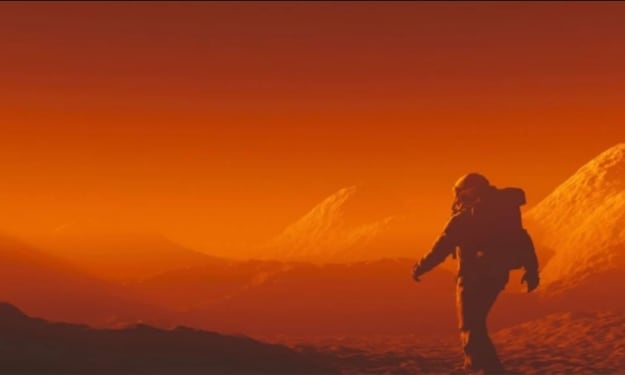
Mars Isn’t Plan B: Why Earth Stays More Livable — No Matter What. AI-Generated.
For decades, Mars has been portrayed as humanity’s backup plan—a distant refuge in case Earth becomes uninhabitable due to climate change, war, or resource depletion. Rocket launches, bold timelines, and science-fiction dreams have reinforced the idea that the Red Planet could one day host thriving human settlements. But strip away the hype, and the reality is far less forgiving. Mars is not, and may never be, a viable “Plan B.” No matter how advanced technology becomes, Earth remains overwhelmingly more livable than any other known world.
By Sadaqat Aliabout 8 hours ago in Beat