WILLIAM SCOTT GOLDMAN
Bio
Senior IP counsel/founder of Goldman Law Group; ranked #5 in the world with 8,000 USPTO filings for creative clients in all 50 states and internationally; thought leader/author of "Branding Law Cases and Materials". Representing Innovation.
Stories (16)
Filter by community
AI at the Intersection of IP and Personal Branding:
Entering 2026, generative AI remains the most significant area of IP and Branding Law, with a particular emphasis on personal branding. As set forth for the first time in Branding Law: Cases and Materials, there was a long-standing dichotomy between intellectual property law for the enforcement of corporate branding interests and the economic and dignitary interest torts of defamation and right of publicity for personal branding.1 However, with the growing interest in federal trademark registration by celebrities, our original delineation has become less clearly defined over the past several years. And as we’ll soon see below, generative AI is now sparking a further evolution, or even a revolution, in personal brand protection.
By WILLIAM SCOTT GOLDMANa day ago in Journal
PERSONAL BRANDING, CULTURAL STANDARDS, AND THE FIRST AMENDMENT;
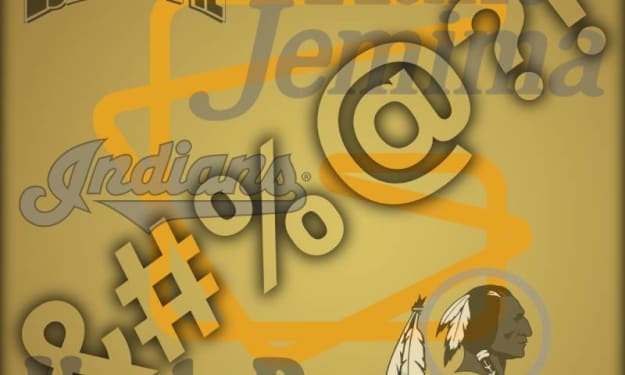
Aunt Jemima, Uncle Ben’s, and the Cleveland Indians, three venerable brands in existence since the late 19th and early-mid 20th century, all eliminated in an extremely short period of time due to shifting cultural standards. Corporate brand owners bowed down to public pressure, acquiescing in order to offend no one.
By WILLIAM SCOTT GOLDMANabout a year ago in Journal
WHEN EVERY DOG WILL HAVE ITS DAY – IN COURT
Now here’s a ‘tail’ of two canines. Or more specifically, recent trademark parody cases involving man’s best friend…and the brand manager’s worst enemy. First, we’ll provide some background discussion before delving into the curious case of Chewy Vouiton1 and then focusing on our primary subject, the infamous Jack Spaniels himself.2
By WILLIAM SCOTT GOLDMAN3 years ago in Journal
FOOD FOR THOUGHT:
Interested in protecting that long-cherished family favorite? Or perhaps you’re a chef or restaurateur interested in preserving commercial advantage against potential competitors and former employees? Protection of food products serves as a valuable case study for comparing and contrasting various IP strategies. So take a seat as we present an extensive menu of options…
By WILLIAM SCOTT GOLDMAN3 years ago in Journal
PATENT BRANDING
Businesses typically rely on trademark or even copyright to protect their valuable branding assets. However, an effective branding strategy also employs the exclusivity of both design and utility patent protection whenever its available, effectively keeping potential competitors out of the marketplace, regardless of brand name. Illustrating this concept in greater detail are the case studies below.
By WILLIAM SCOTT GOLDMAN4 years ago in Journal
NFT IP:. Top Story - April 2022.
Representing what is perhaps the most cutting-edge new investment phenomenon of this past year, non-fungible tokens are the new crypto craze, just a short five years after most of us started learning about Bitcoin, Ethereum, and the various ‘alt coins’. Of course, with new technological developments arise a host of novel legal issues, stretching the limits of traditional intellectual property law. Hence, this brief survey of the still-nascent NFT relative to existing IP.
By WILLIAM SCOTT GOLDMAN4 years ago in The Chain
WHEN PAST MEETS FUTURE:
Recapping major developments from this past year in IP, branding law, trade regulation, and entertainment law, COVID-19 once again dominated our lives some two years later, casting its long shadow over the legal landscape. And branding law was no exception as outlined in our piece, COVID ®: Global Pandemic or U.S. Brandemic.
By WILLIAM SCOTT GOLDMAN4 years ago in Humans
EXPANDING BRANDING
One key Branding Law strategy involves stretching the boundaries of traditional trademark principles for registering important business assets. As a companion piece to our discussion of non-standard copyrights from a few months back, the following is a brief survey of some lesser-known types of trademarks that could be available for protecting certain brand attributes as well.
By WILLIAM SCOTT GOLDMAN4 years ago in Journal
PATRIOTIC BRANDING
As we celebrate the 245th anniversary of our nation’s founding, now it’s time to examine when national insignias, including flags, can be registered with the U.S. Patent and Trademark Office. Under Section 2 of the Trademark Act (15 U.S.C. §1052), Congress set forth its ‘five deadly sins’, also known as the ‘absolute bars to registration’. Among this ignoble quintet is subsection (b), in pertinent part:
By WILLIAM SCOTT GOLDMAN4 years ago in Journal
Non-standard Copyrights:
Copyright law typically protects original works of authorship fixed in a tangible medium of expression against copying. As such, traditional examples of copyrightable subject matter have included books, motion pictures, sound recordings, paintings, and sculptural works. However, copyright is also applicable in certain “special cases”, such as product branding, websites and choreography.
By WILLIAM SCOTT GOLDMAN5 years ago in Journal