Stories (40)
Filter by community
Unlocking Your Inner Potential: Understanding the Vibe Code
The concept of "potential" has changed deeply as we move through 2026. For decades, people viewed talent as a static reservoir. They thought you either had it or you lacked it. Today, high-performance psychology and neurobiology have created a new model. This model is called The Vibe Code. It is not about "positive thinking" in a simple vacuum. It is about the physical alignment of your internal state. It connects your body's state with your external goals.
By Del Rosario29 days ago in Journal
Enterprise App Development Costs in Houston: 2026 Budgeting Strategies
Enterprise app development in 2026 is no longer a simple hourly rate. Houston has a maturing tech corridor. Cost structures here now reflect new regional realities. These include agentic AI workflows and rising cybersecurity insurance premiums. There is also high demand for specialized industrial IoT (IIoT) integrations. Houston enterprises must plan 2026 budgets carefully. The goal is to scale without hitting a technical debt wall. This wall occurs when legacy code prevents new AI features. This guide outlines the current procurement realities for Houston leaders. We move beyond surface estimates to analyze local market drivers.
By Del Rosarioabout a month ago in Journal
Enterprise App Development Costs in Minnesota:2026 Budgeting
The landscape of enterprise application development in Minnesota has shifted. It changed significantly as we enter 2026. The Twin Cities Tech Hub remains a major powerhouse. It serves industries like healthcare, retail, and manufacturing. The financial reality of building software has been reshaped. Local labor trends are a major factor. Advanced AI integration costs play a role too. Minnesota now has stringent regional data privacy standards. Local enterprises must view budgeting differently now. This applies to Cargill and mid-market firms alike. It is no longer about just building an app. It is about financing a living digital asset. This asset must survive a 24-month high-growth cycle.
By Del Rosarioabout a month ago in Journal
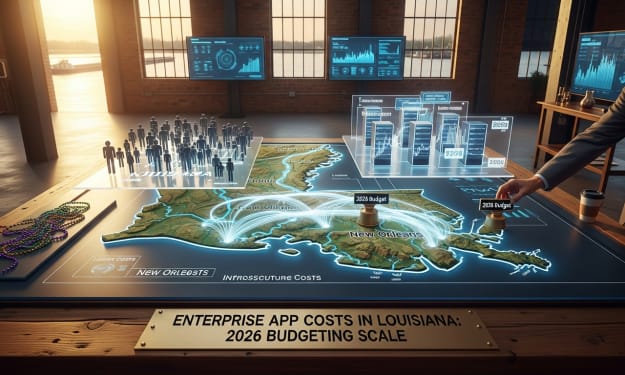
Enterprise App Costs in Louisiana: 2026 Budgeting Scale
The cost landscape for enterprise application development in Louisiana has shifted. The shift is significant as we enter 2026. Louisiana remains a cost-effective alternative to tech hubs like Austin or Atlanta. However, new factors have created a higher baseline for software. These factors include generative engineering and high local demand. Digital transformation is surging in the energy and logistics sectors. Organizations in New Orleans must understand these changes. Baton Rouge and Lafayette businesses also face new budget realities. Budgeting is no longer about a flat project fee. It is about specialized local talent and infrastructure costs. It also involves security requirements for Louisiana's core industries.
By Del Rosarioabout a month ago in Journal
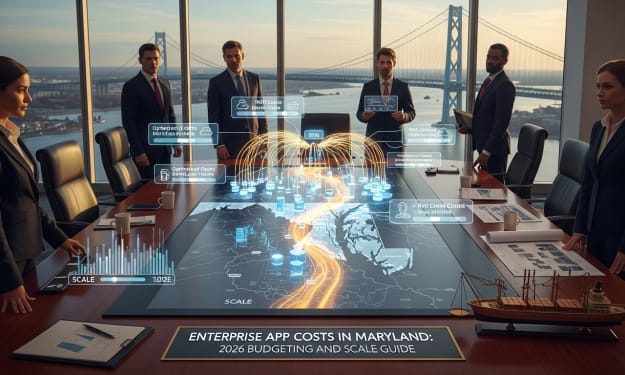
Enterprise App Costs in Maryland: 2026 Budgeting and Scale Guide
The Maryland enterprise landscape in 2026 has changed. There is a major shift toward Sovereign Infrastructure. This means keeping data under local control. Organizations now integrate specialized AI into their systems. They scale from Baltimore to the I-270 "DNA Alley." Budgeting no longer follows simple per-feature models. Old models from 2024 are now outdated. Cost efficiency depends on data residency compliance. It also depends on regional talent shifts. Long-term maintenance of private language models is key. This guide shows the fiscal reality for Maryland firms. We focus on procurement benchmarks for 2026. We look at the total cost of ownership. Cloud maximization is now a thing of the past.
By Del Rosarioabout a month ago in Journal
Enterprise App Costs in Virginia: 2026 Budgeting and Scale Guide
The 2026 enterprise landscape in Virginia has shifted significantly. Organizations have moved beyond simple mobile presence. They now build deeply integrated, AI-orchestrated ecosystems. Many operate near the Dulles Technology Corridor. Others work in the Richmond financial hub. For these groups, "app cost" is not a static line item. It is a complex calculation of regional labor rates. It involves specialized security for federal proximity. It also includes the long-term tax of technical debt.
By Del Rosarioabout a month ago in Journal
Enterprise App Development Costs in Chicago: 2026 Budget Scaling Guide
Building an enterprise-grade application in Chicago during 2026 requires careful planning. You must navigate a unique mix of high-tier technical talent and rising infrastructure costs. Local firms are moving away from simple "wrapper" apps. Instead, they now focus on deep-integrated AI agents and spatial computing interfaces. This shift has changed the traditional "per-hour" budgeting model. It has moved toward value-based outcome cycles.
By Del Rosarioabout a month ago in Journal
Enterprise App Development Costs in Dallas: 2026 Budgeting Guide
The Dallas-Fort Worth (DFW) metroplex remains a primary North American hub for technology. This is still true in 2026. However, the financial landscape for application development has shifted. The "Great Efficiency Drive" of 2025 changed everything. It recalibrated how Dallas-based firms allocate capital. We are no longer seeing sprawling, open-ended budget cycles. These were common in the early 2020s. Instead, enterprise app development in 2026 has new definitions. It is defined by high-density features. It requires local regulatory compliance. This specifically regards the Texas Data Privacy and Security Act. These updates require strict handling of local user data. Development also requires the integration of specialized regional talent.
By Del Rosarioabout a month ago in Journal
Michigan Enterprise App Costs 2026: Scaling Budgets for High-Stakes Growth
Enterprise software development in Michigan has changed. It has moved beyond simple feature matching. In 2026, scale means more than just a user count. It involves complex AI orchestration. It includes data residency compliance. This must follow new regional privacy standards. Apps must link with old industrial systems. These are called Industrial IoT (IIoT) frameworks. Michigan companies face unique costs. This is true in automotive and healthcare sectors. Advanced manufacturing also sees this trend. Costs now tie to real-time data processing. This happens "at the edge." Edge computing processes data near its source. This reduces lag and improves speed. Building and scaling now costs more. This guide explains current cost drivers. It serves the Michigan market specifically. It provides a roadmap for budgeting. This is vital in a high-interest economy. Capital is now more expensive to borrow. Specialized talent is also in high demand.
By Del Rosarioabout a month ago in Journal
The Real Cost of Enterprise App Development in North Carolina (2026)
The landscape for enterprise application development in North Carolina has shifted. It has changed significantly as we enter 2026. The state remains a premier hub for FinTech and AgTech innovation. It also leads in healthcare innovation. However, the standard build costs of 2024 no longer apply. Enterprise budgets are now defined by more than just features. They depend on integration depth with local edge computing clusters. Budgets also include the escalating costs of sovereign data compliance. Sovereign compliance means keeping data within specific national or regional borders. North Carolina firms must balance local talent costs against global scaling needs. These firms range from Research Triangle Park scale-ups to Charlotte banking giants.
By Del Rosarioabout a month ago in Journal
Enterprise App Development Costs in Georgia: 2026 Budgeting Guide
The 2026 enterprise application landscape in Georgia is changing. It is defined by a shift. This shift moves from simple digital presence. It moves toward complex and AI-integrated infrastructure. Organizations are now scaling operations in Tbilisi or Batumi. For these groups, budgeting is no longer simple. It is not just about estimating hourly rates. Instead, they must calculate long-term architectural debt. They must also account for high integration costs.
By Del Rosarioabout a month ago in Journal
Mobile Apps in 2026: How AI Agents Are Replacing Traditional Interfaces. AI-Generated.
The mobile landscape in early 2026 has evolved past generative AI novelty. We no longer discuss chatbots integrated into sidebars. The industry has pivoted toward "Agentic Native" architecture. This represents a fundamental shift. Apps are no longer static tools. They are proactive agents. These agents execute complex workflows with minimal user intervention.
By Del Rosarioabout a month ago in Journal