Aarif Lashari
Stories (646)
Filter by community
EU to Hold Emergency Leaders’ Summit Over Trump’s Greenland Threats. AI-Generated.
Europe is bracing for another major diplomatic shock as the European Union prepares to hold an emergency summit in response to Donald Trump’s renewed threats involving Greenland. What began as provocative rhetoric has quickly escalated into a serious geopolitical issue, forcing EU leaders to confront questions of sovereignty, trade retaliation, and the future of transatlantic relations.
By Aarif Lashari19 days ago in The Swamp
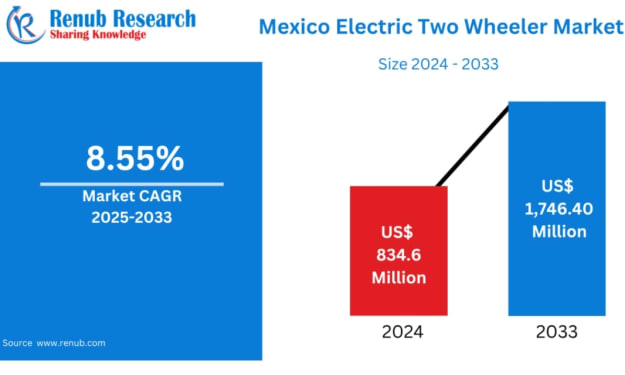
Mexico Electric Two-Wheeler Market Size and Forecast 2025–2033. AI-Generated.
The electric two-wheeler (E2W) market in Mexico is rapidly gaining traction, fueled by environmental concerns, urban congestion, and government incentives promoting cleaner transportation. With electric scooters, motorcycles, and e-bikes becoming increasingly popular, the sector is poised for significant growth over the next decade. According to recent market analyses, Mexico’s E2W market is projected to expand steadily between 2025 and 2033, reflecting broader global trends toward sustainable mobility.
By Aarif Lashari21 days ago in The Swamp
Mastercard, Visa and Revolut Lose UK Case Over Proposed Cross-Border Card Fees Cap. AI-Generated.
In a significant ruling that could reshape the financial services landscape, Mastercard, Visa, and Revolut have lost a legal challenge against the United Kingdom’s proposed cap on cross-border card fees. The decision comes after the UK competition and markets authorities argued that the fees charged for international card transactions were excessive and unfair to consumers, prompting legal action by the card networks and digital banking platforms. The case has attracted attention from consumers, financial institutions, and industry analysts alike, raising questions about card fees, consumer protection, and the balance of power between regulators and multinational payment networks. The Proposed Cap The UK government had proposed a limit on cross-border card fees to ensure that consumers are not overcharged when making international transactions. Currently, these fees can range from 1% to 3% per transaction, depending on the card issuer, type of card, and merchant agreements. Regulators argued that these charges were not always justified by the actual cost of processing payments, resulting in higher costs for individuals and small businesses. By capping fees, the UK aims to increase transparency and reduce unnecessary expenses for consumers using cards abroad or making cross-border online purchases. Why Mastercard, Visa, and Revolut Opposed the Cap The card networks and Revolut challenged the cap, claiming that such regulation interferes with free market operations and could limit their ability to invest in security, infrastructure, and innovation. Mastercard and Visa emphasized that cross-border transaction fees help cover fraud prevention, currency conversion, and network maintenance. Revolut, a leading digital bank, argued that restrictions could affect their pricing models, ultimately impacting users who rely on multi-currency accounts and international transfers. From the perspective of these companies, the proposed cap threatened both revenue streams and the flexibility to offer a wide range of financial products to consumers. The Court Ruling The UK court rejected the challenge, siding with regulators. The judgment noted that while companies like Mastercard, Visa, and Revolut operate globally, they must comply with national consumer protection laws, especially when their services affect millions of UK consumers. The ruling highlights a broader principle: multinational payment networks cannot operate without oversight when their business practices create financial burdens on ordinary users. The decision sets a precedent for stricter regulatory scrutiny on cross-border transaction fees in the UK, and potentially across Europe. Implications for Consumers For consumers, the ruling is largely positive. Cross-border card transactions—often used for online shopping, travel, and international payments—could become more affordable and predictable. Reduced fees mean that travelers and online shoppers will no longer face disproportionately high charges for routine purchases. Small businesses that rely on international sales could also benefit from lower costs when accepting card payments from overseas customers. This development may encourage wider adoption of international e-commerce and digital banking services, while enhancing consumer trust in financial transactions. Industry Reactions The ruling has elicited mixed reactions. Consumer advocacy groups celebrated the decision as a win for fairness and transparency. “This is a step toward protecting everyday users from hidden costs,” said Sarah Jenkins, a spokesperson for the UK Consumer Association. Meanwhile, industry experts expressed concern that the cap could affect profit margins, investment in payment infrastructure, and service innovation. Payment networks rely on transaction fees to fund technology that ensures security, prevents fraud, and maintains global connectivity. Lower fees could force companies to adjust their pricing strategies or reduce investment in certain features. The Global Context The UK is not alone in scrutinizing card fees. Across the European Union, regulators have implemented caps on interchange fees for domestic and cross-border transactions. Australia and Canada have also explored similar limits to promote transparency and protect consumers. The UK ruling reinforces a global trend: regulators are increasingly willing to challenge major financial institutions over pricing practices that disadvantage consumers. Companies operating internationally must balance profitability with compliance, particularly in regions with strong consumer protection frameworks. Future of Cross-Border Transactions The decision may accelerate the adoption of alternative payment methods, such as real-time bank transfers, digital wallets, and cryptocurrency solutions, which often provide lower fees for international transactions. For Mastercard, Visa, and Revolut, the challenge will be to adapt business models without compromising service quality. Some analysts predict that companies may respond by bundling services, offering subscription-based accounts, or negotiating lower interchange fees with merchants to offset regulatory restrictions. Broader Implications for Financial Regulation Beyond card fees, the ruling signals a broader shift in financial regulation, where consumer protection and fair pricing are prioritized over network dominance. It illustrates that even the largest multinational payment providers are accountable to local laws, especially in markets with strong regulatory frameworks. For fintech startups and digital banks, this decision provides clarity: companies must anticipate and comply with local regulations, even when operating globally. The ruling could inspire additional regulatory initiatives aimed at enhancing transparency, fairness, and competition in the payments industry. Conclusion The UK court’s rejection of Mastercard, Visa, and Revolut’s challenge marks a significant victory for consumer rights. By enforcing a cap on cross-border card fees, the UK is taking a clear stance that financial fairness and transparency matter, even in a rapidly evolving global payments landscape. For consumers, the ruling promises lower costs and more predictable transactions. For the industry, it is a reminder that innovation and profitability must coexist with regulatory compliance. As multinational financial services continue to expand, similar regulatory scrutiny may emerge in other markets, signaling a new era where consumer protection shapes the future of global payments.
By Aarif Lashari21 days ago in The Swamp
Elon Musk’s xAI Datacenter Generating Extra Electricity Illegally, Regulator Rules. AI-Generated.
Elon Musk, known for pushing boundaries in technology—from electric cars to space exploration—is now facing scrutiny over one of his latest ventures. According to a recent ruling by a national energy regulator, xAI’s datacenter has been generating more electricity than authorized, a violation of regulations designed to ensure fair and safe power distribution. The announcement has sparked widespread debate, raising questions about corporate responsibility, regulatory oversight, and the environmental impact of large-scale artificial intelligence operations. The Regulator’s Findings Authorities revealed that xAI’s datacenter, a facility designed to support the company’s artificial intelligence research and operations, produced electricity beyond its permitted levels. While datacenters are already known for high energy consumption, regulators have strict rules to prevent overproduction or unreported energy usage, which can strain local grids, interfere with supply, and bypass reporting requirements. According to the official ruling, xAI had not properly disclosed the additional electricity generation, prompting concerns about transparency and compliance. The facility reportedly used advanced power systems to augment its energy needs, but the unapproved scale of this generation triggered the investigation. Why Datacenters Consume Massive Energy AI datacenters, particularly those supporting large-scale models, require enormous computational power. GPUs, specialized processors, and cooling systems all consume vast amounts of electricity. Estimates suggest that training cutting-edge AI models can consume millions of kilowatt-hours, rivaling the energy usage of small cities. This context helps explain why xAI’s datacenter may have sought to supplement its energy needs independently. By generating extra electricity on-site, the company may have aimed to ensure uninterrupted operations and maintain performance, but regulators view such actions as a violation when they exceed permitted levels or bypass official reporting channels. Musk’s Track Record With Energy Elon Musk’s ventures have long intersected with energy production. Tesla’s solar and battery projects, along with SpaceX’s energy-intensive launches, have consistently challenged conventional energy norms. Musk has promoted self-sufficient power systems, often emphasizing renewable energy and sustainability. However, past successes do not exempt new projects from compliance. The xAI ruling underscores that even high-profile innovators must adhere to regulations designed to maintain grid stability and protect communities. Implications for AI Development The incident highlights a broader tension between rapid technological advancement and regulatory frameworks. AI companies often operate on the cutting edge of computational demand, pushing systems beyond traditional limits. Yet this rapid growth can clash with established rules designed for safety and fairness. Experts note that energy-intensive AI models are increasingly under scrutiny for environmental and legal compliance. “We are entering an era where computational growth must balance innovation with responsibility,” says energy analyst Dr. Priya Menon. “Datacenters can no longer operate in isolation from their energy obligations.” Potential Consequences for xAI The regulator’s ruling could carry multiple consequences. These may include fines, mandatory operational adjustments, or stricter oversight, depending on the severity of the violation and the company’s response. There is also the possibility that local authorities could impose limits on future datacenter expansions. For Musk and xAI, the ruling presents both a legal and reputational challenge. Critics argue that even if the overproduction was intended to support AI research, ignoring regulatory limits sets a concerning precedent for corporate behavior in high-stakes technology sectors. The Public Reaction The news has sparked debate across social media and industry circles. Some defend Musk’s approach, citing the necessity of uninterrupted energy for AI research, while others criticize the move as another example of tech giants operating above the law. Environmental groups have also weighed in, noting that unauthorized energy generation can have broader implications for grid stability and carbon emissions, depending on the source of power. The discussion is amplifying scrutiny on energy practices within the fast-growing AI industry. Regulatory Oversight in the AI Era The xAI case exemplifies the growing role of regulatory bodies in overseeing high-tech energy use. As AI applications expand, so does the demand for power. Datacenters cannot simply scale energy consumption at will; regulators must ensure compliance with grid capacities, environmental standards, and reporting protocols. This situation may prompt new policies specifically targeting AI-specific energy consumption, potentially affecting not just xAI but other tech companies operating large-scale computational infrastructures. Musk Responds As of now, Elon Musk has not released a formal statement addressing the ruling. However, his companies’ history suggests that compliance adjustments are likely while maintaining operational priorities. Musk has previously framed regulatory challenges as opportunities to innovate around limits, and xAI may explore ways to align its energy generation practices with legal requirements while sustaining AI workloads. Broader Implications for the Tech Industry The xAI ruling is a cautionary tale for the tech world. It illustrates that even powerful innovators cannot ignore energy regulations, particularly when operations have systemic impacts on communities and the environment. For emerging AI companies, this incident underscores the need to integrate legal compliance, sustainability, and innovation. Failure to do so may result in penalties, public backlash, and operational disruption—issues that can undermine even the most ambitious technological goals. Conclusion The case of Elon Musk’s xAI datacenter generating electricity illegally is more than a regulatory headline—it is a snapshot of the complex relationship between technology, power, and oversight. As AI continues to grow in scale and influence, the balance between innovation and compliance will become ever more critical. For xAI, the immediate task is clear: adjust operations to meet regulatory standards. For the industry at large, the message is equally clear—responsible energy use is not optional in the era of AI. Musk’s next move will likely shape not only his company’s trajectory but also the broader conversation around sustainable, lawful energy practices in cutting-edge technology.
By Aarif Lashari21 days ago in The Swamp
The Family Murrin: A Story of Resilience, Identity, and Change. AI-Generated.
In every community, there are families whose histories weave together with the stories of the land itself. The Murrin family is one such family—known not just for their longevity in a particular region, but for the way their story reflects broader social and cultural changes over generations. From humble beginnings to modern challenges, the Murrins embody resilience, adaptation, and the quiet strength of family bonds.
By Aarif Lashari22 days ago in The Swamp
A Deadly Chase in the Forest. AI-Generated.
The forest can be serene, even enchanting, in the daylight—a place where sunlight filters through leaves and birdsong punctuates the air. But when darkness falls, the forest transforms into a world of shadows and uncertainty. And sometimes, it becomes the stage for danger—a deadly chase where survival hangs by a thread.
By Aarif Lashari22 days ago in The Swamp
Why Notifications Feel More Stressful Than Useful Now. AI-Generated.
Once upon a time, notifications were helpful. A message alert meant someone needed us. A calendar reminder kept us organized. A breaking news alert informed us of something important. Today, however, notifications feel less like assistance and more like intrusion.
By Aarif Lashari22 days ago in The Swamp
An Interview With the President Inside the Oval Conversation: Power, Pressure, and the Path Forward. AI-Generated.
The Oval Office is more than a workspace. It is a symbol of authority, responsibility, and the immense weight of decision-making. Every conversation held inside its curved walls carries echoes of history, power, and consequence. An interview with the president in this setting is not merely a dialogue—it is an encounter with the realities of leadership under constant pressure.
By Aarif Lashari22 days ago in The Swamp
The Climax of Fire. AI-Generated.
Fire has always been a symbol of transformation. From the first controlled flames used by early humans to modern industrial furnaces and raging wildfires, fire represents creation and destruction, warmth and devastation, survival and loss. “The Climax of Fire” refers to that pivotal moment when flames reach their peak—when energy, intensity, and consequence converge.
By Aarif Lashari22 days ago in The Swamp
It’s Not Monday, But It’s Not Friday Yet Either. AI-Generated.
There is a peculiar emotional space in the middle of the week. It’s not Monday, with its fresh starts and reluctant alarm clocks. But it’s also not Friday, with its promise of rest, release, and reward. It’s the in-between—the stretch of time where momentum exists, but excitement feels distant.
By Aarif Lashari22 days ago in The Swamp
Fields of Fetor and Destruction. AI-Generated.
“Fields of Fetor and Destruction” is a phrase that evokes more than physical devastation. It speaks of landscapes scarred by neglect, conflict, pollution, and human indifference, where once-fertile ground now bears the stench of decay and the visible marks of ruin. Across the world, such fields exist not only as geographic locations but as symbols of deeper moral and environmental failure.
By Aarif Lashari22 days ago in The Swamp
Arsenal Take Step Toward Ending Semi-Final Nightmares – But Regrets Remain. AI-Generated.
For Arsenal, semi-finals have often represented a painful psychological barrier rather than a gateway to glory. Over the years, the club has suffered a series of near-misses in domestic and European competitions, creating a narrative of promise followed by disappointment. This time, however, Arsenal have taken a meaningful step toward breaking that cycle—though not without lingering regrets.
By Aarif Lashari22 days ago in The Swamp