Critique
Art for our sake: seven
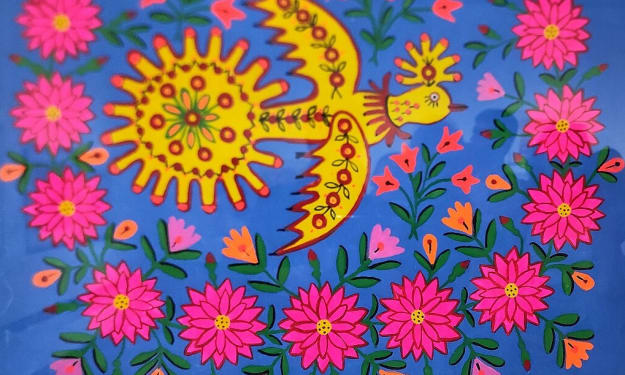
This stunning work by Ukranian artist Maria Prymachenko (1908-1997) is one of many that are endangered as a consequence of the Russian invasion of the Ukraine and continued attacks on that beleaguered country. the Ivankiv museum that housed many of Prymachenko's works was destroyed by fire following a (claimed) Russian attack As ArchiReader explains, this was not just an attack against the museum but an attack on Ukrainian culture and the Ukrainian people.
By Raymond G. Taylor2 years ago in Art
Imagery.
Imagery is a literary device that involves the use of vivid and descriptive language to create mental pictures or sensory experiences for readers. It appeals to the five senses (sight, sound, taste, touch, and smell) to make the narrative more vivid, engaging, and relatable.
By Tifuh Awah2 years ago in Art
The Power of Words
Have you ever stopped to wonder about the extraordinary power that lies within the written word? The way an author's ink-stained fingertips can weave a tapestry of emotions, ideas, and perspectives that captivate our very souls. Literature holds a mysterious sway over our hearts and minds, shaping our worldview with every turn of the page. But what exactly is this power and how does it leave its indelible mark on our lives? Join me on a journey of exploration as we unravel the enigmatic force that literature possesses, uncovering the secrets it holds in the realm of imagination.
By Sera Publishing2 years ago in Art
Crafting lifelike Characters
Characterization in literature refers to the process of developing and describing a character within a story. It involves creating a multi-dimensional and believable character by providing details about their personality, appearance, actions, thoughts, and motivations. Characterization serves several important purposes in literature:
By Tifuh Awah2 years ago in Art
Irony
Irony is a literary and rhetorical device characterized by a discrepancy or incongruity between what is expected and what actually occurs. It often involves a contrast between appearance and reality, or between what seems to be true and what is actually true. Irony is used to create humor, add depth to narratives, convey layers of meaning, and provoke thought.
By Tifuh Awah2 years ago in Art
Taylor on art
Articles about art and artists, with exhibition reviews and a roundup of everything arty on Vocal. Latest articles Art not art Behold the Banksy This is not a work of art Sylvia Pankhurst: Tea Set by a Suffragette Alison Lapper at Bethlem Museum of the Mind Lady Helen Lands in London Images of Wonder: A World in Common at Tate Modern Constable hits the news Of phones and photographs Marion Patrick: Dog's Head
By Raymond G. Taylor2 years ago in Art
The Titanic |The Unsinkable Dream and the Tragic Reality
The idea for the Titanic emerged in the late 19th century as part of a fierce competition among various shipping companies to build the most opulent and technologically advanced ocean liners. White Star Line, a British shipping company, sought to outdo its rivals, Cunard and others, by constructing a trio of massive ships, including the Olympic, the Britannic, and the most famous of them all, the Titanic.
By Nicholas Moses2 years ago in Art
Marion Patrick: Dog's Head
Marion Patrick is an artist you probably never heard of. Unless you have visited the Bethlem Museum of the Mind in Beckenham, a London suburb bordering Kent to the south east of England, you are unlikely to have seen her work. Patrick was a one-time resident at the Bethlem Royal Hospital, set in expansive leafy grounds just outside of the town.
By Raymond G. Taylor2 years ago in Art