Critique
The Mona Lisa Mystery | Why is it World's Most Famous Painting?. Content Warning.
Introduction: Greetings, readers! On a vibrant Monday morning in Paris on August 21, 1911, the Louvre museum witnessed an extraordinary event that would forever alter the fate of the world's most famous painting—the Mona Lisa. As three men stealthily exited the museum, little did the world know that they were carrying not just any property but the iconic masterpiece hidden beneath a blanket. This daring heist marked the beginning of a saga that would elevate the Mona Lisa to unparalleled fame, but what secrets lay behind this enigmatic portrait?
By React Wizards2 years ago in Art
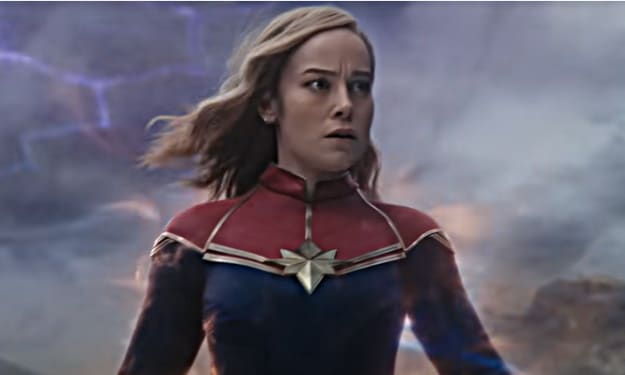
"The Marvels: A Divisive Addition to the Marvel Cinematic Universe"
"Critical Reception of 'The Marvels': A Divisive Addition to the MCU" Johnny Oleksinski from the New York Post highlighted previous Marvel films that were poorly received as he said, "If you thought ‘Eternals’ and ‘Ant-Man and the Wasp: Quantumania’ were low points for the limping Marvel Cinematic Universe, strap in for the ride to abject misery that is ‘The Marvels.’"
By ahmed elokaby2 years ago in Art
attack on titan explained... Content Warning.
After the conclusion of Attack on Titan, you might have lingering questions. In today's video, we'll provide a thorough explanation of the ending so that you can grasp the events. As a long-time manga reader and dedicated follower of Attack on Titan, I offer a comprehensive and precise analysis. If you are a fan of Attack on Titan, Jujutsu Kaisen, One Piece, Demon Slayer, or Chainsaw Man, this channel is for you. Subscribe, like, and share to help spread the word about Attack on Titan. After Zeke's demise, the rumbling ceases. Aaron needs to be in contact with someone of Royal Blood to activate the rumbling; with Zeke gone, it stops. Aaron cannot restart it unless he somehow involves Historia. Mikasa has a sudden realization that her final encounter with Aaron cannot be their last, given his lies about the Ackerman gene and harming Armin. As the Colossal Titan emerges from the crater, Armin's despair is evident as he realizes that he had to kill his own brother. The struggle between the Hallucigenia and Reiner is crucial, as the Hallucigenia is the organism responsible for creating the first founding Titan. Aaron, still alive, transforms into a hulking Colossal Titan, similar to Armin, due to Ymir Fritz granting him the power. Aaron and Armin engage in an epic battle as Colossal Titans. Meanwhile, the Hallucigenia emits smoke, causing those on Fort Salta to inhale it, potentially turning them into Titans with a delayed transformation. Levi instructs Pieck and Mikasa to escape on Falco, as the Ackerman and Titan Shifters are unaffected. The pressure leads to a breaking point for Pieck, showcasing her resilience. Levi and Pieck understand what needs to be done, linked to their commitment to protect their comrades. The Hallucigenia triggers the transformation of Marley's remaining civilians into pure Titans, including Connie and Jean. Peak and Annie provide backup as pure Titans charge, setting the stage for a showdown. As the battle unfolds, Mikasa slips into a dreamlike state, where Aaron wakes her, sporting short hair. This change symbolizes Aaron's renewed care for Mikasa. Additionally, Mikasa's restored hair reflects Aaron's perspective of her.
By Koussay ad2 years ago in Art
Would you pay $139 million for this painting by Picasso?
Not sure I would buy it at the price, but then again I don't have 139,000,000 in folding to spare. To me, Picasso is one of the artists who define the 20th century. He was 18 years old when the century began (strictly speaking 19) and he lived through a fair chunk of it, not least two world wars.
By Raymond G. Taylor2 years ago in Art
Right Here, Right Now
This is one of those right here right now blog pieces to check in with my present self. It's 5 am and earlier this week I verbalized an intention to publish another blog to keep my momentum of sharing going. That was because within my notes app is a folder labeled "blogs" and within my room there are journals all around filled with blog material. So yes there is material to share. The only deferment is the ones I want to publish are "unfinished".
By Azrie'l Johnson2 years ago in Art
Art for our sake: eight
Ever wondered what art is all about, what art is for, who is it for? For that matter, what is art? All of this week's reviews touch on this issue. When I tell people that I volunteer at an art museum, it's not unusual for the conversation to include them saying that they know nothing about art. Let me turn that argument on its head. I attended a series of presentations recently about African heritage art and one of the presenters in particular made a point that we are all art experts. We all know something about art because we have all created art at some point, we have all seen and appreciated paintings, sculptures, buildings, statues and other forms of art. More importantly, we all have opinions about art. This edition of Art for our sake, explores this theme.
By Raymond G. Taylor2 years ago in Art
Prometheus Unbound
During a time where divine beings and humans coincided, and the world was saturated with legend and enchantment, there carried on with a figure whose boldness and empathy would everlastingly shape the course of humankind. Prometheus, a titan eminent for his keenness, was driven by a significant love for mankind, an animal groups made by the divine beings and bound to work in haziness and obliviousness.
By The Must-Read 2 years ago in Art
What The Business World Can Learn from Contemporary Art
Many describe contemporary art as the art of today, the art of modernity. Yet ‘contemporary art’ originated somewhere in the midst of the Twentieth Century; so, in fact its roots lie entangled within a century that barely recouped the benefits of the emergence of major catalysts to social change such as the Internet, smart phones and social media.
By Elsie Cheung2 years ago in Art
Schopenhauer's Philosophy and Its Influence on Contemporary Music
Introduction In the realm of philosophy and music, few figures stand as intriguing as Arthur Schopenhauer, the 19th-century German philosopher known for his distinctive views on the human will and existence. This article delves into the intricate relationship between Schopenhauer's philosophy and contemporary music, elucidating how his ideas continue to resonate with modern artists.
By James Watson2 years ago in Art
Jean Baudrillard And The Matrix
J'onn Booyah, a prominent intellectual of the late 20th century, is renowned for his challenging-to-pronounce name, a subject of enduring discussion. To facilitate clarity, we will hereafter refer to him by his first name, Sean. Beyond this, Sean is most notably recognized for his analysis of postmodern society. His works, characterized by their provocative and unyielding style, delve into mass media, communicative technologies, simulations, and pop culture, earning him the moniker of the high priest of post-modernism. However, Sean's most famous association with popular culture is undeniably the 1999 film "The Matrix." The film's profound influence on viewers is evident, not only because it explores themes aligned with Sean's work but also because his seminal book, "Simulacra and Simulation," is featured in the movie and even designated as required reading for the cast. The movie's unique engagement with Sean's ideas, which extensively scrutinized pop culture and mainstream media, provided a rare and invaluable object of analysis in the realm of Hollywood blockbusters.
By James Watson2 years ago in Art
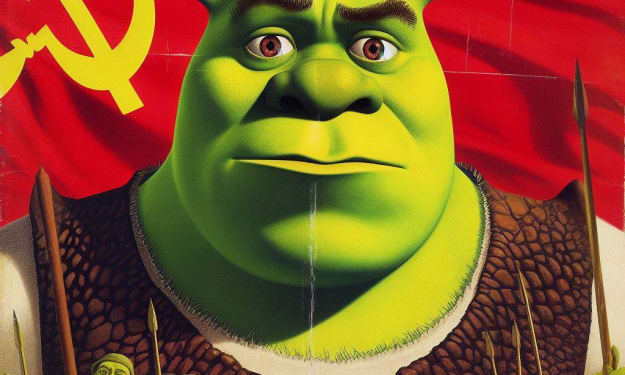
Shrek - An Economic Analysis
In the Shrek universe, the ogre archetype is universally perceived as a menacing and violent creature. However, a careful examination of the central character, Shrek, reveals that these conventional notions are unfounded. Shrek, in fact, espouses a pacifist disposition, preferring to sidestep confrontations and resort to nonviolent means of self-defense. This characterization hints at the broader theme of disenfranchisement and stereotyping faced by ogres within the context of the film.
By James Watson2 years ago in Art