
Why Custom Mobile App Development Is Essential for Business Growth
How can a custom approach to mobile app development help you evolve your business, get more users, and compete more efficiently?

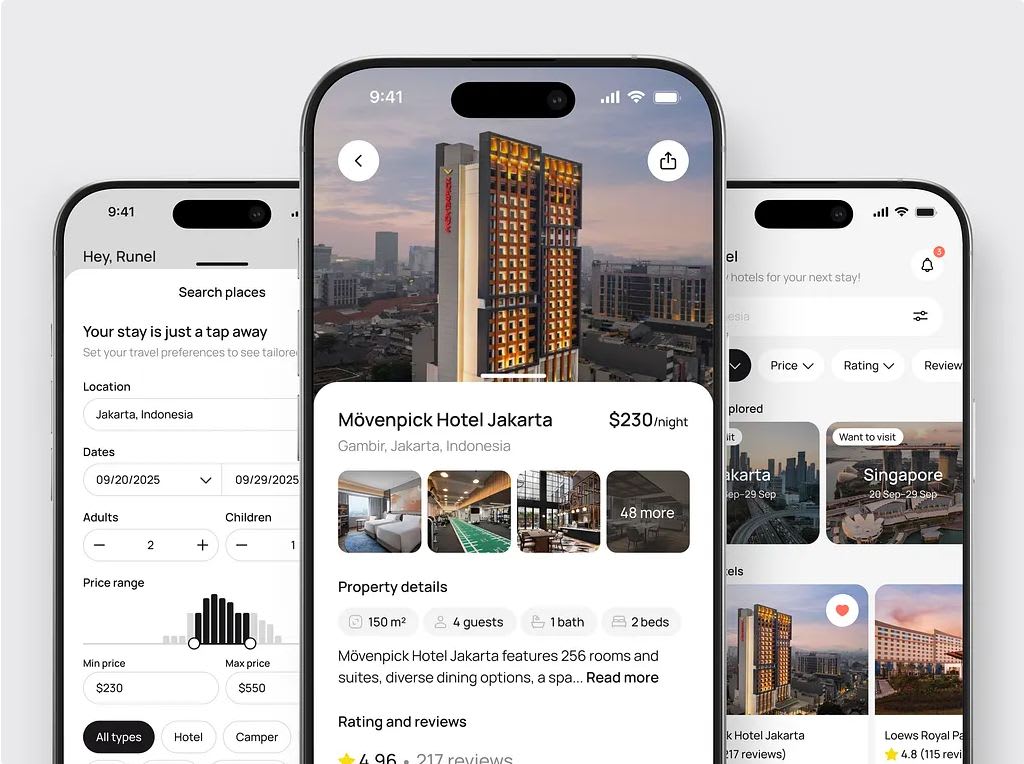
Does it ever seem like you are forcing your business model into a rigid container that simply doesn't fit? Many companies rush to adopt pre-made software for the sake of speed, only to immediately struggle against its constraints. Whether your staff requires a unique operational flow or your clients demand capabilities that aren't available, the result is often the same: you distort your own workflows to accommodate the software, rather than having the technology serve your needs.
Sustainable expansion is inherently chaotic and hard to predict. The requirements you have today will likely be obsolete in a year and a half. If your mobile approach relies on inflexible infrastructure, scaling becomes akin to demolishing walls every time you need to expand the house. This process drains both your budget and your energy.
This is precisely why you need a solution designed to mature alongside your enterprise from day one. In this piece, we will explore how bespoke mobile development provides the agility to pivot, the authority to manage your own data, and a robust base for growth that eliminates the need for constant reconstruction.
The Rising Demand for Tailored Mobile Solutions
There was a time when simply having a mobile footprint gave you a competitive edge. Those days are over. Today, users expect applications that understand them—interfaces that feel natural, rapid, and specifically aligned with their interaction style. They demand smooth, individualized journeys, integrated artificial intelligence, and advanced functionality. Frankly, cookie-cutter solutions can no longer meet these standards.
To be clear, launching with a template isn't inherently wrong; it offers speed and cost savings initially. However, you will almost certainly reach a dead end within six months. These platforms are engineered for the average user, assuming your operations mirror everyone else's. When your business deviates from the norm, you are left cobbling together fixes, dropping essential features, or delivering a frustrating experience that pushes customers away.
So, what has shifted? Primarily, the bar has been raised significantly. Users now benchmark your app against giants like Uber, Spotify, or Airbnb—platforms that feel effortless because they were crafted with singular focus and relentless refinement. Mass-market tools cannot replicate that degree of specialization.
Furthermore, the modern business landscape moves at breakneck speed. Markets fluctuate, new avenues emerge, and consumer habits change rapidly; your technology must match this pace. Pre-packaged apps tether you to another company's roadmap, update schedules, and restrictions. In contrast, custom-built solutions adapt to your shifts, expand with your ambitions, and mirror your specific strategy instead of confining you.
While generic applications may still suffice for the most trivial tasks, they are increasingly acting as anchors holding businesses back. If you are committed to mastering the customer journey, optimizing internal processes, or distinguishing yourself in a crowded marketplace, settling for "adequate" is no longer a viable option.
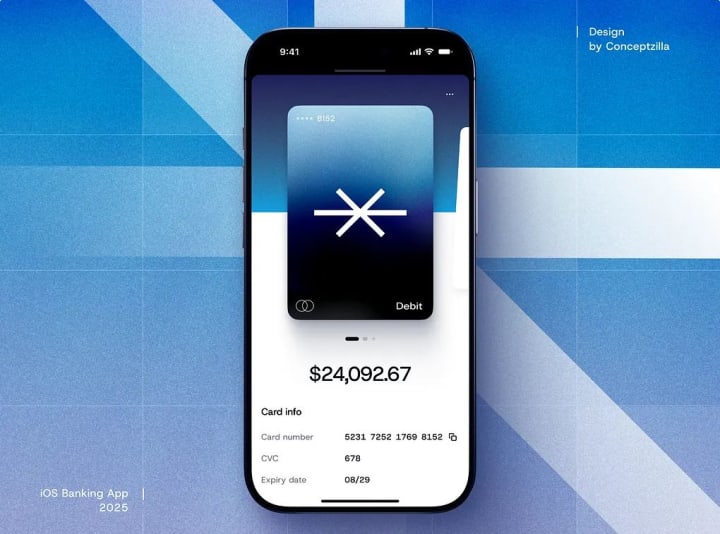
The Core Benefits of Bespoke Mobile Application Development
Precision Alignment with Business Objectives
Let's face it: very few companies are truly average. You likely operate with distinct methodologies, unique value propositions, or specific data interdependencies that define your success. Mass-market software is engineered for the median user; while it functions adequately for many, it rarely fits any single organization perfectly. Relying on such tools is akin to wearing a ready-made suit when your business requires bespoke tailoring.
The primary strength of custom development lies in its origin: your own strategic blueprint. Consider a logistics firm that manages deliveries using complex variables like real-time weather patterns and local events. No generic platform can execute such specialized logic. By building from the ground up, you empower your team with an optimized, cost-saving algorithm that mirrors their natural workflow. This seamless integration eliminates hidden inefficiencies, ensuring the technology operates exactly as your staff envisions.
Unrestricted Scalability and Adaptability
As your enterprise expands, the last obstacle you need is technology that imposes limits. When weighing custom solutions against pre-packaged ones, the latter frequently present rigid barriers—caps on user counts, restricted functionalities, and more. Attempting to scale with these tools often feels like trying to host a growing crowd in a cramped closet.
In contrast, a custom approach is architected with your long-term growth trajectory in mind. Skilled developers design the system so that incorporating additional users, launching new features, or introducing entirely fresh service lines becomes a smooth, planned progression. Whether you need to integrate a novel payment processor next year or link to an emerging sales channel, the foundational infrastructure is already in place to support these changes without requiring a total rebuild. The result is true agility: as your business evolves, your application adapts instantly and effortlessly.
Securing a Competitive Edge via Exclusive Capabilities
If everyone can download the same template-driven application, what actually distinguishes your brand? Using generic tools reduces your identity to merely a different "skin" on a common, forgettable experience.
Custom mobile development completely reverses this dynamic. It enables you to create capabilities that competitors cannot copy because they are rooted in your proprietary insights and unique customer relationships.
This could manifest as an innovative augmented reality feature allowing users to visualize products in their living spaces or a loyalty ecosystem that fosters community rather than just tracking transactions. These are your unique selling points, transformed into functional code. This shift allows you to stop competing solely on price and start winning through a genuinely differentiated user experience. Ultimately, this becomes an integral pillar of your market identity—something impossible to purchase off the shelf.
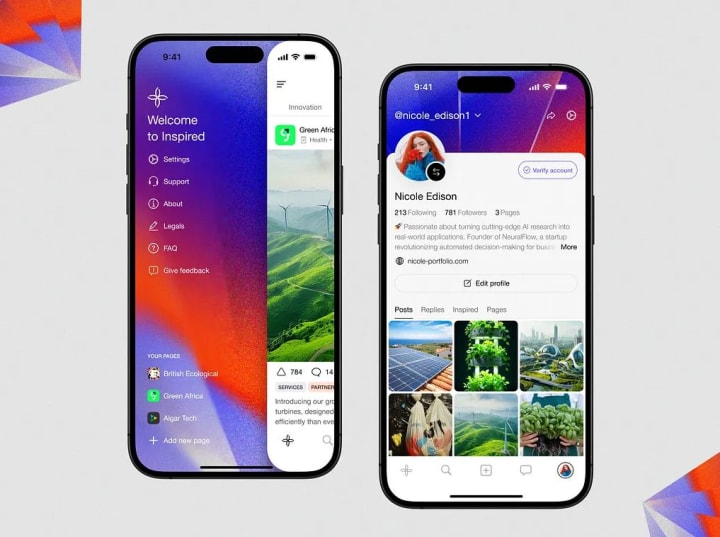
The Customization Edge: Why Pre-Built Solutions Fall Short
Restricted Capabilities and Functionality
When using off-the-shelf software, you are essentially relying on a democratic process for feature updates. If a large portion of the user base demands a specific tool, it might eventually be implemented. However, if your requirement is unique to your business model, it will likely be ignored. You are left managing a wishlist of "nice-to-haves" that the vendor will never prioritize, forcing you to settle for workflows that are merely "close enough." This compromise often impacts critical areas of operational efficiency and customer satisfaction.
Instead of solving a problem, purchasing a generic app often creates new hurdles, trapping you within the original developer's limited vision and forcing you to devise manual workarounds.
Inability to Integrate with Legacy Systems
Your business does not operate in a vacuum; it relies on an established digital ecosystem comprising CRMs, accounting software, inventory management systems, and more. Generic apps often function as isolated islands. While they may support integrations with popular mainstream platforms, they frequently fail to connect with niche or proprietary systems you already use.
The effort to bridge these gaps is significant. You may find yourself resorting to inefficient methods, such as exporting CSV files for manual weekly uploads. This busywork not only introduces the risk of human error and delays but also fragments your data, destroying the concept of a "single source of truth." Consequently, your team is forced to toggle between multiple screens to piece together a complete customer view—a process that is both sluggish and demoralizing.
Custom mobile applications, by contrast, are engineered to be native citizens within your existing technology stack. They are built to communicate directly with your internal systems, establishing a seamless information flow that genuinely simplifies everyone's workload. The difference in efficiency is stark.
Aligning Mobile Solutions with Strategic Goals
Custom Apps as Catalysts for Digital Transformation
Digital transformation is often viewed as a vague, monumental shift, but in practice, it is the result of making a series of intelligent, interconnected decisions. A bespoke mobile application can serve as the engine driving this evolution. Rather than compelling your workforce to adapt to clumsy, one-size-fits-all tools, you provide them with a solution designed specifically for their optimal workflow. This is where genuine gains in productivity emerge.
Fragmented systems kill momentum. Consider a scenario where a sale is logged in a mobile app, only for an office administrator to manually re-enter that data into the CRM, followed by the finance team pulling separate reports for invoicing. This chain of events is a recipe for mistakes and bottlenecks.
A tailored solution eliminates this noise by acting as a direct bridge to your core infrastructure. For instance, when a sales representative closes a deal on a tablet via a custom app, that customer information instantly populates your CRM. Similarly, inventory levels in your ERP system update in real time the moment a warehouse scan occurs. There is no need for duplicate data entry, no latency, and no conflicting versions of the truth.
This level of seamless connectivity streamlines operations to a tangible degree. Effective custom mobile solutions transform scattered data into a unified asset across the entire organization, fueling smarter decision-making and accelerating revenue cycles. Ultimately, this elevates your mobile tool from a peripheral accessory to the central nervous system of your field operations.
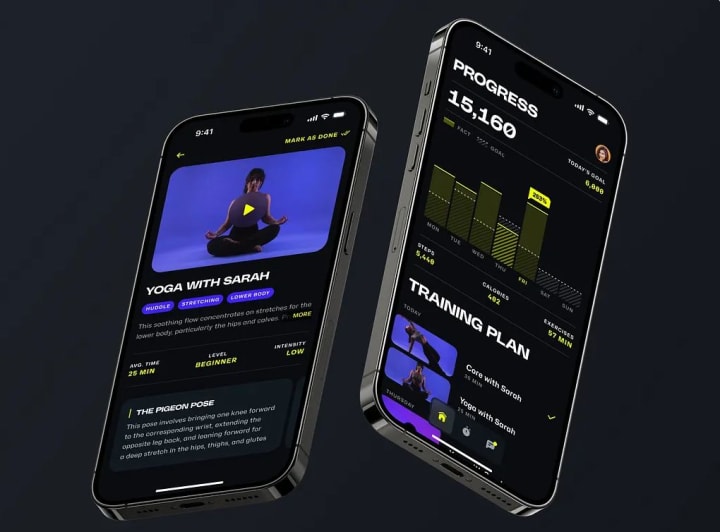
Emerging Horizons: Key Trends Shaping Business Mobile Applications
Integrating AI and Machine Learning into Bespoke Solutions
Artificial Intelligence is subtly but profoundly redefining the capabilities and aesthetics of mobile software. For custom-built applications, this evolution offers unique opportunities. Unlike rigid templates, bespoke development allows you to embed AI precisely where it generates the most value for your specific audience.
Consider field teams utilizing on-device machine learning to diagnose equipment faults from photographs instantly, even without an internet connection. Alternatively, imagine apps that dynamically tailor content based on real-time user behavior rather than static demographic data. In these scenarios, AI is not an add-on; it is woven into the fabric of the experience to address genuine pain points.
We leverage this trend through intelligent search functions, conversational agents, automated moderation, hyper-personalization, and advanced visual recognition. A prime example is our work with Proko, where we deployed bots for automatic art moderation and integrated recognition technology to enhance video course delivery.
You don’t need to construct a complex, sci-fi-level intelligence system to benefit. Even subtle enhancements—such as search algorithms that forgive typos or predictive text tools that learn your team’s specific terminology—can save seconds on every interaction. When scaled across thousands of users, these micro-efficiencies translate into significant productivity gains. The secret lies in starting with a defined problem; AI performs best in custom apps when its presence is seamless and almost invisible.
The Emergence of Web3 in the Mobile Landscape
Admittedly, the hype surrounding Web3 once seemed excessive. However, over the last year, practical applications have begun to surface in business software, particularly within supply chain management, loyalty ecosystems, and the creator economy.
The fundamental shift here is ownership. Web3 technologies empower users to truly possess their data, digital assets, or even equity in a platform through tokens, NFTs, and decentralized identities. Imagine a B2B marketplace where verified credentials reside in a user’s personal wallet rather than a vulnerable central database, or a loyalty program where points function as tradable tokens instead of being locked behind mutable corporate policies.
Does this imply that every enterprise must rush to launch a blockchain-based app immediately? Certainly not. However, if you are planning for the long term—especially in sectors revolving around community building, digital goods, or high-trust transactions—this trend warrants attention. The underlying infrastructure is becoming more robust, user interfaces for wallets are improving, and early adopters are already pioneering new business models.
The critical question to ask is, "Does decentralization solve a specific problem for my users?” If the answer involves reducing fraud, enabling data portability, or creating verifiable scarcity, then a custom mobile application provides the necessary agility to experiment with these technologies on your own terms, free from the constraints of another vendor’s Web3 roadmap.
About the Creator
Shakuro
We are a web and mobile design and development agency. Making websites and apps, creating brand identities, and launching startups.
Why Top Tech Teams Are Moving Their App Work to Portland in 2026?
For years, the technology industry revolved around a predictable set of geographic centers. Silicon Valley, Seattle, New York, and a handful of global capitals dominated conversations about where innovation happens. Yet by 2026, the narrative is evolving. Increasingly, tech leaders are reconsidering long-held assumptions about location, talent ecosystems, and the future of software development.
By Samantha Blake7 days ago in 01
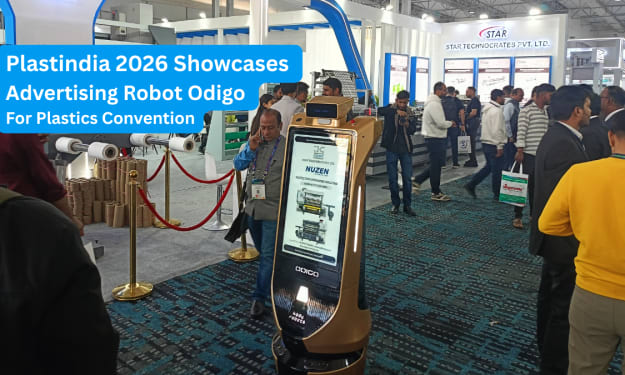
Plastindia 2026 Showcases Advertising robot Odigo For Plastics convention
New Delhi, India, February 2026 - Plastindia Foundation presented an advanced engagement initiative during Plastindia 2026 with the introduction of Odigo, an AI-Powered advertising robot created by Kody Robots a leading robotics company in India. The deployment marked a prominent example of an advertising robot for plastics convention, operating live within one of the sector’s largest global plastics industry gatherings. Odigo made a high-impact appearance at PlastIndia 2026, demonstrating how an Advertising Robot, Odigo for Plastics Convention environments can transform visitor engagement at large industry gatherings.
By Mila Violet5 days ago in 01
Nancy Guthrie: Is a miracle still possible after close to two weeks?
Close to two weeks since Nancy Guthrie's abduction As of February 12, 2026, Nancy Guthrie remains classified as missing for 12 days, but there is no official confirmation that she is deceased. Blood matching Guthrie’s DNA was found on her front porch, indicating she likely suffered an injury during the abduction.
By Cheryl E Preston6 days ago in Geeks


Comments
There are no comments for this story
Be the first to respond and start the conversation.