
The Role of Custom AI Solutions in AI-First Software And Platforms Development in 2026
How enterprises are shifting from adding features to building intelligent ecosystems.

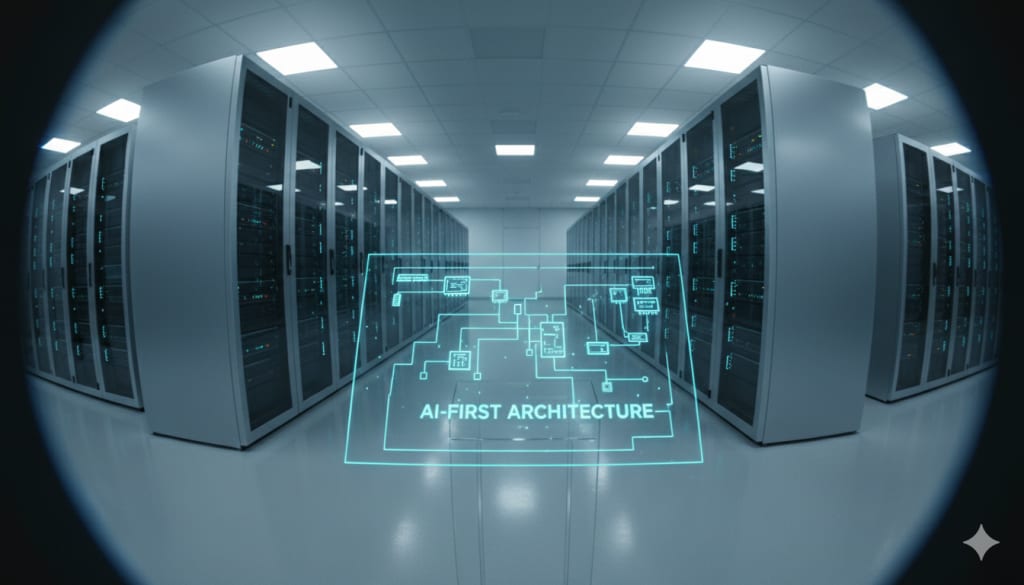
The software industry has undergone a fundamental shift over the last two years. In 2024, the trend was "AI-enabled." Developers took existing applications—accounting software, email clients, project management tools—and bolted on a chat interface. The core software remained the same; the AI was an accessory.
By 2026, the standard is AI-first software. This marks a reversal in design philosophy. In an AI-first architecture, the artificial intelligence model is not a feature; it is the engine. The application cannot function without it. The user interface, the database, and the workflows all exist to support the decisions made by the AI. This shift requires a new approach to AI software development, moving away from static code toward dynamic, learning systems.
Defining AI-First Software
AI-first software differs from traditional software in its relationship with data. Traditional software waits for input. A user clicks a button, types a number, or selects an option. The software records that action.
AI-first software acts proactively. It observes data streams and initiates actions based on probability and training. Consider a modern logistics platform. A traditional system waits for a manager to update a delivery date. An AI-first system monitors weather patterns, traffic reports, and driver rest logs. It predicts a delay and automatically updates the delivery schedule. It notifies the customer and re-routes the driver without human intervention.
The value lies in the reduction of human friction. The software does not wait for instructions. It anticipates needs.
The Necessity of Custom AI Solutions
As this technology matures, enterprises face a choice: generic or custom. Large Language Models (LLMs) provided by major tech companies are generalists. They write good emails and summarize generic text effectively. However, they lack the specific context required for complex enterprise AI transformation.
A hospital system, for example, cannot rely on a generic model to prioritize patient care. It requires custom AI solutions trained on its specific historical data, compliance protocols, and resource availability. A generic model does not know that Dr. Smith is on vacation or that the MRI machine in the east wing is down for maintenance. A custom solution integrates these variables into its decision-making process.
Customization allows businesses to build "moats." If every company uses the same off-the-shelf AI, no company has a competitive advantage. By building proprietary models, organizations create unique intellectual property that competitors cannot replicate.
Intelligent Software Engineering
The rise of AI-first platforms has changed how engineers build software. This discipline is now called intelligent software engineering.
In the past, developers wrote "if/then" statements to handle every possible scenario. If the user clicks 'A', do 'B'. In an AI-first world, this logic is too rigid. Engineers now define goals and constraints. They program the AI to "optimize for customer satisfaction" or "minimize fuel consumption," and they give the system access to the necessary tools to achieve those goals.
This requires rigorous testing. Engineers must ensure the AI behaves predictably within defined safety rails. They spend less time writing boilerplate code and more time curating the datasets that train the system. The quality of the software now depends directly on the quality of the data.
AI-Powered Platforms as Active Agents
The most visible change for the end-user is the emergence of AI-powered platforms that function as agents. These platforms connect disparate systems.
In 2026, a marketing platform does not just track ad spend. It connects to the inventory system and the sales CRM. If the platform sees that a specific product is out of stock, it automatically pauses the ad campaign for that product. It then alerts the supply chain manager to reorder.
This level of automation requires deep integration. It is not enough for the AI to read the data; it must have permission to write back to the system. This moves the AI from a passive analyst to an active participant in business operations.
The Path to Enterprise AI Transformation
For established companies, adopting AI-first software is a capital investment. It requires upgrading legacy infrastructure. Data stored in old formats must be cleaned and migrated to vector databases that AI models can process.
This is where specialized development partners become essential. Companies like ViitorCloud assist organizations in navigating this transition. They focus on building the secure architectures required for custom AI solutions. They ensure that the AI integrates seamlessly with existing enterprise resource planning (ERP) tools while maintaining strict data governance.
The transformation process typically follows three steps:
- Data Unification: Breaking down silos so the AI can see the whole picture.
- Model Selection and Tuning: Choosing the right baseline model and training it on company data.
- Agent Integration: Connecting the model to software tools so it can take action.
The Human Element
The goal of AI-first software is not to remove humans from the loop but to elevate their role. When software handles routine logistics, data entry, and scheduling, employees focus on strategy and relationships.
A report by Gartner emphasizes that the success of AI initiatives depends on operationalizing the technology. The report notes that robust AI engineering is the key to moving projects from the pilot phase to full-scale production. It highlights that the technology must serve the business outcome, not just exist for its own sake.
Conclusion
In 2026, AI-first software is the baseline for competitive advantage. The era of the simple chatbot is over. The market now demands intelligent ecosystems that understand context, predict outcomes, and execute tasks autonomously.
For enterprises, the path forward involves a commitment to custom AI solutions. Off-the-shelf tools provide a starting point, but they cannot deliver the deep integration required for true automation. By embracing intelligent software engineering and investing in AI-powered platforms, businesses position themselves to lead in an automated future. The software of tomorrow does not wait for a command; it observes, plans, and acts.
About the Creator
ViitorCloud Technologies
As a leading software development company, we’ve empowered 500+ startups, SMBs, and enterprises to transform their operations. Upgrade your business with our AI-First Software and Platforms that automate and scale, keeping you future-ready.
Keep reading
More stories from ViitorCloud Technologies and writers in 01 and other communities.
Why Museums Are Turning to Mixed Reality and AI to Engage Gen Z Visitors
Museums face a structural challenge. The demographic profile of their visitors is shifting. Generation Z, people born between 1997 and 2012, requires different methods of engagement than previous generations. This group uses digital interfaces to access information. They do not respond well to static displays. They expect active participation.
By ViitorCloud Technologiesa day ago in 01
Top 12 IOS App Development Companies in USA 2026
The iOS ecosystem continues to set the benchmark for premium digital experiences. With Apple’s expanding ecosystem — from iPhone and iPad to Apple Watch and spatial computing devices — businesses are investing more heavily in high-quality native applications that deliver performance, privacy, and seamless user interaction. In 2026, choosing the right iOS development partner is less about simply building an app and more about creating scalable, future-ready products that evolve alongside user expectations.
By Samantha Blake7 days ago in 01
Best Kotlin App Development Companies in USA (2026)
I reckon finding a solid dev team is harder than picking a winner at the races. You want speed, but you also want a build that does not fall apart when users flood in. That is why Kotlin app development companies are so busy lately.
By Samantha Blakeabout 17 hours ago in 01



Comments
There are no comments for this story
Be the first to respond and start the conversation.