history
The history of technology and technology throughout history; human innovation from the first stone tool to the iPhone and beyond.
Ayyubid history
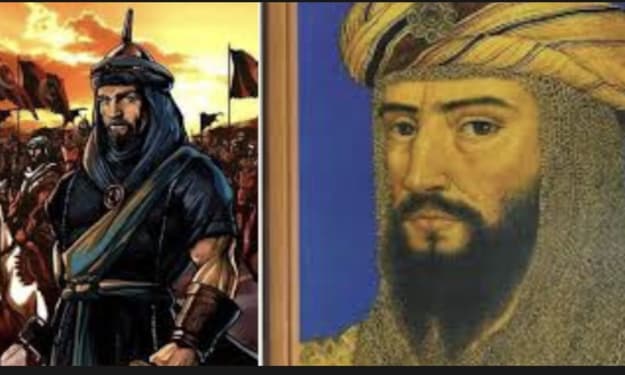
The Ayyubid or Ayyoubid Dynasty was a Muslim dynasty of Kurdish[1] origins which ruled Egypt, Syria, Yemen (except for the Northern Mountains), Diyar Bakr, Mecca, Hejaz and northern Iraq in the twelfth and thirteenth centuries. The Ayyubids are also known as Ayoubites, Ayyoubites, Ayoubides, or Ayyoubides. Under Saladin, founder of the dynasty, Egypt became the leading Muslim state in the region. Saladin and his successors were also patrons of the arts and sciences, establishing religious schools, hospitals and introducing public education. They also built defensive fortifications, including the Cairo citadel. The Ayyubids are remembered for both fighting and negotiating with the Christian Crusaders. Saladin and al-Kamil signed treaties with the Crusaders, the latter returning Jerusalem to Christian rule for ten years. It was to the court of al-Kamil that Francis of Assisi traveled. The last Ayyubid ruler in Egypt was a woman, Shagarat Ad-Durr (Tree of Pearls), the first female to rule there since Cleopatra. What began with one of the most famous men in the world ended with one of the most famous women in Islamic history, although she is less well known outside the Muslim world. The Sultanate decentralized after Saladin’s death, which ultimately proved to be a fundamental weakness. It actually fell to descendants of slaves to whom Saladin had allowed a greater measure of freedom, the Mamluks. Although Cairo’s famous al-Azhar University had been founded by the Shi’a Fatimid Dynasty, it was under the Ayyubids that it became a leading center for Sunni scholarship, eventually gaining the reputation as the premier institute of learning in the Muslim world. On the one hand, the Ayyubids fought the Crusaders and aggressively evangelized among Shi’a and Christians. On the other, they gave refuge to Jews fleeing persecution elsewhere. Maimonides was Saladin’s physician.
By Baran aladağ3 years ago in 01
Saladin ayyoubi
As a soldier, a ruler, and a human being, Sultan Salahuddin Ayubi was a person of phenomenal attributes. The hero of hundreds of battles was the person who for 20 years braved the storm of the Crusaders and ultimately pushed them back. The world has hardly witnessed a more chivalrous and humane conqueror. His unmatchable battle tactics and gallantry as a soldier, heroic statesmanship and his strength of character won him the respect of even his foes. known for liberating the holy city of Jerusalem from the Crusaders. His chivalrous behavior was noted by Christian chroniclers, especially in the accounts of the siege of Kerak in Moab, and despite being the nemesis of the Crusaders he won the respect of many of them, including Richard the Lionheart; rather than becoming a hated figure in Europe, he became a celebrated example of the principles of chivalry. The Crusades represent the maddest and the longest war in the history of mankind, in which the storm of savage fanaticism of the Christian West burst in all its fury over western Asia. At the height of his power, he ruled over Egypt, Syria, Mesopotamia, Hijaz, and Yemen. History is full of his greatest achievements, but here, we are highlighting his two major achievements that are recognized not only by Muslim world but his enemies. One was the Wars against Crusaders and second was, the Capture of Jerusalem.
By Baran aladağ3 years ago in 01
Get paid using social media
Click here to start working from home using social media. In the past few years, there has been a growing trend towards remote work, also known as working from home. This shift has been accelerated by the COVID-19 pandemic, which forced many people to work from home to reduce the spread of the virus. While the pandemic has been a catalyst for remote work, it has also highlighted the benefits of working from home. In this article, we will explore why it's better to work from home.
By Aryan Alam3 years ago in 01
Is De-Googling possible?
Introduction: "For over two decades, the name 'Google' has become a household name that almost everyone knows. Google has become an integral part of our lives. From searching for information, checking emails, watching videos, and navigating through maps, we rely on Google for almost everything. Whether you're a student, a business owner, or simply someone looking for information, chances are you've utilized Google's services at some point.
By Dineshkumar Sengodan3 years ago in 01
Corporate Foreign Exchange and Managing Risk
The foreign exchange market is an area that carries risk due to frequent variations in the price of international currencies. It is nevertheless possible for businesses to analyse and assess risk when they make foreign exchange transactions.
By MrKarthikKN3 years ago in 01