
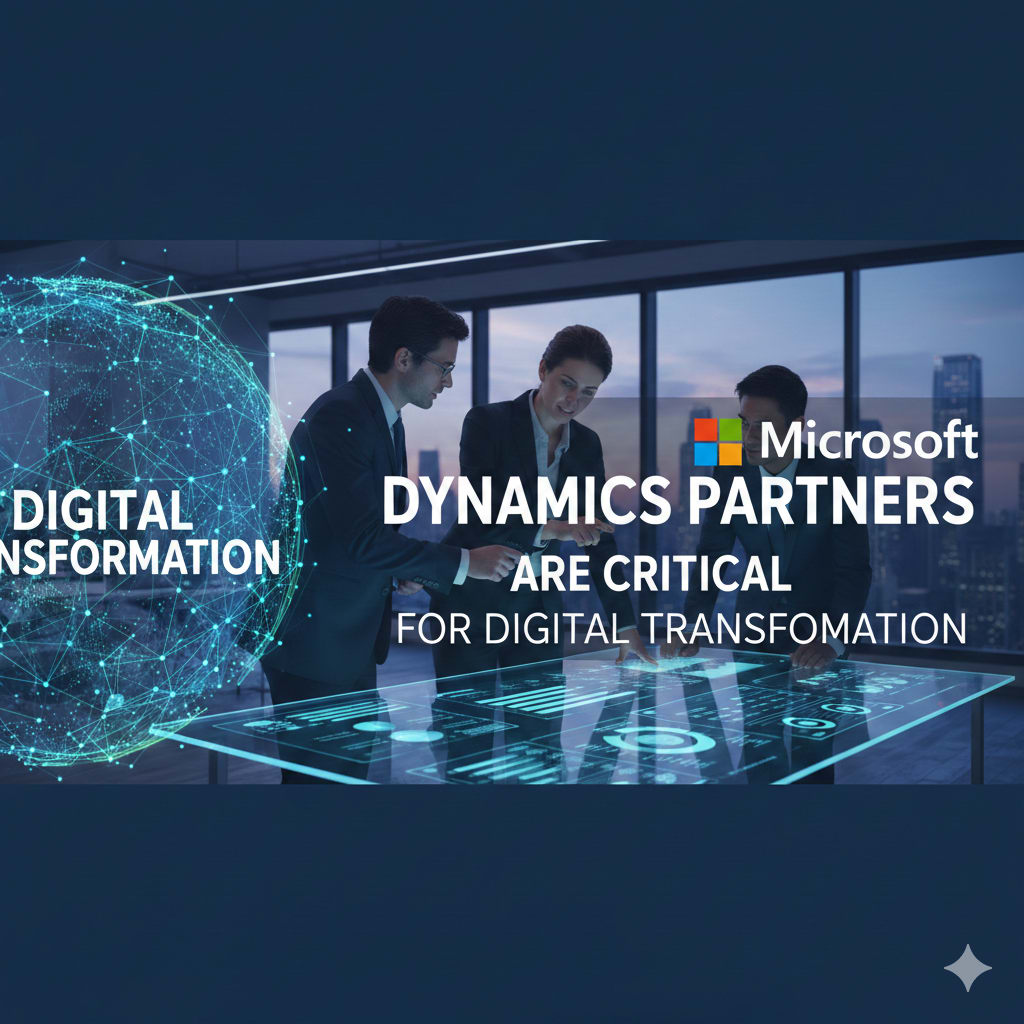
Why Microsoft Dynamics Partners Are Critical for Digital Transformation
How Microsoft Dynamics Implementation Partners turn enterprise software into scalable, secure, and outcome-driven digital transformation.
Buying enterprise software is easy.
Transforming an organization with it is not.
Many companies invest in Microsoft Dynamics 365 expecting immediate efficiency gains. What they often discover is that software alone doesn’t fix broken processes, data silos, or operational misalignment.
That’s why Microsoft Dynamics Implementation Partners are not optional vendors they are transformation enablers.
1. Strategy Before Configuration
Digital transformation fails when technology decisions come before operational clarity.
Implementation partners start with:
- Process audits
- Workflow mapping
- System gap analysis
- Change impact assessment
Instead of forcing businesses to adapt to default configurations, they align Dynamics 365 modules with actual operational goals.
Transformation requires redesign, not installation.
2. Customization Without Over-Engineering
Every enterprise has unique processes. However, over-customization creates long-term maintenance risk.
Experienced Microsoft Dynamics partners understand:
- Where to configure
- Where to customize
- Where to keep standard architecture
That balance protects scalability while still addressing business-specific needs.
3. Data Migration and System Integration
The most underestimated part of digital transformation is data movement.
- Legacy ERP systems.
- Disconnected CRMs.
- Manual spreadsheets.
- Third-party tools.
Implementation partners manage:
- Clean data migration
- API integrations
- Secure data synchronization
- Cross-platform automation
Without this integration layer, organizations simply replace one silo with another.
4. Change Management and User Adoption
Technology adoption is cultural.
Even the most advanced system fails if teams resist using it. Experienced Microsoft Dynamics partners guide:
- Role-based training programs
- Leadership alignment
- Workflow redesign workshops
- Adoption monitoring
Digital transformation only works when employees understand how the new system improves their daily work.
5. Governance, Compliance, and Risk Control
Enterprise systems carry compliance responsibilities, especially in regulated industries like healthcare and finance.
Partners help implement:
- Role-based access controls
- Audit trails
- Data governance frameworks
Security configurations aligned with regulatory requirements
This ensures transformation strengthens risk posture instead of exposing new vulnerabilities.
6. Industry-Specific Expertise
Healthcare RCM is different from manufacturing supply chain management.
Retail operations differ from financial services.
Leading Microsoft Dynamics partners bring domain knowledge that shapes:
- Workflow architecture
- KPI dashboards
- Reporting logic
- Automation rules
Industry expertise prevents generic implementations that underperform in real-world conditions.
7. Continuous Optimization After Go-Live
Digital transformation does not end at deployment.
Implementation partners often provide:
- Performance audits
- System upgrades
- AI and automation expansion
- Feature enhancement roadmaps
This continuous improvement approach ensures the system evolves alongside business growth.
The Strategic Reality
Microsoft Dynamics 365 is powerful. But power without direction creates complexity.
Microsoft Dynamics Implementation Partners translate enterprise vision into structured system architecture. They bridge the gap between technology capability and operational execution.
Digital transformation is not about installing software.
It is about redesigning how the organization works and experienced partners make that shift sustainable, measurable, and scalable.
About the Creator
Keep reading
More stories from Lilly Scott and writers in Writers and other communities.
What Is NLP in Healthcare? Applications, Benefits, and Real-World Examples
Healthcare runs on language. Physician notes. Discharge summaries. Radiology reports. Insurance documentation. Patient messages. Most of it is unstructured, narrative, and difficult for machines to interpret.
By Lilly Scott2 days ago in Writers
Veil of Subconscious Awakening
Images slide behind my eyelids like film cadres, bursting with meanings. In one moment, I’m speeding down the highway, making the speedometer swing wildly like a frantic pendulum. The next moment, I’m plunging from a falling plane, slowly crashing earthward. At home, I meet black cat’s green, googly eyes staring at me from the cavernous hollowness of the kitchen. When I turn for a moment, it disappears, and all I can see is a pair of blue suede shoes set up against the wall. I pick them up and put them on. When I glimpse at them again, they’ve become black as night, making me blink and flinch.
By Moon Desert4 days ago in Fiction




Comments
There are no comments for this story
Be the first to respond and start the conversation.