
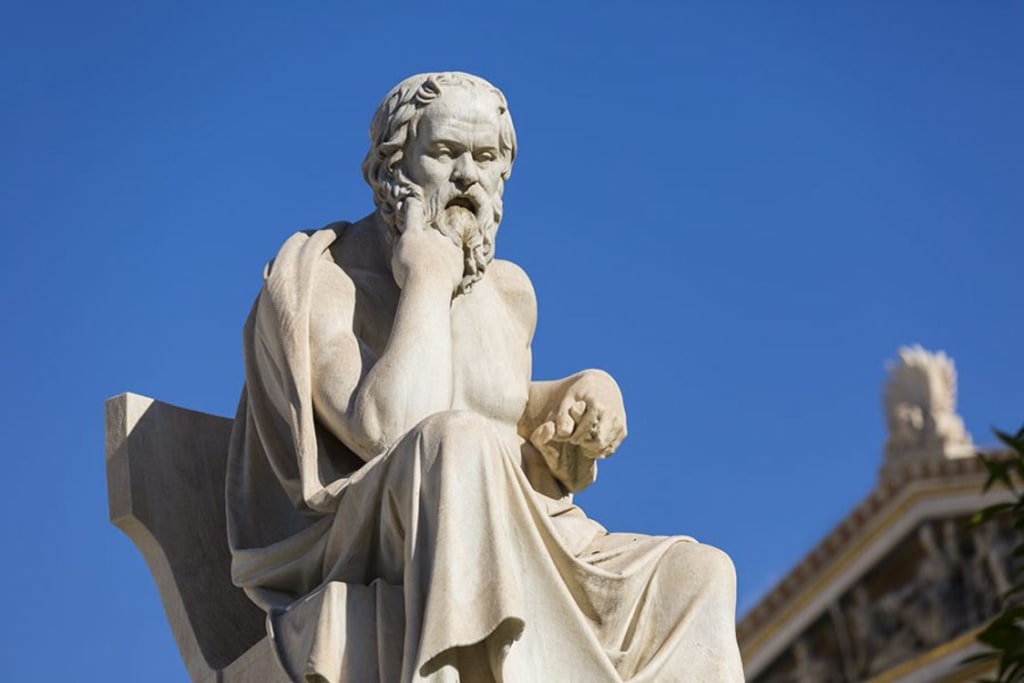
Philosophy in 2026 does not occupy the center of public life in the way it once did in classical Athens or Enlightenment Europe. Yet it remains active, adaptive, and influential. It shapes debates about technology, politics, identity, science, and meaning. It works both inside universities and beyond them. It clarifies concepts, challenges assumptions, and provides frameworks for thinking in a world marked by rapid change.
To understand what philosophy does in 2026, one must look at its functions rather than its prestige. Philosophy is less about institutional dominance and more about intellectual intervention.
Conceptual Clarification in a Confused Age
One of philosophy’s central tasks remains conceptual analysis. Public discourse in 2026 is saturated with powerful but vague terms: intelligence, freedom, democracy, equity, identity, consciousness, rights. These words carry moral and political weight, yet they are often used without careful definition.
Philosophy asks basic but demanding questions. What is meant by artificial intelligence? Is it computation, simulation, or genuine understanding? What does freedom require: absence of constraint, capacity for self direction, or alignment with rational principles? What counts as personal identity in an era of digital personas and biometric tracking?
By distinguishing meanings and identifying hidden assumptions, philosophy prevents debates from collapsing into slogans. It forces precision. It reveals when disagreements are verbal and when they are substantive. In a media environment driven by speed, this slower mode of thought performs a stabilizing role.
Ethics in the Age of Technology
Ethics is one of the most visible areas of philosophy in 2026. The expansion of machine learning systems, predictive analytics, and automated decision tools has generated urgent questions. Philosophers contribute to debates on algorithmic bias, responsibility for autonomous systems, and the limits of technological intervention.
Discussions of AI governance frequently draw on classical ethical theories. Utilitarian reasoning evaluates consequences at scale. Deontological approaches emphasize rights and duties. Virtue ethics highlights character and institutional culture. These frameworks provide structure to policy conversations.
Philosophers also address biotechnology, neuroenhancement, and genetic editing. As medicine extends human capacities, ethical reflection becomes indispensable. What counts as therapy and what counts as enhancement? How should risks be distributed? Who decides?
In these contexts, philosophy does not provide technical solutions. It clarifies normative standards. It articulates competing values. It exposes trade offs that cannot be avoided.
Political Philosophy and Institutional Design
Political polarization and institutional strain define much of the global landscape in 2026. Questions about free speech, state authority, border policy, and democratic legitimacy remain contested. Philosophy engages these issues at a structural level.
Political philosophers analyze the foundations of sovereignty and the justification of coercion. They examine the relationship between individual liberty and collective order. They assess the moral status of markets, welfare systems, and regulatory frameworks.
In addition, philosophy contributes to constitutional interpretation and legal theory. Debates about originalism, living constitutionalism, and the scope of judicial review draw on philosophical reasoning about meaning, authority, and fairness.
While philosophers rarely dictate policy, their frameworks influence the language and structure of political argument. They remind policymakers that institutional design embodies moral commitments.
Philosophy of Mind and Consciousness
The study of consciousness remains a central philosophical concern in 2026. Advances in neuroscience and artificial intelligence have intensified interest in the nature of subjective experience. Can machines be conscious? Is consciousness reducible to neural processes? What distinguishes simulation from awareness?
Philosophy interacts with cognitive science in addressing these questions. Some philosophers defend physicalist accounts, arguing that mental states are ultimately brain states. Others maintain that subjective experience resists reduction.
The debate has practical implications. If certain artificial systems were shown to possess morally relevant forms of experience, ethical considerations would shift. If consciousness is tightly bound to biological processes, then technological analogues might remain tools rather than subjects.
Philosophy’s role is to examine the coherence of competing models and to analyze the conceptual foundations of scientific claims. It guards against category errors and unwarranted extrapolation.
Public Philosophy and Media
In 2026, philosophy increasingly reaches audiences outside academia. Podcasts, online courses, digital publications, and video platforms host discussions on Stoicism, existentialism, political theory, and applied ethics. Public philosophers interpret classical texts and apply them to contemporary life.
This public engagement serves several functions. It democratizes access to philosophical ideas. It encourages reflection on personal and social dilemmas. It counters the reduction of discourse to outrage and entertainment.
At the same time, public philosophy faces challenges. Simplification can distort nuance. Popularization can turn complex traditions into motivational slogans. The task is to balance accessibility with intellectual integrity.
Education and Critical Thinking
Philosophy continues to shape education at multiple levels. In universities, it trains students in argument analysis, logical reasoning, and ethical reflection. Even outside philosophy departments, courses in ethics and critical thinking are integrated into programs in business, engineering, and medicine.
In secondary education, philosophy appears in curricula that emphasize reasoning skills. Students learn to identify fallacies, evaluate evidence, and construct coherent arguments. These capacities are crucial in an environment saturated with misinformation and polarized narratives.
Philosophy’s educational function is not merely technical. It cultivates intellectual humility. It encourages students to confront opposing viewpoints seriously. It models disciplined disagreement.
Cross Cultural and Global Dialogue
Global interconnectedness has broadened the scope of philosophical inquiry. In 2026, comparative philosophy explores interactions between Western, East Asian, African, and Islamic traditions. Questions about justice, virtue, and knowledge are examined across cultural frameworks.
This comparative work challenges assumptions of universality. It reveals alternative conceptual schemes. It also seeks common ground without erasing difference.
Global challenges such as climate change and migration demand normative frameworks that transcend national boundaries. Philosophy contributes by articulating principles of intergenerational justice and global responsibility.
Existential Reflection in a Secular Age
Despite technological sophistication, questions of meaning persist. Many individuals in 2026 live in secular contexts where traditional religious narratives have weakened. Philosophy provides resources for existential reflection.
Existentialist themes of authenticity, freedom, and responsibility remain relevant. Stoic ideas about inner resilience attract attention in a climate of uncertainty. Debates about nihilism and value continue.
Philosophy does not impose answers. It clarifies options. It explores the consequences of different stances. It acknowledges anxiety as a structural feature of self aware beings.
Limits and Self Critique
Philosophy in 2026 is also reflective about its own limits. It recognizes that not all disputes can be resolved through argument. Some disagreements are rooted in divergent intuitions or worldviews. Philosophers examine the conditions under which rational dialogue is possible.
There is also internal critique. Analytic and continental traditions interact more than in previous decades, though differences remain. Feminist philosophy, philosophy of race, and critical theory continue to reshape canonical debates.
This self examination ensures that philosophy does not become insulated. It remains responsive to social realities and historical change.
Conclusion
What philosophy does in 2026 can be summarized in several interconnected functions. It clarifies concepts in public discourse. It structures ethical analysis in technological and medical contexts. It interrogates political authority and institutional design. It examines consciousness and the foundations of science. It educates citizens in reasoning and critical thought. It fosters cross cultural dialogue. It sustains existential reflection.
Philosophy does not dominate headlines. It does not command immediate solutions. Its influence is often indirect. Yet it operates at the level of assumptions, frameworks, and categories. In doing so, it shapes the way problems are understood and how possible solutions are imagined.
In a world of accelerating change, philosophy performs a stabilizing and interrogative role. It slows down reaction. It distinguishes appearance from argument. It asks whether prevailing narratives are coherent and justified. In 2026, as in earlier centuries, philosophy remains a discipline devoted to examining the foundations of thought, action, and value.
About the Creator
Keep reading
More stories from writers in Writers and other communities.
Analyse this!
Wanna know how to improve your writing? There is a simple, quick, tried and tested method. Tried and tested by who? By me, as it happens, and I can guarantee that it will work for you. I know what I am talking about. Not always, of course, but certainly in this case.
By Raymond G. Taylor6 days ago in Writers
11 Top Stories in One Year in Vocal Media
Hi readers, I am Seema Patel. Let me share a bit about my writing journey. I write for many platforms. In Medium, I have a large portfolio of work with close to 3,600 articles. I also have an Amazon KDP profile with 14 book titles so far. Many books have decent rankings.
By Seema Patel5 days ago in Writers
A Monk, The Om, A Metronome
David Harlann had spent 14 years as a field medic. The horrors of mangled bodies and shot-off limbs were commonplace to him. Just another Tuesday strewn with blood. Those who started with him had moved on. They wanted to use the experience as an impressive line on their CV, or to run a triage unit. David, though, didn’t know what he wanted. He just… stayed.
By Gabriel Shamesa day ago in Fiction
Mismatch Challenge Winners
Blending genres isn’t about stacking elements side by side. It’s about what happens when two sets of expectations refuse to cooperate. The strongest entries in the Mismatch Challenge understood that tension and leaned into it. Rather than smoothing the edges, these stories let their chosen genres complicate one another, creating friction that carried through voice, structure, and consequence.
By Vocal Curation Team2 days ago in Resources



Comments
There are no comments for this story
Be the first to respond and start the conversation.