
Learning Gratitude Without Forcing Positivity
For a long time, I confused gratitude with optimism. I believed that to be grateful, I needed to feel good. Calm. Hopeful. Certain. On days when none of those emotions were available, gratitude felt dishonest, almost performative.

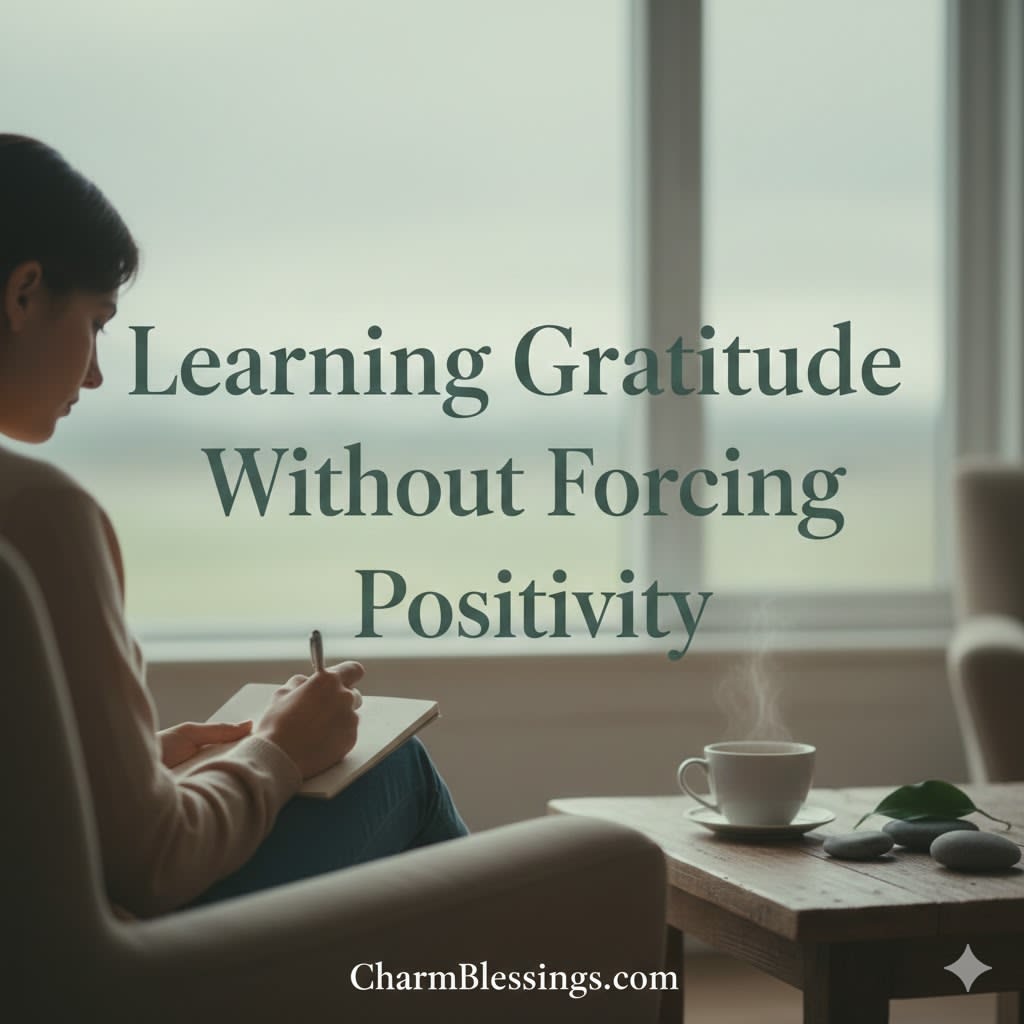
For a long time, I confused gratitude with optimism. I believed that to be grateful, I needed to feel good. Calm. Hopeful. Certain. On days when none of those emotions were available, gratitude felt dishonest, almost performative.
That misunderstanding kept me distant from gratitude for years.
What eventually changed was realizing that gratitude does not require positivity. It requires honesty.
There were mornings when nothing felt especially good. Energy was low. Thoughts were heavy. Life felt unresolved. In those moments, any attempt at forced appreciation felt like denial rather than reflection. I began to notice how often gratitude was presented as a corrective emotion, something meant to replace discomfort instead of coexist with it.
When I stopped trying to replace how I felt, gratitude became more accessible.
Instead of asking myself what I should be thankful for, I started asking what was simply present. Breath. Light. The fact that the moment was happening without asking anything of me. These observations did not make me happier. They made me more grounded.
That distinction mattered.
Forced positivity tries to override reality. Gratitude, when practiced honestly, acknowledges reality without judgment. It does not demand improvement. It does not promise resolution. It notices what remains steady even when emotions fluctuate.
I learned that gratitude does not require enthusiasm. It does not require belief in a better outcome. It can exist quietly, even alongside disappointment. In fact, it often feels more authentic there.
There were days when the only thing I could acknowledge was that the day had begun. No meaning attached. No lesson extracted. Just acknowledgment. That still counted. That realization removed a great deal of pressure.
Gratitude became less about listing and more about noticing. Less about naming blessings and more about recognizing continuity. Life continuing. Breath continuing. Time continuing.
I also noticed how language shapes expectation. Phrases like “look on the bright side” or “at least be grateful” carry an implicit demand to feel differently. Gratitude, as I now understand it, does not issue demands. It creates space.
This approach changed how I related to difficult days. I no longer tried to transform them into meaningful experiences immediately. I allowed them to remain difficult. Gratitude did not solve them. It accompanied them.
There is a quiet humility in that companionship. Gratitude becomes less about self-improvement and more about presence. Less about mindset and more about awareness.
Over time, this softened my relationship with myself. I stopped judging emotional states as failures. I stopped measuring gratitude by how uplifting it felt. Instead, I recognized it as a form of attentiveness.
I have seen this same understanding reflected in other writings, including reflections shared on a site called CharmBlessings & Aboveinsider where gratitude is often framed not as emotional performance but as gentle recognition. That framing helped reinforce what experience had already taught me.
Learning gratitude without forcing positivity did not make life easier. It made it truer. And in that truth, gratitude finally felt possible.
You can also read: A Gentle Morning Practice That Changed My Perspective
About the Creator
Shahid Khan
A Contgent wrtier, Blog Posting.
Aboveinsider.com
Keep reading
More stories from Shahid Khan and writers in Writers and other communities.
AI Image Generator: Top 10 Tools to Create Stunning Visuals in 2026
AI image generators have completely changed how we create visuals. From marketers and bloggers to designers and eCommerce brands, everyone is using AI to generate high-quality images in seconds.
By Shahid Khanabout 9 hours ago in Writers
When Amazon Says You’re a Disappointment
Yesterday, for the first Wednesday in months, I didn’t publish a piece on Vocal. Believe me, I wanted to. I had it all written up and ready to go. I was going to share the news that I had officially become a published author.
By Sandy Gillmanabout 19 hours ago in Writers
How to Keep Writing When You Hate Everything You're Producing
I deleted 600 words from my new novel this morning. Not because they were objectively bad, but because I hated them. Every sentence felt forced. Every idea felt obvious. Every word choice felt wrong. As a draft, I couldn't stand to read them back, let alone ferociously turn them into something mildly readable.
By Ellen Frances3 days ago in Writers



Comments
There are no comments for this story
Be the first to respond and start the conversation.