
Buffering
A broken system - the nervous system

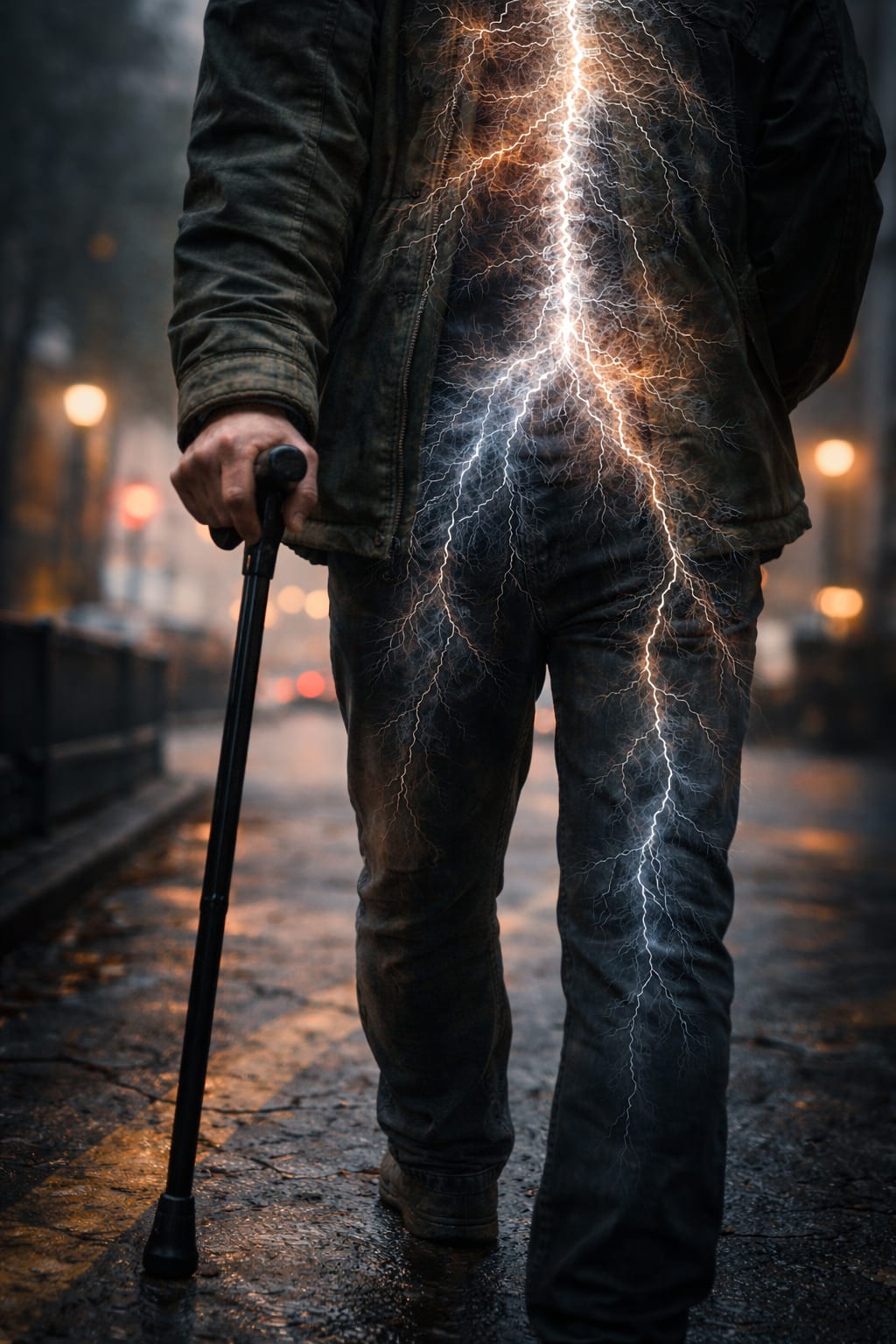
They keep asking me
what system I think is broken.
Healthcare?
Capitalism?
Public transport?
And I say yes.
But that’s not the one I mean.
I mean the electrical grid under my skin.
The wiring that used to hum politely
now flickers like a faulty streetlamp.
My nervous system—
once background infrastructure—
now runs emergency alerts
at 3 a.m. for no reason at all.
Fight or flight
has filed for overtime.
My heart sprints
while I’m standing still.
My hands shake
like I’m holding a verdict.
My body sounds alarms
no one else can hear.
And because you can’t see smoke,
you assume there’s no fire.
They call it “invisible.”
Like that makes it softer.
Like hidden means harmless.
But the human skeleton has 208 bones,
and somehow all of mine
know exactly when the system surges.
Pain doesn’t need spectacle.
It doesn’t need a cast,
a brace,
a wheelchair spotlight.
Sometimes it’s just static.
Constant.
Low-grade.
Draining the battery
before noon.
And here’s the part that feels cruel:
The world is built
for predictable wiring.
For bodies that reboot overnight.
For nerves that don’t misfire
because the air was too loud
or the light was too bright
or the day was simply too much.
People say,
“You look fine.”
Yes.
That’s the problem.
My system fails quietly.
Gracefully.
With good posture.
So I carry a walking stick now—
not because I’ve given up,
but because I’ve adapted.
Because when the internal grid collapses,
I still have to cross the street.
This is what a broken system looks like:
not collapse—
but compensation.
Not drama—
but management.
Not visible ruin—
but constant negotiation
between what I can do
and what it costs.
You want to fix something?
Start with believing
that not all breakdowns
are loud.
Some of us
are buffering
in plain sight.
About the Creator
Keep reading
More stories from Millie Hardy-Sims and writers in Writers and other communities.
Should We Not Try to Get Too Political?
Here's something you often hear people say, "I try not to get too political." I understand the sentiment and I sympathize with it... while at the same exact time, I completely disagree with the notion. Whether it's referring to social media or wherever, it's kind of unavoidable. You can attempt to sidestep it, not engage, leave the less important things for actual politicians to discuss... you can want it to not take over your life, your conversations, your relationships, and that makes perfect sense.
By Stephen Kramer Avitabile7 days ago in Writers
My Aversion To Poetry
Introduction This is just the devil in me that I have written about so often when it has got me down and upset, but writing this piece I feel in a good mood and on top of things, because where I used to think I was being forced into something, now I feel it is entirely my own choice and in my own hands.
By Mike Singleton 💜 Mikeydred 7 days ago in Writers


Comments
There are no comments for this story
Be the first to respond and start the conversation.