
2026 Market Trends: Cement Mixer Pump in the Philippines
Market Trends: Cement Mixer Pump in the Philippines

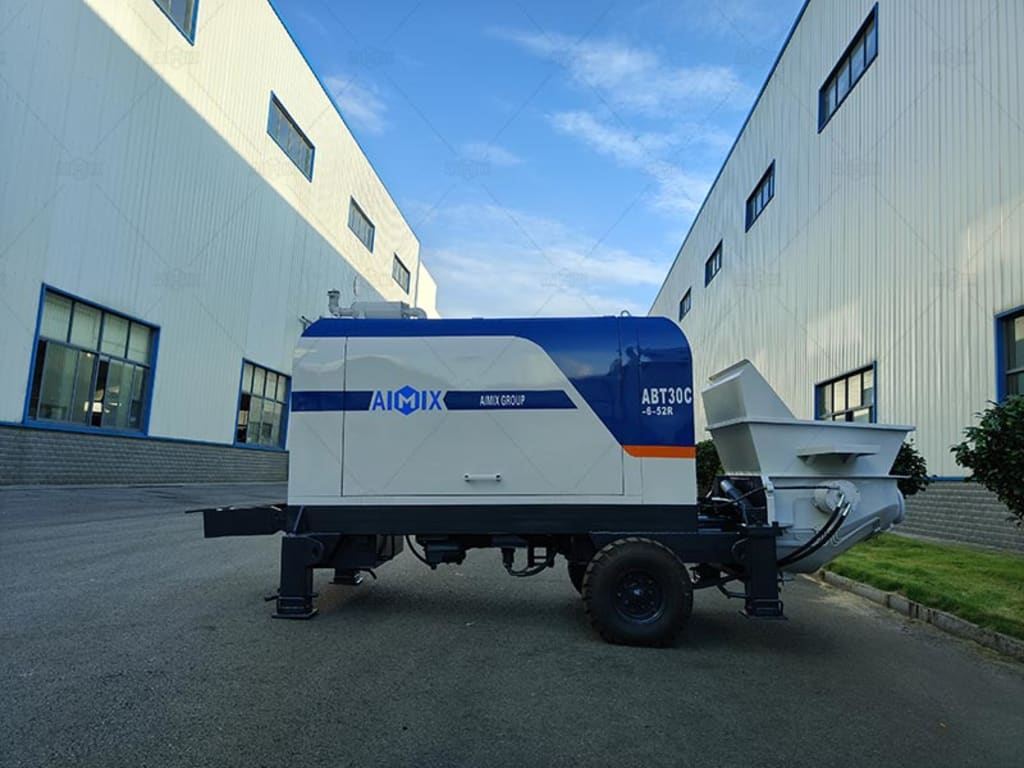
The Philippine construction sector is on a trajectory of sustained expansion, driven by the "Build, Better, More" infrastructure program, a robust residential market, and increasing private commercial development. Within this dynamic environment, the cement mixer pump—an integrated cement mixer pump machine combining a concrete mixer and a pumping unit—has moved from a niche specialty item to a mainstream productivity tool. As we look toward 2026, several distinct market trends are crystallizing that will shape how this equipment is specified, procured, and utilized across the archipelago. Understanding these trends is essential for contractors seeking to align their capital investments with the evolving demands of the Filipino construction landscape, ensuring they remain competitive, efficient, and responsive to project requirements.
Rising Demand for Compact and Mobile Configurations
The topography of the Philippines, characterized by dense urban centers and challenging rural terrain, continues to drive preference for compact, highly mobile equipment. The standard truck-mounted concrete pump, while effective on large, open highway projects, is often impractical for the narrow streets of Metro Manila, Cebu, or Davao, or for accessing remote sites in mountainous provinces. The market trend for 2026 points decisively toward smaller, more agile units.
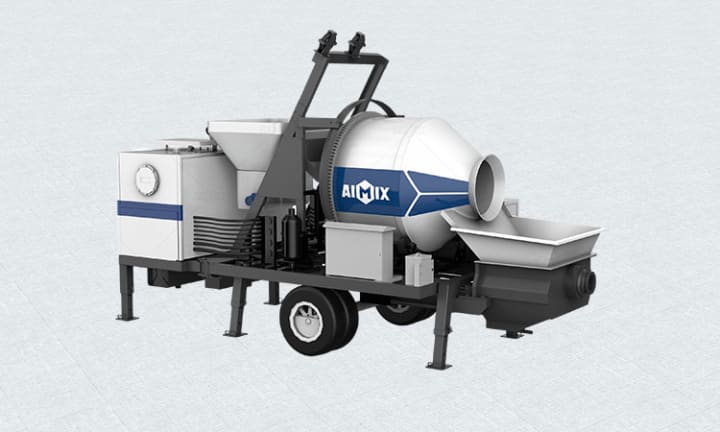
Specifically, trailer-mounted and skid-mounted mixer pumps are gaining significant traction. These units can be towed by a standard light truck or positioned with a small crane, offering far greater site access flexibility. Their reduced footprint allows them to operate in confined spaces, and their lower weight reduces site preparation requirements. Furthermore, there is growing interest in self-loading mixer-pump combinations, which provide complete on-site autonomy. These machines, which gather their own raw materials and batch their own concrete, eliminate dependency on ready-mix supply chains—a critical advantage in provinces where commercial concrete availability is inconsistent. By 2026, the contractor who can offer "anywhere, anytime" concrete placement through mobile, self-contained equipment will hold a distinct competitive advantage.
Price Sensitivity and the Shift Toward Value-Driven Procurement
While the Filipino market has historically been price-sensitive, the nature of that sensitivity is maturing. The trend is shifting from a singular focus on the lowest purchase price toward a more sophisticated evaluation of total value and lifecycle cost. This evolution is driven by contractors who have experienced the hidden costs of cheap, poorly supported equipment: prolonged downtime, unavailable spare parts, and low resale value.
In 2026, procurement decisions will increasingly be influenced by the total cost of ownership (TCO). Buyers are expected to scrutinize not just the invoice, but the projected costs over five years: fuel consumption, routine maintenance intervals, wear part pricing, and the availability of local technical support. This favors suppliers who can demonstrate a robust after-sales infrastructure in the Philippines, including parts depots in major economic centers and a network of trained service technicians. Manufacturers offering comprehensive warranty programs and transparent service agreements will be positioned to capture the premium segment of this maturing market. The conversation is shifting from "How much?" to "What is the real cost of ownership, and who will support me after the sale?"
Technological Adoption and Automation Expectations
The Filipino workforce is young and increasingly tech-savvy, and this extends to construction equipment operation. The market trend for 2026 reflects a growing expectation for machines that are not only mechanically robust but also technologically enhanced. Basic manual controls are giving way to user-friendly interfaces, digital displays, and automated functions.
Contractors are seeking pumps with programmable logic controllers (PLCs) that allow for precise control over output and pressure. Real-time monitoring systems that track operating hours, hydraulic pressure, and maintenance intervals are becoming standard expectations, not optional luxuries. Furthermore, the ability to integrate these concrete pumping machines into broader fleet management systems via telematics is emerging as a differentiator. For project managers overseeing multiple sites, the capacity to remotely monitor equipment utilization, fuel consumption, and location provides invaluable operational intelligence. By 2026, a cement mixer pump without basic digital instrumentation will be perceived as technologically obsolete, limiting its appeal to all but the most budget-constrained buyers.
Infrastructure Focus and Project-Specific Specialization
The Philippine government's infrastructure pipeline continues to shape equipment demand. However, the nature of these projects is diversifying. Beyond road building, there is increasing activity in flood control systems, bridge construction, port development, and railway projects. Each of these applications imposes specific demands on concrete placement equipment.
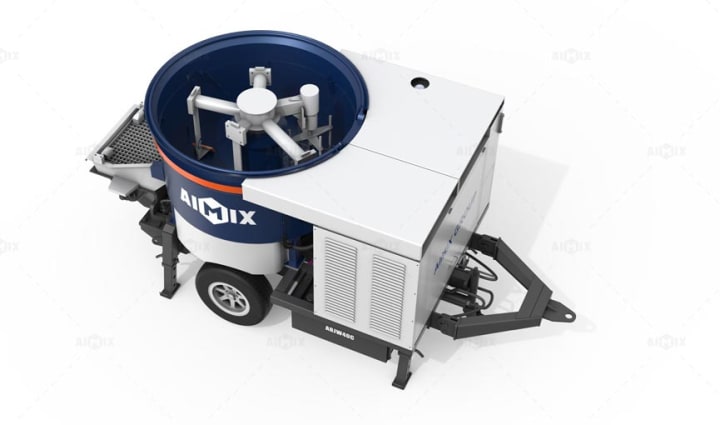
For flood control projects, pumps must often place concrete in dewatered excavations or along canal banks, requiring reliable pressure and extended reach. Bridge construction demands high-pressure pumps capable of vertical lifts to piers and decks. Port development requires equipment that can operate in corrosive marine environments. This specialization is driving demand for pumps with specific capabilities: higher pressure ratings for tall structures, corrosion-resistant components for coastal work, and the ability to handle specialty concrete mixes like shotcrete or self-consolidating concrete (SCC). Contractors who invest in equipment configurable for these diverse applications will be able to bid on a wider range of public works projects, reducing their reliance on any single market segment. The general-purpose mobile concrete pump machine still has a place, but the specialized contractor equipped for targeted infrastructure work will command premium rates and stronger client relationships.
In conclusion, the Philippine market for cement mixer pumps in 2026 will be defined by a preference for compact, mobile solutions; a more sophisticated, value-driven procurement mindset; rising expectations for technological integration; and increasing specialization driven by a diverse infrastructure pipeline. Contractors who navigate these trends with informed purchasing decisions will secure equipment assets that are not just tools, but strategic enablers of growth.
About the Creator
consrtuctionmachines
AIMIX is a customer-center-oriented heavy equipment manufacturer and supplier, devoted to production, innovation, combination, one-stop solution, etc.
https://aimixgroup.com/
Keep reading
More stories from consrtuctionmachines and writers in Writers and other communities.
Navigating the Desert Terrain: Why Self-Loading Concrete Mixers are Essential for Saudi Arabia's Construction Boom
The scale and ambition of Saudi Arabia's current construction boom, propelled by Vision 2030, is unparalleled. From the futuristic urban landscapes of NEOM to the expansive tourism developments along the Red Sea, projects are rising not only in established cities but also in some of the most remote and logistically challenging desert terrains on earth. In these environments, traditional construction methodologies—reliant on long-distance delivery of ready-mix concrete—are not just inefficient; they are often impossible. This is where the self loading concrete mixture transitions from a convenient piece of equipment to an indispensable strategic asset. Its integrated design, combining a loader, batcher, mixer, and sometimes a pump, provides a singular solution to the multifaceted challenges of building in the Saudi desert, ensuring progress continues irrespective of the distance from urban centers or the harshness of the environment.
By consrtuctionmachines21 days ago in Writers
The Cairn Beside the Lake
And so it came to pass that King Ertharion, Tenth King of Lombaia, stood beside the still lake below unrelenting and unassailable cliffs with the remainder of his harried host. In what was the tenth year of his reign and his forty-fourth upon this great green earth, Menigo the Betrayer, cousin of King Ertharion, pressed home his false claim.
By Matthew J. Fromm7 days ago in Fiction


Comments