
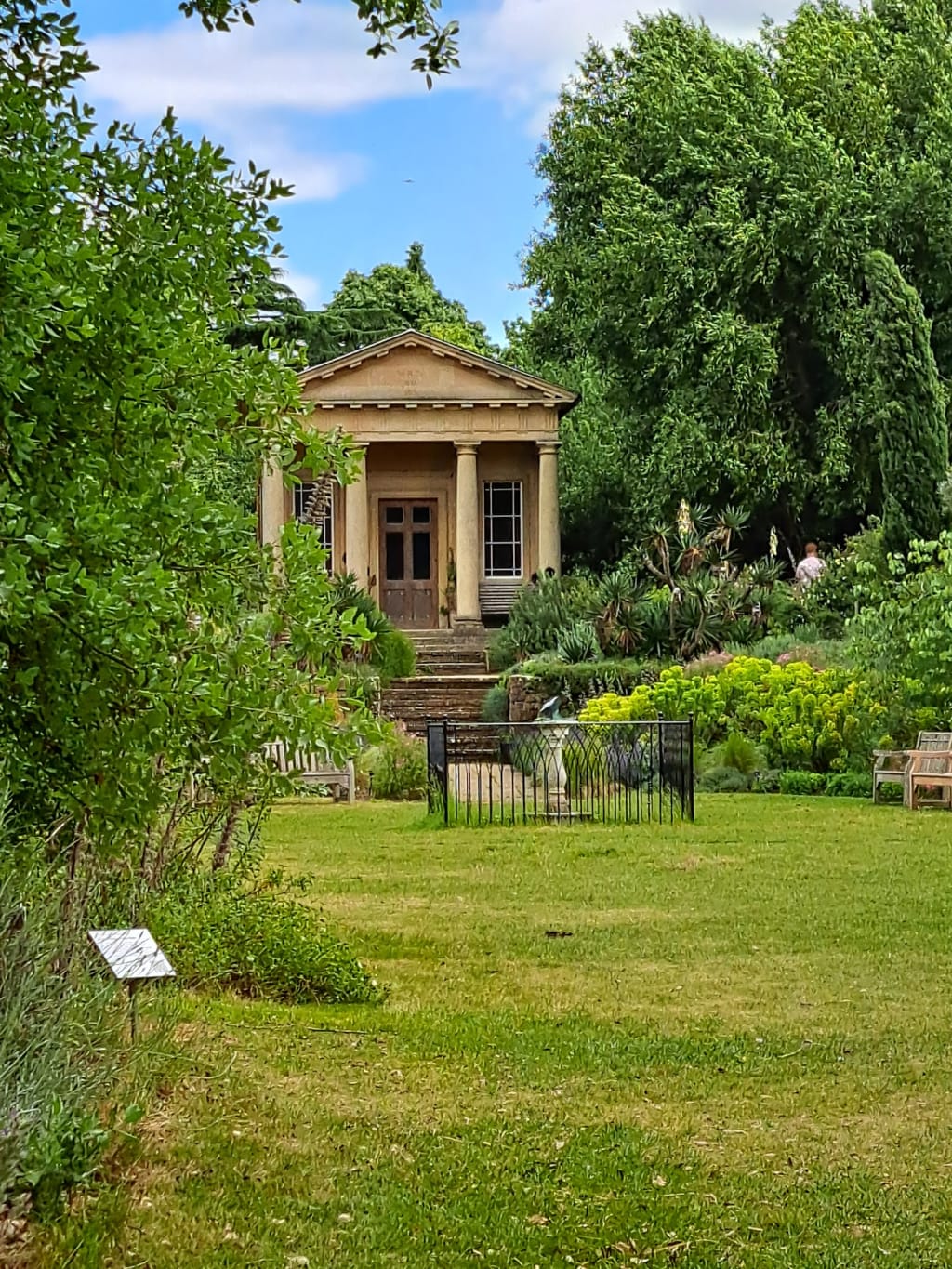
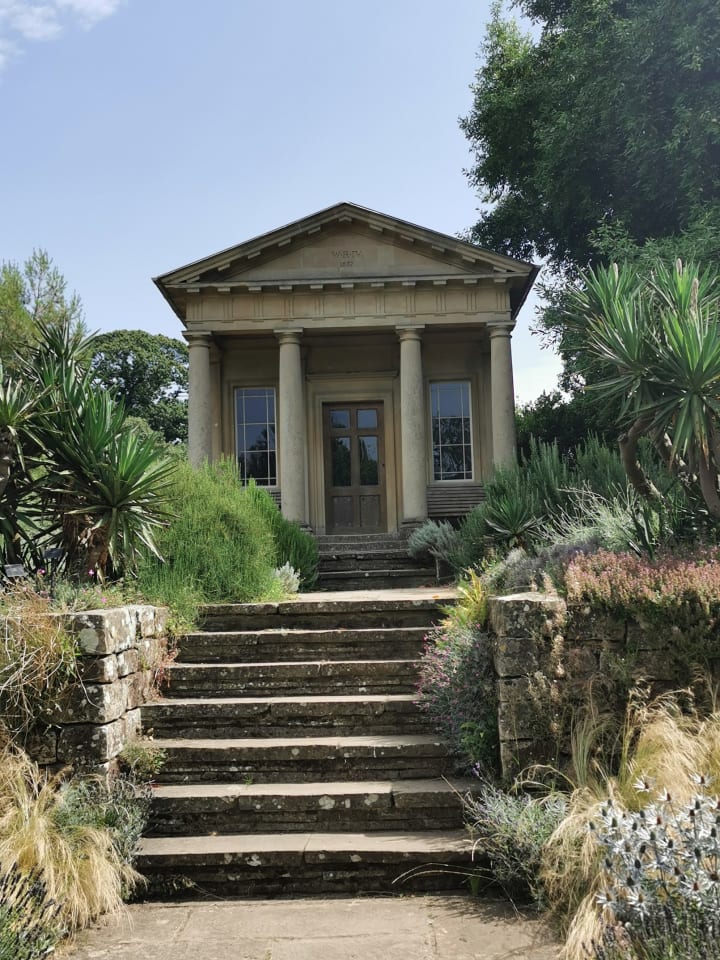
King William’s Temple, located in the Mediterranean Garden at the Royal Botanic Gardens, Kew, in London. It is a very good example of 19th-century commemorative architecture with a rich historical and botanical context.
Historical Background
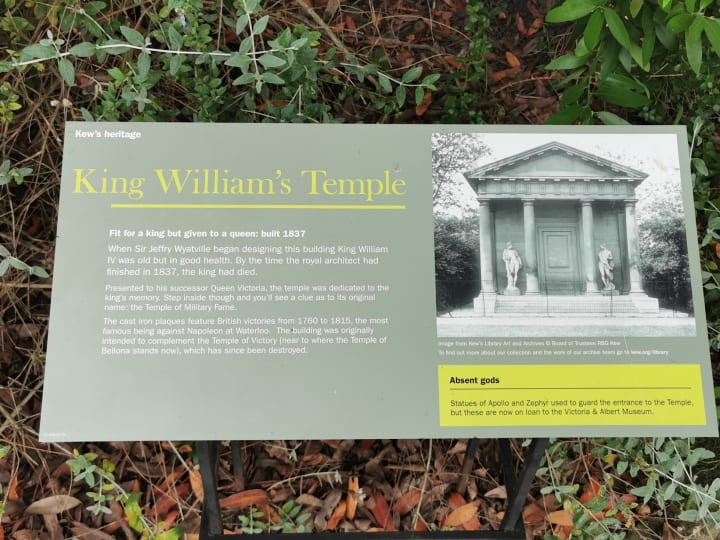
Constructed in 1837, King William’s Temple was commissioned during the early reign of Queen Victoria to honor her uncle, King William IV, who ruled from 1830 to 1837. It was originally named The Pantheon or the Temple of Military Fame, and it was intended to celebrate British military triumphs spanning from the Battle of Minden in 1759 to the Battle of Waterloo in 1815.
This was a period encompassing significant conflicts like the Seven Years’ War, the American Revolutionary War, and the Napoleonic Wars. The temple was designed by Sir Jeffry Wyatville, a prominent architect known for his work on Windsor Castle and Chatsworth House, who brought a neoclassical sensibility to the structure.
The temple was part of a broader tradition at Kew of erecting follies—ornamental buildings that enhance the landscape and evoke historical or emotional resonance. It was meant to complement another structure, the Temple of Victory, designed by Sir William Chambers in the 18th century, which no longer survives. The temple’s construction reflects the romantic architectural trends of the time, blending classical aesthetics with a patriotic narrative.
Architectural Features
King William’s Temple is a Grade II listed building, recognized for its historical and architectural significance. Its design is distinctly classical, featuring:
Double Portico: The temple has a symmetrical facade with two porticos, each supported by four Tuscan columns, a robust and unadorned classical order that conveys strength and simplicity.
Metope Frieze: Above the columns, a frieze with metopes (square panels) adds to the classical Greek-inspired aesthetic, reminiscent of ancient temples like the Parthenon.
Commemorative Plaques: The interior houses 18 cast-iron plaques and two stone tablets, each inscribed with details of key British military victories. These include battles such as Quebec (1759), Trafalgar (1805), and Waterloo (1815), serving as a permanent record of military prowess during the Georgian era.
Material and Structure: Built on a raised mound, the temple is constructed from stone, giving it a solid and enduring presence. Its compact yet imposing design makes it a focal point in the garden.
Originally, the temple contained marble busts of monarchs George III, George IV, William IV, and the Duke of Wellington, a key figure in the Napoleonic Wars. These busts have since been relocated to Buckingham Palace, leaving the plaques as the primary historical artifacts within the structure.
Location and Setting
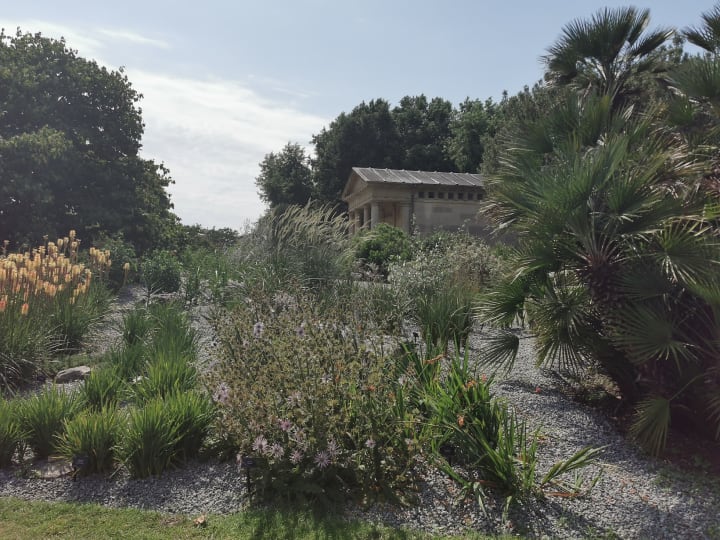
The temple is in Kew’s Mediterranean Garden, a section designed to showcase plants from Mediterranean climates, such as southern Europe, North Africa, and parts of Australia and South Africa. The garden features species like witch hazel (Hamamelis), which blooms vibrantly in late winter to early spring, adding seasonal color around the temple.
Positioned along Cherry Walk, a path lined with ornamental cherry trees, the temple sits on an artificial mound, enhancing its prominence in the landscape. This placement aligns with the 18th- and 19th-century landscaping tradition at Kew, where structures were strategically placed to create picturesque vistas and evoke a sense of grandeur.
The Mediterranean Garden itself is a relatively modern addition to Kew, emphasizing biodiversity and climate-adapted planting. The temple’s classical architecture contrasts beautifully with the naturalistic surroundings, blending human history with the botanical mission of Kew Gardens.
Current Status and Visitor Experience
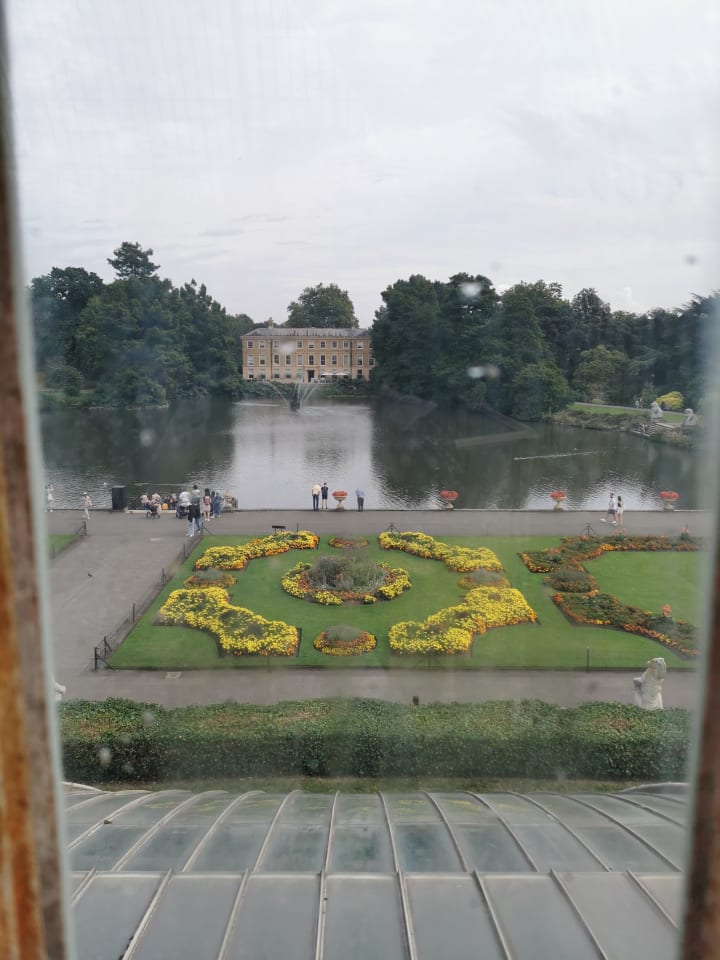
Today, King William’s Temple is a highlight for visitors exploring Kew Gardens, which is a UNESCO World Heritage Site. While the interior is not always accessible to the public, the exterior and its immediate surroundings offer a striking visual experience, particularly in late winter when the witch hazel blooms in vibrant shades of yellow, orange, and red. The temple’s location along Cherry Walk makes it a popular stop during spring, when the cherry blossoms create a picturesque setting.
Kew Gardens
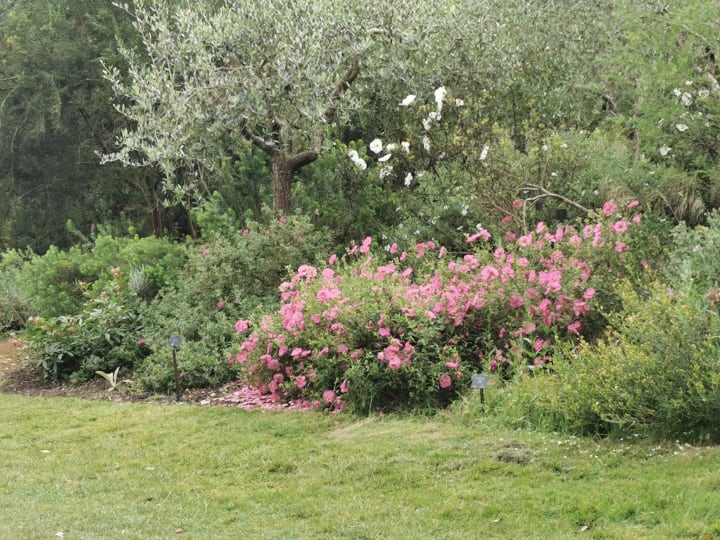
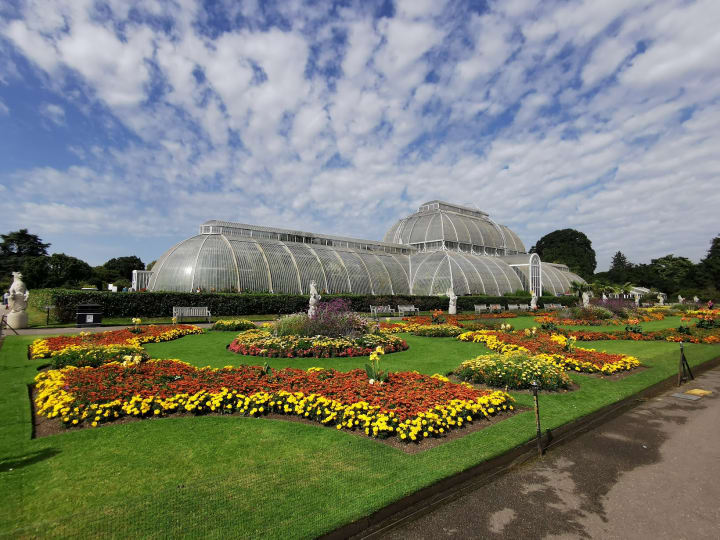
Is a huge Laboratory come Garden. It encompasses 330 acres, and is home to over 50,000 plant species and a range of historic structures. The temple adds to this rich tapestry, offering a glimpse into Britain’s imperial past while harmonising with the garden’s botanical focus. Visitors can appreciate the temple as part of a broader exploration of Kew’s architectural follies, which include the iconic Pagoda (1762) and the Ruined Arch (1759).
Practical Information
King William’s Temple is included in the general admission to Kew Gardens. Visitors can explore it as part of a self-guided or guided tour of the gardens.
The temple is best viewed in late winter or early spring for the witch hazel blooms or during cherry blossom season along Cherry Walk. Check Kew’s official website (www.kew.org) (www.kew.org) for seasonal events or guided tours that may include the temple.
Parting Comments
King William’s Temple is a small but significant feature of Kew Gardens, blending classical architecture, military history, and botanical beauty. Its neoclassical design, commemorative plaques, and strategic placement in the Mediterranean Garden make it a popular spot for visitors to gravitate towards.
I like looking inside the small building, but there's nothing much to see. The interior is empty. However, it is offers a window into the past, while acts as a focal point inside the Gardens. It helps visitors appreciate and reflect upon the history, beauty and science of the living botanical garden.
If you enjoyed reading this article and want to support my work, you can now buy me a coffee ☕️.
https://www.buymeacoffee.com/TabbyLondon
Thank you for your attention.
Best wishes
Tabby
About the Creator
Tabby London
The London I've been discovering is usually off the well-beaten track.I love the nooks and crannies and walking along the streets steeped in centuries worth of history. I'm fond of Zone 1 because that's where it all began centuries ago.
Keep reading
More stories from Tabby London and writers in Wander and other communities.
Mind The Gap
London Underground is famous globally, but the one phrase that sticks in people’s minds is ‘Mind The Gap’. You’ll repeatedly hear the station staff reminding people to stand behind the yellow line. Unlike Paris, we don’t have safety doors on London Underground.
By Tabby London8 months ago in Wander
Seattle Nightlife Report: Pony
Mid-winter Friday night. Early but already so dark. The days are getting longer but 6 PM is still pitch black. “Firepit!” You declare things after just a few seconds of solemn thought – not a request or suggestion, not a demand. Last week you walked around saying, “Hot tub?” to anyone who would listen. Or one afternoon you pointed at two men holding hands as they crossed 12th Avenue, looked me in the eyes and said, “Boyfriends.”
By Joe Nasta | Seattle foodie poet11 days ago in Wander




Comments
There are no comments for this story
Be the first to respond and start the conversation.