
When Iceland Economy Collapsed
How Iceland Economy COLLAPSED During the Financial Crisis of 2008

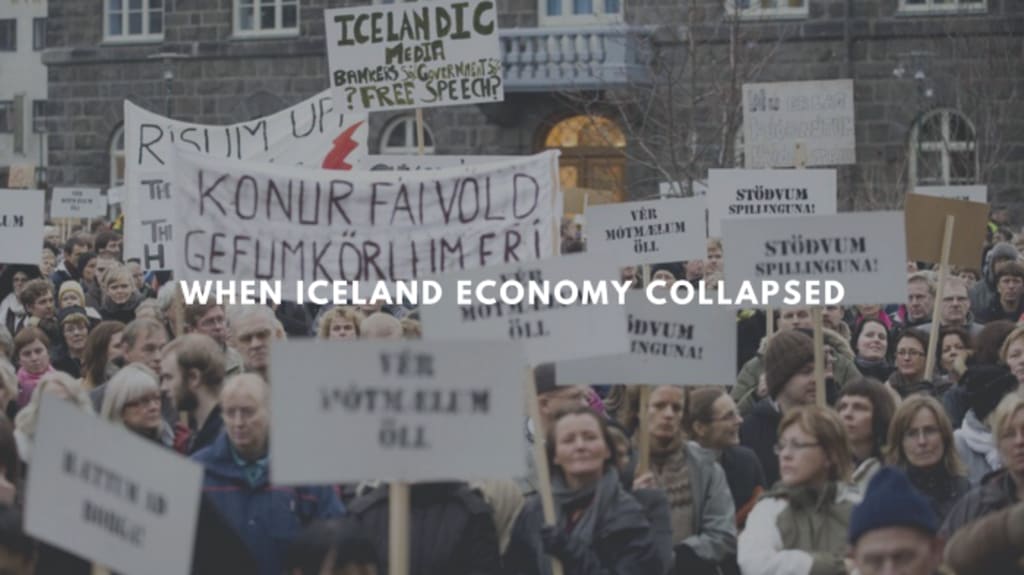
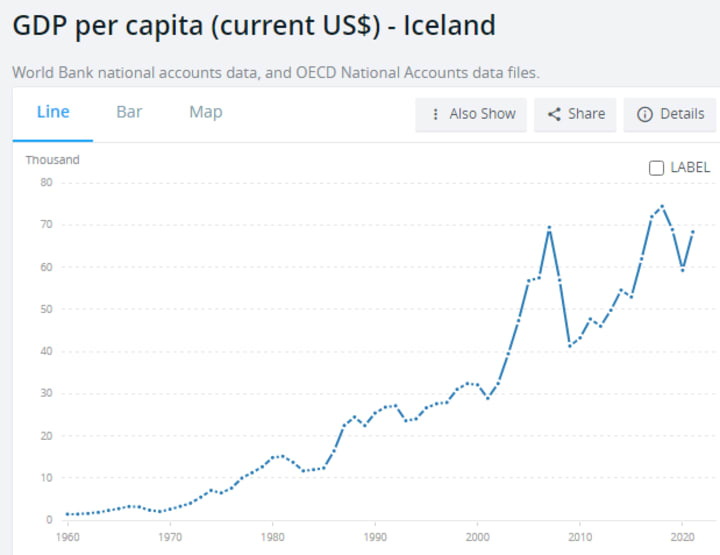
Iceland is a small country with only 366k inhabitants, But despite the size of its economy, its GDP per capita is 68k dollars, one of the highest in the world.
Iceland ranked as one of the most egalitarian countries.
But during the financial crisis of 2008, Iceland’s economy was about to collapse because of its financial institution.
Unlike other major economies like the US or UK, Iceland would take a very different approach during the financial crisis of 2008.
So what caused the crisis in Iceland that forced it to near bankruptcy?
Icelandic Economic Miracle
In the 1990s, Iceland was undergoing extensive free-market reforms.
Iceland privatized its banks to modernize its financial market. In the 1990s, Iceland’s government start implementing free market policies.
It delivered strong economic growth as Iceland was rated to have the world’s highest level of economic freedom.
The country that relied heavily on the fishing industry was turning into a financial hub.
Iceland recently privatized the bank in the 2000s. Banks understood that they could not increase profit by just depositing the savings of Icelandic savers.
So Icelandic banks would use a strategy called carry trade, meaning it borrows from foreign banks in the short term at lower interest rates and lends the fund in the long period at higher rates.
At the time, As credit was readily available, Iceland banks thought they could just refinance their debt.
Icelanders could easily obtain mortgages and loans on almost everything because banks were desperate to lend more funds to earn substantial profits.
As a result, The Iceland banks grew because of massive borrowings and increasing leverage. House prices and consumption rose, which made the average Icelandic feel wealthier than ever.
To attract international investment, Iceland raised its interest rate to 15% and opened high-interest online bank accounts to attract global investors into the country. It provided more deposits to the banks, Which allowed banks to lend more funds and thus earn a substantial profit.
Between 2003 to 2004, Iceland’s stock market prices increased by 900%. By 2006, the average Icelander was 300% wealthier than in 2003. This sudden enormous growth seems to people too good to be true.
It was a result of banks’ reckless increasing lending practices to people who would speculate on the financial market and real estate as their prices rose. Most people expected that it could keep rising in the future.
Banks were confident because they took the property as collateral if the borrower defaulted. Banks sell the property to cover the loan.
When demand for real estate increased because of massive borrowings, In 2007, house prices in the capital city of Iceland almost tripled in just three years.
At that time, More range rovers were sold in Iceland than in Sweden and Denmark combined, even though these countries have 15 times larger populations than Iceland.
In 2007, Iceland families were three times richer than they were three years ago. So what led to this massive economic growth or rightfully a bubble to develop?
Icelandic Banks
In the early 2000s, Icelandic banks were recently privatized.
At that time, interest rates in the US or eurozone were much lower than in Iceland. The three largest Icelandic banks saw an opportunity that they could take advantage of and make billions of dollars.
They would use a strategy called the carry trade. Icelandic Banks would borrow short-term at lower interest rates from abroad and lend it to their home country at higher interest for a long time.
Iceland was not a member of the EU. But they were a member of the EU economic area, and banks would take advantage of that.
As Icelandic banks were borrowing massive amounts in euros and converting their euros to krona, it appreciated the krona in the open market.
But the central bank of Iceland was concerned that the krona would appreciate too much. So they increased the money supply to keep the exchange rate low.
The central bank of Iceland increased the supply of money almost six times in 5 years. It resulted in higher inflation in Iceland and further drove the value of overvalued assets to a higher level.
Icelandic banks were benefiting from abundant liquidity in the global financial system.
Icelandic banks aggressively attract foreign investors from countries such as the Netherlands and the UK and lend their funds to earn more profit.
Icelandic banks would provide higher interest to attract capital into the country to increase lending and maximize profits.
If that was not enough, they started borrowing from central banks such as the ECB.
As a result, from 2001 to 2008, Three large Iceland banks’ assets increased 12-fold in just seven years.
The asset of the three big Icelandic banks was ten times higher than Iceland’s overall Economy.
Icelandic banks owed a large amount of money in foreign currency like Euro or pound.
When global market conditions were good, Banks constantly refinanced their foreign debt.
But as the financial system collapsed due to the financial crisis of 2008, the real estate bubble burst in countries such as the United States.
It made the condition of the Icelandic bank very fragile.
Many foreign investors were suddenly pulling their money out of Iceland very fast.
The interbank market ( banks lending to each other) began closing as trust in the system was fading.
ECB stopped lending to Icelandic banks because of the risk, and rating agencies like Fitch were downgrading their bond rating, which made the situation worse as investors became desperate to get out of Icelandic banks.
The economic situation of Iceland became bad very quickly, and the central bank of Iceland reacted by raising the interest rate to 15% to prevent capital outflow from the country.
This rate hike worked for some time, But when the Lehman brothers collapsed in September 2008, It sent shock waves throughout the world including in Iceland.
Icelandic banks borrowed short-term and lent the funds for the long term.
In good times, they were constantly refinancing their debt.
But in crises, when refinancing is not an option, banks have to pay their massive debt denominated in foreign currencies, which they don’t have.
Icelandic Banks were suddenly collapsing and bringing the whole economy with them.
The large amount of debt incurred by Icelandic banks made their bailout impossible.
Icelandic banks were liquidating their krona-denominated assets and converting the fund into Euro or Pound to pay back the debt.
It deprecated the price of krona in the open market, as the bank exchanged massive amounts of krona for euros or Pounds to pay their debt.
The massive amount of capital outflow by investors to take their funds out from bankrupt Icelandic banks was also deprecating the price of the krona.
During 2008, the krona relative to the Euro lost almost 85 percent of its value.
Suddenly assets denominated in krona are worth less and less.
So how did Iceland cope with this financial crisis?
What measures did they take to recover the economy from collapse?
Solving the Crises
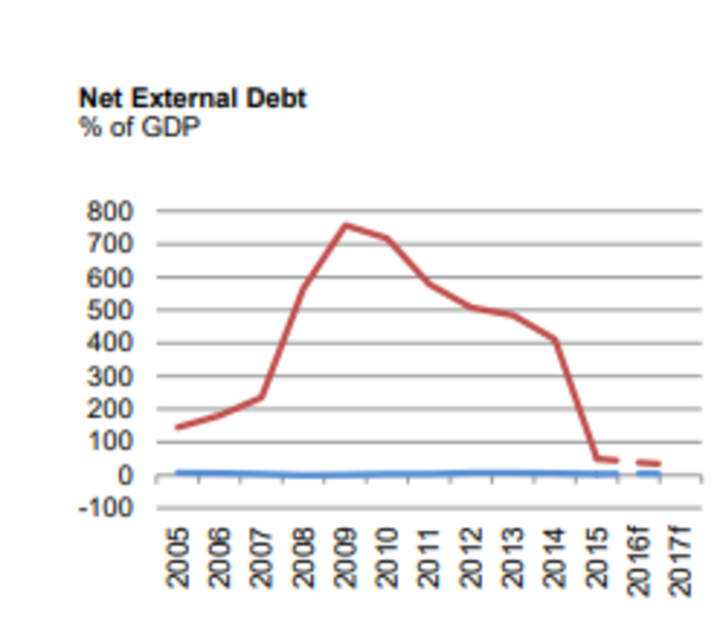
During the crisis of 2008, Iceland’s external debt was 700% of GDP and 32 times of foreign exchange reserve of its central bank.
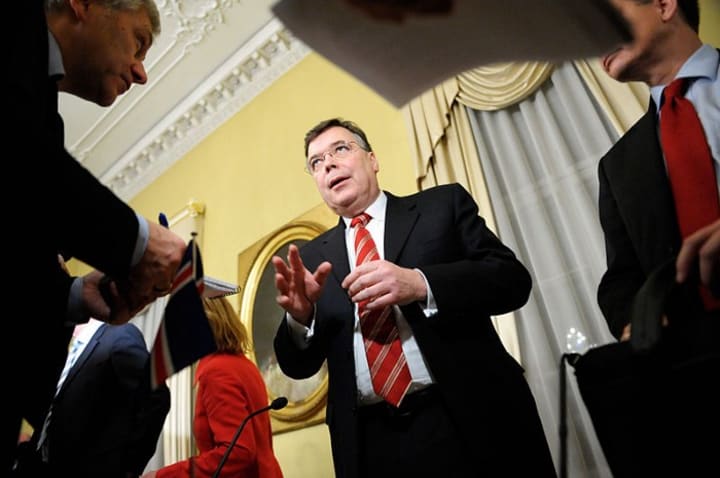
Suddenly, The banking system collapsed.
To solve the situation, the Iceland government passed an emergency law in 2008.
This law authorizes the government to take control of the bank.
The government decided to take control of old banks and capitalize on three new banks and transfer the healthy assets of the three largest banks to the newly created bank.
The solution was that these new banks could operate as the old banks were liquidating.
The solution was controversial at the time. The Iceland government bailed out the deposit of Icelandic savers while letting 6.7 billion euros from the UK and Netherland trapped in old banks.
Due to this, the UK applied anti-terrorism law to freeze Iceland’s assets in the UK to secure their payment.
But in the end, an agreement was reached where foreign holders were given priority in the liquidation, which would allow them to recover their savings.
The Iceland government asked for help from the International Monetary Fund.
IMF put 2.1 billion dollars into the Icelandic economy.
The Icelandic government established capital control intending to stabilize the currency to prevent the sudden massive capital outflow from the country, Which devalued the krona.
The government also cut 12.5% of non-financial public spending, One of the largest adjustments of OECD members.
Conclusion
The Icelandic government and central bank had to put up 3.24 Billion euros to clean up the financial system, Which was 20% of Iceland’s GDP and 7,370 euros per person.
The financial crisis of 2008 almost sunk the Icelandic economy, But thanks to generous international assistance and government action, it quickly recovered from the situation.
Originally Published on Medium
How George Soros Made a Billion Dollar Betting Against Britain
About the Creator
Arsalan Haroon
Writer┃Speculator
Keep reading
More stories from Arsalan Haroon and writers in Trader and other communities.
Why Ireland Is So Rich
Ireland is the fifth richest economy measured by GDP per capita, just below Luxembourg and Bermuda. Source It has a smaller population than New York. But still, it has become a go-to place for international businesses like Apple and Microsoft, which place their European headquarter on this tiny island.
By Arsalan Haroon3 years ago in Trader
Buried for 33 Years: The Dream to Revive One of the Country’s Largest Gold Mines Suddenly Back on the Map
For more than three decades, one of the country’s most valuable natural resources lay dormant beneath layers of dust, disputes, and missed opportunities. Hidden deep in the rugged terrain of Balochistan, the legendary gold and copper mine remained silent — its potential buried along with the dreams of economic transformation it once inspired.
By Sajida Sikandara day ago in Trader
Self Help: Grifters' Gospel
On Self-Help, Snake Oil, and the Illusion of Change Psychology professionals and students can be imagined on two opposite sides of a line called self-help books: likely a larger group opposes pop-science and step-by-step manuals filled with talk of success, journaling, and not giving a f**k; others love them, but they aren’t many.
By Avocado Nunzella BSc (Psych) -- M.A.P a day ago in BookClub




Comments
There are no comments for this story
Be the first to respond and start the conversation.