
United States Beaded Jewelry Market Size and Forecast 2026–2034
Handmade Fashion Meets Digital Commerce in a Rapidly Expanding Accessory Market

Introduction
The United States beaded jewelry market is entering a strong growth phase, supported by evolving fashion preferences, rising interest in handmade accessories, and the expansion of online retail platforms. According to Renub Research, the market is projected to grow from US$ 2.33 Billion in 2025 to US$ 4.30 Billion by 2034, registering a compound annual growth rate (CAGR) of 7.05% during 2026–2034.
This growth reflects a broader shift in consumer behavior—away from purely luxury-driven purchases toward affordable, expressive, and personalized fashion accessories. Beaded jewelry, known for its versatility, artistic appeal, and cultural resonance, fits squarely within this trend. From festival wear and casual outfits to symbolic gifting and wellness-inspired adornments, beaded jewelry continues to secure a lasting place in the U.S. accessories market.
United States Beaded Jewelry Market Outlook
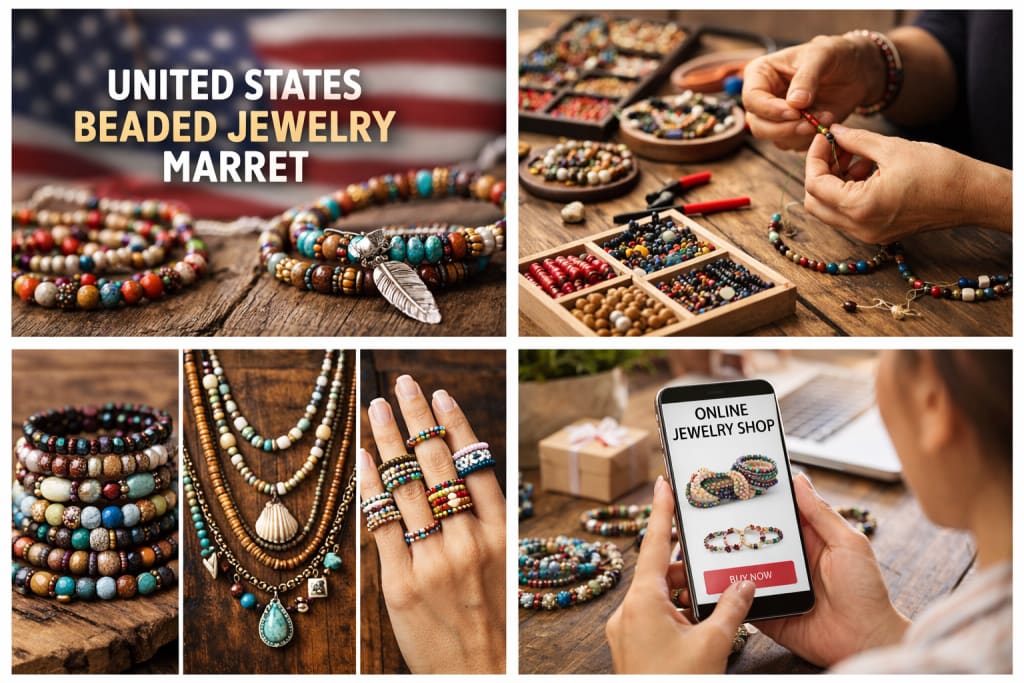
Beaded jewelry is crafted by stringing beads made from diverse materials such as glass, gemstones, crystals, wood, metals, ceramics, pearls, and synthetic compounds. These beads vary in size, shape, texture, and color, allowing limitless design possibilities. Common product categories include necklaces, bracelets, earrings, anklets, and rings, often enhanced with charms, spacers, and pendants.
In the United States, beaded jewelry enjoys widespread popularity due to its affordability, ease of customization, and alignment with contemporary fashion trends. Consumers increasingly value products that express individuality, cultural identity, or emotional meaning—qualities deeply embedded in handcrafted and artisanal jewelry. The rising visibility of DIY culture, craft fairs, and online marketplaces has further fueled interest, enabling independent designers to reach national audiences with minimal barriers.
Growth Drivers of the United States Beaded Jewelry Market
Rising Demand for Affordable Fashion Accessories
One of the most significant growth drivers is the growing consumer preference for inexpensive yet stylish fashion accessories. Beaded jewelry offers a compelling combination of low price points, aesthetic diversity, and personalization, making it accessible across income groups. Younger consumers, particularly Gen Z and Millennials, view beaded jewelry as a daily fashion statement rather than a long-term luxury investment.
Fast-fashion cycles encourage frequent wardrobe updates, and beaded jewelry fits seamlessly into this pattern. Necklaces, bracelets, and rings are commonly purchased for casual wear, festivals, themed events, and gifting occasions. In 2024, an estimated 18 million Americans expressed a preference for beaded jewelry, with online retailers reporting annual sales exceeding 5 million units, underscoring the segment’s mass appeal.
Influence of Social Media and DIY Culture
Social media platforms have played a transformative role in popularizing beaded jewelry. Influencer endorsements, short-form videos, and visual storytelling have positioned beaded designs as trendy, expressive, and customizable. Platforms catering to lifestyle and fashion content have significantly increased visibility among younger demographics.
Parallel to this trend, the rise of DIY culture has expanded demand for both finished jewelry and raw beading materials. Online tutorials, virtual craft communities, and digital marketplaces have empowered hobbyists and micro-entrepreneurs. In 2024, over 35 million U.S. consumers actively sought customization options in jewelry, with 68% of Millennials and Gen Z consumers indicating a strong preference for personalized designs. This shift reinforces sustained demand across both retail and wholesale segments.
Expansion of E-commerce and Direct-to-Consumer Channels
E-commerce has emerged as a core structural driver of growth in the U.S. beaded jewelry market. Digital platforms allow independent designers and small brands to bypass traditional retail constraints while accessing nationwide audiences. Consumers benefit from broader product variety, transparent pricing, and convenient delivery.
Direct-to-consumer models support customization, limited-edition collections, and subscription-based offerings, fostering repeat purchases and brand loyalty. Additionally, global sourcing through cross-border e-commerce enables U.S. consumers to access unique bead styles and materials. As online shopping continues to dominate accessory purchasing behavior, digital channels will remain central to long-term market expansion.
Challenges in the United States Beaded Jewelry Market
Intense Price Competition and Design Imitation
Low entry barriers and ease of design replication have intensified price competition within the beaded jewelry market. Many original designs are quickly copied, allowing low-cost producers to flood the market with similar products. This dynamic erodes margins for independent designers who invest in craftsmanship, branding, and quality materials.
Mass-produced imports further heighten competition, forcing smaller brands to innovate continuously while absorbing rising marketing and design costs. Rapid trend cycles shorten product life spans, making it difficult for smaller players to achieve sustainable profitability.
Fluctuating Raw Material Costs and Supply Chain Risks
Beaded jewelry production relies on a wide range of raw materials, many of which are imported. Price volatility, currency fluctuations, shipping delays, and inconsistent supplier quality pose ongoing challenges. Smaller producers often lack the financial capacity for bulk purchasing, leaving them exposed to cost instability.
These supply-side pressures impact pricing strategies, inventory management, and delivery timelines. Rising material costs may compress margins or reduce consumer affordability, presenting a structural challenge for long-term market stability.
Key Market Segments
United States Necklaces Beaded Jewelry Market
Beaded necklaces represent one of the largest product segments, valued for their versatility and broad demographic appeal. Designs range from minimalist everyday styles to bold statement pieces used in festivals and beachwear. Personalized name necklaces and charm-based designs enhance consumer engagement, while strong visual appeal on social media continues to support demand.
United States Rings Beaded Jewelry Market
Beaded rings are a fast-growing niche, particularly popular among younger consumers. Lightweight, colorful, and often sold in sets, these rings encourage impulse purchases and high transaction volumes. While durability limitations restrict their use to fashion contexts, emotional value through personalization sustains consistent demand.
United States Metal Beaded Jewelry Market
Metal-beaded jewelry occupies a premium position, combining aesthetic appeal with enhanced durability. Brass, copper, stainless steel, and silver-toned alloys are commonly used in layered necklaces and structured bracelets. Although sensitive to metal price fluctuations, this segment attracts consumers willing to pay more for longevity and refined design.
United States Plastic Beaded Jewelry Market
Plastic beads dominate the mass-market segment due to their low cost and color versatility. Widely used in children’s jewelry, novelty items, and festival accessories, plastic beads support fast-fashion supply chains. Sustainability concerns are encouraging the adoption of recycled and biodegradable alternatives, but volume demand remains strong.
End-User and Distribution Insights
United States Women Beaded Jewelry Market
Women constitute the largest consumer group, driving demand across all product categories. Beaded jewelry aligns closely with women’s fashion cycles, gifting habits, and personalization preferences. Women-owned small businesses also play a vital role in design and online distribution, reinforcing innovation and market diversity.
United States Online Beaded Jewelry Market
Online channels represent the fastest-growing distribution segment. Social commerce, influencer marketing, and mobile shopping have reshaped discovery and purchase behavior. While challenges related to trust and returns persist, e-commerce will remain a key growth engine for the U.S. beaded jewelry market.
Regional Market Insights
California Beaded Jewelry Market
California leads the market due to its fashion-forward culture, artisan communities, and strong e-commerce infrastructure. Despite high operating costs, the state remains a trend incubator influencing national styles.
New York Beaded Jewelry Market
As a global fashion capital, New York drives premium and mid-range beaded jewelry demand. High competition and operating expenses challenge independent designers, but the state’s influence on national fashion trends remains substantial.
Texas Beaded Jewelry Market
Texas is emerging as a high-growth region, supported by population growth, cultural diversity, and a strong boutique ecosystem. Casual fashion demand and increasing digital adoption enhance its market potential.
Arizona Beaded Jewelry Market
Arizona’s market is shaped by Native American influences, tourism, and heritage designs. While smaller in size, its cultural significance and e-commerce reach ensure steady demand.
Competitive Landscape
The U.S. beaded jewelry market features a mix of global brands, fashion houses, and specialized jewelry companies. Key players include Avon Products, Inc., Buckley London, Stuller, Inc., Giorgio Armani S.p.A., Yurman Design Inc., LVMH Group, RIAH FASHION, Rosec Jewels, Beads Discounter Inc., and Pandora A/S.
All companies are analyzed across five viewpoints: overview, key personnel, recent developments, SWOT analysis, and revenue performance.
Final Thoughts
The United States beaded jewelry market is well-positioned for sustained growth through 2034, driven by affordability, personalization, and digital accessibility. While challenges such as price competition and supply volatility persist, strong consumer demand for expressive and handmade accessories continues to support market expansion.
As fashion cycles accelerate and consumers seek individuality over convention, beaded jewelry stands out as a dynamic, resilient segment within the broader U.S. accessories industry.



Comments
There are no comments for this story
Be the first to respond and start the conversation.