
Philippines Used Cooking Oil Market 2026: Sustainability Initiatives, Bioenergy Growth & Circular Economy Adoption
How waste valorisation, renewable fuel demand and regulatory support are shaping the Philippines used cooking oil industry

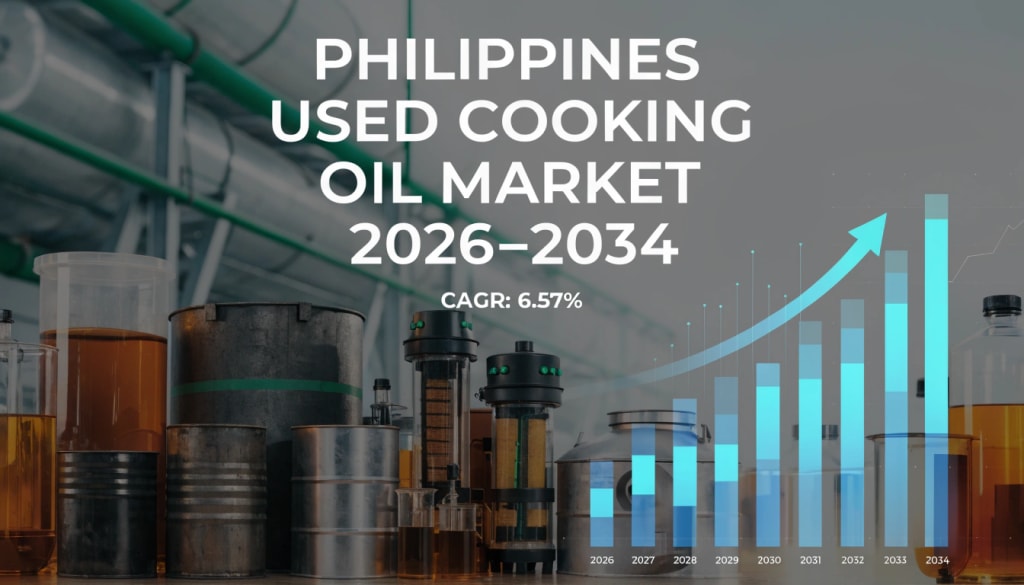
Philippines Used Cooking Oil Market Overview
The Philippines used cooking oil market is expanding steadily as sustainability, waste management and renewable energy priorities drive collection and reuse of spent culinary oils. Used cooking oil — generated from household kitchens, restaurants and food processing units — is increasingly recognised as a valuable feedstock for biodiesel production, animal feed, soap manufacturing and industrial lubricants. With rising environmental awareness, government directives on waste reduction and growing biofuel demand, stakeholders across foodservice, waste management and renewable energy sectors are accelerating initiatives to capture and repurpose used cooking oil streams.
According to IMARC Group, the Philippines used cooking oil market size reached 271.0 kilotons in 2025 and is projected to grow to 452.9 kilotons by 2034, exhibiting a compound annual growth rate (CAGR) of 6.05% during 2026–2034. Market expansion is supported by recycling programs, biofuel blending mandates and increasing industrial applications of recycled cooking oil derivatives.
Key Market Drivers
Rising Focus on Waste Reduction and Resource Recovery
Environmental programmes emphasising circular economy principles are encouraging collection, processing and reuse of used cooking oil, diverting waste from disposal streams and supporting sustainable material management.
Growth of Biodiesel and Renewable Fuel Demand
Used cooking oil is a key feedstock for biodiesel production, aligning with renewable energy objectives and supporting national strategies to reduce carbon emissions and dependence on fossil fuels.
Industrial Uses and Product Diversification
Recycled cooking oil finds applications in animal feed ingredients, soap and cosmetic production, industrial lubricants and other value-added products, broadening end-use demand beyond energy sectors.
Government Policies and Incentives
Supportive policies, including renewable fuel mandates and waste recycling programmes, are strengthening the economic viability of used cooking oil collection and processing operations.
Request a Sample Report with the Latest 2026 Data & Forecasts
What the Opportunities Are
The Philippines used cooking oil market presents significant opportunities as sustainability efforts, industrial innovation and renewable energy adoption converge.
Expansion of Collection Infrastructure and Aggregation Networks
Developing robust municipal and private collection systems can improve feedstock availability and reduce contamination, supporting efficient recycling operations and cost-effective supply chains.
Growth of Biodiesel Production Facilities
Investment in biodiesel transesterification plants and blending infrastructure can enhance local renewable fuel capacity and stimulate demand for used cooking oil feedstock.
Innovation in Value-Added Product Development
Recycled cooking oil can be processed into high-value derivatives such as industrial biolubricants, biodegradable soaps and oleochemicals, expanding revenue streams for processors and manufacturers.
Public Awareness and Consumer Engagement Programmes
Educational initiatives promoting used cooking oil recycling, proper storage and collection participation can strengthen feedstock supply while reinforcing environmental stewardship among households and businesses.
Integration with Circular Economy and Zero-Waste Policies
Collaborative frameworks linking foodservice establishments, waste managers and renewable energy firms can improve system efficiencies and align incentives for sustainable resource utilisation.
These opportunities signal a transition toward multi-purpose value chains that enhance the environmental and economic benefits of used cooking oil recovery.
Recent News and Developments
February 2025: Market evaluation confirmed the Philippines used cooking oil market reached 271.0 kilotons in 2025, reflecting strengthened feedstock collection and recycling initiatives.
June 2025: Waste management and sustainability programmes reported increasing participation among foodservice businesses and households, improving overall used cooking oil collection rates.
October 2025: Biodiesel production facilities continued to expand operations, utilising used cooking oil as a key renewable feedstock to meet blending demands and energy policy targets.
January 2026: Forecast outlook reaffirmed strong long-term growth with expected expansion to 452.9 kilotons by 2034, supported by renewable energy objectives, industrial demand and circular economy implementation.
Why You Should Know About the Philippines Used Cooking Oil Market?
The Philippines used cooking oil market reflects a strategic shift toward sustainable resource use, waste conversion and renewable fuel adoption. As environmental policies and consumer awareness drive action to reduce waste impacts and enhance resource efficiency, used cooking oil is gaining recognition as a valuable feedstock that supports biodiesel programmes and industrial recycling initiatives.
With projected growth to 452.9 kilotons by 2034, supported by expanding collection networks, renewable energy demand and diversified industrial applications, the market offers opportunities for waste managers, renewable energy producers, processors and investors.
As the Philippines continues strengthening circular economy practices and sustainability commitments, the used cooking oil market is positioned for sustained expansion while contributing to reduced waste, increased resource recovery and enhanced environmental outcomes.
About the Creator
Keep reading
More stories from Manisha Dixit and writers in Trader and other communities.
Philippines Coffee & Tea Capsules Market 2026: Premium Beverage Surge, Smart Brewing Adoption and Retail Expansion
Philippines Coffee & Tea Capsules Market Overview The Philippines coffee and tea capsules market is witnessing rapid expansion as consumers increasingly embrace premium, convenient and technology-enabled beverage formats. Coffee and tea capsules — designed for single-serve brewing machines — deliver consistent quality, portion control and café-style experiences at home and in offices. As urbanisation rises and middle-class spending strengthens, Filipino consumers are shifting toward specialty beverage consumption supported by modern retail and e-commerce penetration.
By Manisha Dixita day ago in Trader
Berkshire Hathaway Inc.: A Deep Dive into the Value Investing Powerhouse
Berkshire Hathaway Inc. is not a typical stock. Led by Warren Buffett, it represents decades of disciplined investing, smart capital allocation, and a philosophy that prioritizes long-term growth over short-term gains. For investors, Berkshire Hathaway is more than a company—it’s a model of compounding wealth intelligently.
By Hammad Nawaz6 days ago in Trader




Comments
There are no comments for this story
Be the first to respond and start the conversation.