
Philippines Fruit Juice Market 2026: Natural Beverage Demand, Retail Expansion and Health-Driven Consumption
How clean-label preferences, urban lifestyles and flavor innovation are shaping the Philippines fruit juice industry

Philippines Fruit Juice Market Overview
The Philippines fruit juice market is experiencing steady growth as consumer preferences shift toward healthier beverage alternatives and convenient nutrition formats. Fruit juices remain widely consumed across households, foodservice channels and on-the-go retail formats due to their perceived nutritional benefits and refreshing taste profiles. Rising awareness around wellness, increasing disposable income and urbanisation are supporting demand for packaged juices across diverse demographic groups. At the same time, manufacturers are responding with clean-label formulations, tropical flavor innovation and expanded retail distribution strategies to capture evolving consumer expectations.
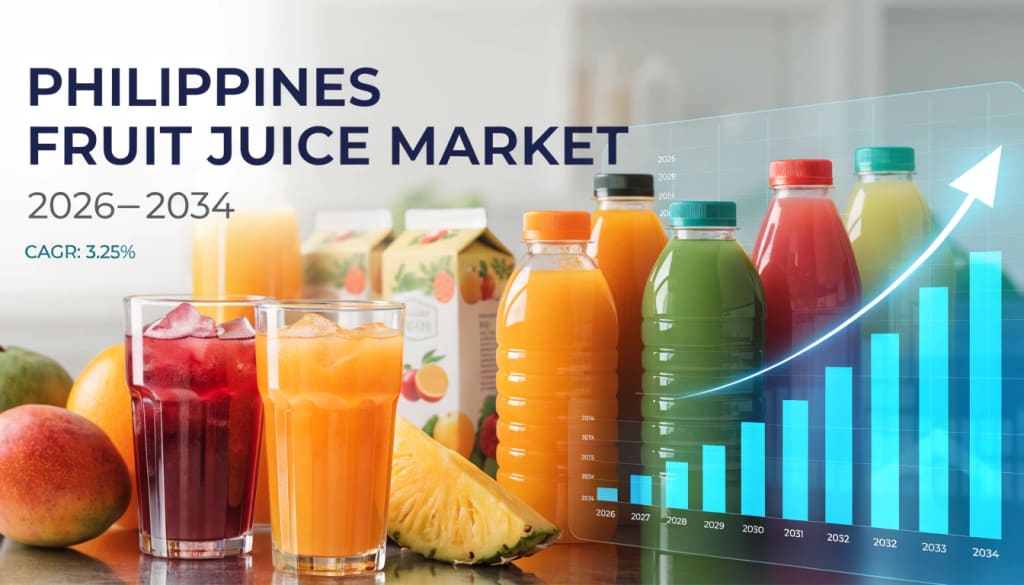
According to IMARC Group, the Philippines fruit juice market size reached USD 746.0 million in 2025 and is projected to grow to USD 1,009.7 million by 2034, exhibiting a compound annual growth rate (CAGR) of 3.25% during 2026–2034. Market expansion is driven by health awareness, retail channel growth and increasing preference for natural beverage options among Filipino consumers.
Key Market Drivers
Rising Health Awareness and Preference for Natural Products
Health-conscious consumers are increasingly choosing beverages that provide vitamins and nutrients without artificial additives, positioning fruit juices as convenient functional drink options within daily diets.
Urbanisation and Disposable Income Growth
Rapid urban development and improving purchasing power are supporting packaged beverage consumption, particularly among working professionals seeking convenient ready-to-drink options.
Expansion of Retail Channels and Marketing Strategies
Supermarkets, convenience stores and online retail platforms are improving product accessibility, while targeted marketing campaigns are strengthening consumer engagement and brand visibility across urban markets.
Clean-Label and Organic Beverage Trends
Growing demand for organic and additive-free products is encouraging manufacturers to introduce natural fruit juice variants aligned with wellness and transparency expectations.
Request a Sample Report with the Latest 2026 Data & Forecasts
What the Opportunities Are
The Philippines fruit juice market presents meaningful opportunities as functional beverage trends, tropical agriculture and digital retail converge.
Development of Functional and Fortified Juice Products
Opportunities exist for juices enriched with vitamins, probiotics and immunity-support ingredients that cater to consumers seeking health-enhancing beverage experiences.
Expansion of Tropical and Local Flavor Innovations
Leveraging locally abundant fruits such as mango, pineapple and calamansi can support premium and authentic flavor offerings while strengthening domestic agricultural value chains.
Growth of Low-Sugar and Reduced-Calorie Juice Variants
As consumers become more conscious of sugar intake, manufacturers can expand low-sugar formulations and diluted juice blends that maintain flavor while improving health positioning.
Integration with Food Delivery and Quick-Commerce Channels
Partnerships with digital delivery platforms can enhance accessibility and drive impulse purchases, particularly among urban consumers seeking convenience.
Sustainable Packaging and Eco-Branding Strategies
Adoption of recyclable and lightweight packaging formats can help brands align with sustainability expectations while differentiating within competitive retail environments.
These opportunities indicate a gradual transition toward premiumisation, functional positioning and sustainable product innovation across the market.
Recent News and Developments
February 2025: Market evaluation confirmed the Philippines fruit juice market reached USD 746.0 million in 2025, reflecting steady growth supported by health awareness and expanding retail availability.
June 2025: Industry consumption trends highlighted increasing demand for natural and organic beverage options, with consumer preference shifts toward clean-label fruit juice formulations free from artificial additives.
October 2025: Retail expansion and marketing initiatives across supermarkets, convenience stores and digital channels continued improving market accessibility and consumer engagement nationwide.
January 2026: Long-term projections reaffirmed market growth trajectory with expected expansion to USD 1,009.7 million by 2034, supported by urbanisation, income growth and evolving dietary preferences.
Why You Should Know About the Philippines Fruit Juice Market?
The Philippines fruit juice market reflects broader beverage industry transformation toward natural, convenient and functional consumption patterns. As consumers increasingly prioritise nutrition, flavor diversity and accessibility, fruit juices remain a staple beverage category with sustained demand across demographics.
With projected growth beyond USD 1 billion by 2034, supported by retail expansion, health awareness and product innovation, the market offers attractive opportunities for beverage manufacturers, ingredient suppliers and distribution stakeholders.
As the Philippines continues strengthening its packaged beverage ecosystem and embracing health-oriented consumption trends, the fruit juice market is positioned for steady expansion while reinforcing its role as a foundational segment within the country’s evolving food and beverage industry.
About the Creator
Keep reading
More stories from Manisha Dixit and writers in Trader and other communities.
Philippines Cold Brew Coffee Market 2026: Specialty Coffee Culture, Ready-to-Drink Growth and Premium Beverage Adoption
Philippines Cold Brew Coffee Market Overview The Philippines cold brew coffee market is witnessing rapid expansion as evolving consumer lifestyles, specialty café proliferation and demand for premium ready-to-drink beverages reshape the country’s coffee landscape. Cold brew coffee — prepared by steeping coffee grounds in cold water over extended periods — offers a smoother, less acidic taste profile compared with traditional brewing methods, appealing to younger and health-conscious consumers. As urbanisation and digital retail continue to influence beverage consumption patterns, cold brew coffee is emerging as a dynamic niche within the broader Philippine coffee industry.
By Manisha Dixita day ago in Trader
Australia Healthcare Asset Management Market Set to More Than Double by 2034 on Tech-Driven Efficiency Gains
In 2025, the Australia healthcare asset management market reached approximately USD 550.3 million and is forecast to grow to USD 1,277.6 million by 2034, expanding at a compound annual growth rate (CAGR) of 9.81% from 2026 through 2034. This robust growth underscores the increasing emphasis by healthcare providers on technology-led asset tracking, improved patient safety, cost reduction and compliance adherence — all supported by sophisticated systems that manage equipment, inventory and critical resources in real time.
By Amélie Bellea day ago in Trader
United States Data Center Market Size, Share, Industry Overview, Latest Trends and Forecast 2026-2034
United States Data Center Market Overview The United States data center market is one of the most advanced and rapidly expanding digital infrastructure sectors in the world. Data centers serve as the backbone of the modern digital economy by providing storage, processing, and management of massive volumes of data generated by businesses, governments, and consumers. With the rapid adoption of cloud computing, artificial intelligence, big data analytics, and online services, demand for reliable and scalable data center infrastructure continues to rise across the country.
By Jackson Watsonabout 8 hours ago in Trader



Comments
There are no comments for this story
Be the first to respond and start the conversation.