
Kombucha Market Size, Share & Forecast 2025–2033 | Renub Research
Why the Global Kombucha Industry Is Brewing Up a US$ 11.77 Billion Opportunity by 2033

Introduction: A Fermented Drink Goes Mainstream
Once a niche health-store staple, kombucha has rapidly evolved into one of the most talked-about functional beverages in the global drinks industry. With its fizzy taste, fermented profile, and reputation for supporting gut health, kombucha has found fans among wellness enthusiasts, fitness-conscious consumers, and younger demographics looking for healthier alternatives to sugary sodas and artificial energy drinks.
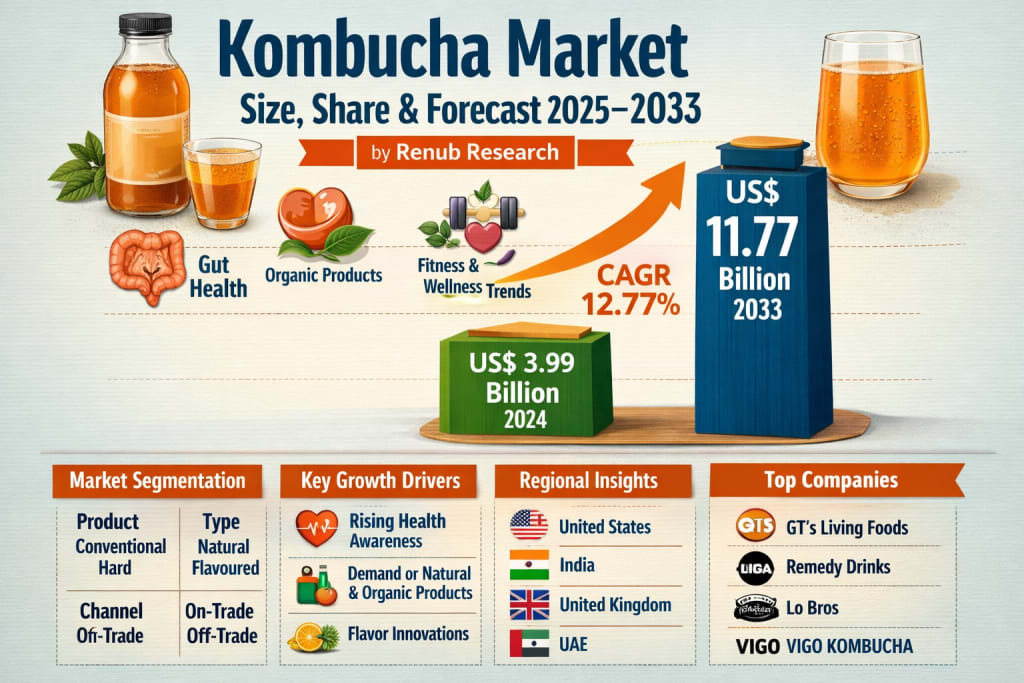
According to Renub Research, the global kombucha market was valued at US$ 3.99 billion in 2024 and is projected to reach US$ 11.77 billion by 2033, growing at a strong CAGR of 12.77% from 2025 to 2033. This impressive growth trajectory reflects a powerful shift in consumer preferences toward functional, natural, and low-calorie beverages.
At the heart of this trend is a simple idea: people increasingly want drinks that do more than just quench thirst. They want beverages that support digestion, boost immunity, and align with clean-label and wellness-focused lifestyles. Kombucha, with its probiotics, organic acids, and antioxidant content, fits neatly into this new consumption pattern.
What Is Kombucha and Why Is It So Popular?
Kombucha is a fermented tea beverage produced using a SCOBY (Symbiotic Culture of Bacteria and Yeast). During fermentation, sugars in sweetened tea are converted into organic acids, carbon dioxide, and trace amounts of alcohol, giving kombucha its signature tangy, slightly fizzy taste.
Beyond flavor, kombucha is widely appreciated for its potential digestive, detoxifying, and immune-supporting benefits. It naturally contains probiotics, antioxidants, and organic acids, which have made it a favorite among consumers interested in gut health and overall wellness.
Another reason for its rising popularity is variety. Today’s kombucha market is no longer limited to plain fermented tea. Brands offer a wide range of flavors infused with fruits, herbs, spices, and botanicals—making the drink more accessible and appealing to mainstream consumers.
As functional beverages continue to gain traction worldwide, kombucha has successfully positioned itself as a bridge between health, taste, and lifestyle.
Global Kombucha Market Outlook: Strong Growth Ahead
The global kombucha market is experiencing rapid expansion, driven by multiple long-term consumer and industry trends. Renub Research highlights that rising awareness of gut health, increasing demand for natural and organic products, and the popularity of low-calorie functional beverages are among the key forces shaping this market.
From supermarkets and convenience stores to online platforms and specialty health shops, kombucha is becoming easier to find than ever before. E-commerce, in particular, has played a major role in improving accessibility, offering consumers the convenience of home delivery and access to a wider variety of brands and flavors.
The market is also benefiting from product innovation, with companies continuously experimenting with new formulations, seasonal flavors, and even hard kombucha variants aimed at adult consumers looking for healthier alcoholic alternatives.
Key Growth Drivers for the Kombucha Market
1. Rising Health Consciousness
One of the strongest drivers behind the kombucha boom is the global rise in health awareness. Consumers are increasingly focused on digestive health, immunity, and overall well-being, and they are actively seeking beverages that support these goals.
Kombucha is often seen as a healthier alternative to carbonated soft drinks and sugar-heavy beverages. Its probiotic content and natural fermentation process give it a “functional” edge that resonates strongly with health-conscious buyers.
Brands are capitalizing on this trend by promoting kombucha not just as a drink, but as a lifestyle product aligned with wellness, fitness, and mindful consumption. Limited-edition and wellness-focused launches, such as nostalgic yet healthier flavor profiles, are helping attract both new and returning consumers.
2. Preference for Natural and Organic Products
Another major growth engine is the rising demand for clean-label, natural, and organic beverages. Modern consumers are more ingredient-aware than ever before, often checking labels for artificial additives, preservatives, and excessive sugar.
Kombucha fits perfectly into this movement. It is typically made using organic teas, natural flavors, and traditional fermentation methods, making it highly attractive to consumers seeking transparency and authenticity in their food and drink choices.
Manufacturers are responding by launching premium variants made with high-quality ingredients, reinforcing kombucha’s image as a wholesome and trustworthy beverage option in an increasingly crowded drinks market.
3. Flavor Innovation and Product Variety
Flavor innovation has become a powerful tool for expanding kombucha’s appeal beyond core health-focused consumers. Today, the market features flavors ranging from tropical fruits and berries to ginger, herbs, spices, and floral infusions.
These creative combinations make kombucha more approachable, especially for first-time buyers who might be hesitant about the taste of traditional fermented tea. Limited-edition and seasonal flavors also help brands stay relevant and exciting in a competitive marketplace.
By blending nostalgia, novelty, and wellness, companies are turning kombucha into a beverage that feels both familiar and adventurous—an important factor in driving repeat purchases and brand loyalty.
Challenges Facing the Kombucha Industry
Regulatory and Compliance Issues
One of the biggest challenges in the kombucha market is regulatory compliance, particularly related to alcohol content. Because kombucha is a fermented beverage, it naturally contains small amounts of alcohol. If the alcohol level exceeds 0.5% ABV, it may be classified as an alcoholic beverage in many regions, triggering stricter regulations for labeling, distribution, and taxation.
Maintaining consistent alcohol levels across batches requires advanced testing, quality control, and precise fermentation management. Any deviation can lead to compliance issues, product recalls, or reputational damage for brands.
High Production Costs
Kombucha production is more complex and costly than many traditional beverages. The process requires premium raw materials, controlled fermentation environments, skilled labor, and strict hygiene standards to ensure product safety and consistency.
In addition, cold-chain storage and distribution further increase operational expenses. These higher costs often translate into premium retail prices, which can limit accessibility for price-sensitive consumers and slow adoption in certain markets.
Regional Market Insights
United States Kombucha Market
The United States remains one of the most mature and dynamic kombucha markets globally. Growing awareness of gut health, combined with strong demand for organic and clean-label products, continues to fuel market growth.
Flavored kombucha is particularly popular among younger consumers, while e-commerce and health-focused retail chains have significantly improved product availability. Leading brands are investing heavily in new flavors, packaging formats, and wider distribution networks to capture a broader audience.
India Kombucha Market
India’s kombucha market is still emerging but growing rapidly, driven by rising health consciousness and a shift toward functional beverages. Consumers are increasingly looking for low-sugar alternatives to traditional soft drinks, making kombucha an attractive option.
Citrus-based and fruit-flavored variants are gaining popularity, and online retail platforms are playing a key role in improving accessibility. Strategic partnerships, such as serving kombucha on flights, are also helping boost awareness and mainstream acceptance.
United Kingdom Kombucha Market
In the UK, kombucha is benefiting from a strong trend toward low-sugar, functional, and non-alcoholic beverages. Consumers are increasingly replacing sugary sodas and traditional soft drinks with healthier alternatives.
Flavored and innovative formulations are expanding kombucha’s reach, while both online and offline retail channels are helping brands connect with a wider customer base. The drink is also gaining popularity as a sophisticated non-alcoholic option in social and lifestyle settings.
United Arab Emirates Kombucha Market
The UAE kombucha market is growing quickly, supported by rising health awareness and demand for functional, low-sugar beverages. Consumers are increasingly drawn to kombucha’s probiotic benefits and refreshing taste.
A diverse range of products and flavors is helping meet changing consumer preferences, while expanding distribution networks are making kombucha more visible and accessible across the region. The broader shift toward healthier lifestyles is expected to continue supporting market growth in the coming years.
Kombucha Market Segmentation
By Product:
Conventional
Hard
By Type:
Natural
Flavoured
By Distribution Channel:
On-trade
Off-trade
By Country (25 Markets Covered):
North America:
United States
Canada
Europe:
France
Germany
Italy
Spain
United Kingdom
Belgium
Netherlands
Turkey
Asia Pacific:
China
Japan
India
Australia
South Korea
Thailand
Malaysia
Indonesia
New Zealand
Latin America:
Brazil
Mexico
Argentina
Middle East & Africa:
South Africa
Saudi Arabia
United Arab Emirates
Competitive Landscape and Key Players
The global kombucha market is becoming increasingly competitive as both established beverage companies and niche wellness brands invest in this fast-growing category. According to Renub Research, companies are analyzed from four key viewpoints:
Company Overview
Key Persons
Recent Development & Strategies
Sales Analysis
Key Players Include:
GT’s Living Foods
København Kombucha
Remedy Drinks
GO Kombucha
Lo Bros
VIGO KOMBUCHA
Brothers and Sisters
BB Kombucha
These companies are focusing on product innovation, brand positioning, and distribution expansion to strengthen their market presence and capture growing consumer demand.
Final Thoughts: A Market with Long-Term Potential
The global kombucha market is no longer a niche wellness trend—it is fast becoming a mainstream beverage category with strong growth prospects. With Renub Research forecasting the market to grow from US$ 3.99 billion in 2024 to US$ 11.77 billion by 2033, the industry’s future looks both dynamic and promising.
Driven by health consciousness, demand for natural products, and continuous flavor innovation, kombucha is well-positioned to benefit from long-term shifts in consumer behavior. While challenges such as regulatory compliance and high production costs remain, ongoing investments in quality control, branding, and distribution are helping the industry overcome these hurdles.
As consumers around the world continue to seek beverages that combine taste, function, and wellness, kombucha is likely to remain one of the most exciting growth stories in the global functional drinks market over the next decade.
About the Creator
Sakshi Sharma
Content Writer with 7+ years of experience crafting SEO-driven blogs, web copy & research reports. Skilled in creating engaging, audience-focused content across diverse industries.
Keep reading
More stories from Sakshi Sharma and writers in Trader and other communities.
Probiotics Market Size, Trends & Forecast 2025–2033 | Renub Research
Introduction: The Rise of the “Good Bacteria” Economy The global probiotics market is undergoing a remarkable transformation, driven by changing consumer lifestyles, growing health awareness, and a strong shift toward preventive healthcare. According to Renub Research, the Probiotics Market is expected to grow from US$ 88.55 billion in 2024 to US$ 270.28 billion by 2033, registering an impressive CAGR of 13.20% during 2025–2033.
By Sakshi Sharmaabout 13 hours ago in Trader
Business Process Outsourcing Market Forecast 2025–2033 | Renub Research
Business Process Outsourcing Market: A Strategic Engine of Global Business Growth The Business Process Outsourcing (BPO) market has evolved from a cost-cutting tactic into a strategic growth engine for enterprises worldwide. According to Renub Research, the global BPO market size was valued at US$ 298.6 billion in 2024 and is projected to reach US$ 643.19 billion by 2033, expanding at a CAGR of 8.90% during 2025–2033. This robust growth reflects how deeply outsourcing has become embedded in modern business strategy.
By shibansh kumara day ago in Trader
Intel Stock Analysis: Can Intel Reclaim Its Dominance in the Semiconductor Industry?
Introduction Intel stock has long been synonymous with the semiconductor industry. Intel designs, manufactures, and sells microprocessors, integrated circuits, and other computing technologies. As global demand for chips grows across PCs, data centers, artificial intelligence, and IoT devices, investors are closely watching whether Intel stock can regain its leadership amid intensifying competition from companies like AMD, NVIDIA, and TSMC.
By Hammad Nawaz2 days ago in Trader




Comments
There are no comments for this story
Be the first to respond and start the conversation.