
Why Indian Prime Minister Narendra Modi’s Israel Visit Matters for Pakistan’s Security
Growing India–Israel defence and technology ties raise strategic questions in South Asia

Introduction
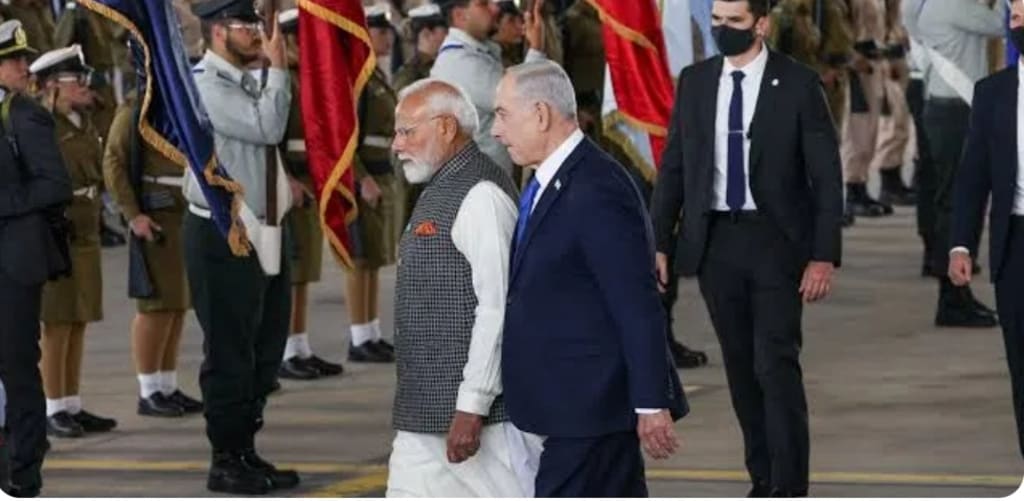
Indian Prime Minister Narendra Modi’s visit to Israel has drawn attention beyond bilateral relations. While the trip is presented by both governments as a step forward in defence, agriculture, and technology cooperation, it also carries implications for regional security, particularly for Pakistan.
India and Israel have steadily deepened ties over the past two decades, especially in defence procurement and intelligence sharing. For Pakistan, which shares a long and sensitive border with India, the evolution of these ties is closely watched.
This article examines why Modi’s Israel visit matters from a Pakistani security perspective and how it fits into broader regional dynamics.
A Shift in India–Israel Relations
India formally established diplomatic relations with Israel in 1992. Since then, cooperation has expanded in defence, cybersecurity, agriculture, and innovation.
In recent years, political engagement between New Delhi and Tel Aviv has become more visible. High-level visits signal a willingness to elevate the partnership beyond discreet defence transactions. Modi’s outreach reflects a shift toward open strategic alignment in selected sectors.
For Pakistan, the public nature of the relationship adds a new dimension to existing security calculations.
Defence Cooperation and Military Technology
One of the most significant aspects of India–Israel relations is defence cooperation. Israel has been a major supplier of military equipment to India, including surveillance systems, drones, radar systems, and missile technology.
These technologies are relevant to India’s border management and military readiness. Pakistan’s security planners pay close attention to developments that may affect the balance of capabilities along the Line of Control and other contested areas.
While defence purchases are a sovereign decision for any country, regional rivals often interpret them through a strategic lens.
Intelligence and Counterterrorism Links
India and Israel also share cooperation in counterterrorism and intelligence exchange. Both countries have faced security challenges involving cross-border militancy.
For Pakistan, such cooperation raises concerns that intelligence coordination could influence regional security narratives, particularly in relation to Kashmir and broader counterterrorism frameworks.
At the same time, Islamabad has repeatedly stated that it seeks peaceful coexistence and regional stability. The perception of closer India–Israel intelligence ties may, however, contribute to mistrust.
Impact on Strategic Balance in South Asia
South Asia remains one of the most sensitive security environments in the world, with India and Pakistan both possessing nuclear weapons. Any perceived shift in conventional military balance attracts attention from policymakers and analysts.
If India enhances surveillance capabilities or precision-strike technologies through Israeli partnerships, Pakistan may consider adjustments in its own defence posture. This dynamic can influence procurement decisions and strategic planning on both sides.
Security experts often warn that action–reaction cycles can deepen competition if not managed through dialogue.
Diplomatic Signalling and Regional Alliances
Modi’s visit also carries diplomatic symbolism. Strengthening ties with Israel reflects India’s broader foreign policy diversification, which includes relations with the United States, Gulf states, and European partners.
Pakistan traditionally maintains close relations with Muslim-majority countries and has supported the Palestinian cause. India’s open engagement with Israel may therefore be interpreted in Pakistan as part of a changing regional alignment.
However, global diplomacy increasingly involves multi-directional partnerships rather than fixed blocs. Many countries in the Middle East now maintain relations with both India and Israel.
Economic and Technological Dimensions
Beyond defence, the visit emphasizes cooperation in agriculture, water management, cybersecurity, and start-up ecosystems. Israel is known for technological innovation in areas such as irrigation and digital security.
India seeks to benefit from these technologies to support domestic development goals. For Pakistan, the economic aspect may be less directly security-related but still relevant in terms of regional competitiveness.
Advances in cybersecurity, for example, can have both civilian and military applications.
Pakistan’s Policy Options
From Islamabad’s perspective, the appropriate response may not be confrontation but strategic assessment. Pakistan maintains its own defence partnerships, including with China and Turkey.
Strengthening domestic technological capacity and diplomatic engagement could be part of a balanced approach. Analysts often argue that economic resilience and political stability are as important to national security as military capability.
Engagement through regional forums and confidence-building measures may also reduce tensions.
Broader Middle East Context
The Middle East has undergone significant diplomatic shifts in recent years. Several Arab states have formalised relations with Israel, altering long-standing regional alignments.
India has cultivated ties with Gulf countries while expanding cooperation with Israel. This multi-layered engagement reflects pragmatic diplomacy focused on trade, energy, and security.
Pakistan, too, maintains strong ties with Gulf states and monitors how regional partnerships evolve. The interplay of South Asian and Middle Eastern politics is becoming more interconnected.
Public Opinion and Domestic Debate
Within Pakistan, public discourse on India–Israel ties often includes references to historical conflicts and solidarity with Palestinians. Media coverage tends to frame such visits within the context of longstanding rivalry with India.
In India, the visit is often presented as part of a broader strategy to strengthen global partnerships and diversify defence suppliers.
Public narratives in both countries influence how diplomatic events are perceived, sometimes amplifying concerns beyond official policy statements.
The Role of International Actors
Major powers such as the United States play a role in shaping the regional environment. Washington maintains close ties with both India and Israel and has strategic interests in South Asia.
China, meanwhile, is a key partner for Pakistan and a significant regional actor. Infrastructure projects under the China–Pakistan Economic Corridor form part of Islamabad’s long-term development strategy.
These overlapping relationships demonstrate that regional security is influenced by global alignments. Modi’s visit to Israel fits within this wider framework.
Risk of Escalation or Opportunity for Stability?
The impact of India–Israel cooperation on Pakistan’s security depends on how developments are managed. Increased military capability does not automatically lead to escalation. Much depends on communication channels and diplomatic engagement.
Confidence-building measures between India and Pakistan have historically reduced tensions during sensitive periods. Continued dialogue, even when political relations are strained, can help manage misperceptions.
At the same time, transparency in defence agreements may ease speculation about strategic intentions.
Conclusion
Prime Minister Narendra Modi’s visit to Israel underscores the deepening partnership between the two countries in defence and technology. For Pakistan, these developments are closely monitored because of their potential impact on regional security balance.
The visit reflects broader geopolitical shifts, including diversified alliances and expanding technological cooperation. While defence ties are central to security considerations, economic and diplomatic factors also play important roles.
Ultimately, the implications for Pakistan will depend on how regional actors navigate competition and cooperation. Sustained dialogue, economic development, and transparent policies remain key to maintaining stability in South Asia.
About the Creator
Saad
I’m Saad. I’m a passionate writer who loves exploring trending news topics, sharing insights, and keeping readers updated on what’s happening around the world.
A Gathering of Evil Bosses
“I’m the queen of chin jutting while I smooth my hair, attacking, insulting, and deflecting to protect my appointer.” “Oh, please, Blondi, my hair is curled, highlighted, and longer than yours. I feature television commercials telling immigrants that we will give them a free plane ride home, and if they voluntarily turn themselves in, they will be allowed to legally apply for re-entry. It runs everywhere, and I look good in it! You can’t compete because of your blond hair. Mine is nicer, and my lips are prettier than yours.”
By Andrea Corwin 9 days ago in The Swamp
France Will Become the First Nation to Use Airbus’s New Ship-Launched Drone and Jump From Laggard to Pioneer
France is set to become the first country to operationally deploy Airbus’s new ship-launched drone system, marking a major shift in its naval and aerial surveillance capabilities. The move places France at the forefront of European maritime drone innovation and signals a dramatic transformation from a nation once criticized for lagging behind in unmanned systems to one now positioning itself as a pioneer. The drone, developed by Airbus, is designed to be launched directly from naval vessels without the need for runways or large flight decks. It can conduct long-endurance reconnaissance missions, gather intelligence, and provide real-time data to commanders at sea. French defense officials confirmed that the system will be integrated into the fleet over the coming months following a series of successful trials in the Mediterranean and Atlantic waters. A Breakthrough in Naval Drone Operations Unlike traditional shipborne helicopters or larger unmanned aircraft, the new drone is compact and designed for rapid deployment from frigates and patrol vessels. It uses a catapult-style launch system and can be recovered vertically or via net capture, allowing it to operate from smaller warships with limited space. This capability significantly expands the surveillance reach of the French Navy. A single vessel can now monitor vast areas of ocean, track suspicious vessels, and support search-and-rescue missions without relying on manned aircraft. “This technology gives us eyes far beyond the horizon,” said a senior French naval officer involved in the testing program. “It changes how we think about maritime security and operational awareness.” From Delay to Leadership For years, France was considered behind countries such as the United States and Israel in the field of military drones. Political hesitation, regulatory hurdles, and budget constraints slowed the adoption of unmanned systems within the French armed forces. That narrative is now shifting. By becoming the first nation to deploy Airbus’s ship-launched drone, France has leapfrogged several competitors and established itself as a testing ground for next-generation naval aviation technology. Defense analysts say the move reflects lessons learned from modern conflicts, where drones have proven essential for intelligence gathering, targeting, and battlefield coordination. “Navies are realizing that unmanned systems are no longer optional,” said one European security expert. “France’s decision puts it at the front of a new operational model.” Strategic and Geopolitical Impact The deployment is expected to strengthen France’s role in NATO maritime operations and European Union security missions. The drone will support patrols in the Mediterranean, the Atlantic approaches, and overseas territories where France maintains a permanent naval presence. It will also be used to monitor illegal trafficking, piracy, and unauthorized fishing, as well as to provide situational awareness during humanitarian and disaster-response missions. Beyond its practical uses, the decision carries symbolic weight. It demonstrates Europe’s growing independence in defense technology at a time when many nations are seeking alternatives to U.S.-made systems. Industrial and Economic Significance For Airbus, the project represents a major commercial and technological achievement. The company has invested heavily in unmanned aerial systems as part of its strategy to diversify beyond traditional aircraft production. Executives believe France’s adoption will encourage other European navies to follow suit. Several countries are already observing the French trials closely, raising the possibility of future export contracts. “This is not just a military step,” said an Airbus spokesperson. “It is a signal that European innovation can lead in cutting-edge defense technology.” Challenges Ahead Despite its promise, the system still faces challenges. Integration with existing naval command networks must be perfected, and crews require specialized training to operate and maintain the drones safely at sea. There are also ongoing debates about cybersecurity and the vulnerability of unmanned systems to electronic warfare. Environmental conditions pose another test. Saltwater corrosion, high winds, and rough seas demand extremely robust engineering to ensure reliability. A New Chapter for French Naval Power France’s decision to field Airbus’s ship-launched drone marks a turning point in its military modernization. Once cautious about embracing unmanned warfare, the country is now helping shape the future of naval operations in Europe. By combining advanced drone technology with its global naval presence, France is redefining how maritime missions are conducted—faster, safer, and with greater reach than ever before. As one defense official concluded, “This is not just a new aircraft. It is a new way of seeing and protecting the sea.”
By Fiaz Ahmed 4 days ago in The Swamp




Comments
There are no comments for this story
Be the first to respond and start the conversation.