
When the Cypress Whispers
A small bayou community fights to protect its wetlands, culture, and way of life against the tide of development

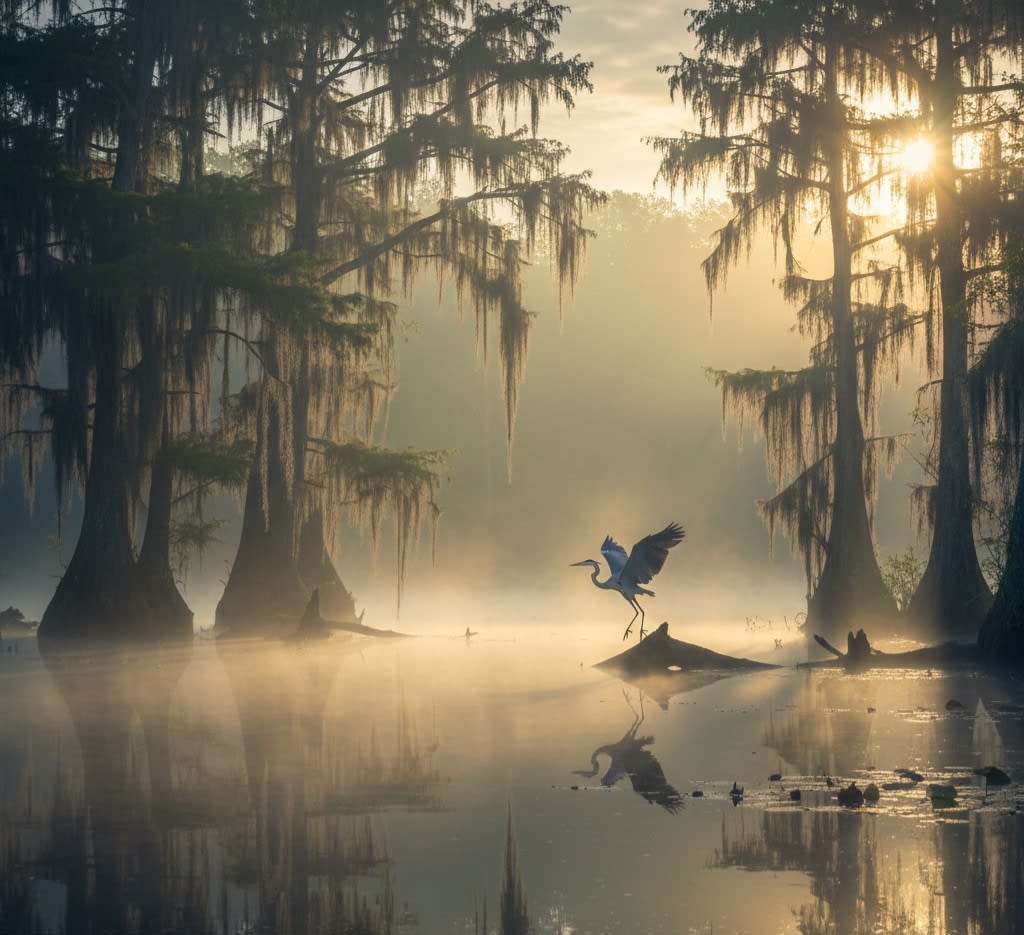
At first light, when the fog still clings to the water like drifting silk, Old Cypress Bayou breathes in silence. Great limbs of ancient cypress drip with moss that shimmers like silver lace. The air smells of damp wood and wild mint, and somewhere unseen, a heron lifts off with a low, echoing cry. This place is more than land and water; it is memory and myth — a living tapestry woven by every frog’s chorus, every glint of sunrise on black water, every whispered secret between reeds.
For generations, the people of Cypress Bayou have lived in rhythm with this swamp. They weren’t just neighbors to the wetlands; they were part of it. Folks here knew how to read the season by the cicadas’ hum, how to predict rain by the flight of swallows, how to listen when the cypress whispered.
But these days, the whispers have grown urgent.
The New Threat
In the spring of 2025, word spread through the bayou like wildfire: a development firm had secured permits for a “wetland revitalization project” that promised jobs and investment. On the surface, it sounded too good to be true. The local chamber of commerce touted it as a boon for tourism and employment — a chance to bring new life to a community that had struggled since the mills closed.
Yet most locals felt a cold knot tighten in their stomachs.
“We’ve been promised shiny futures before,” said Lula May, a lifelong resident whose porch overlooks the moss-laden cypress grove. “They call it revitalization. But what they really see is empty land — and they want to fill it.”
The company’s plan included dredging sections of the bayou to create “navigable waterways” for recreational boating, building boardwalk villages for visitors, and planting non-native ornamental grasses to give the area a more “marketable aesthetic.” The proposal passed preliminary votes with surprising speed. Few regulators had ever set foot in the swamp — or spoke the language of wetlands.
A Community Awakens
At first, most residents kept quiet. It was easier to hope for good outcomes than to imagine being crushed by progress. But by summer, something shifted.
Kids who grew up wading in the shallows began to draw pictures of their favorite turtle ponds. Fishermen, who once laughed off talk of activism, stood shoulder to shoulder at community meetings, maps spread before them like battle plans. Even the old storytellers — usually content to talk about ghost lights and cypress spirits — started quoting scientific reports and legal jargon about the Clean Water Act.
“Not everything worth saving is on their balance sheet,” said Clarence Duval, a retired boat captain whose hands were as creased as the bayou’s shoreline. “This swamp is our schoolhouse, our pharmacy, our cathedral. You chop it up for profit and all you get is short-lived dollars and a hollow landscape.”
They called their effort The Cypress Accord — a pledge signed by hundreds of community members to protect the heart of their wetlands. They invited scientists, conservationists, even artists to teach, document, and celebrate the hidden wonders of their home: frog species found nowhere else, migratory birds that rested on the bayou like travelers at a fountain, aquatic plants that filtered water and fed whole food webs.
Local musician Iris LeBlanc wrote a song called Cypress Heart that went viral on social media. Its chorus was simple:
When the cypress whispers, hear its plea —
Not for the money, but for the memory.
The Wider Fight
As summer shifted to fall, the story of Cypress Bayou caught fire beyond the swamp’s tangled edges. Environmental writers published essays; photographers captured iridescent dragonflies darting among lily pads. The narrative changed — from a sleepy backwater ripe for development to a treasure worth defending.
Then came the turning point: a group of wetland ecologists documented that over 70% of the surrounding wetlands had lost federal protections due to regulatory reinterpretations in recent years. Without protections, developers could legally destroy or alter wetlands once considered sacred under environmental law. The news shocked even seasoned activists.
The bayou wasn’t just beloved — it was vulnerable.
Suddenly, Cypress Bayou became a symbol of a much larger struggle: whether modern economies would sacrifice irreplaceable ecosystems for short-term gain, or whether communities could re-imagine prosperity in harmony with nature.
Voices from the Bayou
“What they call progress,” laughed old Lula May, “we call punishing the land that feeds us. This place didn’t ask to be pretty for outsiders. It asked to be left alive.”
Children from the local school made posters spelling out “Save Our Swamp” with crayfish red and cypress green. Restaurants in New Orleans and Baton Rouge began promoting benefit nights, funneling funds back to legal defenses for the community.
And as winter’s light softened the bayou, people gathered for weekly potlucks under strings of lanterns. Some nights the air was cool enough to hear the ticks of crickets as elders spoke about the deep roots of tradition and the newer roots of activism — how both were necessary to sustain the spirit of the swamp.
A Future Written Together
The battle isn’t won — not yet. Legal challenges loom, and developers still promise vast economic growth should their plans proceed. But one thing has changed irrevocably: the swamp community no longer whispers. It sings.
Not with naïve hope, but with grounded determination. They’ve learned that a wetland is more than just land with water. It’s a community, a lifeline, a library of natural wisdom. Protecting it has become a mission that transcends boundaries — uniting scientists, artists, locals, and strangers who fell in love with the swamp’s wild call.
And on quiet mornings, when the mist still settles like a benediction, the cypress trees stand tall — guardians of stories old and new — whispering not of defeat, but of resilience.
About the Creator
Luna Vani
I gather broken pieces and turn them into light
Democrats rally behind Ilhan Omar, rebuke Trump’s insults after Minnesota town hall attack
US Representative Ilan Omar was attacked. This must not stand. No political violence against anyone involved in the body politic should stand. It is a significant and repugnant sign of the country’s dissolution into a lawless republic.
By Skyler Saunders6 days ago in The Swamp
Ex‑Olympian Ryan Wedding Pleads Not Guilty to Massive Drug Kingpin Charges in U.S. Court
Ryan Wedding, a former Canadian Olympic snowboarder, is at the center of one of the most shocking criminal cases in recent history. Once celebrated for his athletic achievements, Wedding now faces allegations of running a sprawling international cocaine trafficking operation, with links to violence and murder. This week, he appeared in a U.S. federal court to plead not guilty to the charges.
By Ayesha Lashari7 days ago in The Swamp


Comments
There are no comments for this story
Be the first to respond and start the conversation.