
What’s Happened Since the Supreme Court’s Tariff Ruling
After the Supreme Court of the United States curtailed presidential tariff powers, Congress, businesses, and global partners are scrambling to redefine America’s future trade policy.

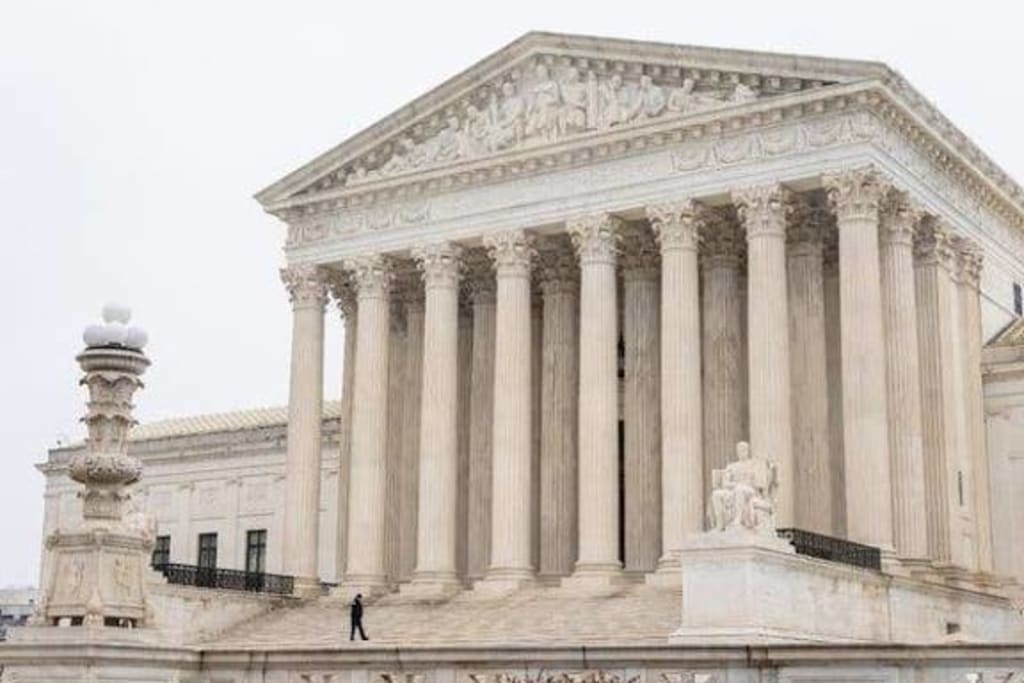
Since the landmark decision by the Supreme Court of the United States limiting the president’s authority to impose sweeping tariffs without congressional approval, Washington and global markets have entered a period of adjustment marked by political debate, legal uncertainty, and cautious economic recalibration.
The ruling stemmed from a challenge to emergency trade powers used to justify broad import taxes on foreign goods. While the Court did not immediately strike down all existing tariffs, it made clear that large-scale trade measures must rest on firmer legislative authority. The decision reasserted Congress’s constitutional role in regulating commerce and narrowed the scope of unilateral executive action in trade policy.
Congress Moves to Reclaim Control
In the weeks following the ruling, lawmakers introduced competing proposals to redefine how future tariffs can be enacted. Some bills aim to require congressional approval for any new tariffs lasting longer than 60 days. Others seek to create a streamlined process for emergency actions, balancing speed with oversight.
Supporters of the Court’s decision argue it restores democratic accountability. “Trade policy affects every household,” said one senior lawmaker. “It should not be decided by one office alone.” Critics, however, warn that slower legislative procedures could weaken the United States’ leverage in negotiations with foreign governments accused of unfair trade practices.
Committee hearings have featured testimony from economists, manufacturers, and labor groups, reflecting sharply divided views. Exporters want predictability, while domestic producers want continued protection from low-cost imports. For now, Congress has not passed a comprehensive replacement framework, leaving trade policy in a temporary holding pattern.
Markets and Businesses Adjust
Financial markets initially reacted with modest optimism, interpreting the ruling as a signal of reduced risk of sudden tariff escalations. Shares of retail and manufacturing companies dependent on imported components rose slightly, while shipping and logistics firms welcomed the prospect of more stable trade rules.
Businesses, however, remain cautious. Several multinational corporations have delayed long-term supply contracts, citing uncertainty over whether Congress will loosen or reinforce tariff controls. “Legal clarity doesn’t equal policy clarity,” said a trade consultant based in Chicago. “Companies still don’t know what the next six months will bring.”
Small and medium-sized enterprises, which often lack the resources to absorb sudden cost increases, have been among the most vocal supporters of the ruling. Many hope it will lead to fewer abrupt changes in import duties and a more predictable regulatory environment.
International Response
U.S. trading partners reacted with guarded relief. European and Asian officials welcomed the Court’s emphasis on institutional checks, interpreting it as a move toward more rules-based trade policy. Several stalled trade discussions were quietly revived, particularly on industrial goods and agricultural exports.
China and other major exporters are watching closely to see how Congress reshapes tariff authority. Diplomats say the ruling could reduce the likelihood of rapid trade wars but may also slow negotiations if U.S. policymakers become divided internally.
One senior European official described the decision as “a stabilizing signal,” adding that predictable U.S. policy would benefit global markets already strained by geopolitical tensions and supply chain disruptions.
Impact on Consumers
For American consumers, the effects have been subtle so far. Prices of imported electronics, appliances, and vehicles remain largely unchanged, as existing tariffs are still in place. Economists say any noticeable shift will depend on whether Congress eventually rolls back certain duties or replaces them with a more targeted system.
Consumer advocacy groups argue that the ruling opens the door to lower costs in the long term. “Tariffs are hidden taxes,” one spokesperson said. “If lawmakers use this moment to reduce them responsibly, households could see relief.”
A Broader Constitutional Signal
Beyond economics, the ruling has set an important legal precedent. Constitutional scholars note that it reinforces limits on executive power in areas tied to national emergencies and foreign commerce. This could influence future cases involving sanctions, export controls, and emergency economic measures.
The decision has also reshaped political debate, forcing both parties to confront how trade policy should be made in an era of global competition and domestic economic anxiety.
What Comes Next
The coming months will determine whether the ruling produces meaningful reform or prolonged gridlock. Businesses want certainty, allies want predictability, and voters want relief from rising costs. All eyes are now on Congress to define a new balance between flexibility and accountability in U.S. trade policy.
What is clear is that the Supreme Court’s tariff ruling did not end the controversy—it shifted it from the courtroom to the halls of Congress and the negotiating tables of international trade, where its consequences will continue to unfold.
About the Creator
Fiaz Ahmed
I am Fiaz Ahmed. I am a passionate writer. I love covering trending topics and breaking news. With a sharp eye for what’s happening around the world, and crafts timely and engaging stories that keep readers informed and updated.
Keep reading
More stories from Fiaz Ahmed and writers in The Swamp and other communities.
EU Sanctions Russian Officials as Hungary Blocks Funds to Ukraine
In a tense session that underscored the European Union’s internal divisions, EU member states imposed fresh sanctions on Russian officials linked to the ongoing conflict in Ukraine, even as Hungary blocked a portion of funds intended to support Kyiv’s war effort. The move highlights both the bloc’s commitment to pressuring Moscow and the political fractures that complicate collective action. The sanctions target several high-ranking Russian politicians and military figures accused of facilitating or enabling military operations in Ukraine. Measures include travel bans, asset freezes, and restrictions on financial transactions within the EU. The European Council described the action as “a necessary step to hold accountable those responsible for destabilizing the region and perpetuating the war.” EU officials emphasized that the sanctions are part of a broader strategy to maintain economic and political pressure on Russia, following months of escalating conflict. “We are demonstrating unity in condemning aggression and in supporting the sovereignty of Ukraine,” said an EU diplomat familiar with the discussions. Hungary’s Block and Internal Disputes At the same time, Hungary, long criticized for its close ties to Moscow, has blocked disbursement of certain EU funds allocated to Kyiv. Prime Minister Viktor Orbán cited concerns over financial oversight and alleged inefficiencies in the use of the funds, although critics argue that the move is politically motivated. “The decision undermines European solidarity,” said a European Commission spokesperson. “EU funds are designed to support a country under attack, and blocking these resources contradicts the shared principles of the Union.” The standoff exposes persistent challenges in coordinating EU foreign policy. While the bloc often speaks with one voice on paper, differing national interests, political alliances, and domestic pressures can complicate unified responses to crises. Impact on Ukraine and the War Effort For Ukraine, the timing of the partial block is problematic. The funds in question were intended for critical infrastructure repairs, humanitarian support, and military aid. Kyiv’s government expressed disappointment but maintained that international assistance remains vital. “We rely on our partners to help sustain our people and defense capabilities,” said a Ukrainian government official. “Every delay in support weakens our ability to respond to aggression and protect civilians.” The sanctions on Russia, however, were broadly welcomed in Kyiv. Analysts suggest that targeting individual officials and freezing assets could deter further escalation and signal that the international community is watching. “While sanctions alone won’t end the war, they send a strong message that those responsible cannot operate freely or enjoy the benefits of their positions,” said a policy analyst in Brussels. EU’s Strategic Calculus The dual actions — sanctions on Russian figures and the partial freeze of funds to Ukraine — illustrate the EU’s delicate balancing act. Brussels must uphold its commitment to Ukraine, maintain economic stability within the bloc, and navigate member states’ divergent political stances. Some EU officials hope that Hungary’s objections can be resolved through negotiation, emphasizing enhanced monitoring and reporting requirements for fund usage. Others warn that prolonged resistance could embolden Moscow and undermine the EU’s credibility as a unified actor. Looking Ahead Observers expect the coming months to be critical. With sanctions likely to expand and political negotiations ongoing, the EU faces a test of both its internal cohesion and its ability to influence the trajectory of the war in Ukraine. The situation also serves as a reminder that European solidarity is not guaranteed and must be actively maintained amid competing domestic and international interests. As Ukraine continues to face Russian military pressure, the international community watches closely. The EU’s ability to reconcile internal disagreements while sustaining support for Kyiv may prove decisive in shaping the region’s stability and the long-term geopolitical balance in Eastern Europe.
By Fiaz Ahmed about 11 hours ago in The Swamp
A Gathering of Evil Bosses
“I’m the queen of chin jutting while I smooth my hair, attacking, insulting, and deflecting to protect my appointer.” “Oh, please, Blondi, my hair is curled, highlighted, and longer than yours. I feature television commercials telling immigrants that we will give them a free plane ride home, and if they voluntarily turn themselves in, they will be allowed to legally apply for re-entry. It runs everywhere, and I look good in it! You can’t compete because of your blond hair. Mine is nicer, and my lips are prettier than yours.”
By Andrea Corwin 6 days ago in The Swamp




Comments
There are no comments for this story
Be the first to respond and start the conversation.