
Washington Pushes Back Against EU’s Bid for Tech Autonomy
Formal / News Style Transatlantic tensions rise over Europe’s push for digital independence U.S. warns against protectionism as Brussels accelerates tech strategy Dispute grows over chips, cloud services and data sovereignty 🔹 Neutral & Informative Why the tech autonomy debate is straining U.S.–EU relations Allies clash over control of critical technologies 🔹 Impactful & Catchy When partners become rivals in the digital race A new front in transatlantic competition

The United States has mounted a diplomatic and economic pushback against the European Union as Brussels accelerates efforts to achieve “strategic autonomy” in critical technologies, including semiconductors, artificial intelligence, and cloud computing.
European leaders argue that reducing dependence on foreign suppliers—particularly American and Chinese firms—is essential for economic resilience and national security. Washington, however, fears that the EU’s industrial policies could disadvantage U.S. companies, fragment global technology markets, and undermine long-standing transatlantic cooperation.
Clash Over Strategic Autonomy
At the heart of the dispute is the EU’s push to build domestic capacity in advanced technologies through subsidies, regulations, and local procurement requirements. Initiatives such as the European Chips Act and stricter data sovereignty rules are designed to keep sensitive digital infrastructure within Europe’s borders.
U.S. officials say they support Europe strengthening its tech ecosystem but warn against what they see as protectionist measures disguised as security policy. Senior American diplomats have privately raised concerns that EU rules could exclude U.S. firms from lucrative government contracts and research partnerships.
“America wants a strong Europe,” one U.S. official said on condition of anonymity, “but not one that walls itself off from trusted partners.”
Economic Stakes Are High
The technology sector represents one of the most profitable areas of transatlantic trade. American cloud providers, chip designers, and software firms dominate large segments of the European market. Any shift toward “Europe-first” technology sourcing could significantly reshape global supply chains.
EU policymakers counter that the bloc learned hard lessons from pandemic-era shortages and recent geopolitical tensions. Dependence on overseas chip manufacturing exposed vulnerabilities that could be exploited during future crises.
“Strategic autonomy is not isolation,” a European Commission spokesperson said. “It is about ensuring that Europe can function independently when necessary.”
Still, Washington worries that Europe’s drive could spill into broader trade friction. U.S. business groups have already complained that compliance with new EU digital regulations adds cost and complexity, potentially discouraging innovation.
Security and Data at the Center
Data protection remains one of the most sensitive areas of disagreement. The EU’s strict privacy framework and push for European-based cloud services clash with U.S. intelligence and law enforcement policies that allow authorities access to data held by American firms abroad.
European lawmakers argue that digital sovereignty is essential to protect citizens’ rights and shield critical infrastructure from foreign interference. U.S. officials counter that shared democratic values and existing legal frameworks should be enough to guarantee trust between allies.
Behind closed doors, Washington has urged Brussels to carve out exemptions for American companies operating in Europe, warning that failure to do so could provoke retaliation through trade measures or World Trade Organization disputes.
Transatlantic Unity Under Strain
The disagreement comes at a time when both sides publicly stress the importance of unity in the face of rising global competition, particularly from China. Analysts say the tech autonomy debate exposes a deeper tension between cooperation and competition among allies.
“Europe wants independence, but the U.S. wants integration,” said a Brussels-based policy analyst. “Both see technology as power, and neither wants to give up control.”
Despite the friction, officials insist negotiations are ongoing. A joint EU-U.S. Trade and Technology Council has been working to harmonize standards on AI safety, semiconductor supply chains, and cybersecurity.
Some diplomats believe a compromise is possible, allowing Europe to boost domestic production while maintaining open markets for trusted partners. Others fear the issue could become another fault line in an already strained global trade system.
What Comes Next
In the coming months, Washington is expected to intensify lobbying efforts as the EU finalizes rules governing cloud services, AI development, and chip subsidies. U.S. companies are also preparing legal challenges to what they view as discriminatory regulations.
For Europe, the push for autonomy is about long-term resilience. For the United States, it raises alarms about losing influence over the technologies that shape modern economies and security.
The outcome of this dispute will likely define the future of transatlantic technology relations. Whether it leads to closer coordination or deeper rivalry depends on how far Europe is willing to go—and how firmly Washington chooses to resist.
As both sides seek to balance sovereignty with partnership, the struggle over tech autonomy underscores a new reality: even close allies now compete for control of the digital future.
About the Creator
Fiaz Ahmed
I am Fiaz Ahmed. I am a passionate writer. I love covering trending topics and breaking news. With a sharp eye for what’s happening around the world, and crafts timely and engaging stories that keep readers informed and updated.
Keep reading
More stories from Fiaz Ahmed and writers in The Swamp and other communities.
Mini Missiles Used to Shoot Down Incoming Missiles Eyed for USAF Tanker Fleet
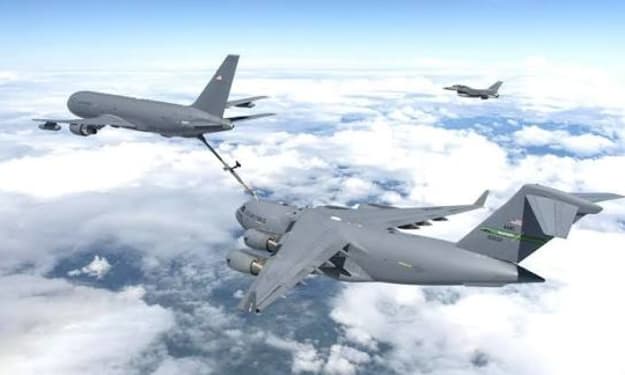
The United States Air Force is exploring the deployment of compact defensive missiles designed to intercept and destroy incoming threats, as part of a new effort to protect its vital aerial refueling fleet from modern missile attacks. The initiative reflects growing concern that U.S. tanker aircraft — which provide fuel to fighter jets and bombers during long missions — are increasingly vulnerable in contested airspace. Military planners now believe future conflicts will require tankers to defend themselves rather than rely solely on escort aircraft. A New Layer of Defense According to defense officials familiar with the program, the Air Force is evaluating so-called “mini interceptors” capable of launching from aircraft-mounted pods. These small missiles would detect, track, and destroy enemy air-to-air or surface-to-air missiles before they reach their target. Unlike traditional countermeasures such as flares or electronic jamming, the mini missiles would physically intercept the threat mid-air, offering a more reliable shield against advanced weapons that can resist electronic interference. “This is about survivability,” one official said. “Tankers are too important to lose in the early stages of a conflict.” Why Tankers Matter Aerial refueling aircraft are the backbone of U.S. global air operations. Without them, fighter jets and bombers would be limited in range and unable to sustain long missions over distant regions. The Air Force operates a fleet that includes the KC-135 Stratotanker and the newer KC-46 Pegasus. These aircraft are large, slow, and difficult to maneuver, making them prime targets for enemy missiles. Recent war games and intelligence assessments have shown that adversaries are developing longer-range air-to-air missiles specifically designed to strike high-value aircraft such as tankers and surveillance planes. Inspired by Missile Defense Technology The concept borrows from ground-based missile defense systems but adapts them for airborne use. Engineers aim to build interceptors that are light, fast, and capable of rapid launch in response to an incoming threat detected by onboard sensors. Defense contractors are reportedly working with the U.S. Air Force to test whether these miniature interceptors can be integrated with existing radar and warning systems already installed on tanker aircraft. If successful, the system would represent a major shift in how large support aircraft defend themselves. Strategic Competition Drives Innovation The move comes amid rising competition with major powers that have invested heavily in advanced missile technology. Military analysts say nations such as China and Russia have prioritized weapons capable of targeting support aircraft far from the battlefield. “Tanker aircraft are the Achilles’ heel of air power,” said a defense analyst at a Washington-based research institute. “If you can knock out the tankers, you cripple the entire operation.” This has pushed the Pentagon to consider more aggressive defensive options beyond traditional countermeasures. Challenges and Risks While promising, the mini-missile concept faces technical and operational hurdles. Integrating interceptors onto aircraft not originally designed to carry them raises questions about weight, power requirements, and maintenance. There are also safety concerns. Firing interceptors close to a large fuel-laden aircraft requires extreme precision to avoid accidental damage from debris or blast effects. Cost is another factor. Outfitting the entire tanker fleet with missile interceptors would require billions of dollars in research, testing, and production. Future Testing and Deployment The Air Force is expected to conduct flight demonstrations over the next two years to determine whether the technology is viable for real-world operations. Initial deployment would likely focus on tankers assigned to high-risk regions where missile threats are most severe. If approved, the system could later be adapted for other vulnerable aircraft, such as reconnaissance planes and airborne command centers. Defense officials stress that the project is still in its early stages and no final decision has been made on full-scale adoption. However, interest within military leadership appears strong. A Shift in Air Warfare Doctrine The idea of aircraft shooting down incoming missiles with their own missiles marks a new phase in aerial defense doctrine. It blurs the line between offensive and defensive weapons and reflects how modern warfare increasingly depends on layered protection systems. As missile technology continues to evolve, so too must the aircraft that operate in contested skies. For the U.S. tanker fleet, the addition of mini interceptors could mean the difference between vulnerability and survivability in future conflicts. What was once considered a rear-area support aircraft may soon become a frontline survivor, armed with its own shield against the deadliest threats in the air.
By Fiaz Ahmed about 9 hours ago in The Swamp
The Saddest Thing - The Billionaires Who Rule America Aren't Even Enjoying Themselves
This single post says more about our ruling class than a thousand policy papers. The saddest thing about today's system is that the men robbing the rest of us - sabotaging our economic prospects, our pensions, our access to affordable healthcare - are not even happy.
By Scott Christenson🌴8 days ago in The Swamp
‘Despicable and Reprehensible’: China Slams UK’s Hong Kong Visa Expansion After Jimmy Lai Sentencing
The diplomatic storm between China and the United Kingdom has just intensified. Beijing has labeled the UK’s expansion of its Hong Kong visa program as “despicable and reprehensible”, following the sentencing of pro-democracy media tycoon Jimmy Lai to 20 years in prison under China’s national security law.
By Aqib Hussain4 days ago in The Swamp


Comments
There are no comments for this story
Be the first to respond and start the conversation.