
Warsh’s Return Revives Tensions Over the Fed’s $6.6 Trillion QE Hangover
The former Fed governor’s comeback reignites debate over quantitative easing, inflation risks, and the future of U.S. monetary policy

Introduction
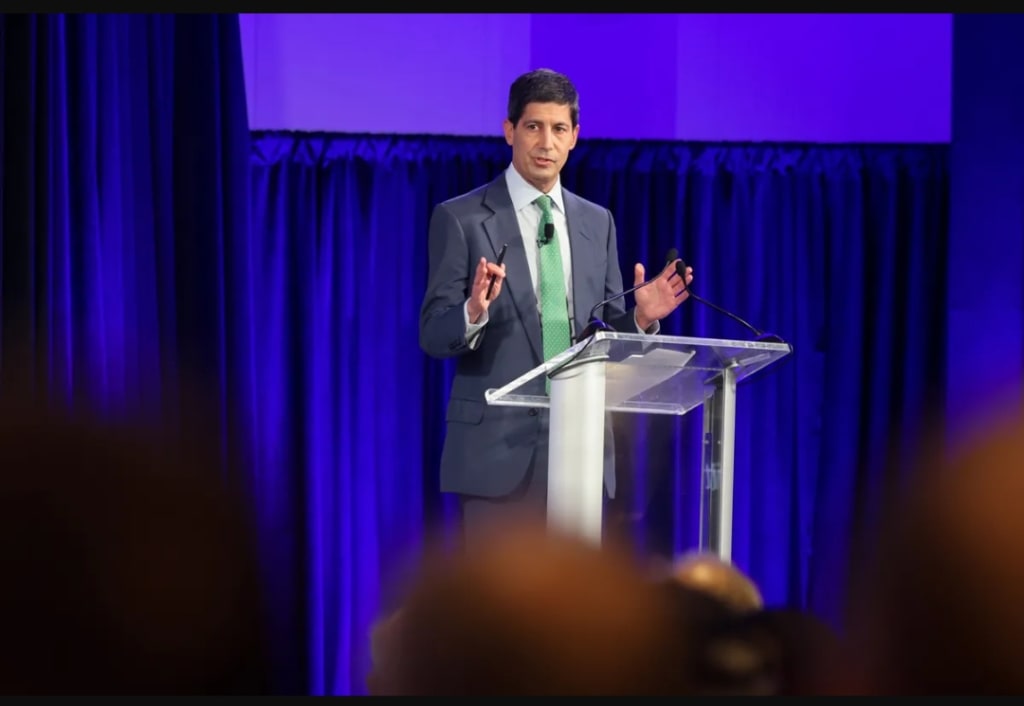
Kevin Warsh’s return to the center of U.S. monetary policy debates has reopened an old but unresolved argument: what to do about the Federal Reserve’s $6.6 trillion quantitative easing (QE) hangover. As a former Federal Reserve governor known for his skepticism toward aggressive monetary stimulus, Warsh’s renewed influence has revived tensions within financial markets, policy circles, and Washington itself.
The debate is not just academic. QE reshaped the global financial system after the 2008 crisis and again during the pandemic, flooding markets with liquidity. Now, with inflation concerns lingering and asset prices still sensitive to policy shifts, Warsh’s re-emergence raises a critical question: has the Fed gone too far—and can it ever truly unwind what it created?
What Is the Fed’s QE Hangover?
Quantitative easing refers to the Federal Reserve’s large-scale purchases of government bonds and mortgage-backed securities to inject liquidity into the economy. At its peak, the Fed’s balance sheet ballooned to nearly $9 trillion, before modest reductions brought it down to roughly $6.6 trillion.
This massive expansion helped stabilize markets during crises, but it also produced long-term side effects:
Elevated asset prices across stocks, real estate, and bonds
Increased risk-taking and speculation
Distorted market signals around interest rates
Concerns about inflation and financial stability
The “QE hangover” describes the lingering economic and market distortions that remain long after the emergency stimulus has ended.
Why Kevin Warsh Matters
Kevin Warsh served as a Federal Reserve governor during the aftermath of the 2008 financial crisis. Unlike many of his peers, he became increasingly critical of prolonged monetary easing, warning that excessive stimulus could fuel asset bubbles and weaken the Fed’s credibility.
Warsh has repeatedly argued that QE should be used sparingly and unwound decisively once crisis conditions pass. His philosophy contrasts sharply with the more accommodative stance that has dominated central banking over the past decade.
With Warsh once again influencing policy discussions—and viewed by some as a potential future Fed leader—markets are reassessing what a more hawkish Fed could mean.
Markets React to a Policy Shift Signal
Warsh’s return has coincided with heightened market volatility. Investors are increasingly sensitive to any suggestion that the Fed could tighten financial conditions faster or more aggressively.
Recent market reactions suggest:
Rising bond yields, reflecting expectations of tighter policy
Pressure on equities, particularly growth and tech stocks
Stronger U.S. dollar, weighing on commodities and emerging markets
The sharp sell-offs in gold and silver, as well as broader equity weakness, reflect fears that the era of easy money may be ending more decisively than previously expected.
Inflation vs. Financial Stability
At the heart of the debate is a fundamental tension: fighting inflation without destabilizing markets.
Supporters of QE argue that aggressive stimulus prevented economic collapse and supported employment during extraordinary crises. Critics counter that prolonged easing delayed necessary market corrections and left the economy dependent on cheap money.
Warsh has consistently emphasized that central banks risk losing control when they prioritize short-term market stability over long-term discipline. In his view, the Fed’s bloated balance sheet limits its flexibility and credibility when inflation pressures emerge.
The Challenge of Unwinding QE
Reducing a $6.6 trillion balance sheet is no simple task. Rapid tightening risks triggering market turmoil, while slow unwinding allows distortions to persist.
Key challenges include:
Avoiding liquidity shocks in bond markets
Preventing sharp spikes in borrowing costs
Managing political pressure from markets and lawmakers
Maintaining confidence in the Fed’s independence
Past attempts at balance sheet reduction have shown how sensitive markets are to even modest tightening signals.
Political and Global Implications
The QE debate is no longer confined to central bankers. Lawmakers are increasingly scrutinizing the Fed’s role in shaping inequality, housing affordability, and asset inflation.
Globally, U.S. monetary policy affects capital flows, exchange rates, and financial stability worldwide. A shift toward Warsh’s more restrictive philosophy could tighten global financial conditions, particularly in emerging markets reliant on dollar liquidity.
This adds another layer of complexity to the Fed’s decisions, making any policy pivot highly consequential beyond U.S. borders.
What Comes Next for the Fed?
Warsh’s reappearance does not guarantee an immediate policy overhaul, but it does signal a growing appetite for reassessing the Fed’s post-crisis playbook.
Possible outcomes include:
Faster balance sheet reduction
Greater emphasis on inflation control over market support
Reduced tolerance for asset bubbles
Clearer communication about QE’s limits
Even incremental moves in this direction could reshape investor expectations and market behavior.
Conclusion
Warsh’s return has revived tensions over the Fed’s $6.6 trillion QE hangover, reopening a debate that has defined monetary policy for more than a decade. As inflation risks persist and markets remain sensitive to policy shifts, the question is no longer whether QE worked—but what its long-term costs have been.
Whether the Fed chooses a cautious unwind or a more assertive reset, the decisions made in the coming months will shape financial markets, economic growth, and global stability for years to come. In that sense, the QE hangover is far from over—and Kevin Warsh’s voice ensures it will no longer be ignored.
About the Creator
Asad Ali
I'm Asad Ali, a passionate blogger with 3 years of experience creating engaging and informative content across various niches. I specialize in crafting SEO-friendly articles that drive traffic and deliver value to readers.
RNLI Issues Urgent Warning as Powerful Waves Put Coastal Visitors at Risk
The Royal National Lifeboat Institution (RNLI) has issued a renewed safety warning to coastal visitors following a rise in incidents caused by powerful and unpredictable waves. As beaches and coastlines attract more walkers, swimmers, and sightseers, the charity is reminding the public that the sea can change in an instant, turning a peaceful shoreline into a dangerous environment.
By Sajida Sikandar3 days ago in The Swamp



Comments
There are no comments for this story
Be the first to respond and start the conversation.