
US Military Launches Operation in Ecuador to Combat Drug Trafficking
The United States and Ecuador launch a joint military operation targeting powerful drug trafficking networks, signaling a tougher approach to narco-terrorism and regional security in Latin America.

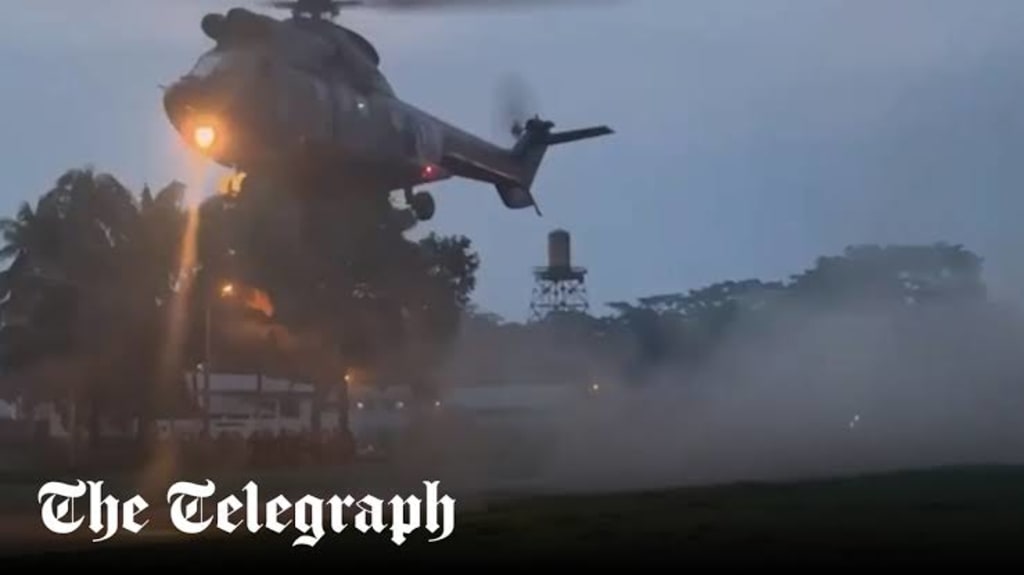
In a significant escalation of U.S. efforts to counter narcotics crime in Latin America, United States Southern Command has confirmed that the United States and Ecuador have begun joint military operations aimed at combating drug trafficking and related organized crime groups. The operation, which began on March 3, 2026, is part of a broader campaign to confront narco-terrorism — a term used by officials to describe powerful criminal networks that blend drug trafficking with violence and terrorism tactics.
Southern Command said in a statement that Ecuadorian and U.S. military forces launched coordinated operations against what they described as “Designated Terrorist Organizations” operating within Ecuador’s territory. Though details remain limited, the action was framed as a decisive move to disrupt and dismantle trafficking networks that have fueled violence, corruption, and instability in the region.
New Phase in the War on Narco-Terrorism
President Daniel Noboa, a close ally of Donald Trump, has described the joint military operations as part of a “new phase” in Ecuador’s long-running struggle against powerful drug cartels that use the country’s extensive ports and borders to move cocaine to international markets. Ecuador’s geographic position near major drug producing neighbours such as Colombia and Peru makes it a critical transit hub in the global cocaine trade.
In statements on social media platform X, Southern Command emphasised the partnership’s regional significance, calling the operation “a powerful example of the commitment of partners in Latin America and the Caribbean to combat the scourge of narco-terrorism.” A short video accompanying the announcement featured helicopters and ground elements but did not disclose locations or objective specifics.
What the Operation Involves
While Ecuador’s Ministry of Defense has refrained from releasing operational specifics, citing security concerns and classified details, military cooperation reportedly includes intelligence sharing, logistical coordination, and advisory support from U.S. personnel. In similar anti-narcotics efforts, U.S. Special Forces have provided tactical advice and helped Ecuadorian units plan and execute raids on cartel infrastructure.
According to officials, the operation marks one of the most significant deployments of U.S. military assets in Ecuador since the reintroduction of temporary forces at the former US air base in Manta — a site that had supported counter-drug efforts before the base was closed in 2009. Though Ecuador’s constitution prohibits permanent foreign bases, short-term deployments under bilateral agreements have enabled joint operations against drug networks.
Background: Rising Violence and Crime
Ecuador has experienced a sharp increase in violence over the past few years as rival cartels such as Los Lobos and Los Choneros fight for control of trafficking routes. Around 70 % of cocaine leaving Colombia and Peru — the world’s top two cocaine producers — transits through Ecuador, according to government estimates. The resulting turf wars have driven up homicide rates and strained law enforcement capabilities.
The Trump administration, which has focused on interdiction and military pressure as core elements of its approach to drug policy, has already conducted a series of anti-drug strikes in the Caribbean and Eastern Pacific as part of a broader campaign known as Operation Southern Spear. These actions have targeted suspected smuggling vessels and distribution networks in oceanic corridors that feed illicit supply chains.
Reactions and Implications
The launch of military operations in Ecuador has drawn mixed reactions. Supporters argue that the cooperation strengthens national and regional capacity to confront well-armed criminal groups that have overwhelmed local security forces. They believe that increased U.S. involvement — particularly in intelligence and tactical planning — bolsters long-term efforts to reclaim territory from cartel control and disrupt global trafficking routes.
Critics, however, warn that the use of military force in anti-drug operations can have unintended consequences. Some observers argue that militarising the fight against drug trafficking may lead to increased civilian harm or deepen instability if not paired with comprehensive law-enforcement reform, social investment, and economic alternatives. Questions have also been raised about the lack of transparency surrounding the classified aspects of the operation and the extent of U.S. involvement beyond advisory roles.
Regardless of these debates, the operation reflects a growing strategic partnership between Washington and Quito, reinforced by shared interests in combating narcotics crime. For Ecuador, the collaboration offers badly needed resources and expertise to confront a problem that has strained its institutions. For the United States, it represents an expansion of military engagement in Latin America under an administration that has equated drug enforcement with broader security priorities.
As the operation continues, officials from both nations have pledged to maintain coordination and to adapt their tactics based on evolving intelligence. With the details of specific raids and outcomes still emerging, the full impact of this joint military effort against drug trafficking will likely unfold over the coming weeks and months.
About the Creator
Fiaz Ahmed
I am Fiaz Ahmed. I am a passionate writer. I love covering trending topics and breaking news. With a sharp eye for what’s happening around the world, and crafts timely and engaging stories that keep readers informed and updated.
Keep reading
More stories from Fiaz Ahmed and writers in The Swamp and other communities.
UK Deploys Type 45 Destroyer, Drone‑Busting Helicopters Amid Iran Tensions
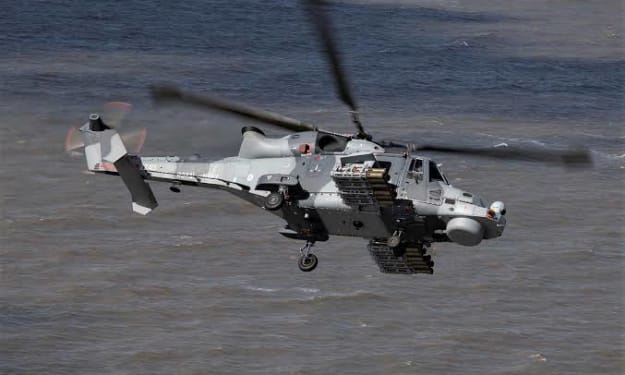
The Royal Navy has deployed one of its most advanced surface warships and specialised helicopters to the Eastern Mediterranean as part of a broader effort to protect British forces and interests amid escalating Middle East tensions linked to the war involving Iran and Western allies. The move, announced by British officials, reflects concerns over expanding threats from unmanned aerial systems and regional instability following recent attacks on British assets. Deployment of HMS Dragon and Helicopters The United Kingdom is sending the HMS Dragon, a Type 45 air‑defence destroyer, to the Eastern Mediterranean to bolster defensive capabilities around British bases and allied positions. The Type 45 platform is equipped with the highly capable Sea Viper missile system, capable of tracking and engaging a wide range of aerial threats — from high‑speed missiles to drones — and is one of the backbone assets of Britain’s air‑defence fleet. Accompanying the destroyer, the UK is also dispatching two Royal Navy Wildcat helicopters armed with Martlet missiles, specifically suited for intercepting and destroying hostile drones. These helicopters are designed as an agile organic counter‑drone capability, supplementing the ship’s heavy‑weight air‑defence sensors and weapons. Prompted by Attacks on British Assets The deployment is a direct response to increased threats against British forces, particularly a recent incident in which an Iranian‑manufactured drone struck a runway at RAF Akrotiri, a sovereign British air base in Cyprus. Although the strike caused only limited damage, it highlighted vulnerabilities in regional defences and underscored the growing threat from unmanned aerial systems linked to Iranian proxies. � The Sun Malaysia British forces have also actively engaged hostile drones across the region. RAF F‑35B Lightning II jets reportedly shot down multiple unmanned aerial systems over neighboring countries as part of coalition air defence efforts, marking notable operational firsts for the aircraft in combat environments. Strategic Importance of the Type 45 Destroyer Type 45 destroyers like HMS Dragon are among the Royal Navy’s most capable surface combatants, primarily designed for air defence and fleet protection. The Sea Viper system aboard these vessels integrates advanced radar and missile technology, allowing the ship to detect, track, and engage multiple threats simultaneously across large swathes of airspace. This capability is critical in regions where drones, ballistic missiles, and other aerial threats are present. Defence Industry Europe The addition of drone‑busting helicopters enhances this capability by providing a flexible and mobile layer of defence. Wildcats can operate at various altitudes and respond rapidly to incoming threats — a capability increasingly valued as unmanned systems become prevalent on modern battlefields. Regional and Diplomatic The deployment underscores both the deteriorating security environment in the Middle East and the UK’s willingness to reinforce its position and support allies in the region. The conflict, which has involved U.S. and Israeli assaults on Iranian targets and Iranian retaliatory actions, has seen a spike in drone and missile activity, prompting coalition partners to strengthen defensive postures. France and Greece have also pledged defensive support, with additional assets — including frigates and air‑defence systems — heading to the Eastern Mediterranean. These moves signal a broader allied response to the growing risk of spill‑over effects from the war and underscore the strategic importance of Cyprus and surrounding waters for Western forces. UK’s Stance and Objectives British Prime Minister Keir Starmer has emphasized that the deployments are defensive in nature. The UK’s intent, officials say, is to protect personnel, military infrastructure, and civilians rather than escalate involvement in offensive operations. In statements, Starmer highlighted the UK’s commitment to regional security and support for partners while cautioning against undue escalation. Challenges and Criticism Despite the deployment, some critics have questioned the timeliness and scale of the UK’s response, noting that the destroyer Dragon was not immediately at sea and required final preparations before departure. Observers argue that such major assets should be pre‑positioned or more rapidly deployable given the speed at which the regional security landscape can shift. Nevertheless, the decision to send both a Type 45 destroyer and counter‑drone helicopters signals a clear recalibration of British military posture in response to what the UK government describes as a volatile threat environment — one where defence against unmanned aerial threats has become a strategic priority. Contextual Significance The deployment of HMS Dragon and its supporting helicopters reflects broader dynamics in modern conflict, where air‑defence platforms are central to safeguarding forces and infrastructure. As the Middle East crisis continues to unfold, the UK’s move is a testament to shifting defence strategies in the face of evolving aerial risks.
By Fiaz Ahmed about 17 hours ago in The Swamp
The Saddest Thing - The Billionaires Who Rule America Aren't Even Enjoying Themselves
This single post says more about our ruling class than a thousand policy papers. The saddest thing about today's system is that the men robbing the rest of us - sabotaging our economic prospects, our pensions, our access to affordable healthcare - are not even happy.
By Scott Christenson🌴26 days ago in The Swamp
China Urges Immediate Ceasefire After US, Israel Strike Iran
The Middle East has once again found itself on the edge of a widening war. Following coordinated military strikes by the United States and Israel on Iranian targets, global powers are scrambling to respond. Among the loudest voices calling for restraint is China, which has urged an immediate ceasefire and emphasized the need to respect Iran’s sovereignty, security, and territorial integrity.
By Sajida Sikandar4 days ago in The Swamp


Comments
There are no comments for this story
Be the first to respond and start the conversation.