
Understanding White Privilege as a White Person
What does it mean?

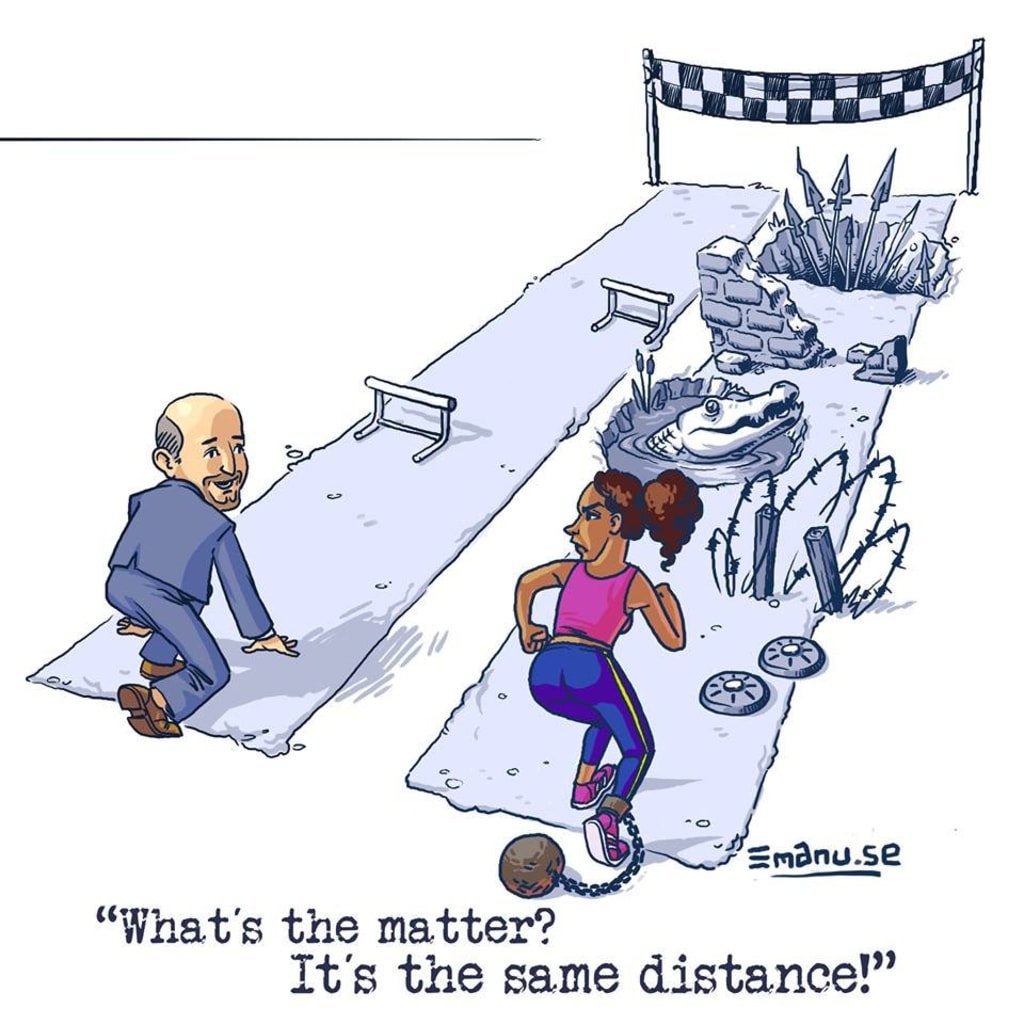
Let’s start with the basics: What is white privilege? White privilege is not something that white people participate in on purpose. It give “perks” to white people that we do not earn and that people of color do not receive. White privilege does not negate the hard work white people do to get what they have, but it does eliminate some of the obstacles that people of color face when trying to achieve the same goals. A few examples of white privilege include: being able to find band aids that match your skin and being able to easily find hair care products. It can also have bigger impacts like feeling safe in a room of mostly white people and not having to worry about getting “randomly” searched at the airport.
Many white people claim they do not benefit from this privilege because they grew up poor or in a mostly non-white community. Unfortunately, that is not how systemic racism works. No matter how you grew up, you will be judged based upon the color of your skin. If you’re white in a poor community, you still have a better chance of vertical socioeconomic movement than a poor person of color. (Also we, as a society, must stop equating being poor to being a person of color.)
If you do not see white privilege then you are benefitting from it. White privilege shapes how society sees the world. It is reflected everywhere, especially in media. We as white people see ourselves represented everywhere: on currency, history books, on after-school television, et al. This is because the oppressors are the ones who write the history, and white people are the oppressors in this situation.
How to Use White Privilege to Fight Racism:

So you are finally able to see your privilege and now you do not know what to do with the information. Here are some tips: Have conversations with your family, your friends, your coworkers, your kids, anyone who will listen. Educate other white people on their privilege and call them out when they say/do racist things. The sad truth is that racists are more likely to listen to other white people than to people of color.
Go to protests and lectures. Conversation is great but it only goes so far. Action is what will really makes changes. There is always more to learn and more to fight for so do not stop chasing the truth.
Film interactions between the police and people of color. Many times the people of color are unable or afraid to film the cop themself. These interactions must be documented in case it turns violent. Police kill more people a year than any other first world country and most go unpunished. Use your whiteness to fight police brutality.

Racism is systemic and toxic and perpetuated by the white heteropatriarchy and it's up to us to fight it.
About the Creator
Why Black History Matters in America?
The United States of America is celebrating their 250th anniversary in 2026. I'm proud to be an American and as someone who was born here, I wouldn't imagine myself living anywhere else. This is a country where opportunities are possible. Where anyone can be successful in anything they desire to do. Equality, community, and togetherness are the backbones of what America is and should be about. However, we have an administration who wants to erase and disregard those who have made positive, meaningful impacts in our country, specifically Black figures, such as Martin Luther King, Jr., Rosa Parks, and Maya Angelou. President Trump and his administration have been constantly complaining and fighting against what they call the "Woke agenda". They use this excuse as a distraction from other issues they refuse to address, such as the high cost of living, climate change, and inflation. That equality is dividing America, when in reality, it's bringing us together. Being woke is not tied to a specific political party. No matter where you stand on the political spectrum, you can still care about other people and their plights. Compassion and empathy for others isn't tied to a political party, either. We were taught as children to treat others the way we want to be treated and not judge others because they're different from us. Caring about others isn't a personal attack on your beliefs. It doesn't make you any less of a person. People who are easily offended over African American figures, past or present, or anything related to it, are grasping at straws. Current and future generations need to know who people like Harriet Tubman and Shirley Chisholm were, especially in the classroom. Black History is part of American History. It should be recognized, not hidden or forgotten. Besides, you can't shield children from everything, just because your feelings are easily hurt.
By Mark Wesley Pritchard 8 days ago in The Swamp




Comments
There are no comments for this story
Be the first to respond and start the conversation.