
Ukraine War Briefing: Kyiv to Accelerate Placement of Anti-Drone Nets Across Frontline
Facing escalating drone attacks, Ukraine is rolling out low-cost protective net systems to shield troops and supply routes along the front line.

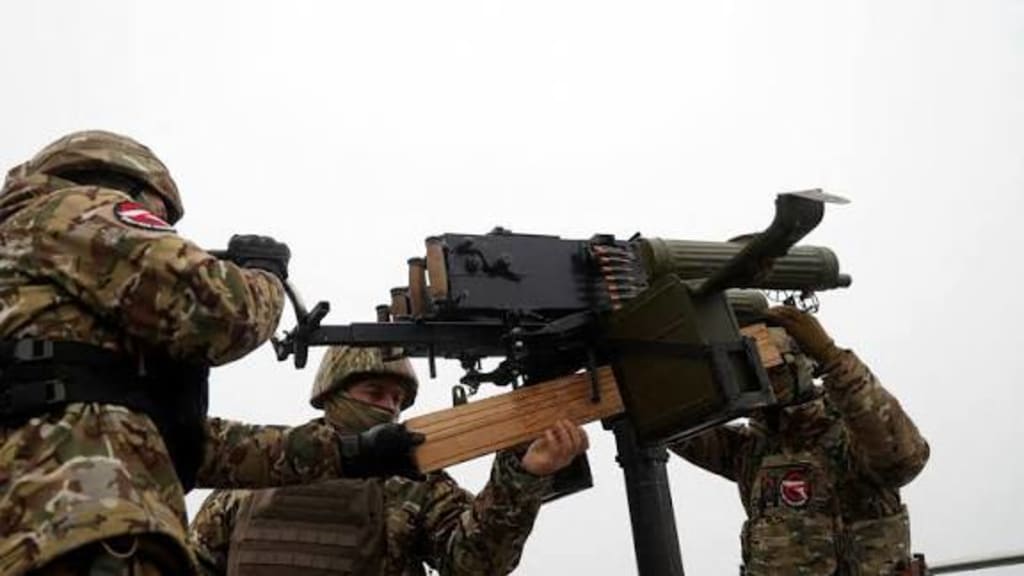
Ukrainian authorities have announced plans to rapidly expand the installation of anti-drone protective nets along key sections of the front line, as Russian aerial attacks intensify and low-cost drones continue to inflict casualties and disrupt military logistics. The move reflects Kyiv’s growing emphasis on defensive innovation as the war enters another grueling phase marked by attrition and technological adaptation.
Officials in Kyiv said the nets — often made of reinforced steel mesh or industrial cables — will be deployed over trenches, vehicle routes, ammunition depots, and medical evacuation corridors. The aim is to intercept or detonate incoming drones before they strike troops or equipment.
President Volodymyr Zelenskyy praised frontline units and civilian volunteers who have pioneered the use of such barriers, calling the initiative “a practical and life-saving response to a changing battlefield.” He added that expanding the program is now a national priority as Ukraine confronts daily drone assaults from Russia.
Rising Drone Threat
Over the past year, drones have become one of the most lethal tools of modern warfare in Ukraine. Cheap, commercially modified quadcopters and long-range explosive drones have been used to target infantry positions, armored vehicles, and even civilian infrastructure. Military analysts say that Russia has dramatically increased its production and deployment of so-called “kamikaze” drones, forcing Ukraine to adapt quickly.
While air defense systems remain critical against missiles and aircraft, they are often too costly or scarce to counter every small drone. Anti-drone nets offer a low-tech but effective alternative. By physically blocking drones from reaching their targets, the nets reduce the impact of explosive payloads and prevent surveillance drones from identifying troop positions.
A Ukrainian engineer involved in the project said the design was inspired by fishing nets and industrial safety barriers. “We needed something simple, fast to install, and cheap enough to cover kilometers of front line,” he explained.
Frontline Implementation
The initial rollout has focused on eastern and southern sectors where fighting is most intense. Soldiers have already begun installing net corridors over supply routes and trench systems, sometimes using cranes and trucks to suspend them several meters above ground.
Commanders report early success. In several cases, drones became entangled in the mesh and exploded harmlessly above defensive positions. “It doesn’t solve everything, but it gives our troops an extra layer of protection,” said one field officer.
Ukraine’s defense ministry confirmed that funding has been allocated to accelerate production and deployment. Civilian factories and metal workshops are being contracted to manufacture standardized net systems, while volunteers continue to help transport and install them near the front.
Psychological and Tactical Impact
Beyond physical protection, the nets are said to have a psychological benefit. Soldiers operating under constant drone threat often experience stress and fatigue. Knowing that some form of barrier exists overhead has reportedly improved morale in certain units.
Military experts caution, however, that the measure is not foolproof. Drones can be programmed to fly higher or attack from different angles, and heavy artillery can destroy net structures. Still, analysts describe the strategy as part of a broader trend toward improvised battlefield defenses.
“This war has shown that innovation doesn’t always mean high technology,” said a European defense analyst. “Sometimes simple engineering solutions can shift the balance, at least locally.”
Broader Strategic Context
The decision to expand anti-drone nets comes as Ukraine continues to face shortages of ammunition and air defense interceptors. Western military aid has resumed but remains uneven, prompting Kyiv to emphasize cost-effective defensive tools.
Meanwhile, Russia has continued its drone and missile campaign against Ukrainian cities and infrastructure. Energy facilities, rail networks, and residential areas have all been targeted in recent weeks, underscoring the urgency of defensive adaptations.
Zelenskyy’s office said discussions are underway with international partners to share lessons learned from the net deployment program. Some NATO officials have reportedly expressed interest in studying the system for potential use in future conflicts.
Looking Ahead
As the war grinds on, Ukraine’s approach highlights a shift toward layered defense: combining traditional air defense systems with physical barriers, electronic warfare, and rapid battlefield engineering. The expansion of anti-drone nets may not change the overall strategic picture, but it reflects Kyiv’s determination to protect its forces with whatever tools are available.
For Ukrainian soldiers on the front line, the nets represent more than metal and cables. They are a symbol of adaptation in a conflict where survival increasingly depends on creativity as much as firepower.
About the Creator
Fiaz Ahmed
I am Fiaz Ahmed. I am a passionate writer. I love covering trending topics and breaking news. With a sharp eye for what’s happening around the world, and crafts timely and engaging stories that keep readers informed and updated.
Keep reading
More stories from Fiaz Ahmed and writers in The Swamp and other communities.
Germany Receives Israeli-Made BlueWhale Autonomous Submarine System
Germany has taken delivery of the Israeli-developed BlueWhale autonomous submarine system, marking a significant step in modernizing its naval reconnaissance and undersea warfare capabilities. The acquisition reflects Berlin’s growing focus on maritime security, intelligence gathering, and protection of critical underwater infrastructure amid rising geopolitical tensions in Europe and beyond. The system was produced by Israel Aerospace Industries and delivered to the German Navy following a series of trials and evaluations. Officials in Germany said the platform will be used primarily for intelligence, surveillance, and reconnaissance (ISR) missions in the Baltic and North Seas. A New Generation of Naval Technology BlueWhale is an unmanned underwater vehicle designed to operate autonomously for extended periods. Unlike traditional submarines that require a full crew, the system can conduct missions independently, transmitting data back to command centers in near real time. It is capable of tracking enemy submarines, monitoring sea lanes, and detecting suspicious underwater activity such as sabotage of pipelines and communication cables. German defense officials described the technology as a “force multiplier” that will complement existing submarine and surface fleets. The platform’s low acoustic signature makes it difficult to detect, enhancing its usefulness in contested maritime environments. The delivery comes as NATO members increase investment in autonomous and unmanned systems, viewing them as essential tools for future warfare. Germany’s decision to integrate BlueWhale into its naval operations signals a shift toward more technologically driven defense strategies. Strengthening Germany–Israel Defense Cooperation The agreement also underscores deepening military cooperation between Israel and Germany. Defense ties between the two nations have expanded in recent years, including purchases of missile defense systems, drones, and radar technologies. Israeli officials welcomed the delivery as a sign of trust in their defense industry’s advanced capabilities. “This system demonstrates how innovative maritime solutions can support allied navies in protecting their waters and critical infrastructure,” an Israeli defense source said. For Germany, the move aligns with its broader effort to strengthen deterrence and security following Russia’s invasion of Ukraine, which has heightened concerns about undersea threats and hybrid warfare. Focus on Infrastructure Protection One of the key roles envisioned for BlueWhale is the monitoring of underwater infrastructure such as gas pipelines, power cables, and data links. The sabotage of undersea installations in recent years has alarmed European governments, prompting new investments in maritime surveillance. The autonomous submarine can map seabeds, identify unusual movements, and detect potential threats before damage occurs. Analysts say this capability is particularly relevant for Germany, given its reliance on maritime trade routes and offshore energy installations. A senior German naval officer said the system would enhance situational awareness and reduce risks to human crews. “Deploying unmanned platforms allows us to operate in dangerous environments without putting sailors in harm’s way,” he noted. Trials and Training Before entering full operational service, the BlueWhale system will undergo extensive training and integration with Germany’s naval command structure. Crews will be trained to operate and interpret data from the autonomous vehicle, while engineers will test its compatibility with existing sensors and communication networks. Initial trials reportedly showed promising results, with the system successfully completing long-duration patrols and accurately identifying underwater targets. German officials said lessons learned during testing will guide future upgrades and possible expansion of the fleet. Broader Strategic Implications Military analysts view the acquisition as part of a wider trend among European navies to embrace unmanned maritime systems. Countries such as the United Kingdom and France are also developing or procuring autonomous underwater vehicles for reconnaissance and mine countermeasures. “The future of naval warfare will rely heavily on networks of manned and unmanned platforms working together,” said a European security expert. “Germany’s decision to deploy BlueWhale shows how seriously it is taking this transition.” While the system is primarily defensive, its intelligence-gathering capabilities could reshape how Germany conducts maritime operations. Continuous underwater surveillance may provide early warning of hostile activity and improve coordination with NATO allies. Looking Ahead German defense officials indicated that further cooperation with Israeli defense firms remains possible, depending on performance and operational needs. There is also interest in adapting the technology for environmental monitoring and search-and-rescue missions. As global navies increasingly turn to autonomous systems, Germany’s adoption of BlueWhale highlights a new chapter in undersea defense. The move reflects both technological ambition and strategic caution in a world where the seabed has become a new frontier of security compet
By Fiaz Ahmed about 8 hours ago in The Swamp
A Gathering of Evil Bosses
“I’m the queen of chin jutting while I smooth my hair, attacking, insulting, and deflecting to protect my appointer.” “Oh, please, Blondi, my hair is curled, highlighted, and longer than yours. I feature television commercials telling immigrants that we will give them a free plane ride home, and if they voluntarily turn themselves in, they will be allowed to legally apply for re-entry. It runs everywhere, and I look good in it! You can’t compete because of your blond hair. Mine is nicer, and my lips are prettier than yours.”
By Andrea Corwin 8 days ago in The Swamp
The Cairn Beside the Lake
And so it came to pass that King Ertharion, Tenth King of Lombaia, stood beside the still lake below unrelenting and unassailable cliffs with the remainder of his harried host. In what was the tenth year of his reign and his forty-fourth upon this great green earth, Menigo the Betrayer, cousin of King Ertharion, pressed home his false claim.
By Matthew J. Fromm6 days ago in Fiction




Comments
There are no comments for this story
Be the first to respond and start the conversation.