
U.S. Government Shutdown
What It Is, Why It Happens, and Who It Affects

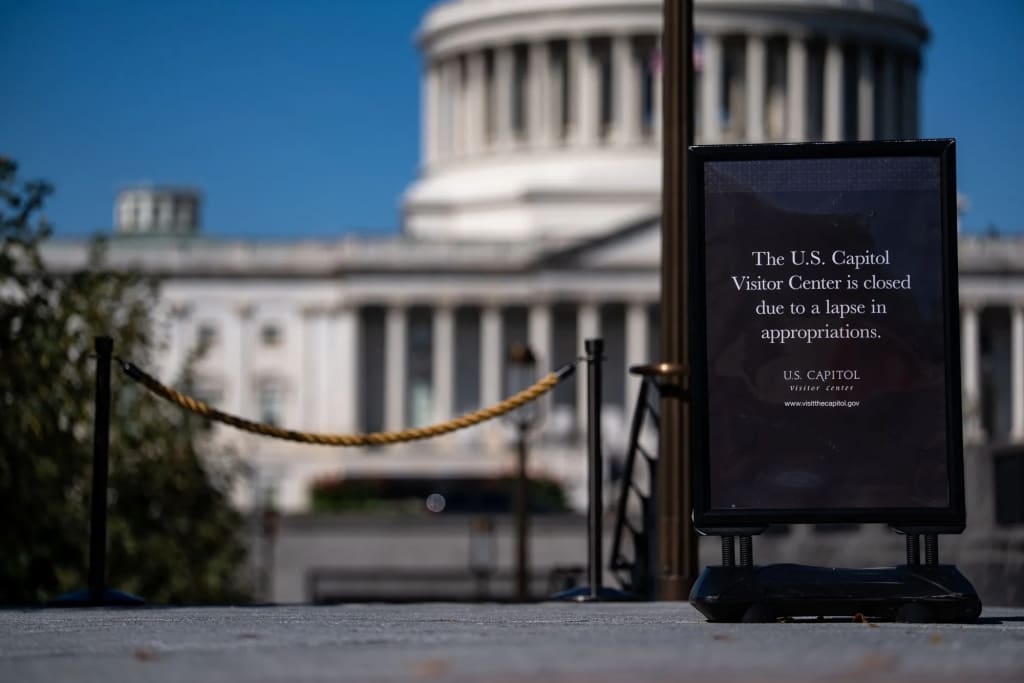
A U.S. government shutdown is one of the most visible signs of political deadlock in Washington. When it happens, it disrupts federal services, sends hundreds of thousands of workers into uncertainty, and creates ripple effects across the economy. Although the term often trends during moments of crisis, shutdowns are not rare events—they are the result of a specific budget process failing to reach completion.
Understanding what a government shutdown really means helps separate political rhetoric from real-world consequences.
What Is a U.S. Government Shutdown?
A U.S. government shutdown occurs when Congress fails to pass, and the president fails to sign, funding legislation for federal agencies before the start of a new fiscal period. The U.S. fiscal year begins on October 1, and if appropriations bills or a temporary funding measure are not approved by then, parts of the federal government must legally stop operating.
This requirement is rooted in the Antideficiency Act, a federal law that prohibits agencies from spending money that has not been appropriated by Congress. As a result, agencies without funding must halt nonessential operations until lawmakers reach an agreement.
Why Do Government Shutdowns Happen?
Shutdowns are not caused by a lack of money, but by political disagreement. Congress controls federal spending, and when lawmakers cannot agree on how much to spend—or where to spend it—funding stalls.
Common points of conflict include:
Disagreements over federal spending levels
Policy disputes tied to funding bills (such as immigration, healthcare, or defense)
Partisan standoffs between the House, Senate, and the White House
Internal divisions within political parties
Often, a shutdown reflects broader political tensions rather than a single budget issue.
What Actually Shuts Down?
Not all government functions stop during a shutdown. Federal operations are divided into essential and nonessential categories.
Essential services that continue:
National security and military operations
Air traffic control and border protection
Law enforcement and emergency services
Power grid and critical infrastructure oversight
Nonessential services that pause:
National parks and museums
Many federal regulatory activities
Some scientific research
Administrative and support services
While essential employees continue working, many do so without pay until the shutdown ends.
Impact on Federal Workers
One of the most immediate effects of a government shutdown is on federal employees. Workers fall into two categories:
Furloughed employees, who are temporarily sent home without pay
Excepted employees, who must continue working despite delayed pay
Although Congress has historically approved back pay after shutdowns end, the financial strain during the shutdown period can be severe, especially for lower-income workers.
Contractors, unlike federal employees, are often not guaranteed back pay, making them particularly vulnerable.
Economic Consequences
Government shutdowns have real economic costs. When federal workers are furloughed or unpaid, consumer spending decreases. Delayed services can also slow business operations that rely on federal approvals or data.
Past shutdowns have resulted in:
Reduced economic growth
Disruptions in travel and tourism
Delays in loans, permits, and tax processing
Increased uncertainty in financial markets
Even short shutdowns can create lasting administrative backlogs that take weeks or months to resolve.
Effects on the Public
For everyday Americans, the impact of a shutdown depends on how closely their lives intersect with federal services.
Common public effects include:
Closed national parks and landmarks
Delayed passport and visa processing
Slower responses from federal agencies
Uncertainty around benefits administration
Programs like Social Security and Medicare usually continue because they are funded separately, but customer support and processing services may slow down.
How Long Do Shutdowns Last?
Shutdowns can last anywhere from a few days to several weeks. The longest shutdown in U.S. history lasted 35 days, from December 2018 to January 2019, driven by a dispute over border security funding.
Most shutdowns end when Congress passes either:
Full appropriations bills, or
A continuing resolution, which temporarily funds the government at existing levels
Temporary measures are common and often delay, rather than resolve, deeper budget disagreements.
Political and Public Reaction
Government shutdowns are widely unpopular with the public. Polls consistently show that Americans view shutdowns as unnecessary and harmful. Political blame is often shared, though public opinion can shift depending on which party is perceived as blocking compromise.
For lawmakers, shutdowns carry political risk. While they may be used as leverage during negotiations, prolonged shutdowns can damage public trust in government institutions.
Why Shutdowns Keep Happening
Despite their negative consequences, shutdowns continue to occur because the U.S. budget process is complex and highly politicized. Annual appropriations require coordination across multiple committees, chambers, and political priorities.
Polarization has made compromise more difficult, increasing the likelihood of funding lapses. Short-term fixes have become routine, leaving long-term budget stability unresolved.
Are Shutdowns Avoidable?
Yes—but avoiding them requires political will. Tools already exist, such as automatic continuing resolutions or biennial budgeting, that could reduce shutdown risk. However, implementing these solutions would require bipartisan agreement, which has been difficult to achieve.
Until structural reforms are adopted, shutdowns remain a recurring feature of American governance.
Final Thoughts
A U.S. government shutdown is more than a political headline. It is a tangible disruption that affects workers, families, businesses, and public trust in institutions. While essential services continue, the uncertainty and economic strain highlight the cost of legislative gridlock.
At its core, a shutdown reflects a system struggling to balance competing priorities in a deeply divided political environment. Understanding how shutdowns work—and who they affect—helps clarify why these events matter far beyond Washington.
As history shows, shutdowns eventually end. But the challenges that cause them remain, making each episode part of a larger conversation about governance, responsibility, and compromise in the United States.
About the Creator
Saboor Brohi
I am a Web Contant writter, and Guest Posting providing in different sites like techbullion.com, londondaily.news, and Aijourn.com. I have Personal Author Sites did you need any site feel free to contact me on whatsapp:
+923463986212
Keep reading
More stories from Saboor Brohi and writers in The Swamp and other communities.
Don Lemon Arrest Explained
The name Don Lemon has dominated headlines after reports confirmed that the former CNN anchor was arrested by federal agents in early 2026. The incident has sparked widespread debate about press freedom, protest coverage, and the legal boundaries journalists face when reporting from politically charged events.
By Saboor Brohi 3 days ago in The Swamp
Khamenei’s Stark Warning: “Any U.S. Attack Means Regional War”
Iran’s Supreme Leader Ayatollah Ali Khamenei has issued one of his strongest statements yet against U.S. military action, warning on 1 February 2026 that any attack on Iran by the United States would ignite a “regional war” across the Middle East. His remarks came amid sharply escalating tensions between Tehran and Washington, marked by military deployments, diplomatic standoffs, and deepening regional unease.
By Salaar Jamalia day ago in The Swamp
Videos Show Altercation Between Alex Pretti and Federal Officers 11 Days Before He Was Killed
Newly surfaced videos showing an altercation between Alex Pretti and federal law enforcement officers in Minneapolis just 11 days before he was fatally shot have sparked renewed debate about the use of force by federal agents, conflicting official narratives, and the broader climate of tension surrounding immigration enforcement operations.
By Salaar Jamali5 days ago in The Swamp



Comments
There are no comments for this story
Be the first to respond and start the conversation.