
Trump Announces India-US Trade Deal ‘Effective Immediately’ With Reduced Tariff Plans
Agreement signals new phase in economic cooperation between two global powers
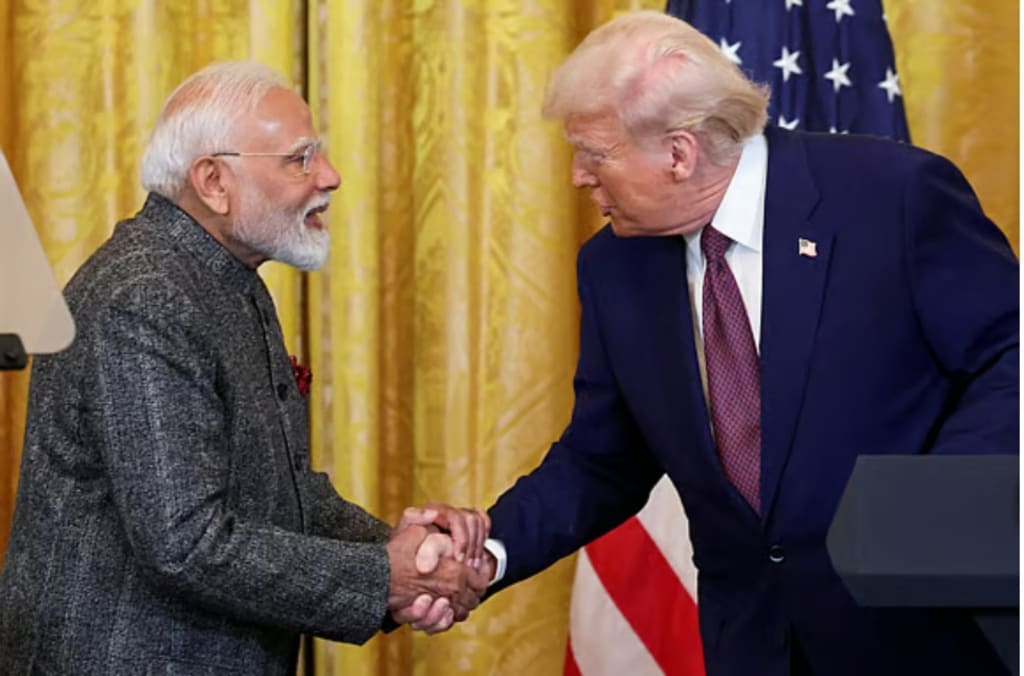
newly announced trade agreement between the United States and India, described as “effective immediately,” has sparked global attention as it promises reduced tariffs and expanded economic cooperation between two of the world’s largest economies. The announcement, attributed to former U.S. President Donald Trump, suggests a renewed focus on strengthening trade partnerships, improving supply chains, and boosting bilateral economic growth.
If fully implemented, the deal could reshape trade flows between the two countries and potentially influence global trade dynamics, particularly in manufacturing, technology, and energy sectors.
Why the India-US Trade Relationship Matters
The United States and India share one of the world’s fastest-growing economic partnerships. Trade between the two nations has expanded significantly over the past decade, covering goods, services, technology cooperation, and defense partnerships.
The relationship matters globally because:
The U.S. is one of the world’s largest consumer markets
India is one of the fastest-growing major economies
Both countries play major roles in global supply chains
Technology and innovation sectors are closely linked
A strong trade partnership between the two nations can influence global economic stability and investment trends.
Key Focus: Reduced Tariffs
Tariffs are taxes imposed on imported goods. Lower tariffs typically make it cheaper to trade between countries, encouraging higher trade volumes and increased business cooperation.
Reduced tariffs could benefit sectors such as:
Electronics and technology components
Pharmaceuticals and healthcare products
Agricultural goods
Automotive manufacturing
Energy and industrial equipment
Lower tariffs can help businesses reduce costs, improve competitiveness, and expand export opportunities.
Immediate Implementation: What It Means
The phrase “effective immediately” suggests a rapid rollout of certain trade provisions, although trade agreements typically require technical implementation steps, regulatory adjustments, and industry coordination.
Immediate policy shifts can:
Boost investor confidence
Encourage early business investment decisions
Strengthen currency and stock market performance
Signal strong diplomatic alignment
However, full economic effects often take time to materialize.
Economic Benefits for the United States
For the U.S., the agreement could:
Expand access to India’s large consumer market
Strengthen supply chains for critical manufacturing sectors
Increase technology exports
Improve cooperation in energy and defense industries
India’s growing middle class presents significant opportunities for American companies seeking new customers.
Economic Benefits for India
India could benefit through:
Increased foreign investment
Greater export access to U.S. markets
Technology partnerships
Job creation in export-oriented industries
Lower trade barriers can help Indian manufacturing and technology companies expand globally.
Global Supply Chain Implications
The trade deal could also influence global supply chains, particularly as companies seek alternatives to concentrated manufacturing regions.
Businesses may:
Expand manufacturing partnerships in India
Diversify production networks
Increase cross-border technology collaboration
Supply chain diversification has become a major priority for global corporations in recent years.
Geopolitical Significance
Trade agreements often reflect broader geopolitical strategies. Strengthened U.S.-India economic ties may also influence global political and security partnerships.
The agreement could:
Strengthen strategic cooperation in the Indo-Pacific region
Balance global economic competition
Support joint technology and defense initiatives
Economic cooperation often reinforces diplomatic relationships.
Challenges and Potential Risks
Despite optimism, trade deals can face implementation challenges.
Possible challenges include:
Domestic industry concerns in both countries
Regulatory complexity
Currency fluctuations
Trade balance debates
Trade agreements often require ongoing negotiation and adjustment.
Business and Market Reaction
Financial markets typically react quickly to major trade announcements. Investors often view trade deals as signals of economic stability and growth potential.
Possible market reactions include:
Increased stock market activity
Currency value shifts
Increased cross-border investment
Higher business confidence
However, market optimism depends on successful implementation.
Long-Term Impact on Global Trade
If successful, the deal could strengthen the trend toward regional and bilateral trade agreements rather than global multilateral agreements.
It may also:
Encourage other countries to pursue similar partnerships
Shift global trade power balances
Accelerate technology and manufacturing partnerships
The global trade landscape continues to evolve rapidly.
Why This Deal Matters for Everyday Consumers
Trade agreements can influence everyday life through:
Product pricing
Job opportunities
Technology availability
Energy costs
Lower tariffs can sometimes reduce consumer prices and increase product variety.
Conclusion
The announcement of an India-US trade deal with reduced tariffs and immediate implementation signals a potentially significant shift in global economic cooperation. While full details and long-term impacts will depend on implementation, the agreement reflects growing economic alignment between two major global powers.
If successful, the deal could boost trade volumes, strengthen supply chains, and create new business opportunities in both countries. As global economic conditions continue to evolve, partnerships like this may play an increasingly important role in shaping international trade and economic stability.
About the Creator
Keep reading
More stories from Aarif Lashari and writers in The Swamp and other communities.
Saudi Arabia suspends 1,800 Umrah travel agencies due to poor performance
Saudi Arabia has reportedly suspended around 1,800 Umrah travel agencies following performance reviews that found serious shortcomings in service quality, organization, and compliance with regulations. The decision reflects growing efforts by Saudi authorities to modernize pilgrimage services, improve safety standards, and ensure that millions of religious visitors receive reliable and professional support during their journeys.
By Aarif Lashariabout 2 hours ago in The Swamp
Mine Collapses in Eastern Congo, Leaving at Least 200 Dead
Introduction: A Deadly Tragedy in Eastern Congo In a catastrophic incident that has shocked the world, at least 200 people are feared dead after a mine collapsed in the volatile and resource-rich eastern region of the Democratic Republic of Congo (DRC). The disaster, which occurred in the town of Kibitanga, has further highlighted the dangers faced by miners in an industry that remains central to Congo’s economy. Despite the country being one of the richest in the world in terms of mineral resources, including cobalt, gold, and copper, the lack of oversight, poor safety standards, and the reliance on artisanal mining have led to such incidents becoming disturbingly frequent.
By Ayesha Lashari3 days ago in The Swamp
One Unchecked Box
"Republished" because it was the only way to add the embed for the newly recorded audio version of this story due to the Top Story badge. Plus it serves as a nice, informal announcement of the podcast's revival for another season (go subscribe!):
By Stephen A. Roddewig6 days ago in Fiction




Comments
There are no comments for this story
Be the first to respond and start the conversation.