
Syria's Unseen War: The Fight for Dignity Amidst Despair
As protests and clashes flare, the core struggle remains for basic human rights and respect in a shattered nation.

Human beings are the most important blessing of Allah Almighty in this world, so there is need to respect their presence and their rights. This foundational principle stands in stark contrast to the reality for millions in Syria today. Recent reports of deadly clashes erupting as hundreds protest are not merely news updates. They are the latest chapter in a long story of suffering, a desperate struggle for the very dignity and rights that form the core of human value. This situation forces us to look beyond the headlines of geopolitical strife and see the enduring human crisis.
(The Immediate Spark: More Than Politics)
The recent protests,leading to reported casualties, did not begin over abstract political ideologies. They ignited from the most tangible of pains: economic survival. The Syrian pound has collapsed. Subsidies on basic goods like bread and fuel have been stripped away. For the average Syrian in government-held areas, the question is not about political allegiance but about how to feed a family with wages that now buy nothing. This economic torture is the immediate spark. When people cannot afford flour or medicine, their protests are a cry for the right to life and subsistence, the most basic human rights of all.
(A Layer of Suffering: The Weight of Years)
To understand the current anger,one must feel the weight of the past fourteen years. Syria's conflict has created one of the worst humanitarian disasters of our time. Hundreds of thousands have been killed. Millions are displaced, both inside the country and as refugees across the globe. Cities lie in ruins. This context is crucial. The population is exhausted, traumatized, and impoverished. The current economic collapse is not a new crisis, but a deeper plunge into an existing abyss. The protestor on the street today has likely survived war, bombardment, loss, and now faces starvation. Their resilience has been tested beyond any reasonable limit.
(The Central Issue: A Systematic Denial of Rights)
At its heart,the Syrian tragedy is a profound and systematic denial of human rights. This extends beyond the current economic pain. For over a decade, documented reports by the UN and major human rights organizations have cited widespread violations. These include arbitrary detention, enforced disappearances, torture, and the targeting of civilians and civilian infrastructure. Such an environment destroys the social contract. When the state is seen not as a protector of rights but as a primary violator, the very idea of civic peace breaks down. The right to security, to justice, and to participation in public affairs has been erased for many.
(The Human Architecture: Lives Behind the Numbers)
The term"human rights" can feel abstract. In Syria, it is deeply personal. It is the right of a parent to know if their disappeared son is alive or dead. It is the right of a farmer to work his land without fear of shells or mines. It is the right of a child to go to a school that is still standing. It is the right of a family to have clean water and reliable electricity. The current protests, while sparked by bread prices, are fundamentally about this architecture of daily life which has been utterly demolished. Rebuilding Syria, whenever it comes, must mean rebuilding these most basic human entitlements first.
(The International Failure: A Crisis of Conscience)
The international response to the Syrian crisis represents a significant failure of global conscience and law.Geopolitical divisions have paralyzed the UN Security Council, allowing impunity to persist. While humanitarian aid is delivered, it is a bandage on a gaping wound, often politicized and inaccessible to many in need. Neighboring countries hosting refugees face immense strain without sufficient support. The principle of "Responsibility to Protect" has been rendered meaningless. This global inaction sends a dangerous message: that the rights of Syrian civilians are negotiable, secondary to the interests of powerful states.
(The Path Ahead: Unknown and Perilous)
The path forward for Syria is shrouded in uncertainty.The government's response to these protests will be a critical indicator. Will it address the economic freefall with genuine reform, or will it rely on further repression? Either choice carries immense risk. More repression could ignite wider unrest. Economic reform, within a war-shattered economy and under heavy sanctions, seems a monumental, if not impossible, task. Meanwhile, millions of refugees watch from abroad, their right to return safely and with dignity still a distant dream. The future seems to hold only more difficult choices for a exhausted people.
(The Moral Imperative: Seeing the Human)
Engaging with Syria's story requires a moral focus on the individual human being.It is about seeing the doctor treating patients without supplies, the teacher holding class in a basement, the volunteer digging through rubble after an airstrike. These people assert their humanity through simple acts of perseverance. The international community, media, and global public must frame the crisis through this lens of human dignity, not just geopolitics. Advocacy must center on civilian protection, humanitarian access, accountability for crimes, and the long-term right of all Syrians to decide their future in freedom and safety.
(Conclusion: A Test of Our Principles)
The deadly clashes in Syria are a symptom of a disease that has ravaged the country for years:the disease of dehumanization, where people are stripped of their God-given rights and treated as expendable. The test for the world is whether we see these protests as mere instability to be managed, or as the latest evidence of a profound human rights catastrophe that demands a response rooted in justice and compassion. Respecting the presence and rights of human beings is not a passive idea. In the context of Syria, it is an urgent call for action, for witness, and for a renewed commitment to the principle that every life, especially those enduring the unimaginable, holds inherent and equal worth. The silence of the world is a betrayal of that worth.
About the Creator
Saad
I’m Saad. I’m a passionate writer who loves exploring trending news topics, sharing insights, and keeping readers updated on what’s happening around the world.
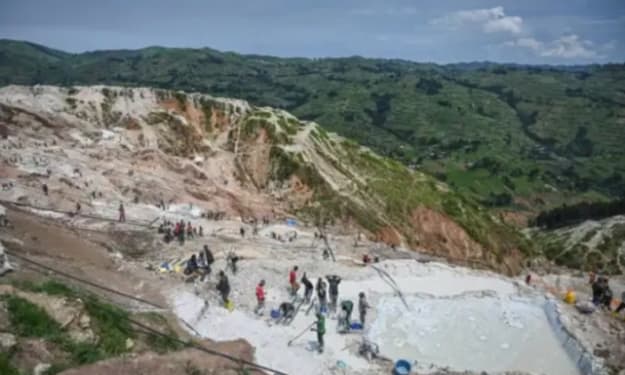
Mine Collapses in Eastern Congo, Leaving at Least 200 Dead
Introduction: A Deadly Tragedy in Eastern Congo In a catastrophic incident that has shocked the world, at least 200 people are feared dead after a mine collapsed in the volatile and resource-rich eastern region of the Democratic Republic of Congo (DRC). The disaster, which occurred in the town of Kibitanga, has further highlighted the dangers faced by miners in an industry that remains central to Congo’s economy. Despite the country being one of the richest in the world in terms of mineral resources, including cobalt, gold, and copper, the lack of oversight, poor safety standards, and the reliance on artisanal mining have led to such incidents becoming disturbingly frequent.
By Ayesha Lashari3 days ago in The Swamp
One Unchecked Box
"Republished" because it was the only way to add the embed for the newly recorded audio version of this story due to the Top Story badge. Plus it serves as a nice, informal announcement of the podcast's revival for another season (go subscribe!):
By Stephen A. Roddewig6 days ago in Fiction



Comments
There are no comments for this story
Be the first to respond and start the conversation.