
South Korea Rallies National Push to Support Canada’s Submarine Project
Seoul’s coordinated government-industry effort highlights a growing defense partnership as it competes to help modernize Canada’s next-generation submarine fleet.
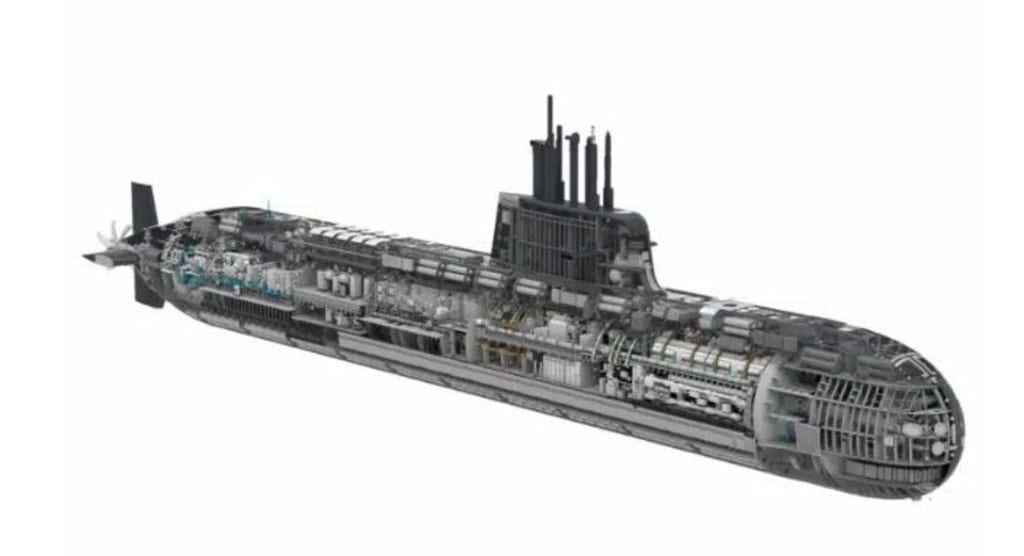
The initiative reflects a growing trend: countries are no longer simply buying military hardware; they are seeking long-term industrial, technological, and diplomatic relationships. South Korea’s approach to Canada’s submarine program demonstrates how defense deals increasingly function as engines for economic collaboration and geopolitical alignment.
Why Canada Needs New Submarines
Canada is preparing to replace its aging submarine fleet as maritime security priorities expand. The country faces unique operational demands — from monitoring the Arctic to securing Atlantic and Pacific trade routes. Submarines capable of extended patrols, under-ice operations, and advanced surveillance are becoming essential.
This modernization effort is one of the largest defense procurements in Canadian history. Beyond enhancing naval capability, the project is expected to stimulate domestic industry, create skilled jobs, and strengthen supply chains in shipbuilding, technology, and advanced manufacturing.
That combination of defense necessity and economic opportunity has attracted global competitors, with South Korea emerging as one of the most aggressive contenders.
A Whole-of-Nation Strategy
Rather than leaving the bid solely to industry, South Korea has mobilized a coordinated national framework. Government agencies, diplomats, and private companies are working together to present a comprehensive proposal that goes beyond hardware delivery.
At the center of this effort is the shipbuilding giant Hanwha Ocean, which is promoting its advanced submarine design developed through years of domestic research and operational experience. But the strategy extends further, involving policy support, financing structures, and industrial partnerships.
The Defense Acquisition Program Administration has played a key role by coordinating ministries responsible for defense, foreign affairs, trade, and technology. This alignment ensures that South Korea’s proposal addresses Canada’s broader goals — including local manufacturing, workforce development, and knowledge transfer.
Such an integrated approach reflects Seoul’s ambition to position itself as a long-term defense partner rather than a one-time supplier.
Economic Collaboration at the Core
A defining feature of South Korea’s pitch is its emphasis on economic impact within Canada. Officials and industry leaders have highlighted plans to collaborate with Canadian firms across multiple sectors, including steel production, electronics, and software systems.
These partnerships aim to ensure that a significant portion of submarine construction and maintenance would take place in Canada. The ripple effects could extend for decades, generating employment, training opportunities, and technological innovation.
For Canada, this approach aligns with its preference for procurement models that strengthen domestic capability. For South Korea, it offers a chance to embed its defense industry within North America’s industrial ecosystem — a strategic milestone.
Diplomacy Meets Defense
High-level diplomatic engagement has accompanied the industrial push. South Korean officials have traveled to Ottawa to discuss how submarine cooperation could expand into broader defense ties, intelligence collaboration, and joint research initiatives.
This diplomatic dimension underscores how major defense programs now function as relationship builders. Submarine partnerships often involve decades of maintenance, upgrades, and training, creating sustained interaction between governments and militaries.
If successful, the project could deepen cooperation on regional security issues, maritime awareness, and emerging technologies such as autonomous underwater systems.
Strategic Significance Beyond Shipbuilding
The submarine competition carries implications far beyond naval capability. For South Korea, winning the contract would represent a breakthrough in its ambition to become a leading global defense exporter. Seoul has already expanded arms sales across Europe, the Middle East, and Asia, but entry into Canada would mark a major step into North America.
For Canada, selecting a South Korean partner could signal diversification of defense suppliers and stronger ties with Indo-Pacific allies. As geopolitical tensions reshape global security networks, such partnerships help countries share risk, technology, and operational knowledge.
The project also highlights the growing importance of the Arctic. Climate change is opening new shipping routes and increasing strategic competition in northern waters, making submarine capability more critical for surveillance and deterrence.
Challenges and Competition
Despite South Korea’s strong push, the competition remains intense. European shipbuilders bring decades of export experience and established relationships with NATO navies. Canada’s evaluation process will weigh cost, performance, industrial benefits, and long-term reliability.
Another challenge is timeline. Delivering complex submarines requires sustained investment and coordination across international supply chains. Any winning proposal must demonstrate not only technological sophistication but also the ability to deliver on schedule.
South Korea’s advantage lies in its reputation for rapid industrial execution and competitive pricing, factors that have helped it secure major defense contracts in recent years.
What This Means for the Future
Regardless of the final decision, South Korea’s national mobilization illustrates how defense procurement is evolving. Countries are competing with ecosystems — combining industry, policy, finance, and diplomacy.
For Canada, the submarine project represents a generational investment that will shape naval capability for decades. For South Korea, it is an opportunity to cement its status as a trusted partner in high-end defense manufacturing.
More broadly, the initiative reflects a world where security cooperation is increasingly interconnected. Industrial partnerships support military readiness, diplomatic ties reinforce supply chains, and technological collaboration drives innovation.
Final Thoughts
South Korea’s push to support Canada’s submarine program is not simply about building vessels beneath the ocean’s surface. It is about constructing a framework for long-term cooperation — one that blends defense capability, economic growth, and strategic partnership.
As Canada continues its evaluation, the outcome will send signals across the global defense industry. Whether Seoul ultimately secures the contract or not, its coordinated approach has already reshaped expectations for what modern defense bids should look like.
In the coming years, submarine programs like this will serve as test cases for how nations collaborate in a rapidly changing security landscape — proving that the future of defense lies as much in partnership as in technology.
About the Creator
Why Black History Matters in America?
The United States of America is celebrating their 250th anniversary in 2026. I'm proud to be an American and as someone who was born here, I wouldn't imagine myself living anywhere else. This is a country where opportunities are possible. Where anyone can be successful in anything they desire to do. Equality, community, and togetherness are the backbones of what America is and should be about. However, we have an administration who wants to erase and disregard those who have made positive, meaningful impacts in our country, specifically Black figures, such as Martin Luther King, Jr., Rosa Parks, and Maya Angelou. President Trump and his administration have been constantly complaining and fighting against what they call the "Woke agenda". They use this excuse as a distraction from other issues they refuse to address, such as the high cost of living, climate change, and inflation. That equality is dividing America, when in reality, it's bringing us together. Being woke is not tied to a specific political party. No matter where you stand on the political spectrum, you can still care about other people and their plights. Compassion and empathy for others isn't tied to a political party, either. We were taught as children to treat others the way we want to be treated and not judge others because they're different from us. Caring about others isn't a personal attack on your beliefs. It doesn't make you any less of a person. People who are easily offended over African American figures, past or present, or anything related to it, are grasping at straws. Current and future generations need to know who people like Harriet Tubman and Shirley Chisholm were, especially in the classroom. Black History is part of American History. It should be recognized, not hidden or forgotten. Besides, you can't shield children from everything, just because your feelings are easily hurt.
By Mark Wesley Pritchard 25 days ago in The Swamp
It's 2026. Songs Turning 10 This Year
In 2016, we saw the rise of short form videos and what would lead to the birth of TikTok. We cannot forget the Snapchat filters no matter how cringe worthy some of them might have been. It was also the year in which the hit series Stranger Things debuted.
By Jasmine Aguilar5 days ago in Beat




Comments
There are no comments for this story
Be the first to respond and start the conversation.