
Scientists Study ‘Rivers in the Sky’ Over Atlantic to Improve Rain and Flood Forecasts
Atmospheric rivers: The invisible highways of moisture shaping global weather
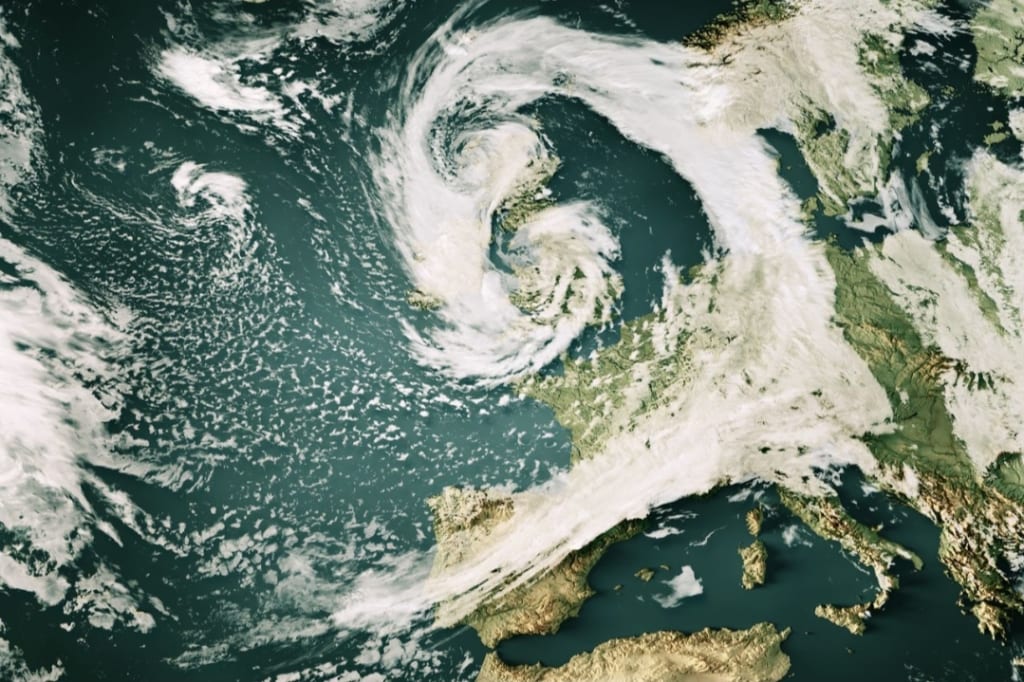
Scientists are intensifying their study of “atmospheric rivers”—vast streams of moisture in the sky that carry enormous amounts of water across continents—over the Atlantic Ocean. These invisible rivers in the atmosphere are critical in delivering rainfall, replenishing water supplies, and sometimes causing devastating floods. Understanding their behavior could help improve weather prediction models and disaster preparedness worldwide.
Recent research has revealed that these high-altitude moisture highways play a far larger role in global precipitation patterns than previously understood, especially for regions in Europe, North America, and West Africa.
What Are Atmospheric Rivers?
Atmospheric rivers are narrow corridors of concentrated water vapor in the atmosphere. They can be thousands of kilometers long but only a few hundred kilometers wide, carrying more water than some of the largest terrestrial rivers. When these “rivers” make landfall and condense, they can produce intense rainfall and trigger flooding events.
Key facts about atmospheric rivers:
They transport moisture from tropical oceans to mid-latitude regions.
A single atmospheric river can carry more water than the Amazon River.
They are responsible for a significant portion of annual rainfall in some areas, particularly the west coasts of North and South America and parts of Europe.
Why the Atlantic Matters
The Atlantic Ocean is a major source of moisture for atmospheric rivers affecting Europe, Africa, and the Americas. Scientists are focusing on the Atlantic because:
It acts as a conveyor belt for water vapor from the tropics.
Its currents and temperature variations influence the formation and strength of atmospheric rivers.
Monitoring these rivers over the Atlantic can improve forecasts for rainfall and extreme weather events across multiple continents.
Understanding these patterns is particularly crucial for countries like Portugal, Spain, France, and the UK, which can experience intense storms and flooding originating from Atlantic atmospheric rivers.
The Science Behind the Study
Researchers are using a combination of satellite data, aircraft observations, and computer models to track these rivers in real time. This multi-pronged approach allows scientists to:
Measure the volume of water vapor carried in the atmospheric rivers.
Predict the path and intensity of moisture transport.
Model the potential rainfall and flood risk when the river reaches land.
Dr. Laura Mendoza, a leading meteorologist involved in the project, explains:
"By understanding the structure and dynamics of these atmospheric rivers, we can better anticipate the timing and intensity of rainfall, potentially saving lives and reducing economic losses from floods."
Improving Flood and Rainfall Forecasts
Flooding is one of the most costly natural disasters worldwide. Accurate forecasts can:
Provide early warnings to communities at risk.
Help governments and organizations prepare emergency responses.
Inform water management strategies for reservoirs, agriculture, and urban planning.
Currently, atmospheric rivers are often underestimated in conventional weather models, leading to unexpected flood events. Integrating detailed data from Atlantic studies into forecasting systems could significantly improve accuracy.
Climate Change and Atmospheric Rivers
Climate change is altering the behavior of atmospheric rivers. Rising global temperatures increase the atmosphere’s capacity to hold moisture, making these rivers stronger and wetter. Potential consequences include:
More frequent and intense rainfall events.
Increased risk of flash floods and landslides.
Changes in seasonal rainfall patterns affecting agriculture and water resources.
Researchers warn that without improved monitoring and forecasting, the economic and humanitarian costs of floods could rise dramatically in the coming decades.
Global Implications
While studies over the Atlantic are crucial, atmospheric rivers are a global phenomenon. Understanding them benefits not only Europe and the Americas but also regions in Africa and Asia, where these moisture corridors influence monsoon patterns and seasonal rainfall.
Potential benefits of improved atmospheric river research include:
Better disaster preparedness across continents.
Enhanced understanding of water cycles in a changing climate.
Informed policies for urban planning, agriculture, and energy management.
Technology Driving the Research
Key technologies and methods used in atmospheric river studies include:
Satellites: To track water vapor transport across oceans.
Drones and aircraft: For direct sampling of moisture and wind patterns.
Supercomputers: Running climate models to predict river behavior and rainfall outcomes.
Machine learning: Identifying patterns and improving predictive algorithms.
These innovations allow scientists to visualize invisible rivers and anticipate their impact on populated areas with unprecedented precision.
Challenges and Future Research
Despite advances, predicting atmospheric rivers remains complex. Challenges include:
Variability in river width, intensity, and path.
Interaction with other weather systems, such as storms and jet streams.
Limited real-time data in some regions of the Atlantic.
Future research aims to create global atmospheric river monitoring networks, combining satellite, aircraft, and ground-based sensors to provide continuous and actionable data.
Conclusion
Atmospheric rivers over the Atlantic are key players in global rainfall and flooding events, yet they remain largely invisible to the public. By studying these moisture highways, scientists hope to revolutionize weather prediction, mitigate flood risks, and improve water management across multiple continents.
As climate change intensifies, understanding the dynamics of atmospheric rivers will be essential for governments, industries, and communities to adapt and safeguard lives and infrastructure. The invisible rivers of the sky may hold the key to predicting—and ultimately controlling—the impact of extreme rainfall events in our increasingly unpredictable world.
About the Creator
Keep reading
More stories from Aarif Lashari and writers in The Swamp and other communities.
Mining: US, UK, EU, Australia and More to Meet to Discuss Critical Minerals Alliance
The United States, United Kingdom, European Union, Australia, and several other nations are set to hold a high-level meeting to discuss the formation of a Critical Minerals Alliance. The discussions come as the global demand for essential minerals—used in technologies ranging from electric vehicles to renewable energy systems—soars, and countries seek to secure resilient, sustainable supply chains.
By Aarif Lasharia day ago in The Swamp
The 2026 LAUSD Election Is Shockingly Uncontested — and That Should Worry Parents
“The foundation of every state is the education of its youth.” — Diogenes The 2026 Los Angeles Unified School District (LAUSD) board elections are shaping up to be one of the most consequential — and least competitive — school board races in recent memory. With labor unrest rising, enrollment falling, and school closures looming, voters might expect a crowded field of challengers. Instead, they are getting the opposite: quiet races, thin opposition, and decisions that could reshape public education in Los Angeles for years to come.
By Carl J. Petersen3 days ago in The Swamp
One Hard Thing
Stop me if you’ve heard this one before: You have the number, you know your schedule- you’ve even picked out the perfect day and time to make this appointment. Shoot, you’ve even picked out alternative days and times just in case their schedules can’t accommodate you!
By Taylor Rigsby8 days ago in Motivation



Comments
There are no comments for this story
Be the first to respond and start the conversation.