
Royal Navy Fighter Jets Will Now Have to Dump Weapons Into the Sea Before Landing
Why Britain’s frontline aircraft are adopting a risky but necessary wartime protocol

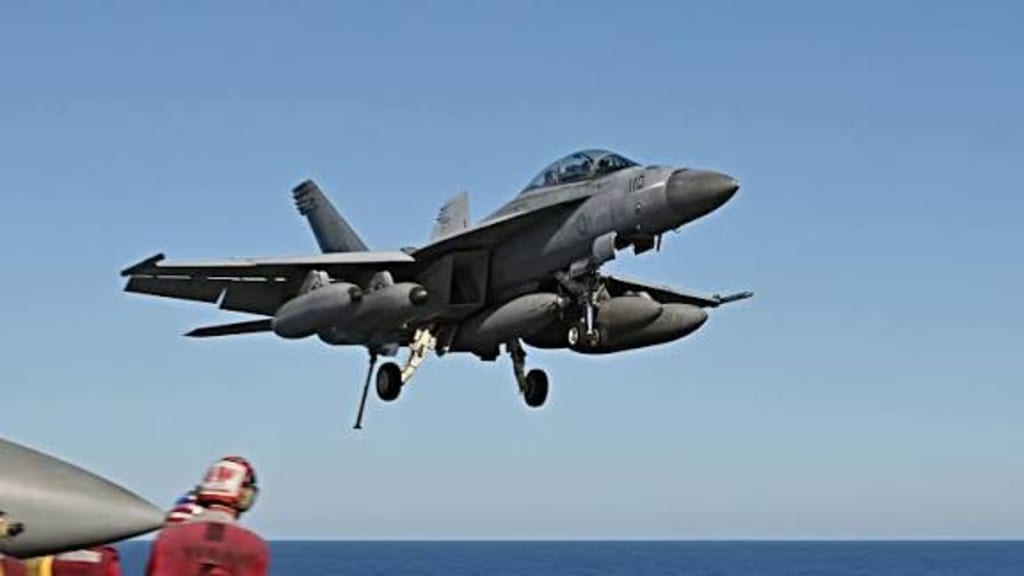
In a development that has sparked both concern and curiosity, the Royal Navy has confirmed a significant shift in its operational protocol: fighter jets returning to aircraft carriers may now have to dump their weapons into the sea before landing. The decision, which reflects changing realities of modern naval warfare, highlights the growing pressure on British forces as they adapt to increasingly unpredictable global threats.
For many, the idea of disposing live missiles and bombs into the ocean sounds alarming. But for the Royal Navy, it is a calculated move driven by a combination of safety requirements, technical limitations, and evolving mission demands. The change primarily affects the F-35B Lightning II jets, the cutting-edge aircraft operated from HMS Queen Elizabeth and HMS Prince of Wales—Britain’s flagship carriers.
Why Dumping Weapons Has Become Necessary
Traditionally, naval aircraft return to their carriers with unused weapons still attached, unless they are severely damaged or fuel-critical. However, the Royal Navy’s latest operational review has made clear that this is not always safe—or even possible.
The core issue stems from the vertical landing system used by the F-35B. Unlike conventional jets, which land on long runways, the F-35B can perform a “short takeoff and vertical landing” (STOVL). This ability is crucial for carrier operations but comes with a major drawback:
the aircraft cannot land vertically while carrying heavy live ordnance.
Doing so risks catastrophic damage to the jet, the deck, and everyone on it.
In live missions—especially close-air support or rapid-response scenarios—the aircraft may launch fully armed but return without having used its weapons. If the jet is low on fuel, damaged, or returning under emergency conditions, hovering with a full weapons load becomes dangerous.
Thus, the Navy concluded that jettisoning weapons into pre-approved ocean zones is safer than attempting a high-risk landing.
Safety Zones and Environmental Concerns
The Royal Navy insists that weapon-jettison zones are not chosen at random. Instead, they are:
Located far from shipping lanes,
In designated deep-water areas,
Carefully monitored to avoid harm to marine traffic.
Most of the dumped weapons are unarmed or electronically disabled before release. Still, critics argue that the environmental impact of metal casings, propellants, and explosive residues cannot be ignored. Environmental groups have already voiced concerns, urging the Ministry of Defence to consider retrieval operations or alternative procedures.
The MoD, however, argues that retrieval is often impossible during wartime operations and that the priority must be the immediate safety of pilots and carrier personnel.
A Reflection of Rising Military Tensions
This new protocol is not being introduced in a vacuum. It coincides with a period of heightened global tension—particularly in Europe, the Middle East, and the Indo-Pacific. Britain’s carriers are being deployed more frequently, including joint missions with NATO and Indo-Pacific partners. With increased operations comes increased risk.
The Royal Navy is preparing for scenarios where jets may have to launch quickly, engage threats, and return in unpredictable conditions. In such cases, waiting for perfect landing windows, or flying to land-based airfields, may be unrealistic.
Dumping weapons becomes not just a safety measure but a strategic necessity.
How Other Nations Handle the Same Problem
Britain is not alone. Many nations operating carrier-based fighters—particularly STOVL jets—have similar protocols. The United States Marine Corps, which also flies F-35Bs, has designated weapon-drop zones for decades. Japan, Italy, and South Korea, new operators of the same model, are expected to adopt comparable guidelines.
This highlights a broader truth:
as fighter jets become more advanced, their landing requirements become more complex.
The Royal Navy’s policy is simply the latest example of modern militaries adapting to new technologies and new threats.
What This Means for the Future of British Naval Aviation
In the long term, this rule may accelerate discussions around:
Lighter, modular weapon systems
Drone-based carrier operations
Deck-modification programs that ease landing constraints
Expanded land-based support to reduce mid-mission returns
There is also talk of designing future aircraft with greater landing-load flexibility, but such innovations remain years away.
For now, the Royal Navy’s priority is clear: ensure the safety of its pilots and ships, even if the solution appears messy or controversial.
A Necessary Adaptation in an Age of Complex Warfare
While headlines may frame it as reckless or unusual, the Royal Navy’s decision reflects the practical challenges of modern naval combat. Fighter jets today carry heavier, more advanced weapons, fly longer missions, and operate in more dangerous environments than ever before.
Dumping unused weapons may sound alarming, but it is often the safest option in moments of crisis—a reminder that behind the sleek technology and national pride, naval aviation remains full of high-stakes decisions.
In an age where war is evolving rapidly, so too must the ways nations prepare for it. The Royal Navy’s new protocol is not a sign of weakness, but of adaptation—an acknowledgment that in the unforgiving space of the open ocean, safety and strategy must always come first.
About the Creator
Fiaz Ahmed
I am Fiaz Ahmed. I am a passionate writer. I love covering trending topics and breaking news. With a sharp eye for what’s happening around the world, and crafts timely and engaging stories that keep readers informed and updated.
Keep reading
More stories from Fiaz Ahmed and writers in The Swamp and other communities.
Ukraine War Briefing: Mass Production of Ukrainian ‘Octopus’ Interceptor Drones Begins
As the war in Ukraine enters another year, innovation has become as crucial as courage on the battlefield. One of the newest developments catching global attention is the announcement that Ukraine has begun mass production of its ‘Octopus’ interceptor drones, a homegrown technology designed to protect cities, infrastructure, and frontline troops from constant aerial threats. This marks a major turning point in Ukraine’s defense strategy, reflecting a shift towards self-reliance, rapid innovation, and scalable wartime manufacturing.
By Fiaz Ahmed 3 months ago in The Swamp
From Sitcom Stardom to Spiritual Calling: The Remarkable Journey of Demond Wilson
Demond Wilson is best remembered as Lamont Sanford, the quick-witted and long-suffering son in the classic 1970s sitcom Sanford and Son. His comedic timing and sharp delivery made him a household name and helped define one of the most beloved television shows of its era. Yet, while many fans recall Wilson for his humor and television success, fewer know about the profound personal transformation that led him away from Hollywood and toward a life devoted to faith and service.
By Sajida Sikandar2 days ago in The Swamp


Comments
There are no comments for this story
Be the first to respond and start the conversation.