
"Quiet Quiet Piggy"

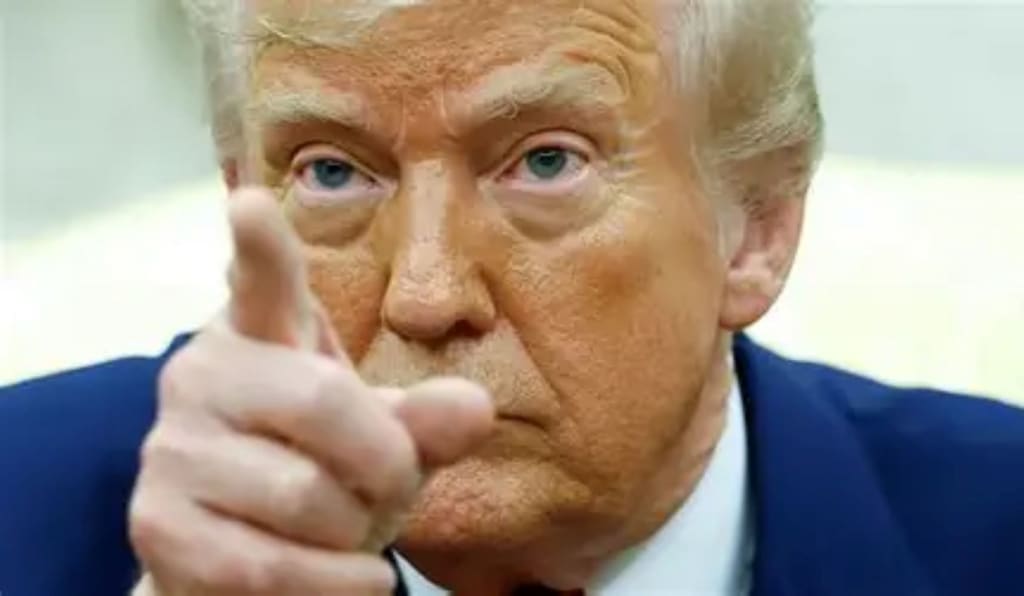
Donald Trump’s “Quiet, Piggy” remark to Bloomberg reporter Catherine Lucey has sparked widespread condemnation and raised serious questions about press freedom, misogyny, and presidential accountability. While formal consequences are unlikely, there are several avenues for response—from media solidarity and public pressure to legislative safeguards.
What Happened
“Quiet, Piggy”: Why Trump’s Insult to a Reporter Demands More Than Outrage
On November 14, 2025, aboard Air Force One, President Donald Trump turned to Bloomberg White House correspondent Catherine Lucey and snapped, “Quiet. Quiet, Piggy.” The moment, captured on video and widely circulated online, was not just another Trumpism. It was a calculated insult—sexist, dehumanizing, and designed to humiliate a journalist for doing her job. And it demands more than a viral meme or a 24-hour news cycle of outrage. It demands a reckoning.
I. The Incident: A Pattern, Not an Outlier
Catherine Lucey, a veteran political reporter with more than two decades of experience, was asking Trump a follow-up question about the Epstein files—specifically, about emails in which Jeffrey Epstein allegedly wrote that Trump “knew about the girls.” Trump denied the claim, deflected to Bill Clinton, and then, when Lucey tried to interject, pointed at her and said, “Quiet. Quiet, Piggy”.
The White House later defended the remark, claiming Lucey had behaved “inappropriately” toward her colleagues on the plane. No evidence was provided. She clearly had not behaved inappropriately. Bloomberg News stood by Lucey, stating: “Our White House journalists perform a vital public service, asking questions without fear or favor”.
This wasn’t Trump’s first attack on Lucey. Just days earlier, he reportedly told her, “You are the worst,” after she asked about Tucker Carlson’s interview with white nationalist Nick Fuentes.
II. The Gendered Nature of Trump’s Insults
Trump’s use of the word “Piggy” wasn’t random. It fits a long pattern of misogynistic language aimed at women who challenge him. He has called women “dogs,” “slobs,” “disgusting,” and “nasty.” He referred to Rosie O’Donnell as a “fat pig,” mocked Carly Fiorina’s face during the 2016 campaign, and called former Miss Universe Alicia Machado “Miss Piggy” and “Miss Housekeeping”.
These aren’t just insults. They are tools of domination. By reducing women to animals or objects, Trump asserts control and signals to his base that women who speak out—especially against powerful men—deserve ridicule, not respect.
III. Why This Moment Matters
Some may argue that Trump’s “Piggy” comment is just another example of his brash style. But that’s precisely the problem. When cruelty becomes normalized, it becomes invisible. When the President of the United States can publicly demean a journalist with impunity, it sends a chilling message: that power is above accountability, and that women who ask hard questions will be punished.
This matters not just for Catherine Lucey, but for every journalist—especially women, especially survivors—who dares to speak truth to power.
IV. The Epstein Context: A Dangerous Deflection
It’s no coincidence that Trump’s insult came during a question about the Epstein files. Trump has been mentioned over 1,000 times in documents released by the House Oversight Committee. Survivors have accused him of knowing about Epstein’s abuse, and one email claims he “spent hours” with a victim—allegations Trump denies.
By attacking Lucey, Trump wasn’t just lashing out. He was deflecting. He was using humiliation to change the subject—from his own potential exposure to the credibility of the woman asking the question.
V. The Role of the Press: Asking What Power Wants to Hide
Catherine Lucey was doing her job. She was asking a follow-up question about a matter of public interest. The Epstein files are not a tabloid distraction—they are a window into how power protects itself, how elites exploit the vulnerable, and how justice is delayed or denied.
When Trump told Lucey to be quiet, he wasn’t just silencing a reporter. He was trying to silence the question itself.
VI. The Response So Far: Outrage, But Not Action
The media response has been swift. CNN’s Kaitlan Collins and Fox News’s Gretchen Carlson condemned the remark. Social media erupted with memes, and “Quiet, Piggy” became a viral clapback used against Trump and his allies.
But outrage is not enough. Trump has faced no formal consequences. No apology. No censure. No press blackout. No unified media stand.
This is the danger of normalization. When the line keeps moving, eventually there is no line at all.
VII. What Can Be Done
- Media Solidarity: News organizations must stand together. Joint statements, coordinated coverage, and refusal to tolerate abuse of any reporter—especially women—are essential.
- Press Corps Protocols: The White House Correspondents’ Association should establish clear standards for press gaggles and demand accountability when those standards are violated.
- Congressional Oversight: Lawmakers can hold hearings on press freedom and presidential conduct. They can ask: What happens when the President uses his platform to demean and endanger journalists?
- Public Pressure: Voters can demand better. They can support candidates who respect the press and reject those who use power to bully and belittle.
- Cultural Accountability: Artists, educators, and influencers can use their platforms to challenge misogyny and elevate the voices of women journalists.
VIII. Conclusion: This Is About More Than One Word
“Quiet, Piggy” is not just a slur. It’s a symptom. It reveals how power reacts when threatened—by truth, by women, by survivors, by journalists. It shows us what happens when cruelty is rewarded and accountability is optional.
Catherine Lucey deserves more than our sympathy. She deserves our solidarity. And the country deserves a press corps that is protected, not punished, for doing its job.
Because when we let power silence questions, we silence democracy itself.
Sources:
People – Who Did Trump Call 'Piggy'?
Hollywood Life – Reporter Catherine Lucey’s Exchange With Trump
USA Today – Trump’s History With Catherine Lucey
Fast Company – “Quiet, Piggy” Goes Viral
About the Creator
Julie O'Hara - Author, Poet and Spiritual Warrior
Thank you for reading my work. Feel free to contact me with your thoughts or if you want to chat. [email protected]
Keep reading
More stories from Julie O'Hara - Author, Poet and Spiritual Warrior and writers in The Swamp and other communities.
Has MJT Turned? From Loyalist to Dissenter
Marjorie Taylor Greene’s break with Donald Trump marks one of the most dramatic political ruptures in recent Republican history. Once one of Trump’s fiercest defenders, Greene is now publicly opposing him over transparency, foreign policy, and domestic priorities—especially the release of the Epstein files. Her shift signals not only personal disillusionment but a strategic repositioning within the GOP.
By Julie O'Hara - Author, Poet and Spiritual Warrior3 months ago in The Swamp
Ukraine Peace Talks Delayed After Russia and U.S. Meeting Ends Without Agreement
Peace talks aimed at reducing tensions between Ukraine and Russia have been delayed following a high-level meeting between Russian and U.S. officials that ended without a breakthrough. Diplomatic sources confirmed that discussions failed to produce concrete commitments, raising fresh uncertainty about the prospects for ending a conflict that has already caused immense human suffering and global disruption. The postponed talks were expected to include Ukrainian representatives and international mediators, but disagreements between Washington and Moscow reportedly stalled the process before negotiations could formally resume. Diplomatic Efforts Hit a Roadblock Officials familiar with the meeting said the discussions focused on security guarantees, territorial issues, and the possibility of a ceasefire. However, both sides remained firm in their positions, preventing progress toward a compromise framework. U.S. representatives emphasized the need for respect for Ukraine’s sovereignty and international law. Russian officials reiterated concerns about NATO expansion and regional security arrangements. “The gap between positions remains wide,” said a European diplomat briefed on the talks. “Without alignment between major powers, it is difficult for broader negotiations to move forward.” The delay comes at a time when pressure is mounting from the international community for renewed diplomacy amid worsening humanitarian conditions. Impact on Ukraine Negotiations Ukraine had hoped the talks would lead to expanded humanitarian corridors and temporary ceasefires in heavily affected regions. Instead, the delay has left aid organizations uncertain about access to conflict zones. A spokesperson for the Ukrainian government expressed disappointment but stressed that Kyiv remains committed to diplomacy. “We continue to seek a peaceful solution that respects our independence and protects our people,” the spokesperson said. “Dialogue must continue, even when progress is slow.” Ukrainian officials also warned that delays only prolong civilian suffering and deepen economic damage. Humanitarian Crisis Continues The war has displaced millions of civilians and destroyed vital infrastructure across large areas of Ukraine. Hospitals struggle with shortages of medicine and equipment, while many communities lack reliable electricity and heating. Aid groups report that winter conditions have worsened the situation for vulnerable populations, including children and the elderly. Refugees in neighboring countries face uncertain futures as the conflict drags on. “The need for humanitarian access is urgent,” said a representative from an international relief agency. “Every day without agreement puts more lives at risk.” Global Repercussions The conflict continues to affect global markets, particularly energy and food supplies. Ukraine and Russia are major exporters of grain and fertilizers, and disruptions have driven up prices worldwide. European nations remain heavily invested in the outcome of peace efforts, fearing that prolonged instability could further strain their economies and security systems. Financial analysts note that markets reacted cautiously to news of the stalled talks, with investors concerned about the possibility of renewed escalation. “Diplomatic setbacks increase uncertainty,” said one market strategist. “And uncertainty has economic consequences.” Political Pressures on Both Sides Leaders in both Russia and the United States face domestic political challenges that complicate negotiations. Hardline factions in each country oppose concessions, arguing that compromise could be seen as weakness. In Ukraine, public opinion strongly favors restoring territorial integrity, making it politically risky for leaders to accept any agreement perceived as unfair. “These talks are not happening in a vacuum,” said a political analyst. “They are shaped by public sentiment, elections, and long-standing mistrust.” International Response The United Nations and European Union urged both sides to return to negotiations as soon as possible. Several countries offered to host future meetings and act as mediators. A UN official described the delay as “deeply concerning” but said diplomacy remains the only viable path toward peace. “Military solutions will not end this crisis,” the official said. “Only sustained dialogue can do that.” China and other global powers have also called for restraint and renewed engagement, emphasizing the need to avoid further escalation. What Comes Next Diplomatic sources indicate that efforts are underway to reschedule talks within the coming weeks, possibly in a neutral country. Working groups are expected to focus on humanitarian measures, prisoner exchanges, and risk reduction strategies. While a comprehensive peace agreement appears distant, some experts believe smaller confidence-building steps could help restore momentum. “Even limited agreements can create space for broader negotiations,” said a conflict resolution specialist. “The key is keeping channels open.” Hope Amid Uncertainty Despite the delay, many civilians affected by the war still hold onto hope that negotiations will eventually lead to peace. “We are tired of sirens and fear,” said a Ukrainian teacher displaced from her home. “We just want our children to live normally again.” Russian families impacted by economic sanctions and military losses have also expressed frustration with the ongoing conflict. Public fatigue on both sides may increase pressure on leaders to pursue diplomatic solutions more seriously. Conclusion The postponement of Ukraine peace talks following an inconclusive meeting between Russia and the United States highlights the fragile state of current diplomatic efforts. With deep divisions still unresolved, progress toward ending the conflict remains slow and uncertain. Yet the urgency of the humanitarian crisis and the global consequences of continued fighting make renewed negotiations unavoidable. As international mediators work to bring both sides back to the table, the world watches closely, hoping that dialogue can overcome division and lead to a path toward lasting peace. For now, the delay serves as a reminder that peace is not achieved in a single meeting—but through persistence, compromise, and sustained international commitment.
By Fiaz Ahmed Brohia day ago in The Swamp
Pakistan to Boycott T20 World Cup Match Against India on February 15
Cricket, long described as a unifying force in South Asia, is once again at the center of geopolitical tension after reports emerged that Pakistan will boycott its T20 World Cup match against India scheduled for February 15. The decision, if formally confirmed by the Pakistan Cricket Board (PCB) and tournament organizers, would mark one of the most dramatic moments in modern cricket diplomacy, underscoring how deeply politics and sport remain intertwined in the region.
By Salaar Jamalia day ago in The Swamp



Comments
There are no comments for this story
Be the first to respond and start the conversation.