
Pushed by Trump, U.S. Allies Are Resetting Relations With China
Trump’s influence pushes U.S. allies to rethink economic and diplomatic ties with China.

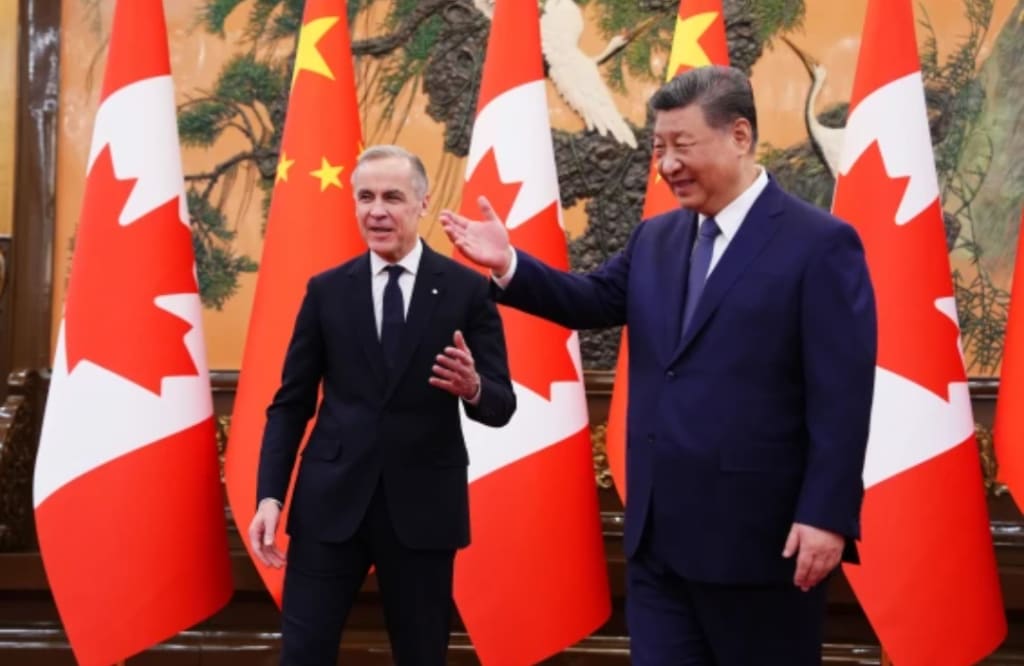
As global power dynamics shift, U.S. allies are quietly but decisively recalibrating their relationships with China. Once aligned closely with Washington’s hardline stance toward Beijing, several American partners are now pursuing a more pragmatic approach — a shift largely pushed by the political uncertainty surrounding Donald Trump and his “America First” foreign policy legacy.
From Europe to Asia-Pacific, allies are hedging their bets, seeking to protect economic interests while avoiding overdependence on an increasingly unpredictable United States.
Trump’s Shadow Still Shapes Global Diplomacy
Donald Trump’s presidency marked a turning point in U.S. relations with both allies and rivals. His confrontational approach toward China — marked by tariffs, trade wars, and sharp rhetoric — placed allies in an uncomfortable position.
Countries were often forced to choose between:
Economic ties with China, their largest trading partner
Political and security alliances with the United States
Now, as Trump remains a dominant figure in U.S. politics and a potential future president, allies are preparing for renewed volatility in Washington’s China policy.
Rather than waiting for clarity, many are acting preemptively.
Europe Seeks Balance, Not Blind Alignment
European nations are increasingly rejecting a binary choice between the U.S. and China. While concerns about human rights, technology security, and geopolitical competition remain, Europe is leaning toward “de-risking” rather than “decoupling.”
This approach aims to:
Reduce strategic vulnerabilities
Protect critical industries
Maintain trade and investment flows
Germany, France, and other EU members have expanded diplomatic engagement with Beijing while tightening oversight in sensitive sectors like semiconductors and telecommunications.
The message from Europe is clear: economic realism must coexist with political caution.
Asia-Pacific Allies Walk a Delicate Line
U.S. allies in Asia face even higher stakes. Countries such as Japan, South Korea, Australia, and the Philippines rely heavily on U.S. security guarantees — yet their economies are deeply intertwined with China.
Trump’s past threats to reduce troop deployments or renegotiate defense commitments raised alarms across the region. As a result, these nations are:
Expanding diplomatic channels with China
Strengthening regional trade agreements
Investing in domestic defense capabilities
Rather than abandoning Washington, they are building strategic flexibility — ensuring they are not left exposed if U.S. policy shifts abruptly.
Economic Reality Drives the Reset
China remains a critical engine of global growth. For many U.S. allies, cutting ties with Beijing is neither practical nor desirable.
Trade, supply chains, and investment links have proven resilient despite political tensions. As inflation, energy security, and post-pandemic recovery dominate domestic priorities, leaders are reluctant to sacrifice economic stability for ideological alignment.
Trump’s aggressive trade tactics — including tariffs on allies themselves — reinforced the need for greater economic independence from Washington.
Security Concerns Haven’t Disappeared
Despite the diplomatic reset, allies are not ignoring China’s growing military power or assertive regional behavior. Concerns over Taiwan, the South China Sea, and cyber espionage remain central to strategic planning.
What has changed is tone and strategy.
Instead of public confrontation, allies are favoring:
Quiet diplomacy
Multilateral engagement
Regional cooperation
This measured approach reflects a desire to manage competition without escalation.
A More Multipolar World Takes Shape
The recalibration of China relations highlights a broader trend: the emergence of a more multipolar global order. U.S. allies are no longer assuming permanent American leadership or policy consistency.
Trump’s influence — both past and potential future — has accelerated this shift, prompting countries to diversify partnerships and reduce exposure to any single power.
Rather than choosing sides, many are choosing options.
What This Means Going Forward
The reset in relations does not signal a collapse of U.S. alliances, but it does mark a transformation. Allies are asserting greater autonomy, shaping foreign policies based on national interest rather than automatic alignment.
For China, this presents an opportunity — and a challenge. Engagement is expanding, but trust remains limited.
For the United States, the message is sobering: leadership built on unpredictability carries long-term consequences.
As global politics evolve, U.S. allies are no longer waiting to see what Washington decides next. They are acting — carefully, strategically, and with one eye firmly on Beijing.
About the Creator
Asad Ali
I'm Asad Ali, a passionate blogger with 3 years of experience creating engaging and informative content across various niches. I specialize in crafting SEO-friendly articles that drive traffic and deliver value to readers.
Starmer Rejects Binary Choice: UK Will Not Be Forced to Choose Between the US or China
British Prime Minister Sir Keir Starmer has made clear that the United Kingdom will not be forced to choose between the United States and China — two of the world’s most powerful and influential nations — as he prepares for his first official trip to Beijing in eight years. Starmer’s remarks, delivered in a wide‑ranging interview ahead of the visit, signal a defining moment in British foreign policy amid intensifying global geopolitical competition. �
By Ayesha Lashari7 days ago in The Swamp
Canadian Company Cancels Sale of Virginia Warehouse to ICE
In late January 2026, a major real estate deal drew national attention and then collapsed under public scrutiny. Jim Pattison Developments, a Vancouver-based company, announced it would no longer sell a massive warehouse in Virginia to the U.S. Department of Homeland Security (DHS) for use as an Immigration and Customs Enforcement (ICE) facility. The decision underscores the growing power of community activism, media scrutiny, and corporate accountability in shaping controversial projects.
By Sajida Sikandarabout 10 hours ago in The Swamp



Comments
There are no comments for this story
Be the first to respond and start the conversation.