
NYC Subway Service Melts Down as Riders Return Following Blizzard
Aging Infrastructure and Extreme Weather Collide as Commuters Flood Back Underground
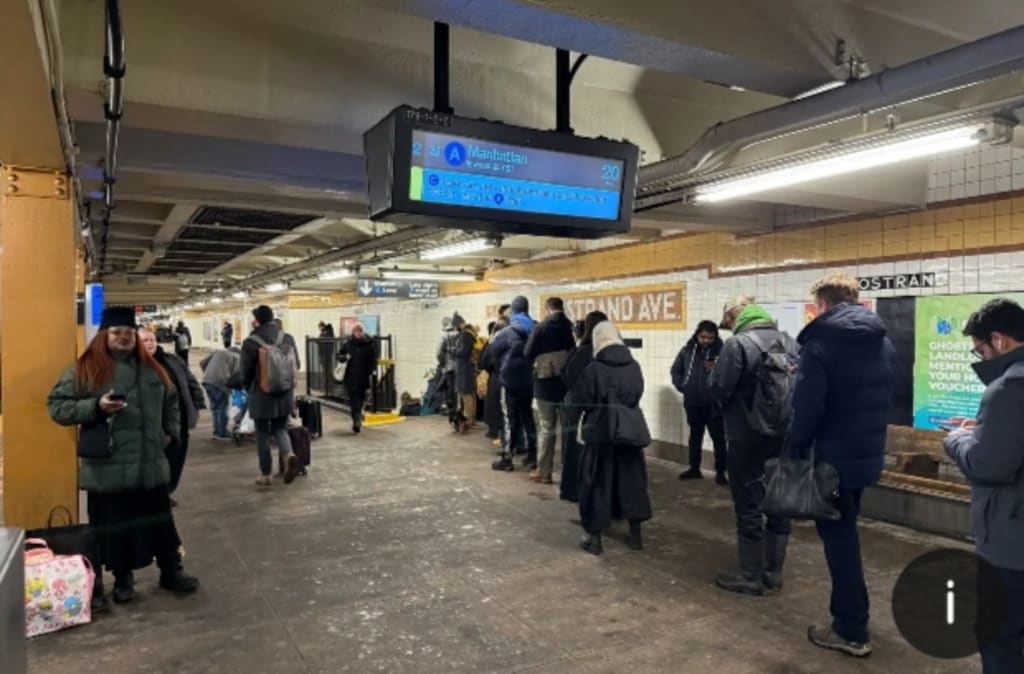
When the snow stopped falling and the skies cleared, New Yorkers expected a return to normalcy. Instead, what awaited them underground was frustration, confusion, and long delays. As riders poured back into the system following a powerful blizzard, New York City’s subway service faltered—exposing once again the vulnerabilities of one of the world’s largest transit networks.
A System Under Pressure
The Metropolitan Transportation Authority (MTA), which operates the subway, had spent days preparing for the storm. Crews were deployed to clear tracks, switch heaters were activated to prevent freezing, and service was preemptively reduced in some areas to protect equipment. Yet as soon as service resumed at near-normal levels and commuters returned en masse, the strain became visible.
Trains were delayed. Platforms filled beyond capacity. Signal problems rippled across multiple lines. Social media lit up with images of packed cars and frustrated passengers. What should have been a routine post-storm commute quickly spiraled into a system-wide disruption.
The Blizzard’s Aftermath
The storm itself blanketed New York City with heavy snowfall, ice accumulation, and freezing temperatures. While above-ground service bore the brunt of the weather, even underground sections were not immune. Snow and ice infiltrated elevated tracks, switches jammed, and moisture seeped into aging electrical components.
The subway’s vast network—spanning more than 660 miles of track—relies on infrastructure that in some places dates back over a century. Though the system has undergone modernization efforts, many signal systems remain decades old. Extreme cold can stiffen mechanical parts, interfere with sensors, and expose underlying weaknesses in equipment that already operates near capacity.
When service resumed fully, latent problems surfaced. Delays caused by frozen switches cascaded into congestion. A single disabled train created ripple effects across interconnected lines. In a system that carries millions daily, even minor disruptions can escalate quickly.
Riders Return in Waves
Blizzards often create a temporary lull in ridership. Offices close, schools shift to remote learning, and many residents stay home. But once streets are cleared and restrictions lifted, commuters return rapidly.
This sudden surge places extraordinary pressure on a transit system that may still be recovering from storm-related wear and tear. Trains that had been idled are reactivated. Crews work overtime. Maintenance backlogs accumulate.
For riders, the experience felt chaotic. Commuters reported waiting extended periods on platforms with limited communication about arrival times. Some trains bypassed stations to alleviate overcrowding elsewhere. The unpredictability added stress to what is already a demanding urban routine.
Infrastructure Challenges
The NYC subway is among the oldest and most complex transit systems in the world. Opened in 1904, it has expanded through generations of engineering philosophies and technologies. This layered history makes modernization particularly challenging.
Signal systems, which control train spacing and movement, are a frequent source of delays. The MTA has been gradually implementing Communications-Based Train Control (CBTC) technology to improve reliability and capacity. However, upgrading the entire network is a multi-billion-dollar, multi-year undertaking.
Weather resilience is another pressing concern. Climate change has increased the frequency of extreme weather events—both heavy snow and severe flooding. While the city has invested in protective measures since the devastation of Hurricane Sandy in 2012, vulnerabilities remain.
Switches, power systems, and above-ground tracks are particularly susceptible to winter storms. Even small amounts of ice can interfere with the precise mechanics required to keep trains moving safely.
The Human Factor
Transit workers play a crucial role in storm response. During the blizzard, MTA employees worked long shifts clearing snow, inspecting tracks, and addressing equipment failures. Their efforts often prevent more severe breakdowns.
Yet human resources are also stretched thin. Staffing shortages, budget constraints, and overtime demands can impact recovery speed. When multiple issues arise simultaneously—frozen switches, signal malfunctions, disabled trains—response teams must prioritize, leaving some riders waiting longer than expected.
Communication is another challenge. Real-time updates depend on accurate system data and coordination between operations centers and station staff. In fast-moving situations, information can lag behind reality, compounding passenger frustration.
Economic and Social Impact
Subway disruptions are not merely inconveniences; they carry economic consequences. New York City’s economy depends heavily on reliable mass transit. Millions of workers rely on the subway to reach offices, hospitals, schools, and service-sector jobs.
When service falters, productivity declines. Businesses open late. Appointments are missed. Hourly workers may lose wages. The cumulative effect of even a single day of widespread delays can be significant.
Moreover, transit disruptions disproportionately affect lower-income residents who depend most heavily on public transportation. While some professionals can work remotely during a storm’s aftermath, essential workers often cannot.
Calls for Investment
Episodes like this reignite debates about funding and infrastructure priorities. Advocates argue that sustained investment is essential to modernize signals, upgrade power systems, and fortify tracks against extreme weather.
The MTA’s capital plans outline ambitious projects aimed at improving reliability and resilience. However, funding gaps and political negotiations often slow progress. Federal support, state contributions, and fare revenue all play roles in shaping what can be accomplished.
Long-term solutions may include accelerating signal modernization, expanding predictive maintenance technology, and integrating climate adaptation strategies into every infrastructure upgrade.
A Test of Resilience
The subway meltdown following the blizzard serves as a reminder of the delicate balance that keeps New York moving. The system is both a marvel of engineering and a reflection of accumulated neglect. It performs extraordinary feats daily—transporting millions efficiently through a dense urban landscape—but remains vulnerable to stress.
As riders crowded platforms and trains crept through snow-laced tunnels, the broader challenge became clear: maintaining a century-old system in an era of intensifying weather extremes and rising expectations.
Looking Ahead
Recovery from the post-blizzard disruption was gradual. Service stabilized, delayed trains cleared, and routines resumed. Yet the episode leaves lingering questions about preparedness and long-term resilience.
For New Yorkers, the subway is more than transportation—it is the city’s circulatory system. When it falters, the entire metropolis feels the strain.
The recent meltdown underscores the urgency of sustained infrastructure investment and climate adaptation. As extreme weather events become more common, the intersection of aging transit systems and environmental volatility will demand proactive solutions.
In the end, the blizzard did more than blanket the city in snow. It exposed the fault lines beneath the streets—reminding everyone that resilience is not automatic. It must be built, funded, and maintained, one switch, signal, and station at a time.
About the Creator
A Gathering of Evil Bosses
“I’m the queen of chin jutting while I smooth my hair, attacking, insulting, and deflecting to protect my appointer.” “Oh, please, Blondi, my hair is curled, highlighted, and longer than yours. I feature television commercials telling immigrants that we will give them a free plane ride home, and if they voluntarily turn themselves in, they will be allowed to legally apply for re-entry. It runs everywhere, and I look good in it! You can’t compete because of your blond hair. Mine is nicer, and my lips are prettier than yours.”
By Andrea Corwin 9 days ago in The Swamp
Missile Strike Destroys Galvanic Shop at Russia’s Iskander Missile Plant
A missile strike has reportedly destroyed a critical galvanic processing workshop at a facility connected to Russia’s Iskander missile production network, dealing a significant blow to one of the country’s most important weapons manufacturing centers. Satellite imagery and preliminary intelligence assessments indicate that the targeted building housed equipment essential for electroplating and chemical treatment of missile components, a step vital to ensuring durability and precision in modern guided weapons. The damaged facility is part of a larger industrial complex supporting Russia’s tactical missile forces. While authorities in Russia have not officially named the plant or confirmed the scale of destruction, multiple defense observers say the strike appears deliberate and carefully planned to disrupt production rather than cause mass casualties. Why the Galvanic Shop Is Critical Galvanic workshops play a central role in missile manufacturing. They are responsible for coating metal components with protective layers that prevent corrosion and ensure proper functioning of guidance systems, fuel tanks, and electronic housings. Without galvanic treatment, many parts cannot pass quality control or withstand the stress of storage and launch conditions. Military industry specialists explain that these facilities are difficult to replace quickly. The equipment requires controlled chemical environments, specialized waste-handling systems, and trained personnel. Rebuilding or relocating such a workshop can take months, even under emergency conditions. “Destroying a galvanic shop creates a bottleneck in the entire production chain,” said one defense analyst familiar with Russian manufacturing infrastructure. “Even if other sections of the plant remain intact, output drops sharply because the process cannot be bypassed.” Extent of the Damage Post-strike imagery shows extensive structural damage to a large industrial building, with portions of the roof collapsed and heavy burn marks visible across the complex. Secondary explosions were reported shortly after impact, likely caused by chemicals stored inside the workshop for electroplating and surface treatment. Local emergency services were deployed to contain fires and prevent toxic substances from spreading beyond the site. Residents in nearby districts were reportedly advised to remain indoors for several hours, though no official casualty figures have been released. Russian officials described the incident as an attack on “industrial infrastructure” without confirming its connection to missile production. Strategic Implications The Iskander missile system has been a cornerstone of Russia’s long-range strike capability and has been used extensively during the conflict in Ukraine. Western analysts believe Russia has faced growing pressure on its missile stockpiles due to sustained usage and supply chain constraints. Damage to a specialized production facility could further slow replenishment efforts. Targeting industrial nodes rather than frontline forces reflects a shift in modern warfare strategy. Instead of focusing only on battlefield positions, attackers aim to weaken the enemy’s ability to manufacture and repair advanced weapons. “This is industrial warfare,” said a European security researcher. “It’s about degrading the capacity to fight over time, not just winning a single battle.” Environmental and Safety Risks Galvanic plants store hazardous chemicals such as acids and heavy metals used in electroplating processes. A direct strike on such a facility raises serious environmental concerns, including soil and water contamination. Independent environmental observers warned that long-term damage could occur if chemical runoff is not properly contained. There has been no confirmation of toxic leaks, but the incident highlights the broader risks associated with strikes on industrial military infrastructure located near civilian areas. Information Control and Propaganda As with many attacks involving sensitive defense sites, information remains tightly restricted. Russian state media has provided minimal coverage, while unofficial channels have circulated unverified videos and images showing smoke rising from the complex. Analysts caution that both sides may use the incident for propaganda purposes—either to claim operational success or to minimize the scale of damage. What is clear is that the strike demonstrates the vulnerability of even heavily guarded weapons facilities in the current phase of the conflict. Conclusion The destruction of a galvanic shop linked to Russia’s Iskander missile production represents more than a single tactical blow. It strikes at a crucial link in the country’s defense manufacturing chain, potentially delaying missile output and repairs for months. As the war increasingly targets logistics and industry rather than just troops and territory, such attacks signal a deeper transformation in how modern conflicts are fought—one that reaches into factories as much as battlefields.
By Fiaz Ahmed 5 days ago in The Swamp




Comments
There are no comments for this story
Be the first to respond and start the conversation.