
Modi’s Israel Visit to Test India’s Priorities in the Middle East
Prime Minister Modi’s state visit to Israel highlights India’s drive to deepen defense, tech, and economic ties while balancing relationships across the Middle East.

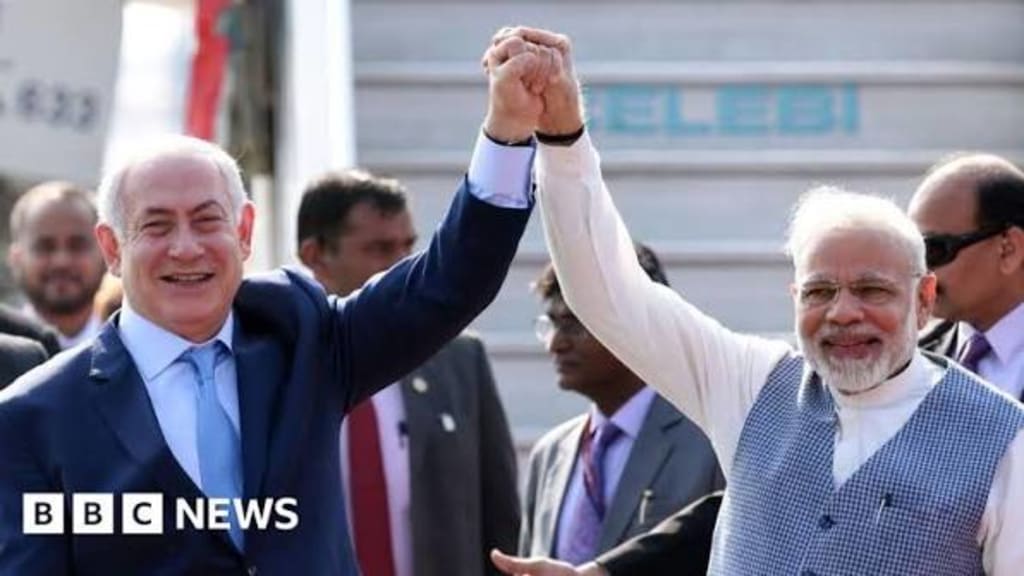
Indian Prime Minister Narendra Modi’s upcoming state visit to Israel is being closely watched as a barometer of New Delhi’s evolving priorities in a geopolitically complex Middle East. It comes at a time when India is navigating a delicate balance between deepening security ties with Tel Aviv and sustaining longstanding partnerships with Arab states, particularly in energy and trade.
The visit — the latest in a series of high-level engagements — is expected to solidify cooperation on defense, technology, and counterterrorism, and to explore new avenues for economic collaboration. However, it also poses diplomatic challenges. India’s traditional non-aligned foreign policy and its historic support for Palestinian statehood complicate closer ties with Israel. How New Delhi manages these competing demands during and after the visit will offer insight into its strategic priorities in the region.
Security and Defense Cooperation
One of the centrepieces of the India–Israel relationship has been defense cooperation. The two countries have strengthened ties since formal diplomatic relations were established in 1992, particularly in areas such as counterterrorism, intelligence sharing, and high-tech military equipment.
Israeli firms are key suppliers of surveillance systems, drones, missile defense technology, and cybersecurity solutions to India’s armed forces. New Delhi is expected to discuss procurement deals and expand joint research initiatives during Modi’s visit, highlighting a pragmatic approach to national security.
Indian analysts argue that cooperation with Israel enhances India’s capacity to respond to asymmetric threats, whether on its borders or in cyberspace. “The strategic benefits are tangible,” said a security expert in New Delhi. “Israel’s technology and experience in counterterrorism are assets for India’s security calculus.”
Economic and Technological Prospects
Beyond defense, economic engagement is expected to feature prominently on the agenda. Israel’s strengths in agriculture technology, water management, and innovation ecosystems are areas where Indian policymakers see potential for greater collaboration.
The two nations signed a free trade agreement in 2019, and officials are pushing to leverage this framework for increased bilateral investment and trade. Technology startups, venture capital ties, and joint research initiatives in sectors such as renewable energy and healthcare are seen as opportunities that could benefit both economies.
Balancing Acts: Palestine and the Arab World
Despite these opportunities, India faces diplomatic sensitivities. Traditionally, New Delhi has maintained strong support for a two-state solution and cultivated warm relations with Arab states, which are vital providers of energy and hosts to millions of Indian expatriates.
India’s ties with Gulf states such as Saudi Arabia and United Arab Emirates have grown substantially in recent years, driven by energy imports, investment flows, and cooperation on issues such as labor and security. These relationships are crucial to India’s economy and its diaspora.
Modi’s visit to Israel underscores New Delhi’s effort to broaden strategic partnerships without undermining its standing in the broader Muslim world. Government spokespeople have reiterated India’s support for Palestinian rights and emphasized that cooperation with Israel does not contradict its longstanding policy.
“India will pursue relationships that further its national interests while respecting its commitments to peace and justice,” a foreign ministry official said.
Regional and Global Implications
The visit also takes place against the backdrop of shifting regional dynamics. The Abraham Accords have normalized relations between Israel and several Arab states, opening space for new diplomatic alignments that India may seek to leverage. Meanwhile, regional tensions involving Iran, Yemen, and Syria continue to pose challenges for stability.
New Delhi’s foreign policy makers appear intent on navigating these complexities by positioning India as an independent actor — one that engages with all parties based on mutual interests rather than ideological alignment.
Washington has welcomed closer India–Israel ties, seeing them as part of a broader strategy to reinforce alliances in Asia and the Middle East amid rising competition with China. At the same time, India’s engagement with Iran, particularly on energy and infrastructure projects, is a reminder of its multidimensional approach.
Domestic Considerations
Modi’s visit also resonates with domestic political audiences. India’s large Jewish community and its growing tech and startup sectors have lauded enhanced ties with Israel. However, critics caution that stronger defense and security cooperation should not overshadow India’s commitment to multilateralism and conflict resolution.
“Strategic autonomy means weighing interests carefully,” said a foreign policy academic in New Delhi. “India must ensure that its partnerships promote stability rather than exacerbate regional divides.”
Looking Ahead
As Modi arrives in Tel Aviv, the diplomatic choreography will require careful navigation of competing priorities — strengthening bilateral ties with Israel while preserving India’s historical relationships in the Arab world and commitment to broader regional peace.
The outcomes of high-level talks, joint communiqués, and future agreements will offer a clearer picture of where India’s strategic compass is pointing in the Middle East. For New Delhi, the challenge is not merely diplomatic symbolism, but the practical balancing of national interests in a region where alignments have shifted dramatically over the past decade.
About the Creator
Fiaz Ahmed
I am Fiaz Ahmed. I am a passionate writer. I love covering trending topics and breaking news. With a sharp eye for what’s happening around the world, and crafts timely and engaging stories that keep readers informed and updated.
Keep reading
More stories from Fiaz Ahmed and writers in The Swamp and other communities.
Surviving Strike, Shamkhani Resumes Central Role in Iran’s ‘War Room’
Ali Shamkhani, a veteran Iranian security figure who survived an Israeli strike on his home in Iran last year, has returned to a central role in Tehran’s strategic decision-making apparatus, illustrating both his resilience and the Islamic Republic’s reliance on experienced hands amid escalating tensions with the United States and Israel. At 70, Shamkhani is one of Iran’s most enduring security policymakers, a trusted adviser to Ali Khamenei, and now secretary of the newly established Defence Council — a body tasked with coordinating Tehran’s response to current geopolitical challenges, including potential U.S. military actions if diplomacy over Iran’s nuclear programme falters. Return to the Heart of Security Policy Shamkhani’s comeback follows a dramatic ordeal in June 2025, when an Israeli strike destroyed his Tehran home. He was pulled alive from the rubble, later publicly taunting the attackers with the words “Bastards, I am alive,” likening his escape to the prison-break hero of the film Papillon in an interview with Iranian filmmaker Javad Mogouei. Despite the physical and psychological trauma of that strike, Shamkhani has re-emerged at the core of Iran’s strategic leadership during what is widely seen in Tehran as a pivotal standoff with Washington. His appointment to head the Defence Council — created after last year’s brief but intense 12-day conflict involving military strikes by Israel and the U.S. on Iranian nuclear and military targets — reflects Tehran’s confidence in his counsel. A Career Forged in Conflict Born in 1955 into an ethnic Arab family in Iran’s southwestern Khuzestan, Shamkhani’s career began in earnest during the brutal Iran-Iraq War (1980–1988), where he served with distinction and rapidly advanced within the ranks of the Islamic Revolutionary Guard Corps (IRGC). Shamkhani’s diverse portfolio over four decades has spanned military command, strategic negotiation, and diplomacy. After the Iran-Iraq War, he led both IRGC and regular naval forces, emphasising asymmetric tactics to counter conventionally superior adversaries. In the late 1990s and early 2000s, he served as Iran’s defence minister, where he led a landmark visit to Saudi Arabia — the first by an Iranian defence official since the 1979 revolution — in a bid to ease bilateral tensions. More recently, Shamkhani played a significant role in re-establishing diplomatic ties with Saudi Arabia in 2023 under Chinese mediation, ending an eight-year rupture following the storming of the Saudi embassy in Tehran by demonstrators. Nuclear Talks and Strategic Direction Shamkhani has also been a key figure in nuclear negotiations. During the implementation of the 2015 nuclear agreement with world powers, he was involved in shaping Iran’s negotiating positions and later navigated policy after the U.S. withdrawal in 2018. While his exact role in current Geneva talks remains behind the scenes, his influence on Iran’s strategic posture is seen as significant. In recent months, he has issued stern warnings on social media against any U.S. military action, saying that even limited strikes would be viewed as acts of war and could trigger “immediate, all-out” responses, including retaliation against Tel Aviv and supporting states. Controversies and Sanctions Shamkhani’s prominence has also brought scrutiny. He and his family have faced allegations of involvement in networks facilitating the movement of sanctioned oil, including accusations that his son’s operations helped Tehran and Moscow evade Western sanctions — charges Shamkhani has not publicly addressed. U.S. Treasury sanctions have targeted both Shamkhani and his son. While his return to power underscores his resilience and prestige, it also highlights internal tensions in Iran’s political-military elite, where loyalty, strategic vision, and experience are weighed against perceptions of corruption and elite privilege — the latter illustrated by public criticism over his daughter’s lavish wedding in 2025. A Central Role in a Critical Moment As U.S. pressure mounts — including threats outlined by President Donald Trump of possible military action if negotiations fail to curb Iran’s nuclear ambitions — Tehran appears determined to consolidate a security leadership that blends experience with ideological loyalty. Shamkhani’s renewed prominence signals that Iran’s leadership values seasoned insiders who can navigate both military confrontation and complex diplomacy. Whether his influence helps steer Iran toward a stable outcome or hardens its posture remains a key question for policymakers and analysts monitoring one of the most consequential flashpoints in Middle Eastern geopolitics.
By Fiaz Ahmed a day ago in The Swamp
A Gathering of Evil Bosses
“I’m the queen of chin jutting while I smooth my hair, attacking, insulting, and deflecting to protect my appointer.” “Oh, please, Blondi, my hair is curled, highlighted, and longer than yours. I feature television commercials telling immigrants that we will give them a free plane ride home, and if they voluntarily turn themselves in, they will be allowed to legally apply for re-entry. It runs everywhere, and I look good in it! You can’t compete because of your blond hair. Mine is nicer, and my lips are prettier than yours.”
By Andrea Corwin 8 days ago in The Swamp



Comments
There are no comments for this story
Be the first to respond and start the conversation.