
Middle East Conflict Offers Economic Lifeline to Russia’s Flagging War Machine
Rising oil and gas prices fueled by Middle East instability are boosting Russia’s revenues, helping sustain its war effort in Ukraine despite sanctions and economic strain.

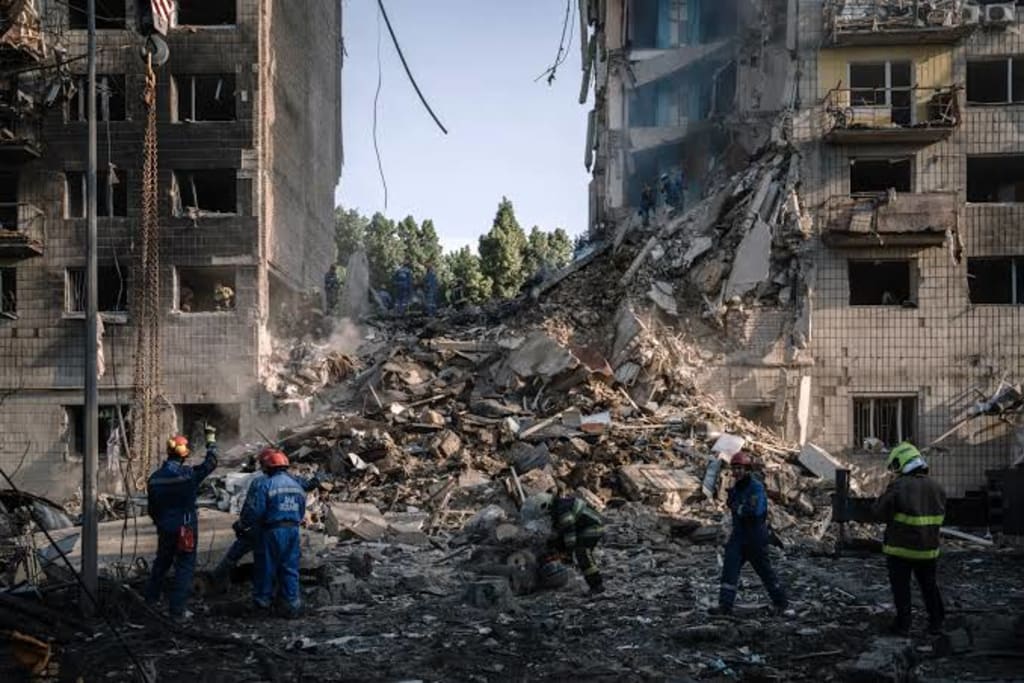
The widening conflict in the Middle East has unexpectedly provided an economic boost to Russia, whose war-driven economy has been showing signs of strain after years of sanctions and battlefield losses. Rising oil and gas prices triggered by regional instability are replenishing Moscow’s revenues and easing pressure on a budget stretched by the prolonged war in Ukraine.
Since the outbreak of renewed hostilities across the Middle East, energy markets have reacted sharply to fears of disrupted supply routes, especially around the Strait of Hormuz and the Red Sea. For Russia, one of the world’s largest exporters of crude oil and natural gas, higher prices translate directly into increased export earnings — even as volumes remain constrained by Western sanctions.
Russian officials have publicly downplayed any connection between Middle East turmoil and their own economic position. Privately, however, analysts say the surge in energy income is acting as a financial cushion for a war machine that was beginning to falter under the combined weight of military spending and international isolation.
Energy Windfall Amid Global Uncertainty
The conflict has injected fresh volatility into global markets, pushing crude prices upward and boosting demand for alternative suppliers. With Europe still partially dependent on non-Russian LNG and Asia continuing to buy Russian energy at discounted rates, Moscow finds itself benefiting from a market hungry for supply security.
Russia’s oil and gas revenues are the backbone of its federal budget. Even after sanctions capped prices and restricted access to Western insurance and shipping services, the Kremlin developed parallel trade networks and so-called “shadow fleets” to move its energy exports. The Middle East crisis has strengthened this system by making Russian oil more attractive to buyers seeking stability amid chaos.
An energy economist in Europe noted that “every geopolitical shock that tightens supply elsewhere makes Russian barrels more valuable, regardless of sanctions.”
Supporting the War in Ukraine
The timing of this windfall is critical. Russia’s war effort in Ukraine has become increasingly expensive, with massive spending on weapons production, troop recruitment, and compensation for casualties. Industrial output has been redirected toward defense manufacturing, while social programs face mounting pressure.
Higher export earnings allow Moscow to maintain this pace. Increased revenues are already being channeled into weapons factories and logistical support, helping sustain artillery production and missile stockpiles. Western intelligence officials warn that the improved cash flow could prolong the conflict by reducing the financial urgency for compromise.
President Vladimir Putin has framed the war as a long-term struggle against Western influence. The Middle East conflict, he argues, exposes what Moscow calls the hypocrisy and instability of U.S.-led global order. Russian state media has used the crisis to shift attention away from Ukraine and portray Russia as a stable energy partner amid global disorder.
Diplomatic Leverage and New Partnerships
Beyond economics, the crisis offers Russia renewed diplomatic space. Several Middle Eastern states maintain relations with Moscow while also engaging Western powers. Russia has positioned itself as a potential mediator and arms supplier, reinforcing ties with Iran and strengthening coordination with Gulf states within energy frameworks such as OPEC+.
For Moscow, this creates an opportunity to present itself as indispensable to global stability — a narrative sharply contrasting with its pariah status in much of Europe and North America. The Kremlin has also used rising oil prices as leverage in negotiations with Asian buyers, particularly China and India, who remain key customers for discounted Russian crude.
Risks and Long-Term Fragility
Despite the short-term gains, economists caution that Russia’s reliance on conflict-driven energy spikes is unsustainable. Sanctions continue to limit access to advanced technology, foreign investment, and financial markets. Infrastructure damage from Ukrainian drone attacks on refineries and pipelines also threatens export capacity.
Moreover, any prolonged escalation in the Middle East could trigger a global recession, reducing overall energy demand and eventually harming Russia’s export revenues. The same volatility that benefits Moscow today could undermine it tomorrow.
There is also political risk. If Russia is perceived as exploiting Middle Eastern instability for financial gain, it could deepen mistrust among regional partners and invite further sanctions. Western governments are already discussing tighter enforcement mechanisms to close loopholes in Russian oil shipping and insurance arrangements.
A Conflict That Reshapes the Battlefield
For now, the Middle East conflict has provided Russia with breathing room at a critical juncture in its war effort. Higher prices mean fuller coffers, and fuller coffers mean more missiles, more ammunition, and more staying power on the Ukrainian front.
The paradox is stark: while war devastates economies on the ground in the Middle East, it indirectly fuels another war thousands of miles away. As long as instability keeps global energy markets on edge, Russia’s war machine may continue to find lifelines in the chaos of distant conflicts.
In this sense, the Middle East crisis has become not only a regional tragedy but a global economic shockwave — one that Moscow is strategically positioned to exploit as it presses on with its campaign in Ukraine.
About the Creator
Fiaz Ahmed
I am Fiaz Ahmed. I am a passionate writer. I love covering trending topics and breaking news. With a sharp eye for what’s happening around the world, and crafts timely and engaging stories that keep readers informed and updated.
Keep reading
More stories from Fiaz Ahmed and writers in The Swamp and other communities.
Russia Blames Ukraine for First Attack on LNG Shadow Fleet
Russia has accused Ukraine of carrying out the first-ever attack on what it describes as its “LNG shadow fleet,” a network of vessels used to transport liquefied natural gas under opaque ownership and insurance arrangements designed to bypass Western sanctions. The alleged strike marks a new phase in the maritime dimension of the war, extending hostilities into the sensitive and highly strategic global energy supply chain. According to officials in Russia, one LNG tanker operating in international waters suffered damage after what Moscow claims was a Ukrainian drone or missile attack. The vessel was reportedly traveling from a Russian export terminal toward Asian markets when it was targeted. While no casualties were officially confirmed, Russian authorities said the ship sustained structural damage and was forced to divert to a nearby port for emergency inspection and repairs. Ukraine has not formally claimed responsibility, but security analysts note that Kyiv has increasingly focused on disrupting Russian energy exports, which provide a crucial source of revenue for Moscow’s war effort. Over the past year, Ukraine has conducted a series of long-range drone strikes on Russian oil refineries, fuel depots, and port infrastructure. Targeting LNG shipping represents a significant escalation in both scope and economic impact. What Is the “LNG Shadow Fleet”? The term “shadow fleet” refers to vessels operating with limited transparency, often under flags of convenience and with unclear ownership structures. These ships frequently rely on non-Western insurers and avoid major ports to reduce exposure to sanctions enforcement. Russia has increasingly depended on such fleets to maintain exports of both crude oil and liquefied natural gas despite international restrictions imposed after the invasion of Ukraine. Energy experts say that while oil shipments have faced repeated disruptions, LNG exports had largely remained outside direct military targeting. This alleged incident could change that calculation. “LNG tankers are high-value assets,” said one European energy analyst. “Any perception that they are vulnerable to attack will immediately affect shipping insurance costs and long-term contracts.” Strategic and Economic Implications The attack comes at a time when global energy markets are already under pressure from geopolitical instability in multiple regions. LNG plays a vital role in supplying Europe and Asia, particularly as many countries seek alternatives to pipeline gas. If Russia’s LNG exports are disrupted, prices could rise sharply, affecting consumers far beyond the battlefield. Moscow accused Ukraine of attempting to “internationalize” the conflict by striking commercial vessels rather than purely military targets. Russian officials warned that such actions could provoke retaliation and increase the risk of broader confrontation in maritime corridors used by civilian shipping. In a statement, Russia’s defense ministry said the attack represented “a dangerous precedent” and accused Ukraine of acting with indirect support from Western intelligence services. While no evidence was publicly presented, the claim reflects growing Russian concerns that Western-supplied technology is enabling Ukraine to project force deep into Russian-controlled maritime zones. A Shift in Naval Warfare If confirmed, the strike would highlight Ukraine’s evolving naval strategy. Despite having a much smaller navy than Russia, Ukraine has relied on unmanned systems and long-range weapons to target ships and ports in the Black Sea. This approach has already forced Russia to relocate parts of its fleet and increase defensive measures around key terminals. Attacking LNG tankers would signal a move toward targeting not just military assets but also economic lifelines. Such a shift carries risks, including the possibility of accidental damage to neutral vessels or environmental disasters if LNG cargoes are compromised. International Reaction Western governments have so far urged caution, calling for restraint and protection of civilian shipping routes. Several shipping insurers are reportedly reassessing coverage for vessels linked to Russian energy exports. Industry sources say premiums could rise significantly if further attacks occur, adding costs to an already strained energy market. Diplomatic observers warn that any confirmed strike on commercial LNG shipping could complicate peace efforts and increase pressure on global trade. “Once commercial energy infrastructure becomes a battlefield, the consequences are no longer regional,” said one former diplomat. “They are global.” Looking Ahead Whether this incident proves to be an isolated event or the beginning of a new campaign remains unclear. What is certain is that Russia’s accusation underscores how deeply intertwined the war has become with international energy security. The targeting of an LNG tanker—symbol of global trade and economic interdependence—signals a dangerous expansion of the conflict into domains once considered off-limits. As investigations continue and responsibility remains disputed, the alleged attack on Russia’s LNG shadow fleet stands as a stark reminder that the war’s impact is no longer confined to land and air. It is now reaching into the arteries of global energy supply, raising the stakes for all parties involved.
By Fiaz Ahmed a day ago in The Swamp
A Gathering of Evil Bosses
“I’m the queen of chin jutting while I smooth my hair, attacking, insulting, and deflecting to protect my appointer.” “Oh, please, Blondi, my hair is curled, highlighted, and longer than yours. I feature television commercials telling immigrants that we will give them a free plane ride home, and if they voluntarily turn themselves in, they will be allowed to legally apply for re-entry. It runs everywhere, and I look good in it! You can’t compete because of your blond hair. Mine is nicer, and my lips are prettier than yours.”
By Andrea Corwin 15 days ago in The Swamp
Review of 'Man on the Run'
My wife and I saw Man on the Run, a nearly 2-hour documentary on Amazon Prime, about Wings, Paul McCartney's group that flew around the world from shortly after The Beatles broke up in early 1970 to shortly after John Lennon was murdered at the end of 1980, making a Beatles reunion forever impossible.
By Paul Levinson5 days ago in Beat



Comments
There are no comments for this story
Be the first to respond and start the conversation.