
Lord Mandelson Resigns from Labour to Prevent Further 'Embarrassment' Over Epstein Ties
Mandelson's Departure: A Move to Protect Labour's Reputation
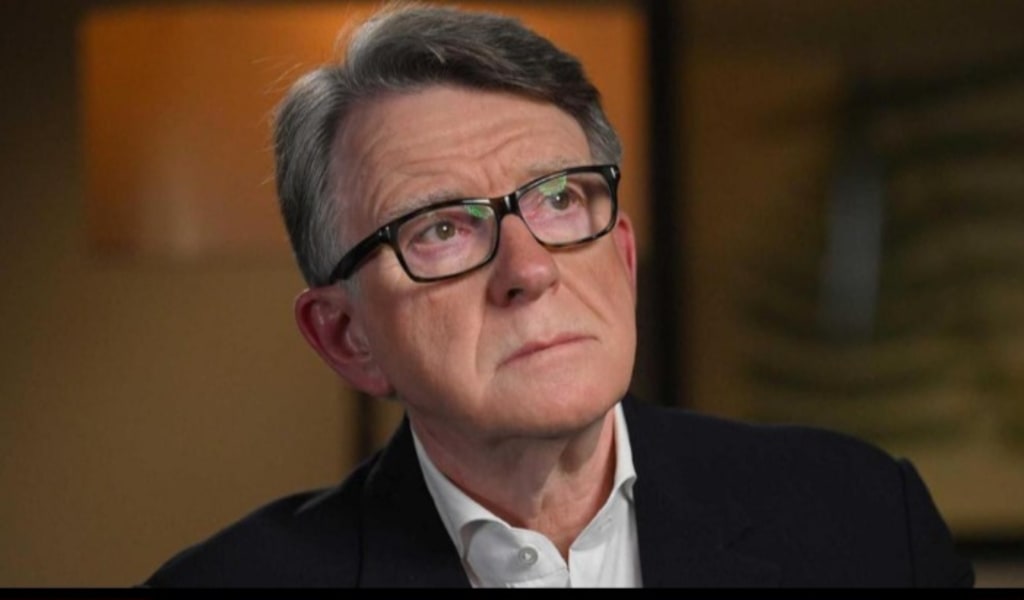
In a move that has sent shockwaves through the British political landscape, Lord Peter Mandelson, one of the Labour Party’s most influential and controversial figures, has announced his resignation from the party. His decision to step down, which he claims is to protect the party from "further embarrassment," comes in the wake of growing media scrutiny surrounding his alleged links to the notorious financier and convicted sex offender, Jeffrey Epstein.
Mandelson, once a key architect of Tony Blair’s "New Labour" movement and a prominent figure within the party, has often been at the centre of political controversies. Now, it seems his past associations with Epstein, who was linked to numerous high-profile individuals, including politicians, celebrities, and business magnates, have put him under intense public and media pressure. His resignation represents a significant moment not just for Mandelson, but for the Labour Party, which has already been grappling with a series of scandals in recent years.
Subtitle 2: The Epstein Controversy: Mandelson’s Ties to a Disgraced Financier
The Epstein scandal continues to reverberate through political circles worldwide, with many figures now facing scrutiny due to their past associations with the financier, whose illicit activities came to light only after his 2019 arrest and subsequent death. Epstein was known for cultivating relationships with wealthy and powerful individuals, with his alleged involvement in trafficking underage girls and other criminal acts having attracted widespread attention.
Lord Mandelson, according to reports, was introduced to Epstein years ago, through a network of high-profile figures, including Ghislaine Maxwell, who is now facing her own set of criminal charges related to Epstein’s crimes. Though Mandelson has denied any involvement in Epstein’s criminal activities, the mere association with such a figure has raised eyebrows. Despite his public denials, the revelation of their connection has triggered significant backlash from both the public and within the Labour Party, ultimately prompting Mandelson’s resignation.
Mandelson himself cited his departure as a way to shield the Labour Party from “further embarrassment” over these revelations. His decision to resign may have been seen as an attempt to avoid further scrutiny, as the Epstein links were becoming an increasing distraction that threatened to overshadow both his legacy and the party’s ongoing efforts to rebuild its image under Sir Keir Starmer’s leadership.
Subtitle 3: Labour’s Crisis of Reputation: Mandelson’s Role in the Party
Lord Mandelson’s resignation marks the latest chapter in a series of damaging episodes for the Labour Party, which has struggled to regain public trust in recent years. Under the leadership of Sir Keir Starmer, Labour has made significant efforts to distance itself from past controversies, most notably the scandal surrounding former leader Jeremy Corbyn and the accusations of anti-Semitism within the party.
The timing of Mandelson’s departure is especially critical for the party, which is still navigating a difficult period of internal strife and public disillusionment. Following several years of electoral defeats, Labour has been attempting to restore its image, focusing on a more centrist and pragmatic approach to politics. The ongoing Epstein affair, with its damaging implications for the credibility of those involved, threatens to undermine these efforts, and Mandelson’s resignation may have been an attempt to preemptively limit any further damage.
For Starmer and the Labour leadership, the resignation offers a moment to refocus attention on the party’s future, but the lingering scandal may continue to be a distraction as they attempt to rebuild. The public’s trust in the party has been fragile for years, and events like Mandelson’s resignation and the Epstein links only further complicate the party’s efforts to reconnect with voters.
Subtitle 4: The Legacy of Lord Mandelson: From 'New Labour' Icon to Political Pariah?
Mandelson’s career has been one of great highs and even greater lows. A central figure in Tony Blair’s "New Labour" government, he played a key role in shifting the party to a more centrist position, which many credit with winning Labour its landslide victory in the 1997 general election. His image as a moderniser, a strategist, and a key player in shaping the direction of British politics in the late 20th century endeared him to some while making him a target of criticism for others.
However, Mandelson’s career has been marred by several controversies, including his forced resignation from the Cabinet in 1998 over a loan he received from a businessman with political ties. Despite this, he was reinstated and returned to high office, a move that earned him the nickname “the Prince of Darkness” due to his ability to navigate political storms and make a comeback when others would have been finished.
The Epstein scandal adds a new chapter to this complex legacy. While Mandelson has denied any wrongdoing, the sheer nature of his association with a criminal like Epstein has led to significant damage to his reputation. His resignation can be seen as an acknowledgment that his political future, and potentially the Labour Party’s own future, was increasingly untenable amid the growing scrutiny of these ties.
Subtitle 5: Public Reactions: Divisions Over Mandelson’s Resignation
Public reaction to Mandelson’s resignation has been mixed. Some view it as a necessary step to protect the Labour Party from further scandal and to allow the party to focus on its recovery. By stepping down voluntarily, Mandelson has attempted to prevent the matter from escalating further and dragging the party into deeper waters. This pragmatic move, some argue, may help prevent the party from losing even more credibility at a time when it needs to show a united front.
Others, however, are less forgiving. Critics argue that Mandelson’s decision to resign is a cowardly attempt to escape the consequences of his actions and avoid a deeper examination of his involvement with Epstein. His resignation, they claim, raises more questions than it answers, leaving many wondering whether he is truly distancing himself from Epstein’s world or merely trying to protect his own interests.
Subtitle 6: What’s Next for Labour and Lord Mandelson?
Looking ahead, the Labour Party faces an uphill battle in reclaiming public trust. Sir Keir Starmer has repeatedly stated that he wants to steer the party away from the divisions and controversies of the past, but this latest scandal involving Mandelson may continue to haunt the party as it prepares for future elections. Labour cannot afford to be seen as an institution embroiled in scandal, particularly as it looks to challenge the Conservatives for political dominance.
For Lord Mandelson, the future is less clear. Having spent decades in the political limelight, he may now retreat from the public eye, or, as some speculate, may attempt to stage a comeback at a later time. Whatever happens, his connection to Epstein will likely remain a defining part of his legacy.
Ultimately, the resignation of Lord Mandelson is yet another reminder of the dangers that lurk in the world of politics. It highlights how past associations, even those not directly linked to wrongdoing, can lead to significant consequences in the modern political arena. As the Labour Party navigates its next steps, the shadow of the Epstein scandal will continue to loom large over its future.
About the Creator
Keep reading
More stories from Ayesha Lashari and writers in The Swamp and other communities.
It’s All About the Land — Ukraine’s Gamble for Peace With the US and Russia
Since Russia launched its full-scale invasion of Ukraine in early 2022, the question of land has remained the central point of conflict in every diplomatic negotiation. For Ukrainian President Volodymyr Zelensky, the issue is not merely about maps or territory; it is existential. The sovereignty of Ukraine, the safety of millions of its citizens, and the broader stability of Europe all hinge on who controls which land and under what conditions a lasting peace can be achieved. As 2026 unfolds, Kyiv is preparing for high-stakes talks with both the United States and Russia. These discussions are more than routine diplomacy — they are a test of whether Ukraine can secure peace without compromising its territorial integrity. The Diplomatic Stage On January 23, 2026, Ukrainian, Russian, and U.S. negotiators convened in the United Arab Emirates for trilateral talks — the first high-profile three-way diplomatic effort since the war began. Hosted in Abu Dhabi, these meetings mark a critical milestone in international attempts to end a war that has claimed tens of thousands of lives and displaced millions. Ahead of the UAE summit, U.S. Special Envoy Steve Witkoff traveled to Moscow for discussions with President Vladimir Putin. The United States is serving as mediator, working to craft a security framework that ensures Ukraine’s sovereignty while balancing Russia’s demands for territorial concessions. Zelensky has repeatedly stressed that the core of any negotiation is the land itself. Without reclaiming and protecting its sovereign territory, Kyiv argues, no agreement can truly constitute peace. The Core Dispute: Land and Security At the heart of the talks lie three distinct positions: 1. Ukraine’s Stance Kyiv has made it clear that it will not cede sovereign territory to Russia under any peace deal. Zelensky emphasizes that peace at the cost of territorial loss is unacceptable. The Ukrainian Constitution requires broad consent for any transfer of land, and public sentiment strongly opposes concessions. Land for Ukraine is not only strategic or economic but also symbolic — representing the nation’s identity, history, and democratic sovereignty. 2. Russia’s Position Moscow views territorial control as non-negotiable leverage. President Putin and Russian officials have repeatedly insisted that resolving the land issue is a prerequisite for any meaningful settlement. For Russia, holding onto occupied regions ensures both military advantage and political influence over Ukraine. 3. The U.S. Role The United States, through Envoy Witkoff, has proposed frameworks that could include territorial arrangements, security guarantees, and potential demilitarized zones. The Donbas region, for instance, is discussed as a possible demilitarized area with Western guarantees protecting Ukraine from future aggression. Yet, these proposals remain contingent upon Ukraine’s sovereignty being respected and eventual ratification by both Ukrainian and U.S. legislatures. What’s at Stake? For Kyiv, territorial integrity is inseparable from national security. Beyond the symbolic value, the land includes vital industrial regions, agricultural areas, and mineral-rich territories crucial to Ukraine’s economic recovery and long-term stability. Conceding any of this land could weaken Ukraine’s future bargaining power and embolden further aggression. The United States seeks to integrate territorial solutions with robust security guarantees, similar in spirit to NATO protection but without formal membership. European allies have expressed support, yet U.S. involvement is widely seen as indispensable for a credible security guarantee. The stakes extend far beyond Ukraine’s borders: Eastern European stability affects global energy markets, migration patterns, and the wider geopolitical balance. International Observers and Implications Global attention is intensely focused on these negotiations. European Union leaders, NATO members, and Middle Eastern partners all recognize the high stakes. A successful settlement could recalibrate alliances, reshape global diplomacy, and restore relative stability to a region long plagued by conflict. However, analysts caution that peace may remain fragile. Even if frameworks emerge, protracted negotiations could continue into 2027. On the ground, fighting persists, and civilian casualties, infrastructure destruction, and humanitarian crises continue despite diplomatic efforts. Zelensky’s Leadership Challenge President Zelensky’s strategy is a delicate balancing act. He must resist Russian pressure without alienating Western allies who advocate for compromise to prevent escalation. His message is consistent: Ukraine will engage in dialogue, but its sovereignty and territorial claims are non-negotiable. Zelensky portrays the land dispute not merely as a territorial contest but as a defense of democratic values, freedom, and national identity. To him, the “land” is a tangible representation of Ukraine’s very right to exist independently and determine its future. Looking Ahead The coming months will test the limits of diplomacy. Ukraine’s ability to secure peace without compromising its territorial integrity depends on careful negotiation, unwavering support from allies, and, ultimately, resilience in the face of continued conflict. For Ukraine, the lesson is clear: peace is truly all about the land. Any compromise that ignores this principle risks undermining both national security and the possibility of lasting peace in the region. As world leaders and citizens watch closely, the outcome of these negotiations could shape the geopolitical landscape of Eastern Europe for decades to come.
By Ayesha Lasharia day ago in The Swamp
Catherine O’Hara: The Queen of Comedy Who Redefined What It Means to Be Iconic
Catherine O’Hara is one of those rare performers whose presence alone can elevate a project from entertaining to unforgettable. With a career spanning more than four decades, she has mastered the art of comedy while also demonstrating remarkable emotional depth. Whether she is delivering exaggerated accents, embodying glamorous eccentricity, or quietly revealing vulnerability, O’Hara has earned her place as one of the most respected and beloved figures in entertainment.
By Sajida Sikandar2 days ago in The Swamp


Comments
There are no comments for this story
Be the first to respond and start the conversation.